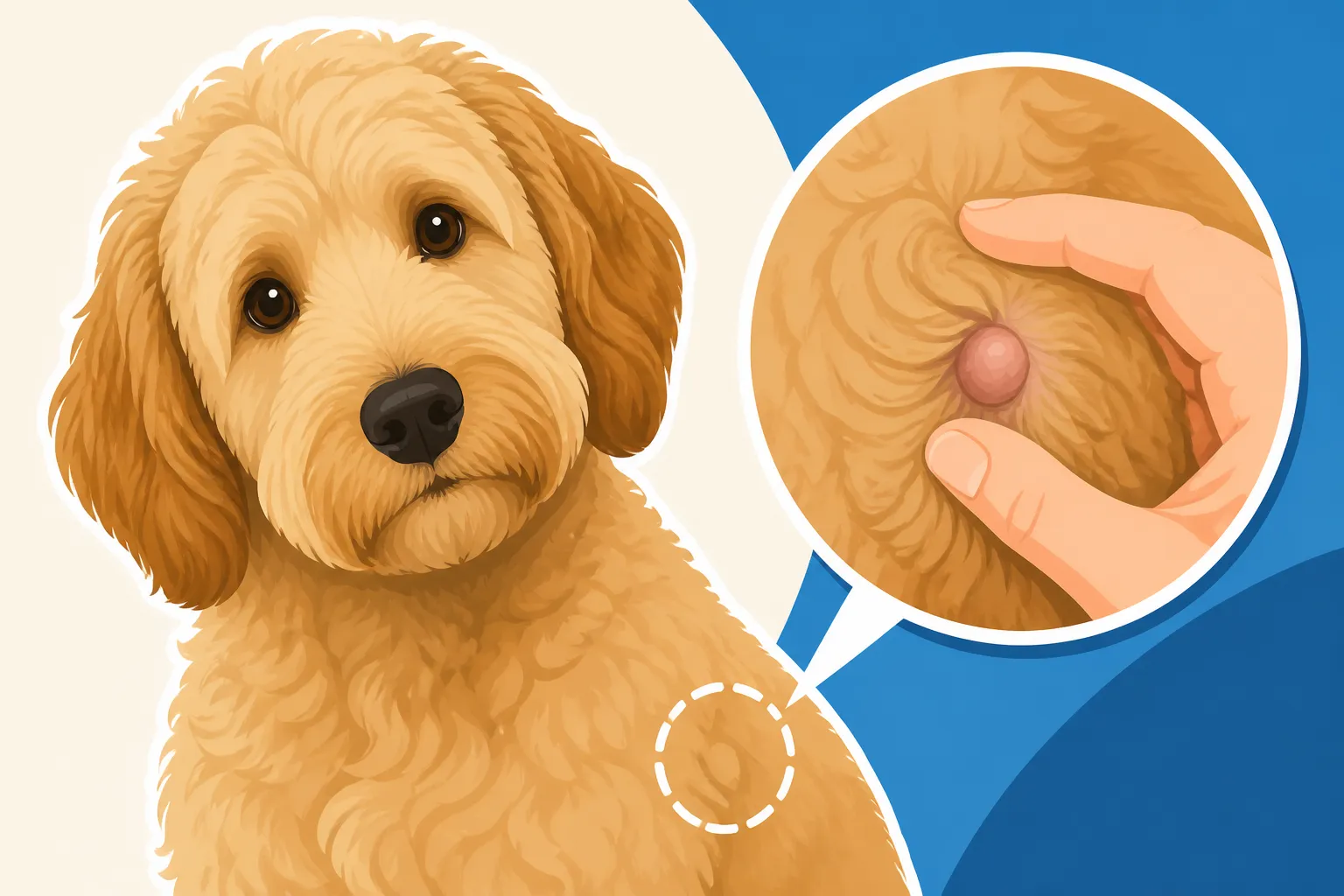
Whether a Lump Under a Labradoodle’s Coat Gets Missed
It's a worry many Labradoodle parents share: that nagging thought that something might be lurking under that gorgeous, often dense, coat. With their fluffy, curly, or wavy locks, it’s all too easy for a small lump or bump to go unnoticed until it’s grown larger, potentially causing more concern or requiring more invasive treatment. The truth is, a Labradoodle's signature coat, while beautiful, can indeed be a masterful camouflage for growths, making proactive checking incredibly important. This guide is here to help you understand why lumps can be missed and, more importantly, how to become an expert at finding them early, giving your beloved companion the best chance at health.
The Challenge of Finding Lumps in a Labradoodle's Dense Coat
Let's face it, one of the biggest joys of owning a Labradoodle is running your hands through that soft, luxurious coat. But that very softness, that wonderful density, can also be a significant hurdle when it comes to routine health checks. It's not like scanning a smooth-coated breed where every tiny skin anomaly pops into view immediately. With a Labradoodle, you really have to feel for things, and that takes a bit more conscious effort and understanding of their unique physiology.
Why Their Unique Coat Can Be a Double-Edged Sword
Labradoodles are known for their varied coat types – from the low-shedding, soft fleece that feels like angora to the denser, curlier wool coat, and even the less common hair coat that’s more akin to a Labrador’s. Each of these presents its own challenges. A wool coat, for example, with its tight, dense curls, can make it incredibly difficult to feel small anomalies against the skin. It's like trying to find a tiny pebble hidden in a thick, plush carpet. The fleece coat, while softer and often wavier, still has significant volume and can easily conceal a new growth, especially if it's small and grows slowly.
The genetics of the Poodle, one of the Labradoodle's parent breeds, contribute to this dense, often non-shedding coat. While fantastic for allergy sufferers, it means loose hair doesn't fall out, instead getting caught in the surrounding coat, which can create mats if not properly brushed. These mats, especially in the armpits or behind the ears, can themselves feel like lumps or can grow over a genuine lump, further obscuring it from your touch. It's a constant battle to stay on top of grooming, not just for aesthetics, but for health. Understanding your Labradoodle's specific coat type and its nuances is the first step in effective at-home lump detection.
Common Areas Where Lumps Hide Best
Some areas on your Labradoodle are notorious hiding spots for lumps, simply due to their anatomy or how much they move. These are the "hot zones" where you need to be particularly diligent during your regular checks. Think about the places where skin folds naturally occur or where a lump could easily be confused with muscle or bone.
The armpits and groin are prime examples. These areas have loose skin and are constantly moving, making it easy for a small growth to be missed, especially if your dog isn't particularly fond of being handled there. Similarly, the neck, particularly under the chin and along the throat, can conceal lumps. Lymph nodes are located here, and if they swell, it can be a sign of infection or more serious underlying issues like lymphoma. Don't forget the chest and belly, especially in a dog with a deep chest inherited from its Poodle ancestry. The skin here is soft and can easily disguise small masses. Even areas like between the toes, on the paw pads, or at the base of the tail can harbor hidden growths. Because these spots aren't always visible, a hands-on approach is critical. A small lump on a paw pad, for instance, might only be noticed if your Labradoodle starts limping, by which time it might have grown larger or become more problematic.
Types of Lumps Labradoodles Might Develop and What They Mean
Finding a lump on your dog can send your heart racing, and understandably so. It's natural to immediately jump to the worst-case scenario. However, it's important to remember that not all lumps are created equal. Some are benign and harmless, while others require immediate veterinary attention. Knowing the possibilities can help you approach the situation with a little more calm, though always with a healthy dose of caution.
The Good, the Bad, and the Ugly: Benign Lumps
Let's start with a bit of a sigh of relief: many lumps you might find on your Labradoodle are completely benign. They're not cancerous and usually don't pose a serious threat to your dog's health, though sometimes they can be bothersome or grow large enough to require removal.
One of the most common benign lumps, especially in older Labradoodles, is a lipoma. These are fatty tumors, typically soft to the touch, somewhat movable under the skin, and non-painful. They can appear almost anywhere on the body and often feel like a small, squishy ball. While generally harmless, they can grow quite large and, if located in an awkward spot like an armpit, might interfere with movement. Another common finding is a sebaceous cyst. These occur when a sebaceous gland (which produces oil for the skin) becomes blocked. They often feel firm, can sometimes rupture and ooze a cheesy material, and might become inflamed or infected. They’re essentially like a large zit under the skin. Less commonly, you might find warts or skin tags, especially around the eyes, mouth, or joints. These are usually small, fleshy growths that are typically benign but can sometimes be irritated by rubbing or grooming, leading to bleeding or infection. While these lumps are often benign, it's crucial to have your veterinarian examine any new lump. Only a vet can properly diagnose its nature, even if it seems innocuous. This is where having pet insurance like Healthy Paws can provide peace of mind, knowing that diagnostic tests for these mysteries are covered.
Identifying Potentially Malignant Growths
While we hope for the best, it's vital to be aware of the types of lumps that are cause for serious concern. Early detection is absolutely key with malignant growths, as it significantly impacts prognosis and treatment success. Labradoodles, being a cross of Labrador Retrievers and Poodles, can inherit predispositions to certain cancers found in both breeds. For example, both Labs and Poodles are known to be susceptible to certain types of cancer, so it's a pertinent concern for Labradoodle owners. You might want to read more about Cancer in an Older Labradoodle as your dog ages.
Mast cell tumors are particularly significant in Labradoodles. These cancerous tumors are notoriously tricky because they can mimic almost any other type of lump. They can be soft or firm, appear on or under the skin, and vary widely in size and color. They might also appear to wax and wane in size, often becoming red, itchy, or swollen when disturbed. Their unpredictable nature means that any suspicious lump should be tested. Another serious concern is lymphoma, which often manifests as enlarged lymph nodes. These might feel like firm, rubbery, enlarged glands, particularly in the neck, armpits, or groin. While less common, other types of malignant growths include melanomas (though many melanomas on dogs are benign, especially in haired skin), fibrosarcomas, and other soft tissue sarcomas. The key takeaway here is simple: if you find any lump, especially one that is growing rapidly, feels firm, is fixed to underlying tissue, or causes your dog pain or discomfort, don't delay. A prompt visit to the vet is non-negotiable.
Practical Steps for Routine Lump Detection at Home
The best defense against a missed lump becoming a serious problem is a good offense: regular, thorough at-home checks. This isn't just about giving your dog a quick pat; it's about a systematic approach that becomes a natural part of your routine. Think of it as a bonding activity that also happens to be a vital health check.
Establishing a Regular "Body Scan" Routine
Making a routine "body scan" a regular part of your interaction with your Labradoodle is the single most effective way to catch lumps early. Aim for at least a weekly check, maybe while you're relaxing on the couch together or after a particularly good brushing session. The more familiar you become with your dog's normal contours and feel, the quicker you'll notice anything out of the ordinary.
Start by gently running your hands over your dog's entire body, paying close attention to specific areas. Use the pads of your fingers, applying gentle but firm pressure, to feel under the coat. Begin at the head: feel around the ears (inside and out), under the chin, and along the jawline where lymph nodes are located. Move down the neck, feeling all sides. Continue down the shoulders, along the front legs (especially the armpits), and over the chest. Systematically work your way back along the ribs, over the spine, down the back legs (paying attention to the groin and behind the knees), and don't forget the tail and paw pads. Remember, you're not just looking for visual cues; you're feeling for any bumps, lumps, or changes in texture that shouldn't be there. If your Labradoodle is a larger standard size, this might take a bit longer, but it's time well spent. Make it a positive experience with praise and treats, so your dog associates these checks with good things.
Grooming as Your First Line of Defense
For a Labradoodle, grooming isn't just about looking good; it's a critical health maintenance task, especially when it comes to lump detection. Those regular brushing sessions are your absolute best opportunity to get hands-on with your dog's skin and really feel what's going on underneath that beautiful coat. You might have heard that it's vital to be Brushing a Labradoodle to the Skin, Not the Surface, and this advice is doubly true for lump detection.
When you're line brushing or using your slicker brush and metal comb to work through the coat, you're not just preventing mats; you're also feeling for any inconsistencies. As you run the brush or comb through small sections of hair, your fingers are naturally making contact with the skin. Pay attention to any resistance that isn't a tangle, any small bumps that roll under your fingers, or any areas that feel unusually warm or sensitive. Groomers often find lumps on Labradoodles simply because they handle the dog's entire body so thoroughly and regularly. If you use a professional groomer every The Six to Eight Week Clock on a Labradoodle's Coat, they can be an extra set of experienced eyes and hands, often catching things you might have missed. Make sure to communicate with your groomer and ask them to report any skin abnormalities they find. For dogs prone to skin issues or those with very dense coats, using a specific dematting comb or a deshedding tool designed to reach the undercoat can help you get closer to the skin for better tactile inspection.
| Characteristic | Benign Lumps (e.g., Lipoma, Sebaceous Cyst) | Potentially Malignant Lumps (e.g., Mast Cell Tumor, Lymphoma) |
|---|---|---|
| Feel | Soft, squishy, movable, or firm (cyst) | Firm, rubbery, sometimes squishy |
| Movement | Often easily movable under the skin | May be fixed to underlying tissue, or movable |
| Growth Rate | Slow, static, or gradual over months/years | Can be rapid, or fluctuate in size |
| Appearance | Skin often normal, may have central pore (cyst), sometimes hairy | May be red, inflamed, ulcerated, swollen, hair loss, or normal |
| Pain/Sensitivity | Usually non-painful | Can be painful, itchy, or sensitive to touch |
| Location | Anywhere, common on trunk, armpits, groin | Anywhere, common on trunk, limbs, face, or lymph node areas |
| Urgency | Monitor, vet check recommended | Prompt vet visit for diagnosis |
When to Seek Veterinary Advice and What to Expect
The moment you find a lump on your Labradoodle, a wave of anxiety is completely normal. The most important thing is not to panic, but to act. While many lumps are benign, only a veterinary professional can definitively tell you what you're dealing with. It's always better to be overly cautious than to regret delaying.
Red Flags That Warrant Immediate Vet Attention
While any new lump warrants a vet check, there are certain "red flags" that should prompt you to call your vet without delay. These signs suggest the lump could be more aggressive or rapidly developing, and time is often of the essence. A lump that is growing rapidly is a major concern. If you notice a lump appearing seemingly overnight, or doubling in size within a week or two, get it checked immediately. Similarly, any changes in the lump's size, shape, or color are red flags. A lump that becomes firmer, more irregular in shape, or changes from skin-colored to red or black, needs prompt evaluation.
Other worrying signs include firmness and immobility. If the lump feels hard and is fixed to the underlying muscle or bone, rather than moving freely under the skin, it’s more likely to be malignant. Pain, lameness, or discomfort associated with the lump also require urgent attention. If your Labradoodle flinches when you touch it, starts limping, or seems generally unwell (lethargic, loss of appetite), it could indicate a more serious issue. Lastly, any ulceration, bleeding, or discharge from the lump, or if it appears inflamed or hot to the touch, should lead to an immediate vet visit. Even a lump in a very young puppy is unusual and should be investigated, as some cancers can appear early in life. Remember, you know your Labradoodle best; if something just "doesn't feel right," trust your gut and consult your vet.
The Diagnostic Process and Treatment Options
Once you've identified a lump and brought your Labradoodle to the vet, the diagnostic process usually begins with a thorough physical examination and palpation. Your vet will assess the lump's size, location, texture, mobility, and whether it's causing your dog any discomfort. From there, the most common first step is a Fine Needle Aspirate (FNA). This involves using a small needle to collect a sample of cells from the lump. It's usually a quick, minimally invasive procedure that can often be done during your appointment, often without sedation. The cells are then examined under a microscope by a pathologist. An FNA can often distinguish between benign fatty tumors (lipomas), cysts, or indicate the presence of inflammatory cells or certain types of cancer like mast cell tumors. However, an FNA isn't always definitive; sometimes it yields inconclusive results or can't fully differentiate between benign and malignant cells.
If the FNA is inconclusive, or if there's a strong suspicion of malignancy, a biopsy might be recommended. This involves surgically removing a small piece or the entire lump for more comprehensive pathological examination. A biopsy provides a more accurate diagnosis but requires anesthesia. Depending on the diagnosis, treatment options vary widely. For benign lumps, watchful waiting might be appropriate, or surgical removal if the lump is growing large, causing discomfort, or at risk of rupture. For malignant lumps, surgical removal is often the first line of defense, aiming to remove the entire tumor with clear margins. In some cases, additional treatments like chemotherapy or radiation therapy might be necessary, especially for aggressive cancers or if the tumor couldn't be fully removed. The cost of these diagnostics and treatments can be substantial, which is why many Labradoodle owners find a good pet insurance plan, like one from Healthy Paws, to be invaluable. It helps cover unexpected vet bills and allows you to make decisions based on your dog's health needs, not just your budget.
Disclaimer
This article is for general informational purposes only and does not constitute professional advice. Laws, prices and regulations vary by location and change over time. Consult a qualified professional for guidance on your specific situation.