The Health Tests a Labradoodle Breeder Should Show
Bringing a new Labradoodle puppy into your home is an incredibly exciting time, full of dreams about playful romps and loving companionship. But for many hopeful owners, the initial joy can quickly become overshadowed by a nagging worry: Am I choosing a healthy puppy? It’s a completely valid concern, as the health history of your puppy’s parents is often the best indicator of their future well-being. This guide is here to walk you through exactly what health tests a reputable Labradoodle breeder should readily provide, and why they are so crucial for your peace of mind and your pup's future.
Understanding the Foundation: Why Genetic Health Tests Matter So Much
It's easy to fall in love with a Labradoodle's charming looks and reputation for being friendly and smart. Many people mistakenly believe that because they're a "hybrid" or "designer" breed, they automatically escape the health issues common to their parent breeds. Oh, if only that were true! The reality is, Labradoodles inherit genetic material from both the Labrador Retriever and the Standard Poodle, which means they can potentially inherit any genetic condition prevalent in either of those breeds. Without careful, responsible breeding practices that include thorough health testing, you could unwittingly adopt a puppy predisposed to serious, painful, and expensive health problems down the line. It's a heartbreaking situation to face, especially when it could have been prevented.
Unpacking the "Hybrid Vigor" Myth
You might hear the term "hybrid vigor" thrown around, suggesting that crossbred dogs are inherently healthier than purebreds. While there's a kernel of truth to the idea that a wider gene pool can sometimes reduce the expression of recessive genes, it's absolutely not a guarantee of perfect health. It's a scientific principle that relies on genetically distinct parent lines. If a breeder is just crossing two dogs without understanding their genetic backgrounds or performing health tests, they're essentially rolling the dice. A Labradoodle puppy from untested parents is just as, if not more, at risk for certain conditions as a purebred, because you're combining the potential genetic issues of two different breeds into one unsuspecting little furry package. Knowing the health history and genetic clearances of both parents is paramount to increasing the odds of a healthy puppy.
The True Cost of Skipping Health Screens
Beyond the emotional toll of watching your beloved dog suffer, the financial burden of managing genetic conditions can be staggering. We're talking about surgeries that run into the tens of thousands for hip and elbow issues, lifelong medication for conditions like Addison's Disease, or specialized care for progressive vision loss. A responsible breeder invests in these tests not just as a formality, but as an ethical commitment to the future health of the puppies they bring into the world. It’s a vital step that shows they care more about the dogs than about cutting costs.
Essential Genetic Health Clearances for Labradoodles
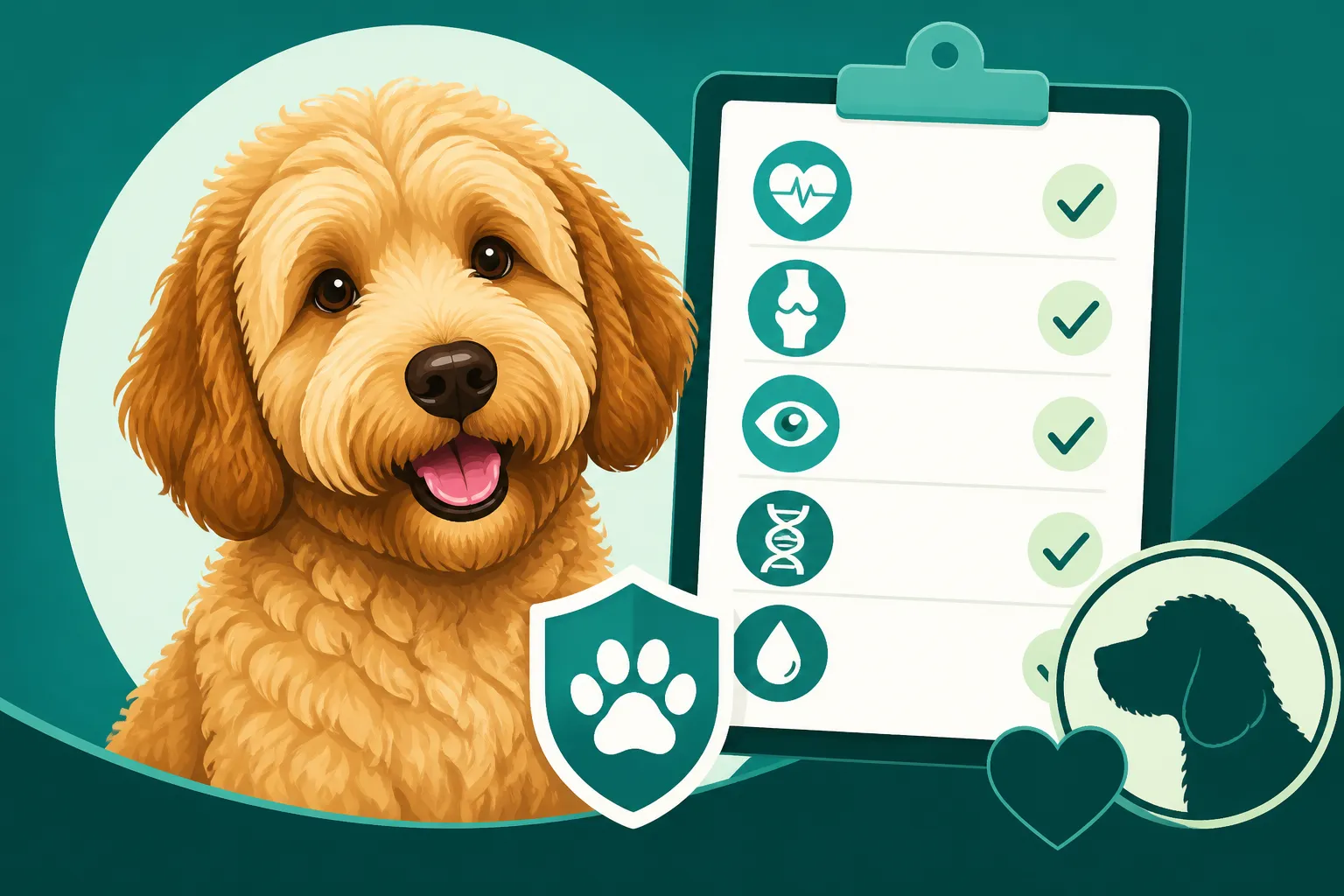
When you're speaking with a prospective breeder, these are the non-negotiable health tests they should be able to provide clear documentation for, for both the mother and father of your potential puppy. Don't be shy about asking for proof; a good breeder will be proud to show you.
Hip and Elbow Dysplasia Screenings
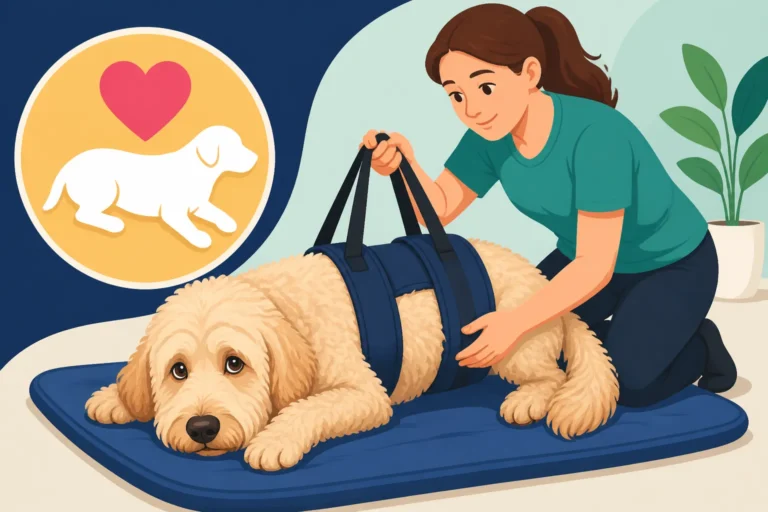
Hip and elbow dysplasia are unfortunately common orthopedic conditions in larger, active breeds like Labradors and Poodles, and therefore, Labradoodles. These conditions involve malformation or laxity in the hip and elbow joints, leading to pain, arthritis, and sometimes debilitating lameness. It's truly heartbreaking to watch an active dog struggle to move because of joint pain.
Reputable breeders utilize certifications from organizations like the Orthopedic Foundation for Animals (OFA) or PennHIP to screen their breeding stock. OFA certifications range from Excellent to Fair, with breeders aiming for Good or Excellent. PennHIP provides a distraction index, a numerical score indicating the degree of hip laxity. Both are crucial indicators. When you're looking at a breeder's information, make sure both parents have passing scores. Don't just take their word for it; ask to see the official certificates. Understanding What OFA Grades Mean on a Labradoodle is important, as is ensuring Whether Both Labradoodle Parents Need OFA Hips to mitigate risk. These tests are essential to help ensure your Labradoodle has the best chance at a long, active life without the agony of severe joint issues, especially considering the significant size of many dogs, with Hips and Elbows in a Sixty Pound Labradoodle being a major consideration.
Eye Conditions: prcd-PRA and Other Ocular Health
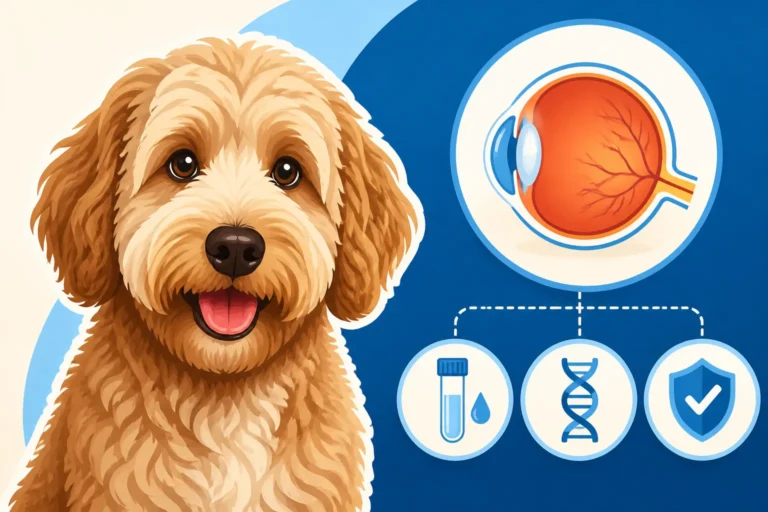
Vision is precious, and losing it is devastating for any dog. Labradoodles are susceptible to certain inherited eye conditions, most notably progressive retinal atrophy (prcd-PRA). This genetic disease gradually degenerates the retina, leading to night blindness and eventually complete blindness.
For prcd-PRA, a simple DNA test can determine if a dog is Clear, a Carrier, or Affected. A responsible breeder will only breed Clear dogs, or breed a Clear dog with a Carrier, ensuring no puppy will ever be Affected. You'll want to see documentation showing both parents are Clear, or at least one is Clear and the other is a Carrier (never two Carriers, as this can produce Affected puppies). This is why The prcd-PRA Test Both Labradoodle Parents Need is so critical. Beyond prcd-PRA, breeders should also have current eye certifications (often done annually by a veterinary ophthalmologist) to check for other conditions like juvenile cataracts. These screenings help prevent conditions like The Progressive Retinal Atrophy Labradoodles Are Tested For and spot early signs of issues such as Cataracts in a Middle Aged Labradoodle.
Exercise-Induced Collapse (EIC) Testing
Imagine your energetic Labradoodle puppy, full of life, suddenly collapsing after a vigorous play session. This terrifying scenario is precisely what Exercise-Induced Collapse (EIC) looks like. EIC is a genetic neuromuscular disorder common in Labrador Retrievers and, consequently, Labradoodles. Affected dogs appear normal at rest but, after 5-20 minutes of strenuous exercise, can develop weakness, incoordination, and even collapse.
Thankfully, there's a DNA test for EIC that identifies if a dog is Clear, a Carrier, or Affected. Like with prcd-PRA, responsible breeders avoid breeding two Carriers together to prevent Affected puppies. They will show you proof that their breeding dogs are either Clear or a Carrier bred to a Clear dog. Understanding Exercise Induced Collapse and the Labradoodle's Labrador Half and recognizing What a Labradoodle Collapse Episode Looks Like can help you understand the importance of this specific test, which targets The DNM1 Mutation Behind Labradoodle Collapse.
Von Willebrand Disease (vWD)
Von Willebrand Disease is an inherited bleeding disorder that can range from mild to severe. Dogs with vWD lack a specific protein necessary for proper blood clotting. This means they can bleed excessively after injuries, during surgery, or even from minor cuts. While not always life-threatening, it can be a significant concern, especially if your dog ever needs surgery.
Like many other genetic conditions, vWD can be identified through DNA testing, classifying dogs as Clear, Carrier, or Affected. A conscientious breeder will be able to show you results for both parents, demonstrating they are not at risk of passing on this serious condition to their puppies. This test is a crucial one, as it directly impacts Von Willebrand's Bleeding in a Labradoodle.
Addison's Disease
Addison's Disease, or hypoadrenocorticism, is an endocrine disorder where the adrenal glands don't produce enough hormones. It's more common in Poodles than Labradors, making it a concern for Labradoodles. The symptoms can be vague and mimic many other conditions – lethargy, vomiting, diarrhea, lack of appetite – making it notoriously difficult to diagnose. Left untreated, it can lead to a life-threatening "Addisonian crisis."
While there isn't a direct DNA test that predicts Addison's in the same way as EIC or prcd-PRA, there are efforts to identify genetic markers. What's most important is that a responsible breeder tracks the health of their lines and is transparent about any incidence of Addison's in their dogs or their puppies' relatives. If a breeder has a history of this in their lines, they should be able to discuss how they are working to minimize its occurrence through careful selective breeding. Familiarizing yourself with Addison's Disease a Labradoodle Inherits From the Poodle and understanding The Vague Signs of Addison's in a Labradoodle are good steps for any prospective owner.
What Breeders Should Provide and How to Verify
It's one thing for a breeder to say their dogs are health tested, and another entirely for them to prove it. A transparent, ethical breeder will not only provide proof but welcome your questions about it.
Asking for Proof: Beyond Just Words
Never, ever accept a breeder's verbal assurance alone. Always ask for the actual health certificates and documentation for both parent dogs. These documents will clearly state the registered name of the dog, its breed, date of birth, and the results of the specific health test. For OFA, it will be a certificate with a stamped seal. For DNA tests, it will be a report from the testing laboratory (e.g., Paw Print Genetics, Embark, Animal Genetics).
A responsible breeder understands that you, as a potential new family member, need to feel secure in your decision. They should be able to provide copies of these documents digitally or in person. If a breeder hedges, says the vet has them, or makes excuses, consider that a major red flag. This isn't just paperwork; it's a commitment to the health of the puppies they produce. Many responsible owners also understand that even with the best health testing, unforeseen issues can arise, which is why they often look into pet insurance providers like Healthy Paws, who understand the value of a comprehensive health history and offer comprehensive coverage.
Understanding "Clear by Parentage"
Sometimes, a breeder might tell you a puppy or a parent dog is "clear by parentage" for certain genetic conditions. What does this mean? It means that if both of the parent's parents (i.e., the grandparents of the puppy) were tested and found to be Clear for a specific genetic condition, then their offspring (your puppy's parent) will also be Clear, as they could not have inherited the gene from either side.
While "clear by parentage" is generally acceptable for recessive genetic conditions, it's critical to verify the grandparent's test results. Don't just accept "clear by parentage" at face value without seeing the actual documentation for the grandparents. It saves the breeder money on testing, but it requires you to do your due diligence and ensure the claims are backed up. Furthermore, it's usually only valid for one generation. If a dog is "clear by parentage," but then goes on to breed, its offspring cannot automatically be deemed clear by parentage without verifying the tests of both of its parents. For a deeper dive, consider understanding Whether a Labradoodle Clear by Parentage Still Needs Testing.
The Role of Registries and Health Databases
While the Labradoodle is not recognized by major kennel clubs like the AKC, the individual parent breeds (Labrador and Poodle) are. Their health test results are often recorded in public databases. For example, OFA results for hips, elbows, and eyes are publicly searchable by a dog's registered name or OFA number. This transparency allows you to independently verify the information a breeder provides.
Many ethical breeders participate in breed-specific health databases or collaborate with organizations that track the health of Doodle breeds, ensuring accountability. They’ll usually list the OFA CHIC (Canine Health Information Center) number, which indicates a dog has had all the recommended health screenings for its breed. This kind of transparency is a hallmark of a breeder who genuinely cares about their lines and the health of the puppies they produce.
Here’s a quick overview of the key health tests and what they target:
| Health Condition | Test Type | What It Screens For | Org. / Database Examples | Why It Matters for Labradoodles |
|---|---|---|---|---|
| Hip Dysplasia | X-ray Evaluation | Malformation of hip joints, leading to arthritis & pain | OFA, PennHIP | Common in both parent breeds; impacts mobility and quality of life for a large, active dog. |
| Elbow Dysplasia | X-ray Evaluation | Malformation of elbow joints, leading to lameness & pain | OFA | Also common in parent breeds; causes chronic pain and limits physical activity. |
| Progressive Retinal Atrophy (prcd-PRA) | DNA Test | Degeneration of retina leading to blindness | OptiGen, Paw Print Genetics | Inherited from Poodles; prevents heartache of a dog losing its sight. |
| Exercise-Induced Collapse (EIC) | DNA Test | Neuromuscular disorder causing collapse after exercise | Paw Print Genetics, Embark | Inherited from Labradors; crucial for active dogs to prevent dangerous episodes. |
| Von Willebrand Disease (vWD) | DNA Test | Bleeding disorder affecting blood clotting | Paw Print Genetics, Embark | Inherited from Poodles; important for preventing excessive bleeding during injuries or surgeries. |
| Addison's Disease | Health History / Genetic Markers | Adrenal gland insufficiency | (Breeder tracking) | More prevalent in Poodles; difficult to diagnose, but breeders should track incidence in lines. |
| Annual Eye Exam (CAER/CERF) | Opthalmologist Exam | Checks for cataracts, retinal folds, other eye issues | OFA (CAER) | Screens for non-DNA related eye conditions that can also impact vision. |
The Bigger Picture: Beyond Genetic Tests
While genetic tests are undeniably foundational, a truly responsible breeder considers much more than just DNA panels. They’re investing in the overall well-being of their dogs, ensuring that they are healthy in every sense of the word.
Comprehensive Vet Checks and Early Socialization
Beyond the specific genetic tests, a good breeder will ensure their breeding dogs receive regular, comprehensive veterinary care, including annual check-ups, vaccinations, and parasite prevention. They will also make sure that their puppies are thoroughly vet-checked, dewormed, and given their first set of vaccinations before going to their new homes. This isn't just about avoiding illness; it’s about giving your puppy the strongest start possible.
Furthermore, a responsible breeder doesn't just focus on physical health. They also prioritize the mental and emotional well-being of their puppies through early socialization. This means exposing puppies to a variety of sights, sounds, people, and experiences in a positive way, helping them grow into well-adjusted, confident adult dogs. A breeder who focuses on temperament and early enrichment is setting their puppies up for success in their future homes, reducing the likelihood of behavioral issues that can be just as challenging as physical ailments.
What to Look for in a Responsible Breeder
Finding a responsible Labradoodle breeder isn't just about ticking boxes on health tests; it's about finding someone ethical, transparent, and genuinely passionate about the breed. They will be open about their breeding practices, eager to answer your questions, and willing to show you where their dogs live. They’ll likely have a comprehensive contract that outlines health guarantees and their responsibilities, as well as yours.
Beware of breeders who have multiple litters simultaneously, can't tell you much about the specific temperaments or health histories of their individual dogs, or refuse to let you meet the puppy's parents (especially the mother). These are red flags that could indicate a puppy mill or a backyard breeder who is cutting corners, potentially sacrificing the health and well-being of their dogs for profit. A responsible breeder understands that even a well-bred puppy needs ongoing care, and they'll be happy to discuss things like diet, exercise, and even pet insurance options, with companies like Healthy Paws offering plans that can cover a wide range of potential future needs, helping you budget for the unexpected. When you choose a puppy from parents with verified health tests, you are making a commitment to a happier, healthier future for your Labradoodle, and increasing the likelihood that Whether Health Tested Parents Add Years to a Labradoodle.
By taking the time to understand these vital health tests and seeking out a breeder who prioritizes them, you're not just buying a puppy; you're investing in a lifetime of joy and companionship with a healthy, happy Labradoodle.
Disclaimer
The information provided in this article is for general informational purposes only and does not constitute veterinary advice. Always consult with a qualified veterinarian for any health concerns or before making any decisions about your pet's medical care.