Which Labradoodle Tests Can Be Done at Eight Weeks
Bringing home a new Labradoodle puppy is an incredibly exciting time, but it often comes with a heap of questions and a little bit of anxiety, especially when you start digging into all the health considerations. One common worry I hear from new owners is about getting all the right health checks done as early as possible. You want to give your fluffy companion the very best start, and that often means wondering, "Which Labradoodle tests can be done at eight weeks?" It’s a completely valid question, and the truth is, while some things can be assessed early, many critical health screenings actually need to wait. This guide is here to walk you through exactly what can and can’t realistically be tested on your eight-week-old Labradoodle puppy, helping you understand what to expect and how to prepare for their long-term health journey.
Understanding Puppy Health Screens at Eight Weeks
It’s completely natural to want a crystal-clear picture of your new puppy’s health the moment they join your family. The urge to get every possible test done, to ensure no hidden surprises, is powerful. However, when it comes to an eight-week-old Labradoodle, the scope of what can be definitively tested is often much narrower than what many first-time owners might imagine. Their little bodies are still growing at an incredible pace, and many conditions simply haven't had the chance to manifest, or the diagnostic tools aren't yet appropriate for their developing systems.
The Reality of Early Puppy Testing
Let's manage expectations right away. Most comprehensive genetic and orthopedic tests, the kind that give you a deep dive into potential inherited conditions, are typically not performed at eight weeks of age. This isn't because veterinarians are trying to withhold information, but because a puppy's skeletal and organ systems are still incredibly immature. For instance, evaluating hip or elbow dysplasia, which we'll discuss more later, requires fully developed joints, and an eight-week-old puppy simply doesn't have them yet. Their bones are soft, cartilage is plentiful, and growth plates are wide open. Any X-rays taken at this age wouldn't provide reliable information about their adult joint structure.
What is typically done by a responsible breeder, and absolutely should be a prerequisite for bringing your puppy home, is a thorough general veterinary check-up. This isn't a "test" in the sense of a genetic panel, but it's a critical foundational assessment of your puppy's immediate physical health. It's about ensuring they are robust enough to go to their new homes and that there are no obvious, urgent medical concerns. It's frustrating when you want certainty, but patience is often key when dealing with a growing puppy.
What a Vet Exam at Eight Weeks Does Cover
A standard veterinary examination for an eight-week-old Labradoodle puppy is remarkably comprehensive in its own way, focusing on visible health and immediate concerns. Your veterinarian will perform a hands-on physical exam, checking for a whole host of things that indicate overall wellness.
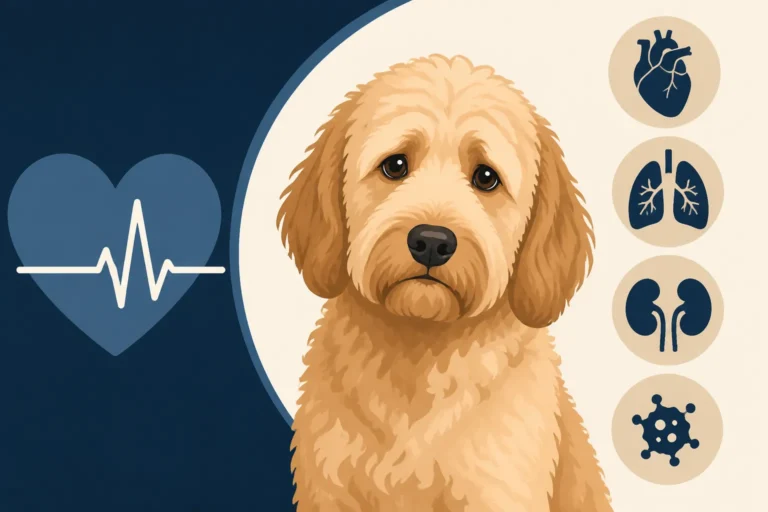
They'll listen to your puppy's heart and lungs to detect any murmurs, irregular rhythms, or signs of respiratory issues. They'll examine the eyes for any discharge, redness, or signs of vision problems, and check the ears for infections, mites, or excessive wax buildup, which can be particularly important for a breed prone to ear issues. The mouth will be inspected for proper tooth alignment – though puppy teeth are temporary – and to ensure there are no cleft palates. They’ll also palpate the abdomen to feel for any abnormalities in the internal organs and check for umbilical hernias, a common, usually minor, concern in puppies where a small bulge may be present near the belly button. For male puppies, the vet will confirm that both testicles have descended into the scrotum; cryptorchidism (undescended testicles) is something breeders and vets watch for early on.
Beyond the physical exam, a fecal test is almost always performed at this age to check for common intestinal parasites like roundworms, hookworms, coccidia, and giardia. Puppies are highly susceptible to these, and early detection and treatment are crucial for their health and preventing spread. Vaccinations appropriate for their age will also be administered, setting them on the path to immunity against serious diseases. This foundational vet visit, while not testing for complex inherited diseases, is absolutely vital for ensuring your Labradoodle puppy is healthy enough for the transition to your home.
Genetic Testing: What's Possible and What's Not at Eight Weeks
The world of canine genetic testing has advanced by leaps and bounds, offering a fantastic tool for responsible breeders to screen their breeding stock. For a new puppy owner, it can be confusing to understand how these tests apply to your individual eight-week-old. The good news is, for many genetic conditions, the information is readily available, even if your puppy doesn't undergo the test themselves.
DNA Tests That Can Be Done Early
When we talk about DNA tests, we're talking about looking at your dog's genetic code, usually from a simple cheek swab or blood sample. The fantastic thing about DNA is that it doesn't change from birth to old age. This means that genetic tests for specific conditions can technically be performed at any age, including on an eight-week-old puppy. The results would be just as accurate as if the test were done on an adult dog.
For Labradoodles, there are several important genetic conditions to be aware of, inherited from their Labrador Retriever and Poodle parentage. These include:
- Progressive Retinal Atrophy (prcd-PRA): This is an inherited eye disease that can lead to blindness. A DNA test can identify if a dog is clear, a carrier, or affected. You can learn more about this in our article, "The prcd-PRA Test Both Labradoodle Parents Need".
- Exercise-Induced Collapse (EIC): Common in Labrador Retrievers, EIC causes affected dogs to lose muscle control during strenuous exercise. The DNA test for the DNM1 gene can determine a dog's status. For more details, check out "Exercise Induced Collapse and the Labradoodle's Labrador Half" and "The DNM1 Mutation Behind Labradoodle Collapse".
- Von Willebrand's Disease (vWD): This is a bleeding disorder that can lead to excessive bleeding after injury or surgery. It's inherited from the Poodle side. You can explore this further in "Von Willebrand's Bleeding in a Labradoodle".
- Degenerative Myelopathy (DM): A progressive neurological disease affecting the spinal cord, often seen in older dogs.
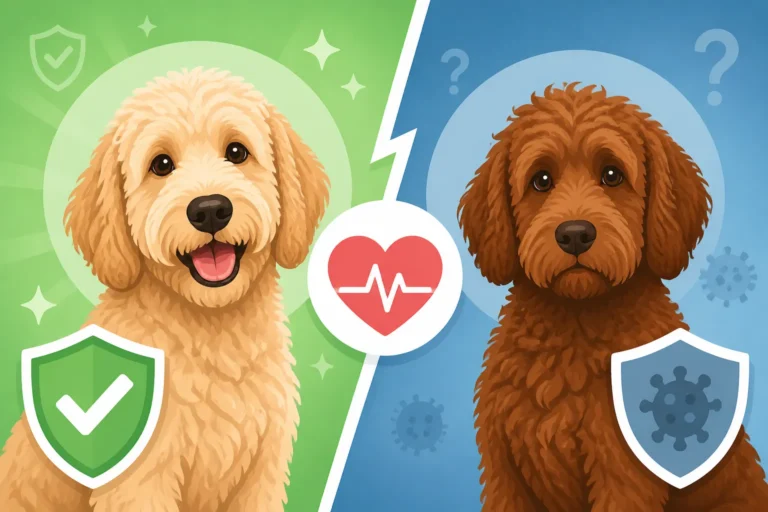
While a DNA test can be done on your 8-week-old puppy for these conditions, a responsible breeder should have already performed these tests on both parent dogs. This is the gold standard for preventing these diseases. If both parents are "clear" for a specific recessive genetic condition, then by definition, all their offspring will also be "clear by parentage" for that condition. This means you wouldn't necessarily need to test your individual puppy for it. However, if one or both parents were carriers, then testing the puppy could be useful to know if they are clear, a carrier, or affected.
Why Breeders Test Parents, Not Just Puppies
This brings us to a crucial point: responsible breeders focus their genetic testing efforts on their breeding stock, not just the puppies in a litter. The goal is to eliminate or reduce the risk of passing on known genetic diseases through careful mate selection. A breeder who has tested their parent dogs extensively can provide you with "clear by parentage" certificates for your puppy for many conditions, offering immense peace of mind without needing to poke and prod your tiny eight-week-old.
For example, if a breeder has both the dam (mother) and sire (father) tested and found them to be clear for prcd-PRA, then every single puppy in that litter will also be clear for prcd-PRA. No individual puppy test is needed for that specific condition. This proactive approach by the breeder saves you time, money, and unnecessary stress on your puppy. It also demonstrates a deep commitment to the health of their lines. When looking for a puppy, always ask to see the health certificates and genetic test results for both parents. This transparent practice is a hallmark of a good breeder and something that truly adds years to a Labradoodle's potential lifespan, as detailed in "Whether Health Tested Parents Add Years to a Labradoodle". You can also delve into "The Health Tests a Labradoodle Breeder Should Show" to understand what documentation to ask for.
Developmental Screens and Future Considerations
Beyond the immediate health check and genetic DNA tests, there's a whole category of health screenings that are vitally important for Labradoodles but simply cannot be performed on an eight-week-old puppy. These tests are typically developmental, meaning they require the puppy to reach a certain level of physical maturity before accurate results can be obtained. Understanding this timeline is crucial for planning your Labradoodle's long-term care.
Orthopedic Evaluations: A Waiting Game
One of the biggest areas of concern for many large and medium-sized breeds, including Labradoodles, is orthopedic health, particularly regarding their hips and elbows. Both Labrador Retrievers and Poodles can be prone to conditions like hip dysplasia and elbow dysplasia. These are complex conditions where the joints don't develop properly, leading to pain, arthritis, and mobility issues later in life.
The gold standard for evaluating these conditions involves radiographic (X-ray) examinations performed by organizations like the Orthopedic Foundation for Animals (OFA) or through PennHIP. These evaluations require specific positioning and anesthesia to get clear, diagnostic images. Crucially, these tests cannot be done accurately on an eight-week-old puppy. Why? Because their bones are still largely cartilage, their growth plates are wide open, and their joints haven't fully formed. The earliest that OFA will give a preliminary hip and elbow evaluation is 4 months, but the definitive certification isn't typically granted until the dog is at least 24 months (two years) old, as discussed in "Hips and Elbows in a Sixty Pound Labradoodle".
So, what does this mean for your eight-week-old puppy? It means you rely heavily on the breeder's due diligence. A responsible breeder will have ensured that both parent dogs received excellent OFA or PennHIP scores before breeding. You should always ask to see these certifications for the parents. Understanding "Whether Both Labradoodle Parents Need OFA Hips" is key here. Your role as an owner will be to provide appropriate nutrition and controlled exercise during their growth period to support healthy joint development, avoiding excessive impact or strenuous activity, especially during critical growth phases. Over-exercising a growing puppy can contribute to orthopedic problems, a topic we cover in depth in "The Exercise Limit for a Growing Labradoodle".
Other Health Concerns and Proactive Measures
While you're playing the waiting game for orthopedic evaluations, there are other important health conditions that Labradoodles can be prone to which don't have early puppy screens but require ongoing vigilance.
- Addison's Disease: This is an autoimmune disorder that affects the adrenal glands, more common in Poodles. Symptoms can be vague and mimic other conditions, and it often doesn't appear until a dog is older. There's no puppy test for it, but understanding its potential presence from the Poodle lineage is important. Our article "Addison's Disease a Labradoodle Inherits From the Poodle" offers more insight.
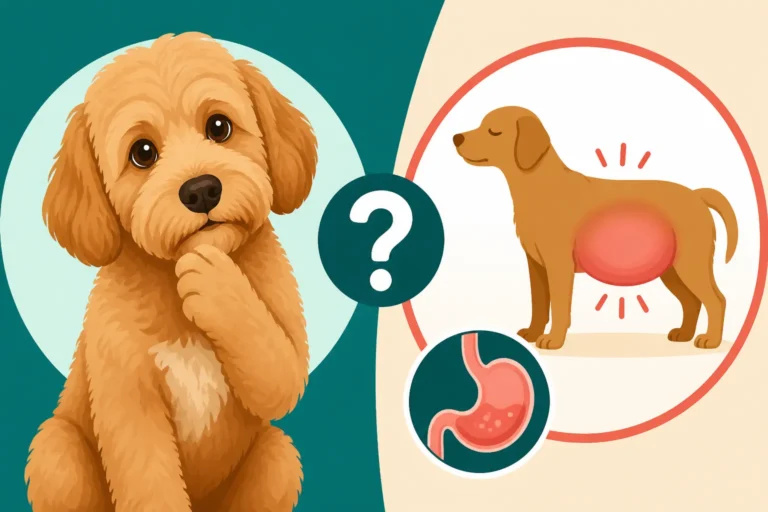
- Bloat (GDV): Gastric Dilatation-Volvulus is a life-threatening condition where the stomach twists. It's more common in deep-chested breeds, like the Standard Poodle, which contributes to a Labradoodle's risk profile. While there's no diagnostic test for bloat in puppies, knowing the risk factor and understanding preventative measures is crucial as your dog grows. You can read more about it in "Bloat Risk in a Standard Poodle Bred Labradoodle".
- Sebaceous Adenitis: A skin condition that also comes from the Poodle side, causing inflammation and destruction of the sebaceous glands, leading to hair loss and skin issues. Again, there's no early puppy test, but it's something to be aware of and watch for as they mature. Check out "Sebaceous Adenitis in a Labradoodle's Skin" for more information.
For all these conditions and general well-being, consistent, regular veterinary check-ups throughout your Labradoodle's life are absolutely paramount. Your vet is your best partner in monitoring their health, catching potential issues early, and providing guidance on nutrition, exercise, and preventative care. This long-term approach is where pet insurance can also play a vital role. Companies like Healthy Paws offer comprehensive coverage that can help offset the costs of unexpected illnesses or accidents as your Labradoodle grows. Starting a policy when they're young and healthy is often the best way to ensure maximum coverage should something arise later on. Having a safety net like Healthy Paws allows you to make healthcare decisions based on what's best for your dog, rather than solely on your wallet.
Interpreting Results and Moving Forward
Bringing home a new Labradoodle puppy is a commitment to their entire lifespan, and understanding the nuances of their health from day one, even if comprehensive testing isn't immediately possible, sets the stage for a wonderful life together.
What a "Clear by Parentage" Status Means
As we discussed, a key piece of information you should receive from your breeder regarding your eight-week-old Labradoodle puppy is their "clear by parentage" status for various genetic conditions. This isn't just a fancy phrase; it's a testament to responsible breeding practices and offers genuine peace of mind.
What it means, in plain terms, is this: if both the mother and the father of your puppy have been genetically tested and are found to be "clear" of a specific recessive genetic disease (meaning they do not carry any copies of the affected gene), then it is genetically impossible for their offspring to inherit two copies of that affected gene. Therefore, the puppy itself will be "clear" and will not develop that particular recessive genetic disease. It essentially means that the parents' health clearances extend to their puppies, negating the need for individual puppy testing for those specific conditions. This is a huge benefit and confirms that the breeder has taken proactive steps to produce healthy puppies. Always ask for the documentation that proves the parents' clear status for all relevant genetic tests.
It's important to remember that "clear by parentage" only applies to the specific tests performed on the parents. It doesn't mean the puppy is immune to all possible health issues, just that for those specific genetic conditions, you have a solid assurance.
Your Role as a New Labradoodle Parent
Beyond the initial health checks and genetic assurances, your journey as a Labradoodle parent is just beginning. Your ongoing commitment to their well-being will be the most significant factor in their health and happiness.
This includes providing consistent, high-quality nutrition tailored to their life stage and size. Labradoodle puppies grow rapidly, and feeding them a diet that supports healthy bone and joint development is crucial. Regular veterinary care, as they transition from puppyhood to adolescence and then adulthood, is non-negotiable. These routine visits allow your vet to monitor growth, administer booster vaccinations, and catch any emerging health concerns early.
Proper grooming is another cornerstone of Labradoodle care that directly impacts health. Their unique coats, whether fleece or wool, require diligent brushing and regular professional grooming to prevent painful matting and skin issues. Establishing a good grooming routine from a young age will make it a positive experience for your dog.
Finally, being prepared for the unexpected is part of responsible pet ownership. Even with the best breeding and care, health issues can arise. This is where pet insurance providers like Healthy Paws can be an invaluable partner. Enrolling your Labradoodle early ensures that you have financial support for unforeseen accidents, illnesses, or even chronic conditions that may develop over their lifetime, allowing you to focus on your dog's recovery without the added stress of crushing vet bills. Taking these proactive steps, from understanding early tests to planning for lifelong care, ensures you're giving your beloved Labradoodle the best possible chance at a long, healthy, and happy life.
Here’s a quick overview of testing at eight weeks:
| Test Type | Can Be Done at 8 Weeks? | Why/Why Not |
|---|---|---|
| Physical Exam | YES | Crucial for assessing immediate health: heart, lungs, eyes, ears, palpation. |
| Fecal Exam | YES | Essential for detecting and treating common puppy parasites. |
| DNA Tests | YES (if needed) | Genetic material is constant. Usually done on parents; puppies are "clear by parentage" if parents are clear. |
| Hip/Elbow X-rays | NO | Joints are too immature; definitive results require the dog to be 24 months old. |
| Thyroid Panel | NO | Thyroid issues typically manifest later in life. |
| Addison's Test | NO | Symptoms and diagnostic tests are for more mature dogs; appears later in life. |
| Eye Certification (CAER) | NO (usually done at 8+ weeks, but depends on specific breeder/vet) | While some initial eye checks happen, full ophthalmologist certification is often done later, or on parents. |
Disclaimer
This article is for general informational purposes only and does not constitute professional advice. Laws, prices and regulations vary by location and change over time. Consult a qualified professional for guidance on your specific situation.