Whether an F1 Labradoodle Is Less Likely to Get Addison’s
It's a really common hope among potential Labradoodle owners that getting an F1 generation dog – the very first cross between a purebred Labrador Retriever and a purebred Standard Poodle – will magically make them healthier and immune to some of the genetic conditions that can plague either parent breed. When it comes to something as serious and often tricky to diagnose as Addison's disease, it’s completely understandable to want every possible advantage. Let's dig into whether that F1 status truly offers a significant shield against this particular illness.
Understanding Addison's Disease in Labradoodles
Addison's disease, also known as hypoadrenocorticism, is one of those frustrating conditions that can be incredibly difficult to pinpoint, often masquerading as other ailments before a crisis hits. It's a real concern for many Doodle owners, and for good reason.
What is Addison's Disease?
At its heart, Addison's disease is a hormonal disorder. It happens when your dog's adrenal glands, which are tiny but mighty glands located near their kidneys, stop producing enough of certain vital hormones. Specifically, we're talking about glucocorticoids (like cortisol, often called the "stress hormone") and mineralocorticoids (like aldosterone, which regulates electrolytes). Without enough of these, the body's internal balance goes completely out of whack. It's not a common disease overall, but certain breeds, including the Standard Poodle, are known to have a higher predisposition, and since the Poodle is one half of our beloved Labradoodle, it's a condition we need to be aware of.
Imagine your body trying to deal with daily stress, regulate its blood sugar, and keep its fluid and electrolyte levels in check without the right chemical messengers. That's essentially what happens to a dog with Addison's. It's a serious condition that, left untreated, can be life-threatening. The good news is that once diagnosed, it's typically very manageable with lifelong medication, allowing dogs to live full, happy lives.
Recognising the Subtle Signs of Addison's
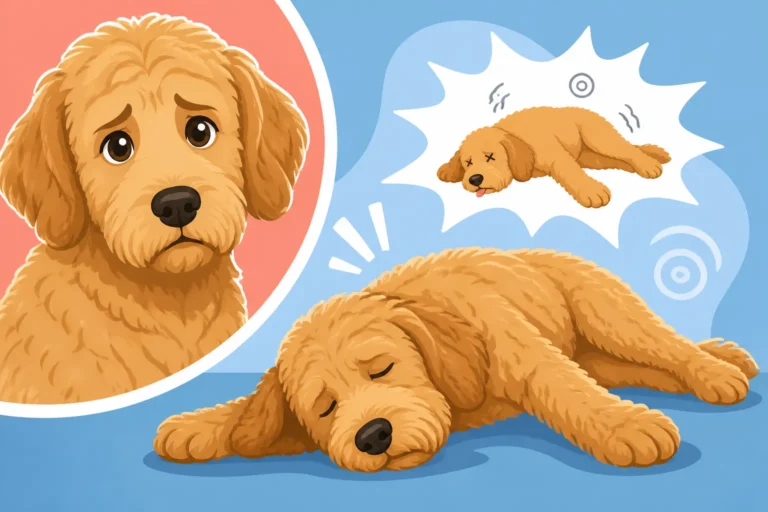
This is where Addison's really earns its reputation as "the great imitator." The signs can be incredibly vague and often come and go, making it easy to dismiss them as a passing upset stomach or just a "bad day." Owners might notice their Labradoodle seems a bit lethargic, perhaps less enthusiastic about walks or playtime than usual. They might have intermittent vomiting or diarrhea, which could be mistaken for dietary indiscretion. Some dogs might experience a loss of appetite, leading to weight loss over time. Muscle weakness, trembling, or even an increased thirst and urination can also be subtle indicators.
What makes it particularly insidious is the "waxing and waning" nature of these symptoms. One day your dog seems fine, the next they're off, then they perk up again, making you question if anything was ever truly wrong. This pattern often makes owners delay a vet visit or leads to misdiagnoses initially. However, it's crucial to pay attention, especially if these vague symptoms seem to get worse during times of stress. If you’ve noticed any of these concerning trends, it's always best to consult your vet sooner rather than later. For a more in-depth look at what to watch out for, check out our guide on The Vague Signs of Addison's in a Labradoodle.
In some severe cases, a dog can go into an "Addisonian crisis," which is a sudden, life-threatening collapse. This happens when the adrenal glands completely fail, causing severe shock, dehydration, and electrolyte imbalances. These are true emergencies, requiring immediate veterinary intervention.
Diagnosing and Managing Addison's
Because the symptoms are so non-specific, getting an Addison's diagnosis often involves a bit of detective work from your vet. They'll start with a thorough physical exam and usually recommend routine blood work. While general blood tests might show some suggestive changes, such as electrolyte imbalances (high potassium and low sodium) or kidney changes, these aren't definitive.
The gold standard for diagnosing Addison's is a specific test called the ACTH (adrenocorticotropic hormone) stimulation test. This test measures the adrenal glands' ability to respond to a stimulating hormone. If the adrenals don't respond as they should, it confirms the diagnosis. It’s a straightforward procedure that gives a clear answer, removing the guesswork. Learning about How Addison's Is Diagnosed in a Labradoodle can help you understand the process better.
Once diagnosed, Addison's disease is managed with lifelong medication. Most dogs will need daily oral corticosteroids (like prednisone) to replace the missing glucocorticoids, and often monthly injections of desoxycorticosterone pivalate (DOCP, like Zycortal or Percorten-V) to replace the mineralocorticoids. It sounds daunting, but with the right medication regimen, dogs with Addison's can lead completely normal, active lives. It truly is amazing how well they respond once their hormones are balanced. Our article on Life on Daily Medication for an Addisonian Labradoodle delves deeper into what living with an Addisonian dog entails. It’s certainly a commitment, but one that is incredibly rewarding.
The Genetics Behind Addison's Disease
Understanding the genetic underpinnings of Addison's is key to appreciating why the "F1" label isn't necessarily a get-out-of-jail-free card. It's a complex puzzle involving multiple genes and environmental factors.
The Role of Heritability
Addison's disease is widely recognized as having a strong hereditary component, especially in certain breeds. The Standard Poodle, one of the Labradoodle's foundational breeds, is indeed one of the breeds with a higher incidence of Addison's. This means that genetic predispositions are passed down from parent to offspring. It's not like catching a cold; it's something that's woven into the dog's genetic code, making them more susceptible.
When we talk about heritability, it’s not always a simple dominant or recessive gene where you either have it or you don’t. For many complex diseases, it’s more about a collection of genes that increase the risk rather than guaranteeing the disease. This makes breeding to eliminate it a significant challenge for even the most dedicated breeders. If a Poodle parent carries these genetic risk factors, those factors are absolutely passed on to their Labradoodle puppies. This is precisely why it’s so vital to consider Addison's Disease a Labradoodle Inherits From the Poodle when selecting a puppy.
Complex Inheritance Patterns
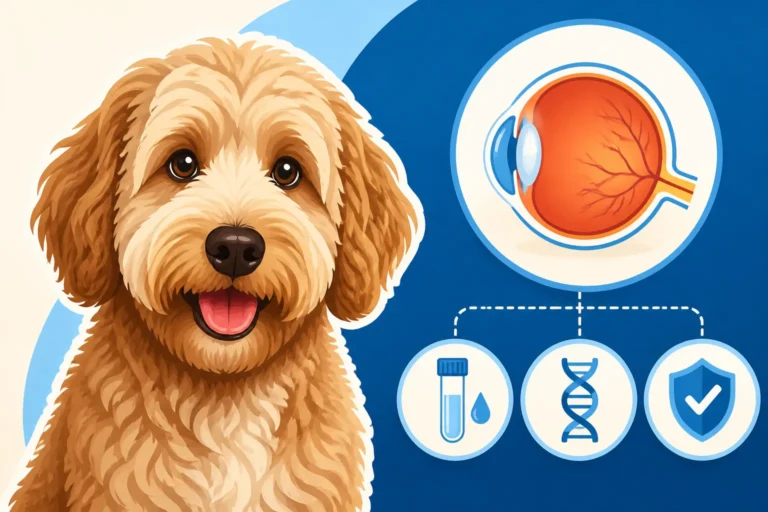
Unlike some straightforward genetic diseases that can be screened for with a single DNA test (like Progressive Retinal Atrophy or Exercise Induced Collapse), Addison's disease typically has a complex, polygenic inheritance pattern. This means that multiple genes, possibly interacting with environmental factors, contribute to a dog's susceptibility. There isn't one "Addison's gene" that breeders can easily test for and eliminate from their lines, which makes responsible breeding for this condition particularly challenging.
Because it's polygenic, a dog might inherit some risk genes from one parent and more from the other, building up their overall susceptibility. This complexity is why even dogs with no immediate family history of Addison's can sometimes develop it, if they happen to inherit a problematic combination of genes from their otherwise healthy parents. It's like a genetic lottery where having certain tickets increases your odds, but doesn't guarantee a win or a loss.
The Impact of Poodle Lines on Labradoodle Health
Given the Poodle's known predisposition to Addison's, the Poodle half of the Labradoodle equation plays a significant role in the offspring's potential risk. A responsible Poodle breeder will be keenly aware of Addison's in their lines and actively work to reduce its incidence through careful breeding choices, but even then, the risk isn't entirely eliminated due to the complex inheritance.
If a Standard Poodle used in an F1 Labradoodle cross comes from a line with a known history of Addison's, then the Labradoodle puppies will inherent that genetic predisposition. The Labrador Retriever parent typically has a much lower incidence of Addison's, but they aren't entirely immune to autoimmune conditions themselves. Therefore, if the Poodle parent carries a higher genetic load for Addison's, those genes are definitely going to be present in the F1 Labradoodle. This is a critical factor for prospective owners to consider, regardless of generation.
F1 Labradoodles and Addison's Risk
This is where the rubber meets the road for our specific question. Does being an F1 Labradoodle really make a difference when it comes to Addison's? It's a nuanced answer that often gets simplified.
Defining an F1 Labradoodle
Let's clarify what we mean by an F1 Labradoodle. An F1 Labradoodle is a first-generation cross, meaning one parent is a purebred Labrador Retriever and the other is a purebred Standard Poodle. This is the very first step in creating the Labradoodle cross. Their genetic makeup is, theoretically, 50% Labrador and 50% Poodle.
These dogs are often sought after because they represent the initial "hybrid" and are sometimes perceived as having the most robust health due to something called hybrid vigor. They can exhibit a wide range of coat types, shedding levels, and temperaments, combining traits from both parent breeds in sometimes unpredictable ways. It's an exciting combination, but one where the health outcomes are deeply tied to the health of the individual parents.
The Theory of Hybrid Vigor Heterosis
The concept of hybrid vigor, or heterosis, is a fascinating one in genetics. It essentially suggests that when you cross two genetically distinct purebred lines, the first-generation offspring can sometimes be healthier, more robust, and have a reduced incidence of certain genetic diseases compared to their purebred parents. This is thought to occur because the offspring inherit a more diverse set of genes, which can mask or dilute the expression of recessive genes for diseases that might be present in a single purebred line. You can read more about this in Whether Hybrid Vigor Is Real in a Labradoodle.
For example, if a purebred line carries a specific recessive gene for a disease, and that gene is relatively common within that line, breeding within that line increases the chance of producing offspring with two copies of the recessive gene, leading to the disease. However, if you cross that purebred with another purebred that doesn't carry that specific recessive gene (or carries it at a much lower frequency), the offspring are less likely to inherit two copies of the problematic gene and thus less likely to develop the disease. This is the theoretical advantage of the F1 cross.
Why F1 Might Seem Less Prone to Addison's (and why it's not guaranteed)
Based on the principle of hybrid vigor, an F1 Labradoodle could theoretically be less prone to some simple recessive genetic diseases, especially if one parent breed rarely carries the gene and the other does. However, for a complex, polygenic condition like Addison's disease, the situation is far less clear-cut, and the F1 status is by no means a guarantee of immunity.
Here's why:
- It depends on the individual parents: The actual risk for an F1 Labradoodle largely hinges on the genetic health of the specific Labrador Retriever and Standard Poodle parents used in the cross. If the Poodle parent comes from a line with a strong history of Addison's, and carries a significant number of the predisposing genes, those genes will be passed on to the F1 Labradoodle puppies. While the Labrador parent might dilute some of that genetic load, it doesn't necessarily eliminate the risk entirely, especially for a condition involving multiple genes.
- Polygenic nature: Since Addison's isn't typically caused by a single recessive gene, hybrid vigor's protective effect is less potent. It's not about hiding one bad gene; it's about the accumulation of multiple risk factors. An F1 dog can still inherit enough of these problematic genes from both sides (even if one parent's contribution is smaller) to develop the condition.
- Carrier status: An F1 Labradoodle can still be a carrier of genetic predispositions for Addison's, even if they don't develop the disease themselves. This is a crucial point for future breeding, though most F1 Labradoodles are spayed/neutered.
- No "magic bullet": The F1 designation is not a magic shield against all genetic diseases. It might reduce the incidence of some conditions where one parent breed is particularly prone and the other is almost completely clear, but for a condition like Addison's that has some prevalence in the Poodle, it's more about careful selection of parentage than simply relying on the generation number.
In essence, while the idea of hybrid vigor is appealing, it's not a blanket protection, especially against complex inherited diseases. A poorly bred F1 Labradoodle from parents with significant health issues in their lines is likely to be at higher risk for Addison's than a carefully bred F2 or multigen Labradoodle whose parents have extensive health clearances and come from lines known to be clear of the disease. The health of the parent dogs always trumps the generation label.
Crucial Steps for Minimizing Addison's Risk in Any Labradoodle
Regardless of whether you're looking at an F1, F1b, or multigen Labradoodle, there are proactive steps you can take to minimize the risk of Addison's disease and other inherited conditions. Your due diligence as a prospective owner is paramount.
Prioritizing Health Testing in Parent Dogs
This cannot be stressed enough: choose a breeder who performs comprehensive health testing on their parent dogs. For Addison's disease specifically, while there isn't a single definitive DNA test that clears a dog, breeders should be tracking the health history of their lines meticulously. This means knowing if Addison's has appeared in any of the Poodle or Labrador ancestors. They should be transparent about this information.
Beyond Addison's, reputable breeders will also perform screenings for other common Labradoodle health concerns, such as hip and elbow dysplasia, eye diseases (like PRA), and thyroid issues. These tests provide a snapshot of the parents' health and demonstrate the breeder's commitment to producing healthy puppies. Asking to see these certifications, such as OFA or PennHIP for hips, and CERF/CAER eye exams, is a non-negotiable step. For a full rundown, refer to The Health Tests a Labradoodle Breeder Should Show. Without these foundational clearances, you're essentially buying a puppy blind.
Researching Breeder Lines
Don't just take a breeder's word for it. A truly responsible breeder will be happy to discuss the health history of their dogs' lineage, often going back several generations. Ask specific questions: Has Addison's ever appeared in your Poodle lines? What about autoimmune diseases in general? What steps do you take to mitigate these risks? How often do you introduce new bloodlines, and what is their health history?
You're looking for transparency and a genuine understanding of canine genetics and health from your breeder. They should be able to articulate their breeding philosophy and how they select their breeding dogs. If a breeder is evasive, deflects questions, or claims their dogs are "100% healthy" without providing verifiable proof, that's a major red flag. This kind of thorough research helps you understand the genetic landscape of your potential puppy.
The Importance of a Health Guarantee
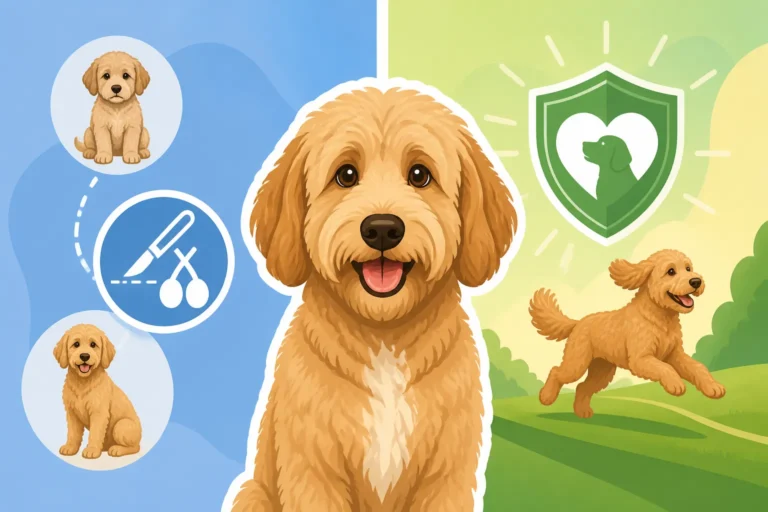
A good health guarantee isn't just a piece of paper; it's a reflection of a breeder's confidence in the health of their puppies and their commitment to you as a buyer. While no breeder can guarantee a dog will never get sick, a responsible breeder will offer a guarantee against serious inherited diseases, often for the first one to two years of the puppy's life.
For conditions like Addison's, a guarantee might mean the breeder will offer a replacement puppy or a partial refund if the condition develops within the guaranteed period. It's a layer of protection for you and an incentive for the breeder to continue striving for healthy lines. Always read the health guarantee carefully and understand its terms before committing to a puppy. Our article on What a Labradoodle Health Guarantee Actually Covers can help you navigate this important document. Having pet insurance, like a plan from Healthy Paws, is also an excellent idea to cover unexpected veterinary costs, especially for conditions that might arise outside of a breeder's guarantee period or for emergency situations like an Addisonian crisis, which can be incredibly costly. You might want to consider arranging care credit before a Labradoodle bloats, but it can also assist with other emergencies.
In conclusion, while the F1 generation of Labradoodles might offer some benefits in terms of genetic diversity for certain conditions, it's not a silver bullet against Addison's disease. The complex, polygenic nature of Addison's means that individual parent health and diligent breeding practices are far more important than the simple "F1" label. Always prioritize working with a transparent breeder who health tests extensively and is open about their dogs' lineage.
F1 Labradoodle vs. Addison's Risk: Perception vs. Reality
| Feature | Common Perception of F1 Labradoodles | Reality Regarding Addison's Disease |
|---|---|---|
| Hybrid Vigor | F1s are inherently healthier due to "hybrid vigor," making them immune to genetic diseases. | Hybrid vigor can reduce the incidence of some simple recessive genetic diseases, but it doesn't eliminate all risks, especially for complex, polygenic conditions like Addison's. It's not a magic shield. |
| Addison's Risk | F1 Labradoodles are less likely to get Addison's because of the Labrador influence. | The risk is primarily influenced by the Poodle parent's genetic lines. If the Poodle parent carries genetic predispositions for Addison's, these will be passed to the F1 offspring. The Labrador side may dilute, but not eliminate, the risk. |
| Genetic Testing | F1 status means you don't need to worry as much about genetic disease testing. | Health testing of both parent dogs for all relevant conditions (including a thorough understanding of Addison's history in Poodle lines) is crucial, regardless of generation. |
| Breeder Choice | Any F1 breeder will produce a healthier dog. | The quality of the breeder, their health testing protocols, and their transparency about ancestral health history are far more important than the "F1" label itself. Responsible breeding is key. |
| Prevention | Just getting an F1 is enough to prevent Addison's. | While hybrid vigor can be beneficial, the most effective prevention lies in careful selection of breeding stock, extensive health screening of parents, and understanding the specific genetic predispositions in their lines. |
Disclaimer
This article is for general informational purposes only and does not constitute professional advice. Laws, prices and regulations vary by location and change over time. Consult a qualified professional for guidance on your specific situation.