What to Ask a Groomer For on a Labradoodle
Walking into a new groomer with your beloved Labradoodle can feel a little like stepping into uncharted territory. You want your furry companion to look their best and be comfortable, but the specific lingo and options can be confusing, especially with a breed known for its diverse coat types. This guide aims to demystify the conversation, empowering you to ask the right questions and ensure your groomer understands exactly what your Labradoodle needs, from a simple trim to a full styling session.
Understanding Your Labradoodle's Coat Type Before You Call the Groomer
Before you even pick up the phone to book an appointment, having a clear understanding of your Labradoodle's coat type is going to be your secret weapon. This isn't just about aesthetics; it directly impacts how often your dog needs grooming, what kind of tools are best, and what styles are truly achievable without causing discomfort. Different coats mat differently, shed differently, and even respond to washing and drying in unique ways.
Identifying Hair, Fleece, and Wool Coats
Labradoodles notoriously come in a range of coat types, thanks to their mixed heritage. The three main categories you'll hear about are "hair," "fleece," and "wool." A hair coat is often the least common in multi-generational Labradoodles but can appear, especially in earlier generations (F1). It's typically straighter and coarser, much like a Labrador's coat, and will shed. You might notice little tufts of hair around the house, particularly during seasonal changes. This coat type generally requires less intricate grooming than the others, but still benefits from regular brushing to remove loose hair and prevent tangles.
Then there's the fleece coat, which is often considered the "ideal" Labradoodle coat by many breeders and owners. This coat is soft, wavy to spiraled, and has a silky or cashmere-like texture. It's low-shedding, making it a popular choice for families with mild allergies. However, "low-shedding" doesn't mean "no-maintenance." The fleece coat is highly prone to matting if not brushed regularly and thoroughly. These mats tend to form in hidden areas like armpits, behind the ears, and around the tail. Finally, the wool coat is dense and curly, much like a Poodle's coat. It feels like soft wool, doesn't shed at all, and is often the most allergy-friendly. While this sounds great, it is also the most high-maintenance coat type, requiring daily attention to prevent severe matting, which can quickly become painful for your dog. Understanding these distinctions is crucial for managing expectations with your groomer.
How Your Labradoodle's Coat Type Impacts Grooming Frequency and Style
The type of coat your Labradoodle has will largely dictate how often they need professional grooming and what kinds of clips will work best. For a hair-coated Labradoodle, you might find that professional grooms every 10-12 weeks are sufficient to keep them tidy, with regular at-home brushing to manage shedding and minor tangles. The style options are often simpler, focusing on neatening up the outline and possibly a little feathering. If you're wondering Whether a Hair Coat Labradoodle Sheds Like a Labrador, the answer is often "yes," though perhaps slightly less if there's some Poodle influence.
Fleece and wool coats, on the other hand, demand much more frequent professional attention. A fleece-coated Labradoodle typically needs grooming every 6-8 weeks, sometimes even more frequently if kept long or if they're particularly active. The groomer will focus on dematting, trimming, and shaping to maintain that desirable "teddy bear" look. A wool-coated Labradoodle will likely need to see the groomer every 4-6 weeks to prevent painful matting that can necessitate a complete shave-down. The density and curl of the wool coat mean that any neglected area can quickly become a felted mess. Your groomer can also advise on specific styles that work with your dog's curl pattern, perhaps a shorter clip in summer or a slightly longer one in cooler months, always with an eye on preventing mats. This is especially important as The Coat Change That Hits a Labradoodle at Nine Months can make maintenance particularly challenging, turning a relatively easy puppy coat into a matting nightmare.
Here's a quick reference for understanding the grooming implications of different Labradoodle coat types:
| Coat Type | Description | Grooming Frequency | Typical Grooming Needs |
|---|---|---|---|
| Hair | Closest to a Labrador's coat; can be straight or wavy, may shed | Moderate | Regular brushing to manage shedding, occasional professional grooming to shape and tidy |
| Fleece | Soft, wavy, or spiraled, often described as a "teddy bear" coat, low-shedding | High | Daily to every-other-day brushing, professional grooming every 6-8 weeks |
| Wool | Dense, curly, similar to a Poodle's coat, almost no shedding, requires significant maintenance | Very High | Daily thorough brushing, professional grooming every 4-6 weeks to prevent matting |
Essential Questions to Ask Your Groomer Before the Appointment
Choosing the right groomer is about more than just finding someone with open slots. It's about finding a professional who understands Labradoodle coats, prioritizes your dog's comfort, and communicates openly with you. Don't be shy about asking questions; a good groomer will welcome them and appreciate your involvement in your dog's care.
Discussing Your Labradoodle's Health, Temperament, and Any Special Needs
When you first contact a groomer, start by providing them with a mini-profile of your Labradoodle. Mentioning their age is a great starting point; a young puppy having their What a Labradoodle's First Puppy Trim Costs will have very different needs than a senior dog who might be stiff in their joints. Be open about your dog's temperament – are they nervous around new people? Do they get anxious with loud noises? A groomer who knows upfront that your Labradoodle is prone to anxiety can adjust their approach, perhaps scheduling them during quieter times or using calming techniques. You might ask if they offer "express grooms" for anxious dogs, where the dog is in and out quickly, rather than spending hours in a crate waiting.
Crucially, discuss any health issues. Does your Labradoodle have sensitive skin or allergies that might react to certain shampoos? Are they prone to ear infections, requiring extra care during ear cleaning? Perhaps they have orthopedic issues like hip or elbow dysplasia, making standing for long periods uncomfortable. A great groomer will ask these questions themselves, but it shows you're a proactive owner if you bring them up. For example, if your dog is prone to Ear Infections Built Into a Labradoodle's Drop Ear, you'll want to ensure the groomer is extra careful about drying the ears thoroughly after bathing and maybe even uses a specific ear cleaning solution recommended by your vet. This kind of upfront conversation helps the groomer tailor the experience to your dog's individual needs, preventing stress and potential complications.
Clarifying Services, Pricing, and What's Included in a Full Groom
Pricing structures can vary widely between grooming salons, so it's vital to get a clear breakdown of what's included in their "full groom" package. Don't assume anything. Typically, a full groom for a Labradoodle will include a bath, blow-dry, brush-out, haircut (if requested), nail trim, and ear cleaning. However, some groomers might charge extra for de-matting services if your dog arrives with significant tangles. This is a very common point of confusion and frustration for Labradoodle owners, as mats can be extensive and require significant time and effort to resolve safely. Make sure you understand their de-matting policy and associated costs, if any. Some groomers might even refuse to de-mat severe cases, recommending a complete shave-down for the dog's comfort, which is important to know in advance.
Ask about the specific products they use. Are they high-quality, gentle shampoos suitable for sensitive skin? Do they offer hypo-allergenic options? Inquire about the experience level of the groomer who will be working on your dog, especially if your Labradoodle has specific challenges or you're requesting a complex style. Finally, clarify the estimated time frame for the groom. Knowing whether your dog will be there for two hours or four hours helps you plan your day and reduces anxiety for both you and your pet. It's a good idea to confirm pick-up times and any late pick-up fees. Clear communication about all these points upfront can prevent misunderstandings and ensure a smooth, positive experience.
Popular Labradoodle Haircut Styles and What to Request
The beauty of the Labradoodle's coat, especially the fleece and wool types, is its versatility. You can go for a shaggy, playful look or a neat, athletic cut. Knowing the terminology for these styles will help you communicate effectively with your groomer.
The Classic "Teddy Bear Clip" for a Fluffy Look
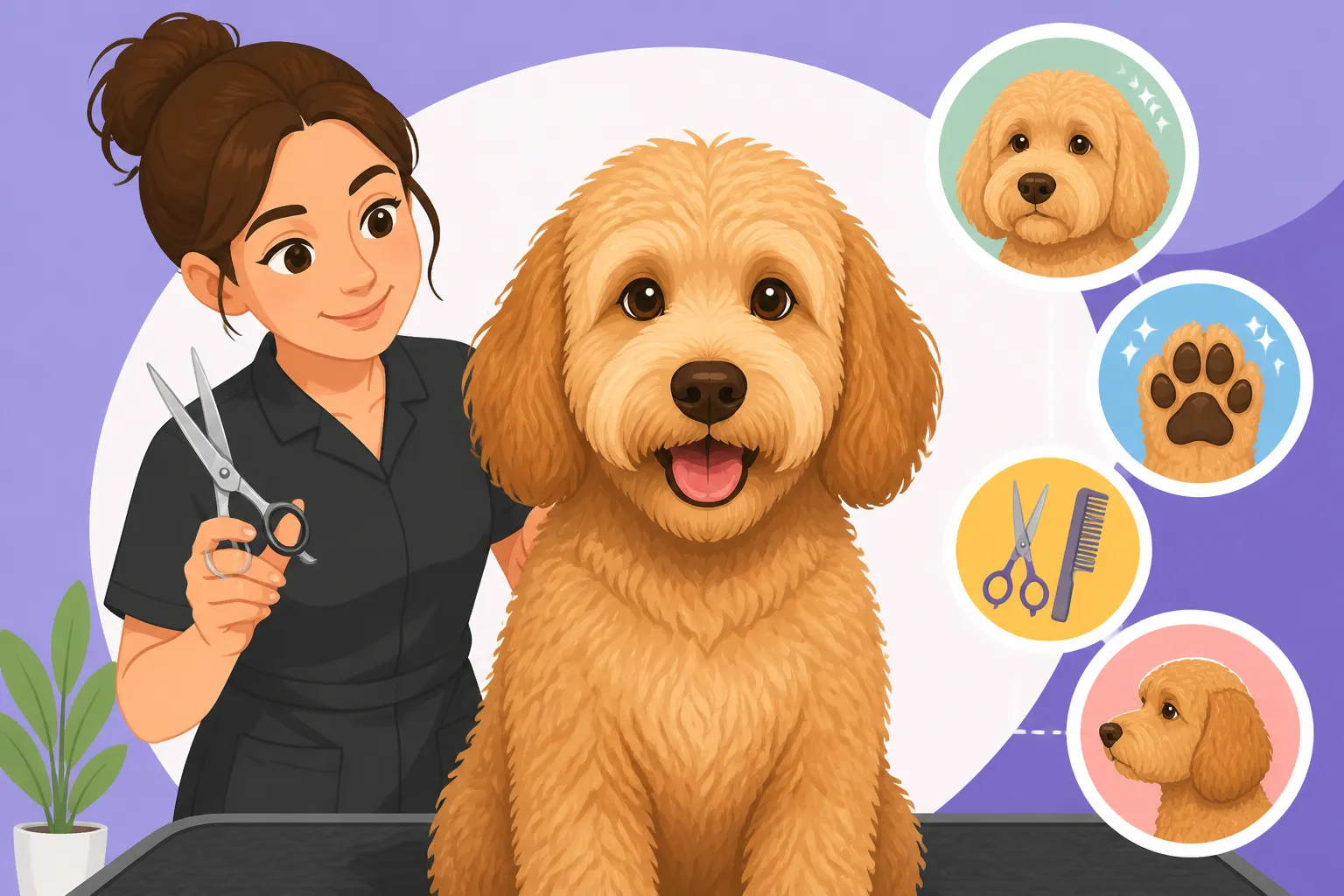
Perhaps the most iconic and sought-after Labradoodle style is the "Teddy Bear Clip." This cut aims to maintain that soft, fluffy, puppy-like appearance that makes Labradoodles so endearing. It typically involves leaving the coat longer on the body, anywhere from one to three inches, with careful scissoring to create a rounded, plush look. The face is usually kept a little longer around the muzzle and eyes to enhance the "teddy bear" effect, often with a rounded crown on the head.
When requesting this clip, it's important to be specific about the desired length. Simply saying "teddy bear" might still leave room for interpretation, as one groomer's "long" might be another's "medium." Bringing in a photo of a Labradoodle with the exact look you envision can be incredibly helpful. Be aware that maintaining a longer "teddy bear" clip, particularly on a fleece or wool coat, means more frequent at-home brushing to prevent matting. If your dog has a particularly dense or curly coat, the groomer might suggest a slightly shorter version to make daily care more manageable for you, while still achieving a fluffy aesthetic. This style really brings out the charm in a Labradoodle, but it's a commitment to regular maintenance, both at home and professionally.
Practical, Shorter Clips for Easy Maintenance
For many Labradoodle owners, especially those with active dogs who love to swim or romp in the mud, or simply those with busy schedules, a shorter, more practical clip is the way to go. These cuts significantly reduce the time and effort required for at-home maintenance and can prevent matting disasters. The "kennel clip" or "utility clip" often involves clipping the body hair to a uniform, shorter length, typically around half an inch to an inch. This gives the dog a clean, tidy look that is much easier to brush and keep clean.
Even with a shorter clip, you can still ask for some stylistic touches. For example, you might request the body be clipped short, but the legs left slightly longer, or the face and tail trimmed to a pleasing shape rather than just buzzed. A "puppy cut" is similar to a short utility clip but usually retains a slightly softer, rounded look on the head and face. Discuss your lifestyle with your groomer: if your Labradoodle is frequently outdoors, swims in lakes, or gets into burrs, a shorter cut might save you a lot of headache and your dog a lot of discomfort. Remember, a shorter cut doesn't mean less love, just less laundry, and fewer tangled brushes! It truly simplifies things, and your dog will likely appreciate the freedom from heavy, mat-prone hair, especially if you're dealing with Yeast Trapped Under a Labradoodle's Coat or other skin issues.
Considering Breed-Specific Details vs. Lifestyle-Driven Cuts
When discussing haircut options, it’s worth considering whether you want a look that emphasizes your Labradoodle's unique features or one that purely serves a functional purpose. Some owners might want to highlight the classic Labradoodle "furnishings" – the longer hair on the face, eyebrows, and mustache – while keeping the body neatly trimmed. This blend can give a dog an expressive, intelligent look. On the other hand, if your Labradoodle struggles with hair getting into their eyes, a practical trim around the face, often called a "visor" or "bangs trim," might be more important than maintaining a long, shaggy brow.
The key is open communication. Show your groomer pictures, describe your dog's daily activities, and explain any challenges you face with their coat. Do you struggle to brush Mats Behind a Labradoodle's Ears? Tell your groomer! Do they always come back from a swim with wet, heavy ear hair? Ask for suggestions. A skilled groomer will listen and offer advice that balances aesthetics with practicality and your dog's comfort. They can suggest specific blade lengths for the body, scissor work for the legs and head, and ways to keep sensitive areas tidy without sacrificing the overall look you desire. Whether you prefer a sculpted profile or a low-maintenance shave, your groomer is there to help you achieve it.
Addressing Common Labradoodle Grooming Challenges with Your Groomer
Labradoodles, for all their charm, come with their own set of grooming challenges. Being proactive and discussing these with your groomer can make a world of difference in your dog's comfort and the final outcome of the groom.
Tackling Mats, Tangles, and Undercoat Management
Mats are perhaps the single biggest headache for Labradoodle owners and groomers alike. They are insidious tangles that tighten close to the skin, causing discomfort and potentially leading to skin infections or hot spots. They form quickly in high-friction areas like the armpits, behind the ears, on the inner thighs, and where harnesses rub. If your Labradoodle comes in with mats, be prepared for a candid conversation with your groomer. Many groomers adhere to a "humanity before vanity" policy, meaning if a coat is severely matted, the kindest and safest option is often a full shave-down, rather than hours of painful de-matting. De-matting can be incredibly stressful and painful for a dog, and can also damage their skin.
Discuss prevention strategies with your groomer. They can show you how to properly line brush your Labradoodle at home and recommend the right tools. A good quality slicker brush and a metal comb, perhaps found on sites like Amazon or Chewy, are essential. If your dog frequently gets Mats in a Labradoodle's Armpits, your groomer might suggest keeping those areas clipped shorter. They can also advise on techniques to get your dog used to brushing, making it a more pleasant experience for both of you. Remember, prevention is always better than cure when it comes to mats.
Navigating Sensitive Skin, Allergies, and Ear Care
Many Labradoodles inherit sensitivities, often from their Poodle lineage, which can manifest as allergies or general skin irritation. It's crucial to inform your groomer about any history of sensitive skin, itching, redness, or specific allergies your dog has. This allows them to use appropriate hypoallergenic or medicated shampoos and conditioners. Some groomers might even allow you to bring your vet-prescribed shampoo if your dog has severe skin issues. Ignoring these concerns can lead to further irritation or discomfort after the groom, so open dialogue is key.
Ear care is another vital component, particularly for Labradoodles who often have pendulous (drop) ears with a lot of hair growing inside the ear canal. This combination creates a warm, moist environment ripe for bacterial and yeast infections. Ask your groomer about their ear care routine. Do they pluck ear hair? (Some prefer to, others advise against it depending on the individual dog and sensitivity.) Do they use a specific ear cleaner? Are they experienced in spotting early signs of infection, such as redness or excessive discharge, which they can then alert you to? Properly drying the ears after a bath is paramount, especially if your Labradoodle loves to swim. If you're concerned about Whether a Labradoodle's Ear Hair Causes Its Infections, your groomer can offer insights and best practices.
Maintaining Your Labradoodle's Coat Between Professional Grooms
Professional grooming is essential, but it's only part of the equation. What you do at home between appointments makes a monumental difference in your Labradoodle's comfort, coat health, and the groomer's ability to achieve the style you want.
Establishing a Consistent Daily and Weekly Brushing Routine
The single most important thing you can do for your Labradoodle's coat is to establish a consistent and thorough brushing routine. For fleece and wool coats, this often means daily brushing, or at least every other day. A hair coat might get away with 2-3 times a week. The goal isn't just to skim the top layer; you need to brush all the way down to the skin to prevent mats from forming at the base of the hair shaft. This technique is called The Line Brushing a Labradoodle Coat Needs. Your groomer can give you a hands-on demonstration of how to do this effectively.
Invest in the right tools: a high-quality slicker brush, a long-toothed metal comb, and potentially a de-matting rake if you catch tangles early. Many of these reliable tools can be found on sites like Chewy or specialty pet stores. Make brushing a positive experience from an early age by using treats and praise. Start with short sessions and gradually increase the duration. Focus on those mat-prone areas like the armpits, behind the ears, and around the collar. If you stay on top of daily brushing, your groomer will thank you, and your Labradoodle will be much more comfortable during their professional spa day.
The Art of Bathing and Drying Your Labradoodle at Home
Bathing your Labradoodle at home can be done between professional grooms, but it's crucial to do it correctly to avoid creating more problems than you solve. The biggest mistake owners make is not thoroughly drying the coat after a bath. A damp Labradoodle coat, especially a dense fleece or wool one, is an invitation for mats to tighten and felt. When the hair is wet, it clumps together, and as it dries, those clumps can form painful mats right down to the skin. This is why Washing a Labradoodle Without Wrecking the Coat requires specific steps.
Always use a dog-specific shampoo and conditioner that are gentle on their skin. Work the shampoo in thoroughly, paying attention to all areas. Rinse, rinse, and rinse again until absolutely no suds remain – residual shampoo can irritate the skin. The drying process is where you need to be meticulous. Towel dry thoroughly, then use a high-velocity dog dryer (a human hairdryer can be too hot and doesn't have enough power). As you dry, continuously brush the coat to separate the hairs and ensure no damp spots remain. If you're air-drying, be prepared for significant matting. For a dog that loves to swim, be sure to thoroughly rinse and dry their coat, especially if you're battling Whether a Labradoodle's Foot Hair Traps Moisture or skin irritations from water exposure. If you find bathing and drying too daunting, a quick rinse with plain water after a muddy adventure, followed by a thorough brushing when dry, can sometimes be enough between full grooms.
Preparing Your Labradoodle for a Positive Grooming Experience
A positive grooming experience starts long before your dog sets paw in the salon. Your preparation at home, coupled with clear communication with your groomer, can significantly reduce stress for your Labradoodle and lead to better results.
Desensitization and Positive Reinforcement at Home
From the moment you bring your Labradoodle puppy home, you can start preparing them for a lifetime of grooming. This means regularly handling their paws, ears, tail, and mouth. Touch their paws and trim their nails frequently (even just one nail at a time) so they get used to the sensation. Gently run a soft brush over their body. Use positive reinforcement: treats, praise, and gentle strokes to associate these experiences with something good. If you're working on dental care, like brushing teeth, use a highly palatable dog toothpaste, maybe something from Ollie's treats or a similar brand, to make it a pleasant event.
Simulate parts of the grooming process. Introduce them to the sound of a hairdryer from a distance, gradually moving closer as they remain calm. Practice having them stand still on a non-slip surface for a few minutes. These small, consistent efforts build a foundation of tolerance and trust. When your Labradoodle isn't suddenly confronted with unfamiliar sensations and restraints at the groomer, they are far more likely to remain calm and cooperative, making the experience better for everyone involved. For a breed that often enters adolescence around The Ten Month Old Labradoodle That Forgets Everything, consistency in these early stages is key.
Communicating Your Expectations and Your Dog's Comfort Levels
Don't assume your groomer is a mind reader. Be explicit about what you want for your Labradoodle's haircut and what your dog's personality is like. Do you have a specific length in mind? Use your fingers to show them on your dog's leg or body. Do you want the face kept shorter around the eyes for better visibility, or would you prefer a fuller, shaggier look? Clarity is your friend. It's perfectly acceptable to bring photos of cuts you like, or even cuts you definitively don't like, to help illustrate your vision.
Equally important is communicating your dog's comfort levels. If your Labradoodle is very sensitive about their feet, let the groomer know so they can take extra time or use a different approach for nail trims. If they have a tendency to get stressed, ask if the groomer can call you as soon as they're done, rather than having them wait in a crate for an extended period. A good groomer wants to provide the best possible experience for your dog and will appreciate your input. They are partners in your Labradoodle's care, and open, honest dialogue is the foundation of a successful relationship.
Disclaimer
This article is for general informational purposes only and does not constitute professional advice. Laws, prices and regulations vary by location and change over time. Consult a qualified professional for guidance on your specific situation.