Whether a Labradoodle’s Foot Hair Traps Moisture
One of the most common worries many Labradoodle parents express is about their beloved companion's feet. With those wonderfully shaggy, often curly coats, it's easy to wonder if all that extra hair around their paws and between their toes could be causing trouble. Specifically, you might be concerned about whether a Labradoodle's foot hair traps moisture, leading to discomfort or more serious issues. This guide will walk you through exactly why this is a valid concern, what problems it can cause, and how you can prevent and treat them.
The Unique Architecture of a Labradoodle's Paws
It’s easy to look at a Labradoodle and see a fluffy, adorable creature, but a closer look at their paws reveals a design that, while charming, can be a magnet for moisture-related problems if not managed properly. Unlike many other breeds with shorter, sleeker coats, the Labradoodle’s lineage – particularly the Poodle side – contributes to a very specific hair growth pattern that extends right down to their toes.
Why Their Coats Go All the Way to Their Toes
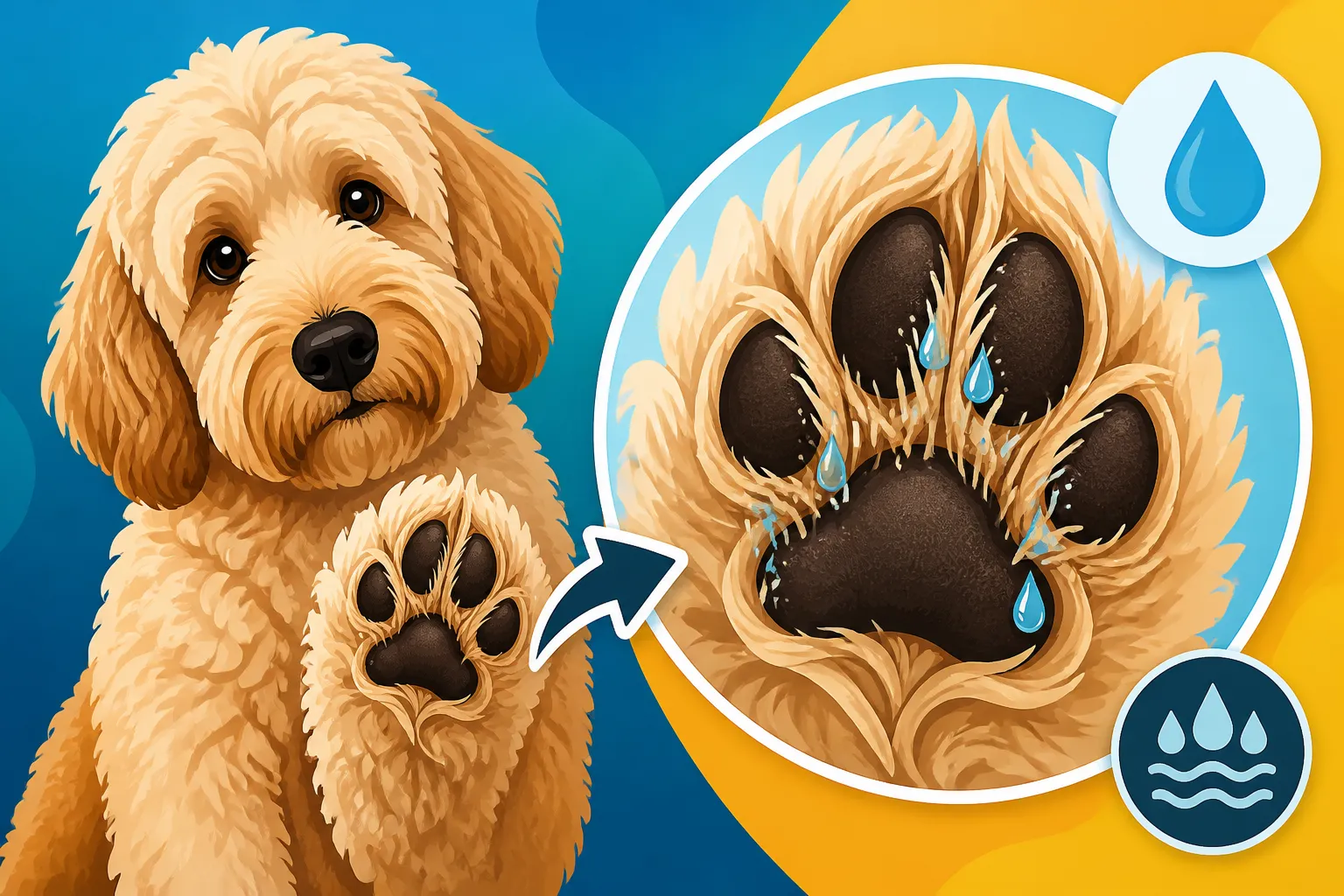
Think about the Poodle parent. Their coat is renowned for its continuous growth and lack of shedding (or very minimal shedding), and this trait is often passed directly to Labradoodles, especially those with fleece or wool coats. This means the soft, often curly hair doesn't just stop at the leg; it continues to grow long, thick, and dense around their paws and, crucially, between their paw pads. This isn't just a surface layer either; it can form a thick tuft, almost like little insulated boots, which can be lovely in cold, dry weather but problematic otherwise.
The Labrador Retriever side, while known for a double coat that sheds, usually has much shorter, denser hair on their feet, allowing for better drainage. The Labradoodle, being a hybrid, often gets a combination of these traits, leading to that abundant foot hair. This extended growth is a double-edged sword: it offers a bit of natural padding and protection, but it also creates tiny, insulated pockets. These pockets are prime locations for trapping all sorts of things, from debris on a walk to, yes, moisture.
How This Differs from Other Breeds
Consider a Golden Retriever or a German Shepherd. Their feet usually have much shorter, coarser hair between their pads that doesn't hold onto moisture nearly as well. Even within the "Doodle" family, a Goldendoodle might have slightly different foot hair characteristics depending on the exact Poodle and Golden Retriever lines. The Labradoodle's dense, often curly, and fast-growing foot hair is a particular concern because it acts like a sponge. When your Labradoodle walks through wet grass, splashes in puddles, or takes a delightful swim, that hair soaks up the water and holds it close to the skin, creating a perpetually damp environment. This isn't just a minor inconvenience; it's a breeding ground for problems that can quickly escalate.
The Real Risks of Trapped Moisture
The innocent-looking fluff between your Labradoodle's toes can become a serious health hazard when it consistently traps moisture. This damp, warm environment is exactly what certain unwelcome guests need to thrive, leading to painful and irritating conditions for your furry friend.
Yeast Infections and Dermatitis
One of the most common culprits lurking in damp paw hair is yeast. Yeasty paw infections are a nightmare for dogs and owners alike. You'll often notice a distinct, somewhat sweet and pungent smell, often described as smelling like Fritos or stale corn chips, emanating from their paws. The constant moisture allows Malassezia yeast, which is naturally present on a dog's skin, to overgrow. This leads to intense itching, redness between the toes and on the paw pads, and a greasy or waxy discharge. Your Labradoodle might lick, chew, or even bite at their paws obsessively, sometimes to the point of causing open sores or secondary bacterial infections. Chronic yeast infections can make the skin tough and discolored, often a brownish-red hue, due to constant licking and inflammation.
Beyond yeast, general dermatitis, or skin inflammation, can occur. The skin becomes macerated, much like human skin does after being wet for too long – it gets soft, prone to tearing, and highly susceptible to irritation from friction or even just the moisture itself. This can be incredibly uncomfortable for your dog, making every step painful.
Bacterial Hot Spots and Interdigital Cysts
If left unchecked, that damp environment provides a perfect incubator for bacteria. When bacteria proliferate, you might see red, angry-looking "hot spots" – inflamed, moist, often oozing patches of skin that appear suddenly and expand rapidly. These are intensely itchy and painful. For Labradors and Poodles, and thus Labradoodles, hot spots are a fairly common nuisance, especially if they enjoy swimming. You might also notice bumps or lumps forming between their toes, which could be interdigital cysts. These painful cysts are often caused by hair follicles becoming inflamed and infected, frequently exacerbated by chronic moisture and friction. They can rupture, leading to open wounds and further infection. It's a truly miserable experience for your dog.
If you notice your Labradoodle constantly licking their paws, or if there's any redness, swelling, or odor, it's a clear sign that moisture or something else is causing trouble. Early detection is key, and if you have pet insurance like a policy from Healthy Paws, it can be a huge relief when these unexpected skin issues pop up, making sure you don't hesitate to seek veterinary care.
Mats and Debris Trapping
Beyond the biological issues, the long hair between the paw pads is excellent at picking up and holding onto physical debris. Mud, burrs, tiny pebbles, small sticks, even ice balls in winter – all get lodged in that dense fur. This not only causes discomfort and irritation but can lead to tight matting. Mats on the paws are particularly painful because they pull on the skin with every step. When wet, these mats tighten even further, creating even more localized dampness and exacerbating the problems discussed above. Imagine trying to walk with a pebble permanently wedged in a knot of hair between your toes – not fun! This type of matting often requires careful trimming or even shaving by a professional groomer. It’s a good reminder that regular grooming goes beyond just aesthetics; it's vital for health, as detailed in our guide on Brushing a Labradoodle to the Skin, Not the Surface.
Practical Solutions for Paw Care and Prevention
Preventing moisture-related paw problems in your Labradoodle is all about consistent, proactive care. It’s not just a seasonal thing; it's a year-round commitment to keeping those paws healthy and happy.
Regular Trimming and Grooming
This is hands down the most crucial step. You need to routinely trim the hair between your Labradoodle's paw pads. This can be done with small, blunt-nosed scissors or a small, quiet clipper. The goal is to trim the hair flush with the paw pads, removing any excess that extends beyond the pads or creates dense tufts between the toes. This opens up the space, allowing for better air circulation and faster drying. Depending on how fast your Labradoodle's hair grows, this might need to be done every 2-4 weeks. If you're unsure how to do it safely, your professional groomer can easily take care of it during a regular visit, or you can ask them for a quick lesson. Our guide on Trimming the Hair Between a Labradoodle's Pads provides detailed steps.
Beyond trimming, regular brushing of the entire coat, including the legs and feet, helps prevent mats from forming which can lead to localized moisture trapping. Ensure you're using the right tools, like a slicker brush and a metal comb, to get deep into the coat.
Here’s a quick overview of essential paw care:
| Task | Frequency | Tools | Purpose |
|---|---|---|---|
| Foot Hair Trim | Every 2-4 weeks (or as needed) | Small blunt-nosed scissors, small clipper | Prevents moisture/debris trapping, promotes air circulation |
| Nail Trim | Every 3-4 weeks (or as needed) | Nail clippers (guillotine or scissor style), Dremel | Prevents discomfort, splayed toes, and bone/joint issues |
| Paw Pad Check | Daily/After every walk | Your eyes and hands | Inspect for cuts, foreign objects, redness, swelling, odor |
| Drying Paws | After every wet walk/bath/swim | Towel, blow dryer (cool setting) | Removes moisture immediately to prevent yeast/bacterial growth |
Drying Techniques After Wet Adventures
If your Labradoodle loves splashing in puddles, walking through dewy grass, or swimming – and let's face it, many do! – drying their paws thoroughly immediately afterward is non-negotiable. Don't just wipe the surface. Take a towel and really get in between each toe and around each pad. You can even use a low-setting, cool-air blow dryer for a few minutes, gently directing the air between their toes, to ensure everything is completely dry. This is especially important for breeds prone to Yeast Trapped Under a Labradoodle's Coat or Ear Infections Built Into a Labradoodle's Drop Ear. Make it a routine, just like you would after a bath, and it will save you a lot of headaches down the line. For Labradoodles that are prone to hot spots, even after a short swim, proper and prompt drying is paramount. Our article on Hot Spots on a Labradoodle That Swims covers this in more detail.
Paw Protection and Moisturizers
In certain conditions, consider paw protection. During snowy or icy weather, if salt or de-icers are used, dog booties can protect their paws from harsh chemicals and prevent ice balls from forming in their fur. Some owners also use paw balms or waxes to create a barrier against moisture and irritants. These can also help keep the paw pads supple and prevent cracking, which can be another entry point for infection. While not a substitute for trimming and drying, they can offer an extra layer of defense, especially for active Labradoodles that spend a lot of time outdoors.
Recognizing and Treating Paw Problems
Even with the best preventative care, sometimes issues can still arise. Knowing what to look for and when to seek professional help is crucial for your Labradoodle's well-being.
Signs to Watch Out For
Your Labradoodle's paws are easy to overlook, but they're constantly telling you a story if you pay attention. The most obvious sign of a problem is persistent licking, chewing, or biting at their feet. This indicates discomfort and is usually the first clue. Beyond that, look for:
- Redness or inflammation: Especially between the toes or on the paw pads.
- Swelling: The paw or individual toes might appear puffy.
- Odor: A yeasty, cheesy, or foul smell is a strong indicator of infection.
- Discharge: Pus, clear fluid, or a greasy residue between the toes.
- Limping or reluctance to walk: This suggests pain.
- Hair loss or thinning: Chronic licking can cause this, or it might be a symptom of a deeper skin issue.
- Change in paw pad texture: Pads might feel rough, crusty, or excessively moist.
If you observe any of these signs, don't delay. Early intervention can prevent minor irritation from becoming a full-blown infection.
When to Consult Your Vet
While you can manage very mild, superficial irritation at home by cleaning and drying the paws thoroughly, anything more than that warrants a vet visit. If the licking persists, if there's an odor, redness, swelling, or lameness, it's time to call your veterinarian. They can accurately diagnose the issue – whether it's yeast, bacteria, an allergy, a foreign body, or something else entirely. They might perform skin scrapes, cytology (examining cells under a microscope), or even cultures to identify the specific pathogen. If you find your Labradoodle needs medicated baths frequently for their skin, it's definitely time for a vet check-up.
For chronic or recurring paw problems, your vet might recommend additional diagnostics or a referral to a veterinary dermatologist. This could involve looking into underlying allergies (food or environmental), immune system issues, or even ensuring there are no other systemic health problems contributing to the paw issues. Having a reliable pet insurance plan, such as those offered by Healthy Paws, can be incredibly beneficial for managing the costs associated with diagnostics and ongoing treatments for chronic conditions. Remember, regular wellness checks, as covered in The Yearly Screening a Labradoodle Should Get, are always a good idea to catch problems early.
Treatment Options for Infected Paws
Treatment for infected paws will vary depending on the diagnosis. Your vet might prescribe:
- Topical medications: Antifungal creams, antibacterial ointments, or medicated paw soaks/shampoos. These are often used for localized infections.
- Oral medications: Antibiotics for bacterial infections or antifungals for widespread yeast. Sometimes steroids are used to reduce severe inflammation and itching.
- Allergy management: If allergies are the root cause, your vet might suggest dietary changes, antihistamines, immunotherapy, or other allergy-specific treatments.
- Pain relief: For painful infections or cysts, pain medication may be prescribed.
- E-collar: An Elizabethan collar (cone) might be necessary to prevent your Labradoodle from licking or chewing their paws, which can hinder healing and worsen the infection.
Always follow your vet's instructions carefully, and complete the full course of any prescribed medication, even if your Labradoodle's paws seem to be improving. Stopping early can lead to a relapse or antibiotic resistance. Your dedication to your Labradoodle's paw health will go a long way in ensuring they remain comfortable and active for years to come.
Disclaimer
This article is for general informational purposes only and does not constitute professional advice. Laws, prices and regulations vary by location and change over time. Consult a qualified professional for guidance on your specific situation.