Whether an F1b Labradoodle Is More Poodle
It's an exciting journey to welcome a Labradoodle into your home, but the sheer variety within the "Doodle" world can feel like navigating a maze. One of the biggest questions I hear from aspiring owners, especially those concerned about allergies or specific coat types, is whether an F1b Labradoodle truly embodies more of the Poodle's characteristics. This guide is here to untangle the genetics and give you a realistic picture of what to expect from an F1b, helping you understand how this particular generation leans into its Poodle heritage in terms of appearance and personality.
Decoding Labradoodle Generations: A Quick Primer
Before we dive specifically into the F1b, it helps to understand the foundational generations of Labradoodles. The "F" in F1, F1b, and so on, stands for "Filial Hybrid," which essentially means "generation." These designations are attempts by breeders to classify the genetic makeup of these delightful crossbreeds, helping prospective owners predict certain traits, especially coat type and potential for shedding. It's not always a perfect science, but it provides a valuable roadmap.
The Original F1 Labradoodle
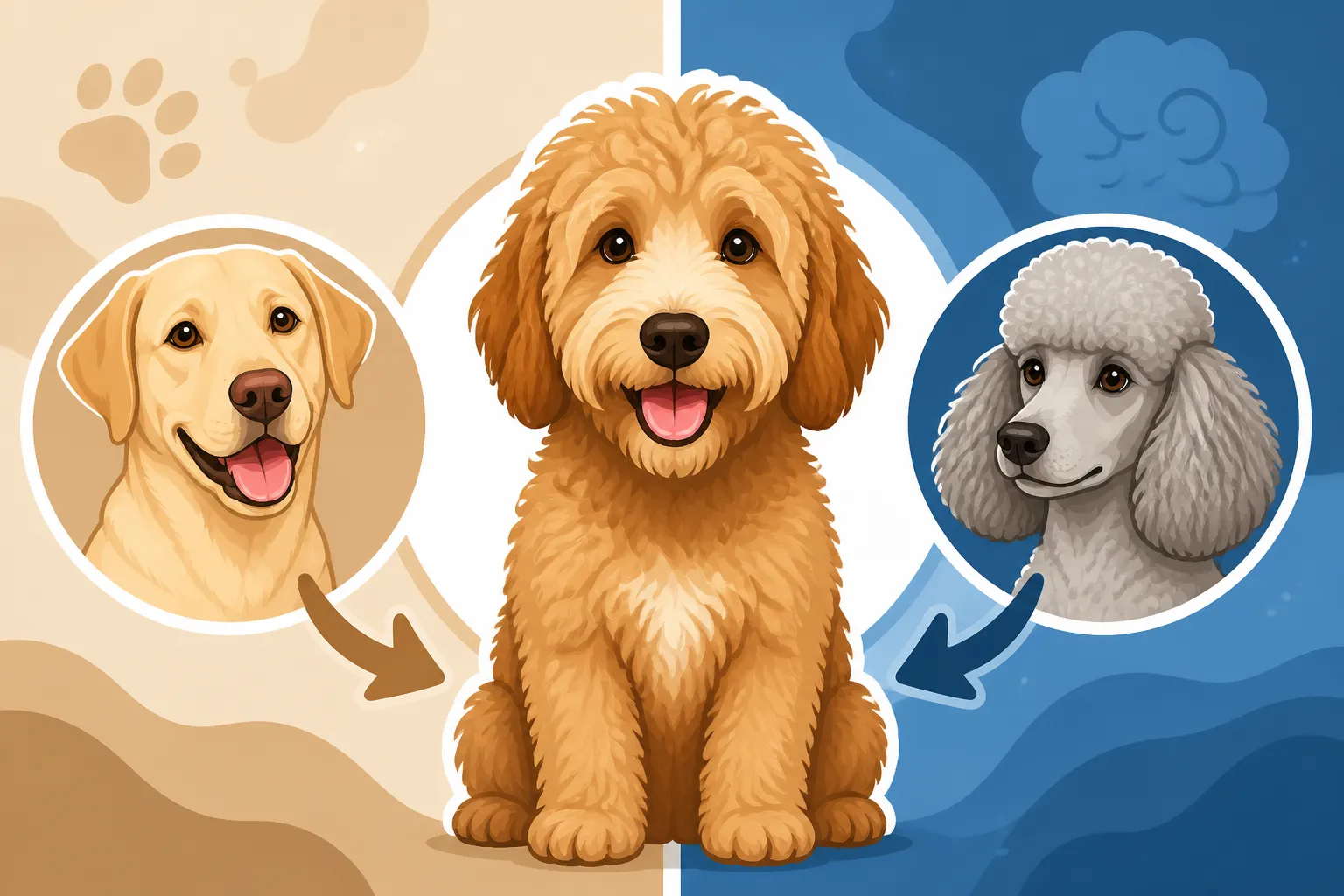
The journey of the Labradoodle began with what we call an F1, or "first-generation," cross. This is when a purebred Labrador Retriever is bred directly with a purebred Poodle. On paper, an F1 Labradoodle is a 50/50 mix of both parent breeds. This generation is often seen as the most variable, which can be both exciting and a little frustrating for new owners.
You see, with an F1, you never quite know what you're going to get. Some F1 Labradoodles might end up looking a lot like a Poodle, with a curly, low-shedding coat, while others might lean more towards the Labrador, with a flatter, wavier coat that sheds more. And some fall right in the middle, a beautiful blend of both. This unpredictability, particularly with shedding, is often why families seeking an "allergy-friendly" dog might look beyond the F1 generation. It's truly a Whether an F1 Labradoodle's Coat Is a Gamble!
Introducing the F1b: The Backcross
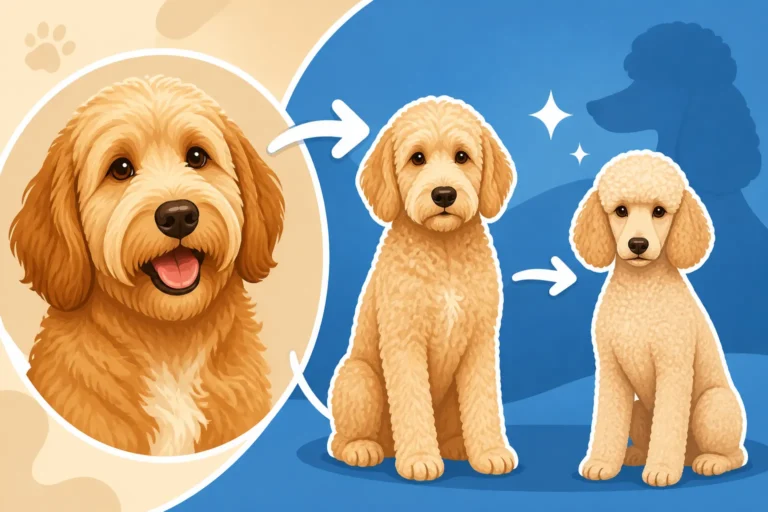
This is where the F1b comes into play, and it's a game-changer for many. An F1b Labradoodle is the result of breeding an F1 Labradoodle (the 50/50 cross) back to one of its purebred parents, almost always a Poodle. The "b" in F1b stands for "backcross." So, an F1b is an F1 Labradoodle bred with a purebred Poodle. This specific cross dramatically shifts the genetic balance.
The purpose of this backcross is to increase the percentage of Poodle genetics in the puppy, primarily to produce a more consistent coat type that is less likely to shed and therefore more likely to be tolerated by individuals with allergies. It's an intentional effort to dial up certain desired traits, and it generally works quite well.
The Genetic Blueprint: Why F1b Labradoodles Are More Poodle
When you break down the genetics, an F1b Labradoodle typically carries a higher percentage of Poodle DNA. If an F1 Labradoodle is approximately 50% Poodle and 50% Labrador, and you breed that F1 back to a 100% Poodle, the resulting F1b puppy is theoretically around 75% Poodle and 25% Labrador. This isn't an exact science for every single gene, as the F1 parent's 50/50 split is already an average, but it gives us a very strong indication of the dominant influence.
This genetic weighting means that many of the traits associated with the Poodle breed have a greater chance of appearing in an F1b puppy. This is often precisely what people are looking for, especially if they are trying to mitigate the shedding and dander that can come from the Labrador side. However, it's crucial to remember that genetics are still a bit of a lottery, and you can still get variations even within an F1b litter. There's always a chance for the less dominant genes to express themselves.
| Feature | F1 Labradoodle (F1 x Poodle) | F1b Labradoodle (F1 x Poodle) | Poodle Influence (Approx.) | Shedding Potential | Grooming Needs |
|---|---|---|---|---|---|
| Genetic Ratio | 50% Labrador / 50% Poodle | 25% Labrador / 75% Poodle | High | Variable (low to moderate) | Moderate to High |
| Coat Type | Straight, Wavy, or Curly (variable) | Wavy or Curly (more consistent) | High | Low to non-shedding (more likely) | High (regular brushing, professional clips) |
| Allergy Friendliness | Moderate (can be hit or miss) | High (generally better for allergies) | High | Significantly reduced | More frequent |
| Body Build | Can lean Poodle or Labrador | Generally more Poodle-like (leaner) | High | ||
| Temperament Lean | Balanced mix, or lean either way | Often more Poodle energy/intelligence | High |
Physical Manifestations: An F1b's Poodle-Like Appearance
The increased Poodle genetics in an F1b Labradoodle strongly influence its physical appearance. Owners seeking an F1b often have a clear picture in mind, and usually, that picture leans heavily into the Poodle's aesthetic.
Coat Type: The Defining Trait
This is arguably the most significant factor that draws people to the F1b generation. With a 75% Poodle genetic makeup, an F1b Labradoodle is much more likely to inherit the Poodle's iconic low-shedding coat. This means less loose hair around your home and, for many, fewer allergy symptoms.
You'll typically find F1b Labradoodles sporting either a fleece coat or a wool coat. The Fleece Coat and Why Breeders Aim For It is soft and wavy, often described as feeling like angora. The Wool Coat Labradoodle and Its Upkeep is denser and curly, very much like a purebred Poodle's coat. Both of these coat types are less prone to shedding than the straight or 'hair' coats that can appear in F1s. This is also why an F1b is often seen as being Whether a Labradoodle Is Truly Hypoallergenic compared to earlier generations, though no dog is ever 100% hypoallergenic. The presence of the "furnishings" gene, which gives them their characteristic beard and eyebrows, is also highly likely in an F1b, coming directly from the Poodle side. The Furnishings Gene Behind a Labradoodle's Beard is critical for that classic doodle look.
Body Build and Structure
While Labradors are known for their sturdy, stocky build, Poodles tend to be more elegantly proportioned, with a leaner frame and longer legs. An F1b Labradoodle will typically exhibit more of the Poodle's athleticism and refined structure. They might have a narrower chest and a more tucked-up abdomen than their F1 counterparts, who can sometimes retain the heavier Labrador bone structure. This isn't to say they'll be fragile; Poodles are robust dogs, but the overall impression is one of grace and agility rather than sheer power.
Facial Features and Head Shape
Look closely at an F1b's face, and you'll often see more Poodle influence. This can manifest as a longer, more refined muzzle, rather than the broader, blockier head of a Labrador. Their ears might also be set a little higher and hang closer to the head, reminiscent of a Poodle. The eyes, while still having that friendly Labradoodle spark, might have a slightly almond shape that points back to their Poodle lineage. These subtle differences contribute to an overall look that definitely leans into the Poodle's elegant charm.
Temperament and Behavior: The Poodle Personality in an F1b
It's not just about looks; the increased Poodle genetics in an F1b can also influence their personality and behavior. Both Labradors and Poodles are intelligent, friendly dogs, but they express these traits in slightly different ways.
Intelligence and Trainability
Poodles are renowned for their exceptional intelligence and eagerness to please, which makes them highly trainable. Labradors are also smart and willing, but perhaps with a touch more exuberance. An F1b Labradoodle will typically inherit that keen Poodle intellect, making them quick learners and highly responsive to positive reinforcement training. They often thrive on mental stimulation and can excel in dog sports like agility or obedience.
However, this heightened intelligence also means they can get bored easily if not given enough to do. A bored F1b can become a mischievous F1b, so providing puzzles, training sessions, and interactive toys is crucial. This can sometimes lead to owners feeling their Whether a Labradoodle Is Too Smart for a Novice owner, as they need consistent engagement.
Energy Levels and Playfulness
Both parent breeds are active, so an F1b Labradoodle will likely be a dog with plenty of energy. However, the Poodle influence might manifest as a more "bouncy" or agile play style, less prone to the heavy-footed romping sometimes seen in Labradors. They love to run, jump, and play, and will need regular exercise to keep them happy and well-behaved. Think long walks, games of fetch, and plenty of opportunities to burn off steam in a secure yard or dog park. The Exercise a Labradoodle Needs Before It Behaves is a real thing, regardless of generation, but an F1b's energy can be particularly persistent.
Social Nature and Affection
Labradors are famously outgoing and friendly with everyone, often eager to make new friends. Poodles, while deeply devoted to their families, can sometimes be a bit more reserved or discerning with strangers initially, although they warm up quickly. An F1b often strikes a lovely balance: generally friendly and social, but perhaps with a slightly more thoughtful approach to new people or situations than a pure Labrador.
Many F1b Labradoodles inherit the strong "Velcro" tendencies of the Poodle, wanting to be right by their human's side as much as possible. This means they're fantastic companions, but it also means they don't do well being left alone for long periods. If you're considering a Labradoodle, especially an F1b, be prepared for a dog that wants to be a central part of your daily life. The Velcro Labradoodle That Cannot Be Left is a very real characteristic you'll notice.
Practical Considerations: Grooming and Care for Your Poodle-Leaning F1b
The increased Poodle influence in an F1b Labradoodle comes with some practical implications, particularly when it comes to grooming. This is a topic that many new owners underestimate, and it's vital to be prepared.
The Realities of a Low-Shedding Coat
While an F1b's low-shedding coat is a huge plus for allergy sufferers, it's a double-edged sword. Unlike shedding coats that release dead hair, these coats hold onto it. If that hair isn't regularly brushed out, it quickly forms mats. Mats can be painful for your dog, pulling on their skin, and can even lead to skin infections if left untended.
You'll need a dedicated grooming routine. This typically involves line brushing your Labradoodle several times a week, ensuring you get down to the skin, not just brushing the surface. You'll also need professional grooming every 6-8 weeks to keep their coat in top condition. Ignoring this will lead to a matted dog that often needs to be shaved down completely, which isn't fun for anyone. For this reason, Why a Wool Coated Labradoodle Costs More to Groom is a serious consideration. Companies like Chewy offer a wide range of grooming tools, from slicker brushes to detangling sprays, that can help you maintain your F1b's beautiful coat at home between professional visits.
Dental and Ear Care
Poodles, and by extension many F1b Labradoodles, can be prone to certain health issues that require consistent care. Their drop ears, especially if they have a lot of hair growing inside, can trap moisture and debris, making them susceptible to ear infections. Regular ear cleaning and sometimes even plucking or trimming the ear hair are necessary. Likewise, dental care is crucial. Poodles can be prone to dental issues, so daily brushing of your F1b's teeth is highly recommended to prevent plaque buildup and gum disease.
Beyond the Genetics: Individual Variation and Responsible Breeding
While genetics provide a roadmap, it's essential to remember that every dog is an individual. Even within an F1b litter, you'll find puppies with slightly different personalities and appearances. Some may lean a little more towards the Labrador side than others, despite the 75/25 genetic split. This is simply the fascinating complexity of living organisms.
The most important factor in predicting the traits of your F1b Labradoodle, beyond its generational designation, is the breeder. A responsible breeder will understand the genetics of their lines, perform extensive health testing on both parent dogs (the F1 Labradoodle and the purebred Poodle), and carefully select pairings to produce healthy, well-tempered puppies. They should be able to tell you about the specific temperaments of the parent dogs and what traits they aim for in their F1b litters. They will also be transparent about the potential variations that can occur.
Ultimately, an F1b Labradoodle is specifically bred to amplify the Poodle's traits, especially those related to coat and reduced shedding. If you're looking for a dog that is likely to be intelligent, active, devoted, and sports a low-shedding, wavy or curly coat, the F1b generation is a fantastic choice that usually delivers on its promise of being "more Poodle." Just be prepared for the dedicated grooming that comes with that gorgeous coat!
Disclaimer
This article is for general informational purposes only and does not constitute professional advice. Laws, prices and regulations vary by location and change over time. Consult a qualified professional for guidance on your specific situation.