Whether PennHIP or OFA Suits a Labradoodle Better
Navigating the world of canine health screenings can feel like trying to decipher a secret code, especially when you’re deeply invested in the long-term well-being of your beloved Labradoodle. Many prospective and current owners find themselves wondering about the best way to ensure their dog’s joint health, particularly regarding hip dysplasia, a common concern in larger breeds. This guide aims to demystify the two primary hip evaluation methods, PennHIP and OFA, helping you understand their differences and which approach might be better suited for your furry family member.
Understanding Hip Dysplasia in Labradoodles
Hip dysplasia is a heartbreaking condition where the hip joint doesn't form correctly, leading to looseness and eventual painful arthritis. For Labradoodles, inheriting genes from both the Labrador Retriever and the Poodle, two breeds prone to this genetic issue, makes hip screening absolutely essential. It’s not just about a score; it’s about your dog's future comfort, mobility, and quality of life. Owners often wonder about the specific signs to watch for, such as Signs a Young Labradoodle's Hips Are Failing, but proactive screening is truly the best defense.
Why Hip Health Matters for Your Labradoodle
Labradoodles are often active, joyful companions who love to run, jump, and play fetch. Healthy hips are fundamental to their ability to enjoy these activities without pain. Imagine your active Labradoodle, full of life, suddenly struggling to get up or limping after a walk. This is a common and distressing scenario for owners whose dogs develop hip dysplasia. Early detection, or better yet, breeding from parents with excellent hip health, can significantly reduce the risk.
The truth is, even with the best genetic planning, life happens. This is why many owners consider pet insurance. When facing potential hip issues or other unexpected health challenges like Torn Cruciates in an Active Labradoodle, having a reliable plan in place, such as coverage from Healthy Paws, can make a huge difference in managing vet bills and ensuring your dog gets the best care possible without financial strain.
The Genetic Component and Responsible Breeding
Hip dysplasia is a polygenic trait, meaning multiple genes contribute to its development, alongside environmental factors like nutrition and exercise during growth. This complexity is why responsible breeders go to great lengths to screen their breeding stock. They want to ensure they're doing everything possible to produce puppies with the best chance of healthy joints. Understanding Whether Health Tested Parents Add Years to a Labradoodle is crucial for anyone considering a Labradoodle puppy. Breeders typically share these health clearances, and it's a critical part of choosing a puppy.
Deciphering OFA: The Orthopedic Foundation for Animals
The Orthopedic Foundation for Animals (OFA) has been a cornerstone of canine orthopedic health evaluation for decades. It's a widely recognized system, particularly in North America, for assessing hip and elbow health in dogs. When you hear breeders talk about "OFA certified" dogs, this is the organization they're referring to.
How OFA Hip Evaluations Work
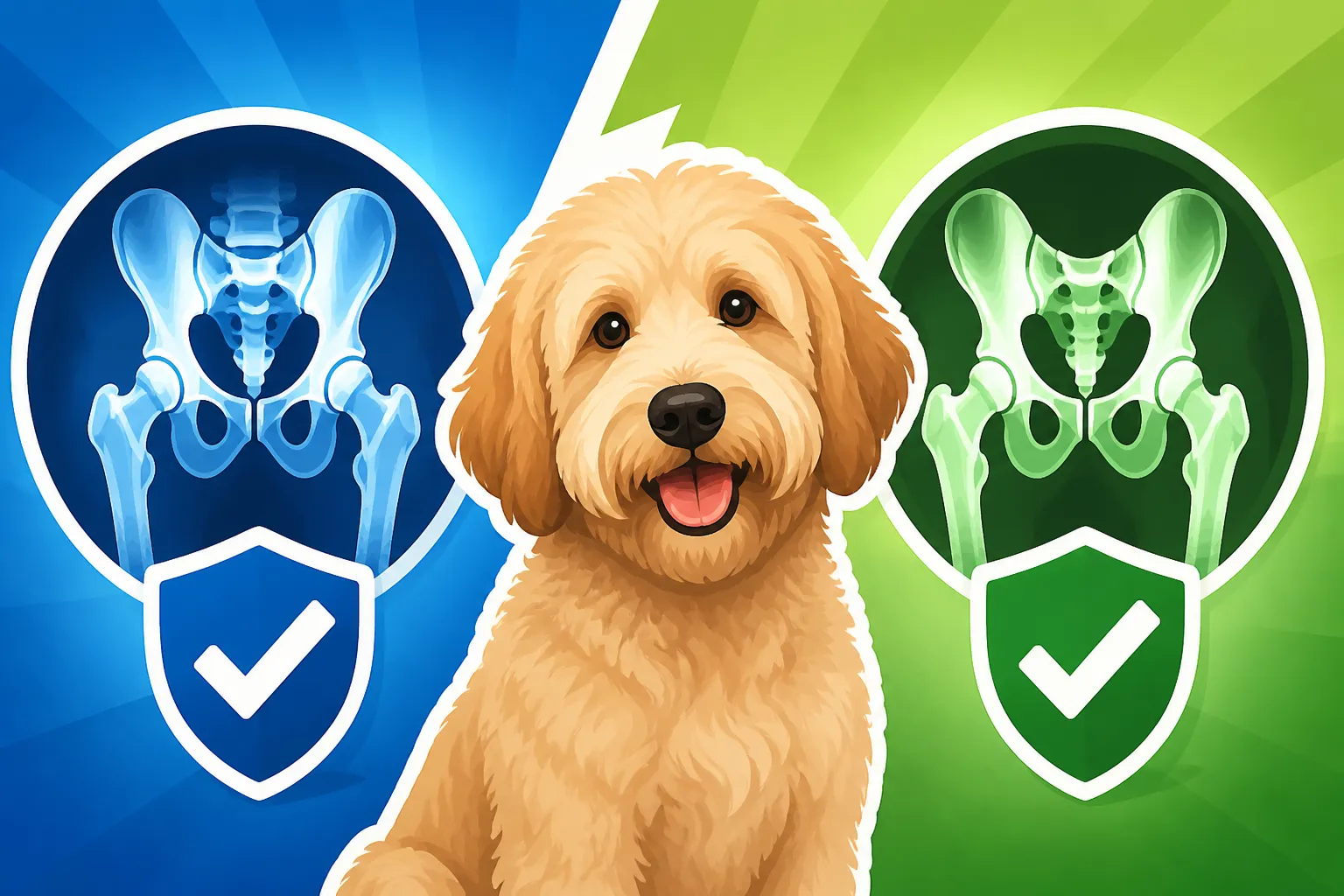
For an OFA hip evaluation, dogs must be at least 24 months old – a full two years – to get a preliminary or final certification. This age requirement is important because it allows the hip joints to mature completely, providing a more accurate assessment. Your veterinarian will take specific X-rays of your Labradoodle's hips, positioning them very precisely. These X-rays are then sent to the OFA, where three independent, board-certified veterinary radiologists review them.
The radiologists look for specific markers of hip dysplasia, such as the depth of the hip socket, the fit of the femoral head into the socket, and any signs of degenerative joint disease. Based on their consensus, the hips are assigned one of seven ratings: Excellent, Good, Fair (all considered "passing" or non-dysplastic), Borderline, Mild, Moderate, or Severe (the latter three indicating hip dysplasia). When a breeder tells you their dog has "Good" OFA hips, you now know exactly what that means in terms of the evaluation. It’s important to understand What OFA Grades Mean on a Labradoodle.
Advantages and Disadvantages of OFA for Labradoodles
One of the biggest advantages of OFA is its widespread acceptance and the vast database it maintains. This allows for long-term tracking of canine orthopedic health and can give breeders a historical perspective on certain lines. The consensus approach of three radiologists also adds a layer of reliability to the grading process. For many potential owners, seeing an OFA certification provides a tangible level of assurance.
However, the age requirement can be a drawback for breeders who want to evaluate their dogs earlier. Waiting until two years of age means a dog might have already been bred or invested heavily in training before a definitive hip status is known. Another point of contention for some is that OFA evaluations are based on a subjective assessment of radiographic images, meaning there's some degree of human interpretation involved. While the three-radiologist system mitigates this, it's still a factor.
Exploring PennHIP: The University of Pennsylvania Hip Improvement Program
PennHIP offers an alternative, and some argue a more objective, method for evaluating canine hip health. Developed at the University of Pennsylvania, this system focuses on quantifying hip laxity – how loose the hip joint is – which is a primary indicator of susceptibility to hip dysplasia.
The PennHIP Evaluation Process
Unlike OFA, PennHIP evaluations can be performed on dogs as young as 16 weeks (4 months old), providing a much earlier assessment of hip laxity. This is a significant difference for breeders. The procedure requires specific training and certification for veterinarians, as it involves taking three distinct X-ray views: a distraction view, a compression view, and a standard extended hip view (similar to OFA).
The distraction view is particularly unique, as it measures the maximum amount the femoral head can be displaced from the hip socket, essentially quantifying the hip's looseness. This measurement, called the Distraction Index (DI), is then compared to the DI values of thousands of other dogs of the same breed in the PennHIP database. The result isn't a simple "pass or fail" but a percentile ranking, indicating how your Labradoodle's hip laxity compares to the breed average. A DI closer to 0 indicates tighter hips, while a DI closer to 1 indicates very loose hips.
The Benefits and Drawbacks of PennHIP for Labradoodles
The primary benefit of PennHIP is its ability to provide an early, objective, and quantitative assessment of hip laxity. This earlier evaluation allows breeders to make informed decisions about breeding stock much sooner, potentially preventing the transmission of dysplastic genes. The quantitative nature of the Distraction Index is also seen as less subjective than OFA's grading system. For breeds like the Labradoodle, where hip dysplasia is a genuine concern, having this detailed data can be incredibly valuable.
However, PennHIP also has its considerations. Not all veterinarians are certified to perform PennHIP evaluations, meaning you might have to travel further to find a qualified practitioner. The procedure itself can be more complex and may sometimes require mild sedation to ensure proper positioning for the X-rays. While the early assessment is a huge plus, some argue that hip laxity at 16 weeks doesn't perfectly predict future arthritis, although studies generally show a strong correlation.
Comparing OFA and PennHIP for Your Labradoodle
When you're trying to decide whether Whether PennHIP or OFA Suits a Labradoodle Better, it truly comes down to understanding what each test offers and what your priorities are. Both methods are valuable tools for breeders and owners committed to canine health, but they approach the problem from different angles.
Key Differences in Methodology and Results
The most fundamental difference lies in their approach. OFA provides a qualitative assessment of hip conformation and signs of degenerative disease at maturity (24 months or older), relying on the visual interpretation of radiologists. PennHIP provides a quantitative measurement of hip laxity, which can be done as early as 16 weeks. Think of it like this: OFA tells you what the hip looks like at full development, while PennHIP tells you how much play there is in the joint at a younger age.
This table summarizes the main distinctions:
| Feature | OFA Evaluation | PennHIP Evaluation |
|---|---|---|
| Minimum Age | 24 months for official certification | 16 weeks (4 months) |
| Primary Focus | Radiographic signs of conformation & disease | Quantitative measurement of hip laxity |
| Evaluation Method | Subjective assessment by 3 radiologists | Objective measurement (Distraction Index) |
| Results | Grades (Excellent, Good, Fair, Mild, etc.) | Distraction Index (DI) & percentile ranking by breed |
| Veterinarian Training | Standard veterinary radiography skills | Requires special PennHIP certification and equipment |
| Prediction for Dysplasia | Direct diagnosis at maturity | Predicts susceptibility to developing dysplasia |
Which One is Preferred by Labradoodle Breeders?
The preference between OFA and PennHIP can vary significantly among Labradoodle breeders. Many traditional breeders still primarily use OFA due to its long history and widespread recognition. It’s also often easier to find a vet who performs standard OFA X-rays. For these breeders, getting a "Good" or "Excellent" OFA score on their breeding dogs is the gold standard they aim for. They might combine this with Elbow Dysplasia in a Labradoodle Puppy screenings, since elbows are another common concern for Labradors and Poodles.
However, a growing number of progressive Labradoodle breeders are embracing PennHIP, especially those who want the earliest possible data on their potential breeding stock. They see the objective, quantitative nature of the Distraction Index as a superior predictor of future hip health and appreciate the ability to make breeding decisions earlier. Some breeders even opt for both, using PennHIP for early screening and then confirming with OFA at 24 months to have the most comprehensive picture possible. If you're discussing a puppy with a breeder, asking Whether Both Labradoodle Parents Need OFA Hips (or PennHIP) is a smart move.
Making the Best Choice for Your Labradoodle
Choosing between PennHIP and OFA isn't always straightforward, and what's "best" often depends on your individual circumstances, your breeder's practices, and your personal comfort level with each method.
Considerations for Prospective Puppy Owners
As a prospective puppy owner, your most critical step is to ask your breeder which hip evaluations they perform on their breeding dogs. Don't be shy about asking to see the official certificates. A responsible breeder will be transparent and proud to share this information. If a breeder only relies on one method, ask them why. Their reasoning can give you insight into their breeding philosophy.
Remember, hip health is just one piece of the puzzle. You'll also want to inquire about elbow, eye, and genetic disease screenings like The Progressive Retinal Atrophy Labradoodles Are Tested For and The prcd-PRA Test Both Labradoodle Parents Need. A thorough health testing protocol demonstrates a breeder's commitment to producing healthy puppies.
Recommendations for Current Labradoodle Owners
If you already own a Labradoodle and are concerned about their hip health, especially if you got them from parents without known hip clearances, or if you're noticing any stiffness or changes in gait, talk to your vet. They can help you decide if an OFA or PennHIP evaluation is appropriate for your dog, even if they aren't going to be part of a breeding program. Diagnosing hip dysplasia early can allow you to implement management strategies, such as appropriate exercise, diet, and supplements (like Whether Glucosamine Helps a Labradoodle's Joints), to help maintain your dog's comfort.
And again, consider pet insurance. When the unexpected happens, whether it's an injury or a long-term condition like arthritis stemming from hip dysplasia, having coverage from a provider like Healthy Paws can significantly reduce the financial burden of diagnostics, medications, and potential surgeries, like What Total Hip Replacement Runs on a Labradoodle. It allows you to focus on your dog's recovery without added stress.
The Importance of a Balanced Approach
Ultimately, both OFA and PennHIP provide valuable information. Neither is inherently "better" in all situations; they simply offer different perspectives. The ideal scenario involves breeders who use both, or at least understand the merits of each and implement a comprehensive health testing strategy. For instance, some breeders might perform PennHIP on younger dogs to identify those with poor hip laxity early and remove them from their breeding program, and then follow up with OFA evaluations on the selected breeding stock at two years to confirm good conformation. This multi-faceted approach offers the most robust prediction of joint health for future generations of Labradoodles.
Beyond the Hip Score: Comprehensive Joint Health
While hip and elbow evaluations are crucial, they are part of a larger picture of joint health for your Labradoodle. Responsible ownership means looking at preventative measures and being prepared for potential issues throughout your dog's life. This becomes even more critical as you consider What a Labradoodle Owner Should Watch For After Eight.
Managing Growth and Exercise for Healthy Joints
For a Labradoodle puppy, proper growth management is paramount. Over-exercising a puppy, especially with high-impact activities like excessive jumping or long runs, can put undue stress on developing joints, potentially exacerbating any genetic predisposition to dysplasia. Understanding The Exercise Limit for a Growing Labradoodle is vital. Puppies need play, but controlled, age-appropriate exercise is key.
Maintaining a healthy weight throughout your Labradoodle's life is also incredibly important. Excess weight puts additional strain on joints, worsening conditions like hip dysplasia or arthritis. Working with your vet on a balanced diet and regular, moderate exercise plan can go a long way in preserving joint health.
The Role of Nutrition and Supplements
Quality nutrition plays a foundational role in supporting overall health, including joint development and maintenance. For growing puppies, ensuring they receive a diet formulated for large breeds helps regulate their growth rate, which can be protective for joints.
As dogs age or if they have a diagnosed joint condition, supplements can sometimes offer additional support. Ingredients like glucosamine, chondroitin, and Omega-3 fatty acids are commonly recommended for joint health. However, always consult with your veterinarian before adding any supplements to your Labradoodle's diet, as they can advise on appropriate dosages and potential interactions. While we touched on Whether Glucosamine Helps a Labradoodle's Joints, it's always best to get professional advice.
Regular Veterinary Care and Early Detection
Regular veterinary check-ups are essential for monitoring your Labradoodle's joint health, especially as they get older. Your vet can assess their gait, palpate their joints, and watch for any subtle signs of discomfort or arthritis. Early detection of any joint issues allows for prompt intervention, whether it's through medication, physical therapy, or other management strategies. A proactive approach, including The Yearly Screening a Labradoodle Should Get, can make a significant difference in your Labradoodle's long-term comfort and mobility. Don't wait until you see significant limping; subtle changes can be addressed much more effectively.
Disclaimer
This article is intended for informational purposes only and does not constitute veterinary advice. Always consult with a qualified veterinarian for any health concerns or before making any decisions about your Labradoodle's care, diet, or treatment. The information provided here is based on general knowledge and should not replace professional veterinary consultation.