Elbow Dysplasia in a Labradoodle Puppy
It’s every new Labradoodle parent’s worst nightmare: seeing your bouncy, happy puppy suddenly start limping or showing discomfort. That sinking feeling in your stomach is entirely valid. When you see your precious Labradoodle puppy favoring a leg, especially an elbow, one of the more serious concerns that jumps to mind is elbow dysplasia. This comprehensive guide is here to walk you through everything you need to know about this complex condition, from understanding its causes to navigating diagnosis and treatment, and most importantly, how to give your furry friend the best possible outcome.
Understanding Elbow Dysplasia in Labradoodles
Elbow dysplasia is not a single disease, but rather a catch-all term for several developmental abnormalities that can occur in the elbow joint of rapidly growing dogs. It’s a condition that can cause significant pain and lameness, impacting your Labradoodle puppy’s ability to move and play. Because Labradoodles are a cross between the Labrador Retriever and the Poodle, both breeds known to be prone to joint issues, understanding this condition is crucial for their well-being.
What is Elbow Dysplasia?
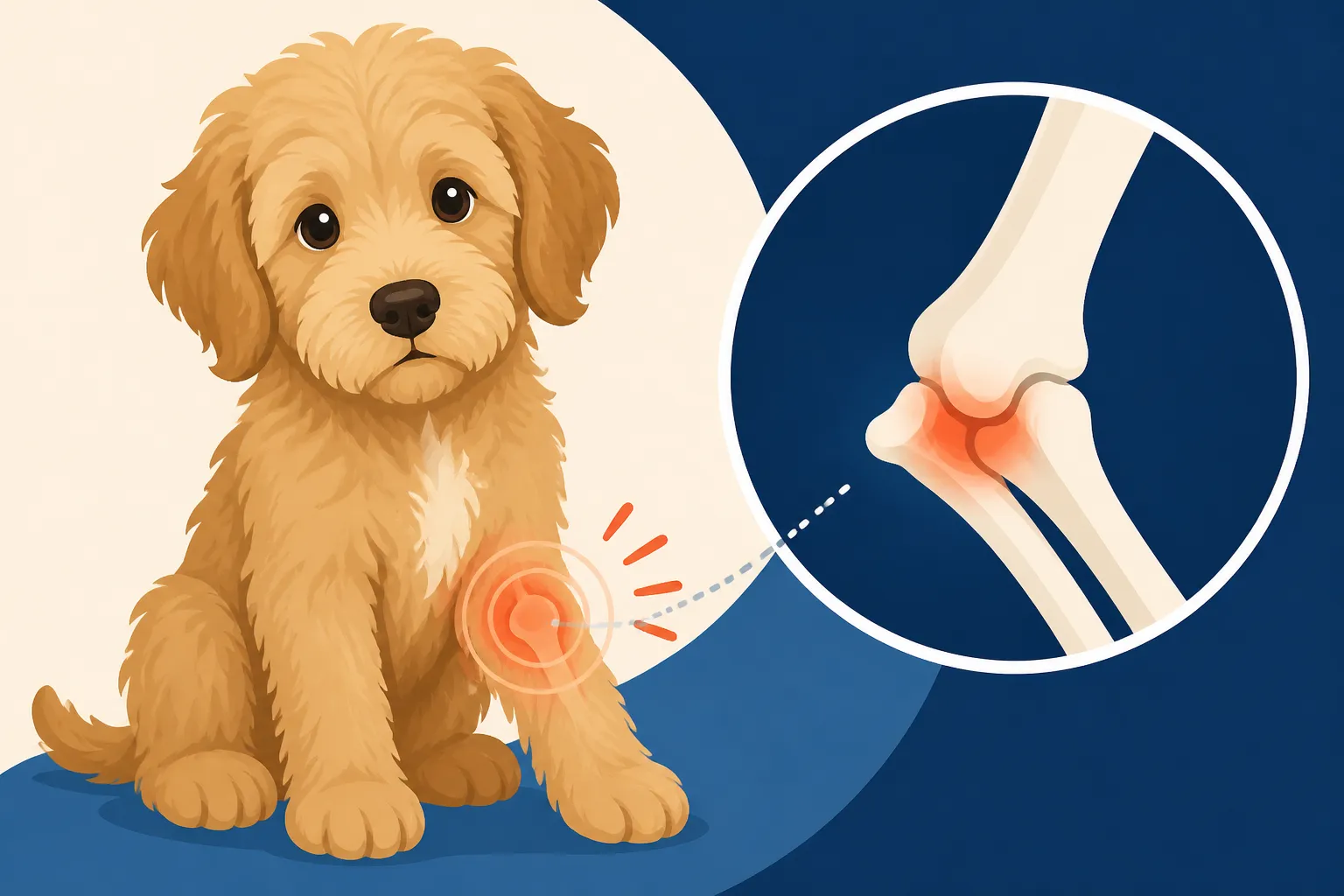
At its core, elbow dysplasia refers to a malformation or degeneration of the elbow joint, which is comprised of three bones: the humerus (upper arm bone), the radius, and the ulna (forearm bones). When these bones don't grow at the same rate or don't fit together perfectly, it leads to instability and abnormal forces within the joint. This abnormal development sets the stage for chronic pain, inflammation, and eventually, debilitating osteoarthritis.
There are four primary components of elbow dysplasia that often occur individually or in combination:
- Fragmented Coronoid Process (FCP): This is one of the most common forms. The coronoid process is a small bony projection on the ulna. In FCP, a piece of this bone breaks off, causing irritation, pain, and damage to the cartilage lining the joint.
- Ununited Anconeal Process (UAP): The anconeal process is another bony projection on the ulna, which should fuse to the ulna by about 5 months of age. If it fails to fuse, it remains a separate bone fragment within the joint, causing instability and pain.
- Osteochondrosis Dissecans (OCD): This condition involves abnormal cartilage growth and maturation. A flap of cartilage, sometimes with a piece of underlying bone, can detach from the surface of the humerus, leading to pain and inflammation within the joint.
- Elbow Incongruity: This occurs when the three bones of the elbow joint don't align properly. The radius and ulna might be different lengths, or the joint surfaces might not match perfectly, leading to uneven pressure and stress on the cartilage.
Each of these conditions, independently or together, can cause friction and damage within the joint, triggering a cascade of inflammation and eventually leading to degenerative joint disease, or arthritis, often early in life. The manifestation can vary greatly, from a subtle lameness to severe, debilitating pain that profoundly impacts a puppy's quality of life.
Genetic Factors and Breed Predisposition
It’s important to understand that elbow dysplasia is considered a multifactorial disease, meaning it results from a complex interplay of genetic predisposition, environmental influences, nutrition, and growth rate. However, genetics play a very significant role. Both parent breeds of the Labradoodle – the Labrador Retriever and the Poodle – are known to carry genes that increase the risk of developing elbow dysplasia. This is why responsible breeding practices are so critical.
Because the condition is polygenic, meaning multiple genes contribute to its inheritance, it’s not as simple as a single "good" or "bad" gene. This complexity makes eradication challenging, but careful screening can drastically reduce its incidence. Reputable breeders will go to great lengths to ensure their breeding stock has been thoroughly screened for elbow dysplasia, typically through evaluations performed by organizations like the Orthopedic Foundation for Animals (OFA). We talk more about this in our article, Hips and Elbows in a Sixty Pound Labradoodle.
Even when both parents have excellent elbow scores, there's always a small chance a puppy could still develop the condition due to the complex genetic inheritance and environmental factors. However, choosing a puppy from health-tested parents significantly minimizes this risk and gives your Labradoodle puppy the best possible start. It's a proactive step that can save a great deal of heartache and expense down the line.
Spotting the Signs: When to Worry About Your Labradoodle's Elbow
Detecting elbow dysplasia in a Labradoodle puppy can be tricky because young dogs are often exuberant and may mask pain, or their symptoms might be intermittent. It’s important for owners to be vigilant and aware of both subtle and more overt signs, especially since early intervention can often lead to better outcomes. Most symptoms typically appear between 4 and 12 months of age, during periods of rapid growth.
Subtle and Early Indicators
Sometimes, the first signs of elbow dysplasia are so subtle you might second-guess yourself. Your Labradoodle puppy might seem perfectly fine one day and then display a slight limp the next. This intermittent lameness, particularly after a burst of activity like a vigorous play session or a long walk, or even after prolonged rest, is a classic early warning sign. You might notice your puppy "bunny hopping" or having an unusual gait when running, trying to compensate for discomfort in one or both front legs.
Other subtle changes to watch for include a reluctance to engage in activities they previously enjoyed. Perhaps they’re less keen on fetching, don't jump as readily, or seem a bit stiff when getting up from a nap. They might shift their weight differently, perhaps favoring one front leg, or try to avoid putting full pressure on it. Sometimes, they might hold their affected leg out at an unusual angle when sitting, or even display a slight "toe-out" stance to alleviate pressure on the joint. These seemingly minor observations are worth noting and discussing with your veterinarian.
More Obvious Symptoms and Behavioral Changes
As the condition progresses, or if it's more severe from the outset, the symptoms tend to become more pronounced and persistent. You might observe a consistent lameness that doesn’t resolve with rest, or one that clearly worsens after even moderate exercise. There might be visible swelling around the elbow joint, though with a Labradoodle’s fluffy coat, this can be challenging to detect without careful palpation.
Pain responses become more evident; your puppy might vocalize, pull away, or even snap if you attempt to touch or manipulate their affected elbow. Their range of motion may decrease noticeably, making it difficult for them to fully extend or flex their leg. In chronic cases, you might even start to see muscle atrophy in the affected limb, where the muscles appear thinner compared to the healthy leg due to disuse. Beyond physical symptoms, persistent pain can lead to behavioral changes, such as increased irritability, a reluctance to play, or even a change in their normally joyful demeanor. Any of these more obvious signs warrant an immediate veterinary visit.
The Road to Diagnosis: What Your Vet Will Do
When you suspect your Labradoodle puppy might have elbow dysplasia, the first and most important step is a visit to your veterinarian. They are your primary partner in uncovering the root cause of your puppy’s discomfort and guiding you through the diagnostic process. It can be a worrying time, but having a clear plan helps.
Initial Examination and Screening
Your vet will begin with a comprehensive physical examination. This isn't just a quick look; it's a thorough assessment where they will observe your Labradoodle’s gait, how they stand, and how they bear weight. They’ll carefully palpate all four limbs, paying close attention to the elbow joints. During this process, they’ll gently manipulate the elbows, flexing and extending them, listening for any crepitus (a grinding or crackling sound), feeling for swelling or thickening, and noting any pain responses from your puppy. It's not uncommon for a Labradoodle to show discomfort during this examination, which helps narrow down the problem area.
This initial assessment is crucial because lameness can stem from many different issues, not just elbow dysplasia. Your vet will try to differentiate between soft tissue injuries, other orthopedic problems, or even less common conditions. They might recommend a short course of anti-inflammatory medication to see if the symptoms improve, but if lameness persists or is severe, further diagnostic steps will certainly be necessary to get a definitive diagnosis.
Radiography and Specialist Consultations
To accurately diagnose elbow dysplasia and pinpoint its specific form, X-rays (radiographs) are the gold standard. Your vet will typically take multiple views of both elbows, as the condition can affect one or both sides. For the best and most accurate images, especially in a wiggly or painful puppy, sedation or even a light general anesthetic is often required to ensure perfect positioning. Poorly positioned X-rays can miss critical details or even suggest problems that aren't there. For instance, the exact positioning required for official OFA (Orthopedic Foundation for Animals) elbow evaluations is very specific, similar to the process we discuss for hips in our article, Whether Both Labradoodle Parents Need OFA Hips.
In some complex cases, or if the X-rays are inconclusive, your vet might recommend more advanced imaging techniques. A Computed Tomography (CT) scan provides a much more detailed 3D view of the bones and joint, which is excellent for identifying subtle bone fragments (like in FCP) or assessing joint incongruity. Another option is arthroscopy, a minimally invasive surgical procedure where a tiny camera is inserted into the joint, allowing direct visualization of the cartilage and bone. Arthroscopy can often serve as both a diagnostic and therapeutic tool, as minor issues can sometimes be addressed during the same procedure. Depending on the findings and the complexity, your primary vet might also recommend a referral to a board-certified veterinary orthopedic specialist who has advanced training and equipment for these intricate cases.
| Type of Elbow Dysplasia | Description | Common Symptoms | Diagnostic Focus |
|---|---|---|---|
| Fragmented Coronoid Process (FCP) | A small piece of bone breaks off the ulna's coronoid process. | Forelimb lameness, pain on elbow extension, stiffness. | X-rays (often require special views), CT scan for small fragments. |
| Ununited Anconeal Process (UAP) | A growth plate fails to fuse, leaving a separate bone fragment. | Chronic lameness, swelling, pain when elbow is flexed. | X-rays (lateral view with elbow flexed), may be visible on standard X-rays. |
| Osteochondrosis Dissecans (OCD) | Abnormal cartilage development forming a flap on the humerus. | Lameness, stiffness, pain when joint is manipulated or extended. | X-rays (may show flattening or defect), CT scan for clearer cartilage views. |
| Elbow Incongruity | Poor alignment or unequal growth of the radius and ulna in the joint. | Abnormal gait, progressive lameness, restricted motion. | X-rays (multiple views), CT scan for precise measurements and alignment issues. |
Treatment Strategies for Labradoodle Puppies with Elbow Dysplasia
Once your Labradoodle puppy receives a diagnosis of elbow dysplasia, your veterinarian will discuss a range of treatment options. The best approach depends on several factors: the specific type and severity of the dysplasia, your puppy's age, overall health, and your family's circumstances. There are generally two main pathways: conservative management or surgical intervention.
Conservative Management Approaches
For milder cases, or when surgery is not immediately indicated, conservative management is often the first course of action. The primary goal is to manage pain, reduce inflammation, and minimize further damage to the joint. One of the most challenging aspects for an owner is implementing strict rest and activity restriction. This means limiting your energetic Labradoodle puppy to leash walks only, no jumping, no running, no playing roughly with other dogs, and often strict crate rest for a period. This sounds tough, and it is, but it’s vital to give the joint a chance to heal and prevent further microtrauma. We delve into this more in our piece on The Exercise Limit for a Growing Labradoodle.
Pain management is another cornerstone of conservative treatment. Your vet will likely prescribe Non-Steroidal Anti-Inflammatory Drugs (NSAIDs) to alleviate pain and reduce inflammation within the joint. Additionally, they may recommend chondroprotectants, which are supplements like glucosamine, chondroitin, and MSM, aimed at supporting cartilage health and slowing down the progression of arthritis. Maintaining your Labradoodle’s ideal weight is also paramount; every extra pound puts more stress on already compromised joints, so a controlled diet is essential. Physical therapy, which can include gentle range-of-motion exercises, massage, and even hydrotherapy (like swimming in a controlled environment), can also be immensely beneficial in strengthening surrounding muscles and improving joint function without high impact.
Surgical Interventions
For many types of elbow dysplasia, especially those involving bone fragments or significant incongruity, surgical intervention offers the best chance for long-term comfort and function. The specific surgical procedure will depend entirely on the underlying cause of the dysplasia.
- Arthroscopy: This is a popular and minimally invasive option, particularly for conditions like FCP and OCD. A small incision is made, and a tiny camera (arthroscope) is inserted into the joint. Specialized instruments are then used to remove fragmented coronoid processes or cartilage flaps. The benefits include smaller incisions, less pain, and a generally faster recovery time compared to traditional open surgery.
- Osteotomy Procedures: For cases of elbow incongruity, where the bones don't fit together correctly, surgical procedures called osteotomies may be performed. This involves carefully cutting and reshaping the bones (ulna or radius) to realign the joint surfaces, reducing abnormal pressure and improving function.
- Forelimb Unloader Osteotomy (PAUL or CUE): In more severe cases or when arthritis has already set in, these procedures aim to shift weight-bearing forces away from the most damaged parts of the joint. By strategically altering the bones, the surgeon can alleviate pressure on painful areas.
- Salvage Procedures: For end-stage elbow dysplasia where severe arthritis has developed and other treatments haven’t provided relief, salvage procedures like elbow replacement or arthrodesis (joint fusion) might be considered. These are less common in young puppies but can be options for older dogs with chronic, debilitating pain.
Regardless of the surgery performed, post-operative care is critical to success. This will involve strict rest, often with confinement, for several weeks, followed by a carefully managed rehabilitation program that includes physical therapy. Pain medication and anti-inflammatories will also be part of the recovery protocol. It's a significant commitment, but for many Labradoodles, surgery offers a dramatic improvement in quality of life.
Long-Term Outlook and Management for Affected Labradoodles
The diagnosis of elbow dysplasia, especially in a young puppy, can feel overwhelming. You might be picturing a future filled with pain and limitations for your beloved Labradoodle. While it's true that elbow dysplasia is a serious condition, with proper long-term management, many affected Labradoodles can lead happy, comfortable lives. The key is understanding that this is often a lifelong journey of care.
Managing Chronic Pain and Arthritis
Even after successful surgery or with diligent conservative management, elbow dysplasia often leads to the development of osteoarthritis in the affected joint. This means that chronic pain management will likely be an ongoing aspect of your Labradoodle's care. Your vet will work with you to create a comprehensive pain management plan, which might evolve over time. This can include long-term use of NSAIDs, though often at lower maintenance doses, or other pain medications as needed. Beyond pharmaceuticals, many owners find great success with complementary therapies such as pulsed electromagnetic field therapy, cold laser therapy, and acupuncture, which can significantly improve comfort and reduce reliance on daily medications.
Maintaining a regimen of joint supplements, ensuring a balanced diet that supports joint health, and continuing with controlled, regular exercise are all critical components. The goal isn't to "cure" the arthritis, but to minimize its impact, keep your Labradoodle as comfortable as possible, and preserve their mobility. Regular veterinary check-ups, often every 6-12 months, will be essential to monitor the progression of arthritis and adjust the treatment plan as your Labradoodle ages and their needs change. These ongoing costs can add up, so having comprehensive pet insurance from a provider like Healthy Paws can be incredibly helpful in covering these lifelong expenses.
Lifestyle Adjustments and Quality of Life
Living with a Labradoodle affected by elbow dysplasia often means making some practical lifestyle adjustments to support their joint health and comfort. Simple changes around the home can make a big difference, such as providing orthopedic beds that cushion their joints, using ramps or steps to help them get into cars or onto furniture, and ensuring non-slip surfaces throughout the house. Avoiding high-impact activities like jumping off tall objects, intense fetching on hard surfaces, or prolonged, strenuous running is crucial.
Maintaining a healthy body weight is perhaps one of the most impactful lifestyle adjustments you can make. Even a few extra pounds can significantly increase the load on already compromised joints, accelerating the progression of arthritis and exacerbating pain. We discuss optimal weight in our article The Weight a Labradoodle Should Hold. Instead of intense bursts of activity, focus on regular, moderate exercise tailored to your Labradoodle's comfort level, such as controlled leash walks or swimming, which is excellent for joint health with minimal impact. With thoughtful care and commitment, your Labradoodle with elbow dysplasia can still enjoy a wonderfully fulfilling life as a cherished family member.
Preventing Elbow Dysplasia: A Proactive Approach
While we can't completely eliminate the risk of elbow dysplasia, especially given its complex genetic nature, there are significant proactive steps that can be taken to minimize its occurrence and impact. The journey to a healthy Labradoodle often begins long before you even bring your puppy home, with the choices made by responsible breeders.
The Critical Role of Responsible Breeding
The single most important factor in preventing elbow dysplasia is selecting a puppy from responsible, health-tested parents. Reputable Labradoodle breeders will diligently screen their breeding dogs for elbow dysplasia (and other genetic conditions like hip dysplasia) before they are ever bred. This typically involves submitting X-rays of the parents' elbows to organizations like the Orthopedic Foundation for Animals (OFA) or utilizing other screening methods like PennHIP. These organizations provide evaluations that grade the quality of the joints, and only dogs with "normal" or "excellent" scores should be used for breeding. You can learn more about these evaluations in our article Whether PennHIP or OFA Suits a Labradoodle Better.
When you're speaking with a breeder, don't hesitate to ask for copies of the health certificates for both parents. A transparent breeder will be happy to provide them and explain what they mean. Be wary of breeders who offer vague assurances or claim "clear by parentage" without providing actual test results for the parent dogs themselves; clear by parentage only means the parents of their parents were tested, not the actual parents. This level of transparency is a hallmark of responsible breeding and significantly increases your chances of getting a healthy puppy. As we explore in Whether Health Tested Parents Add Years to a Labradoodle, selecting a puppy from carefully screened lines is a huge step towards promoting a long, healthy life.
Optimal Puppy Care and Environmental Factors
Even with genetically sound parents, a puppy’s environment and care during their crucial growth period can influence whether elbow dysplasia manifests or how severely it develops. Overfeeding a growing Labradoodle puppy, for instance, can lead to excessively rapid growth and weight gain, putting undue stress on developing joints. Instead, feed a high-quality, large-breed puppy food specifically formulated to support slow and steady growth, ensuring they receive balanced nutrition without overdoing it on calories.
Controlled exercise is another vital preventative measure, especially during the first year of your Labradoodle's life. While it's tempting to let a bouncy puppy run and jump to their heart's content, excessive high-impact activities like prolonged running on hard surfaces, jumping off furniture, or frequently climbing stairs can put significant stress on vulnerable growth plates and developing joints. Structured, moderate exercise like controlled walks and gentle play is far more beneficial. Early detection is also key; maintaining regular veterinary check-ups and immediately addressing any signs of lameness or discomfort can lead to earlier diagnosis and intervention, which often results in better long-term outcomes for your Labradoodle. For comprehensive coverage and peace of mind should a condition like elbow dysplasia arise, considering pet insurance from a reputable provider such as Healthy Paws early in your puppy's life, before any pre-existing conditions are noted, is a smart financial decision that can support ongoing care costs.
Disclaimer
This article is for general informational purposes only and does not constitute professional advice. Laws, prices and regulations vary by location and change over time. Consult a qualified professional for guidance on your specific situation.