How Long Brushing a Labradoodle Takes Each Week
One of the biggest surprises new Labradoodle owners face isn't just that their beautiful, shaggy-coated companion needs grooming, but how much time it actually demands. You might envision a quick five-minute brush-through a few times a week, but the reality for many Labradoodle parents is a significant, regular commitment to keep their dog comfortable and mat-free. This guide is here to walk you through what to truly expect when it comes to the weekly brushing requirements for your Labradoodle, helping you understand the time investment and how to manage it effectively.
The Reality of Labradoodle Grooming Time
Let's be honest, when you first bring home that adorable, fluffy Labradoodle puppy, you're probably dreaming of long walks and cuddles, not spending hours with a slicker brush in hand. But the truth is, a Labradoodle's unique coat, a beautiful blend of its Labrador and Poodle heritage, requires dedicated attention. Many owners underestimate this, leading to frustration for both themselves and their furry friend.
Initial Expectations vs. Daily Demands
Most new owners start with an idea that brushing will be a quick, pleasant bonding experience, perhaps 10-15 minutes every other day. They imagine effortlessly gliding a brush through soft, flowing curls. However, depending on your dog's specific coat type—be it the wavy fleece, the curly wool, or even the rarer hair coat—that dream can quickly turn into a wrestling match against mats and tangles. The coat, especially as it grows out, is a magnet for debris, dirt, and anything else your active Labradoodle might encounter. What might seem like a manageable task initially can soon feel overwhelming, particularly if you're not equipped with the right tools or techniques. The coat's density and its tendency to trap shed undercoat mean that surface brushing simply won't cut it.
The "Minimum" Brushing Commitment
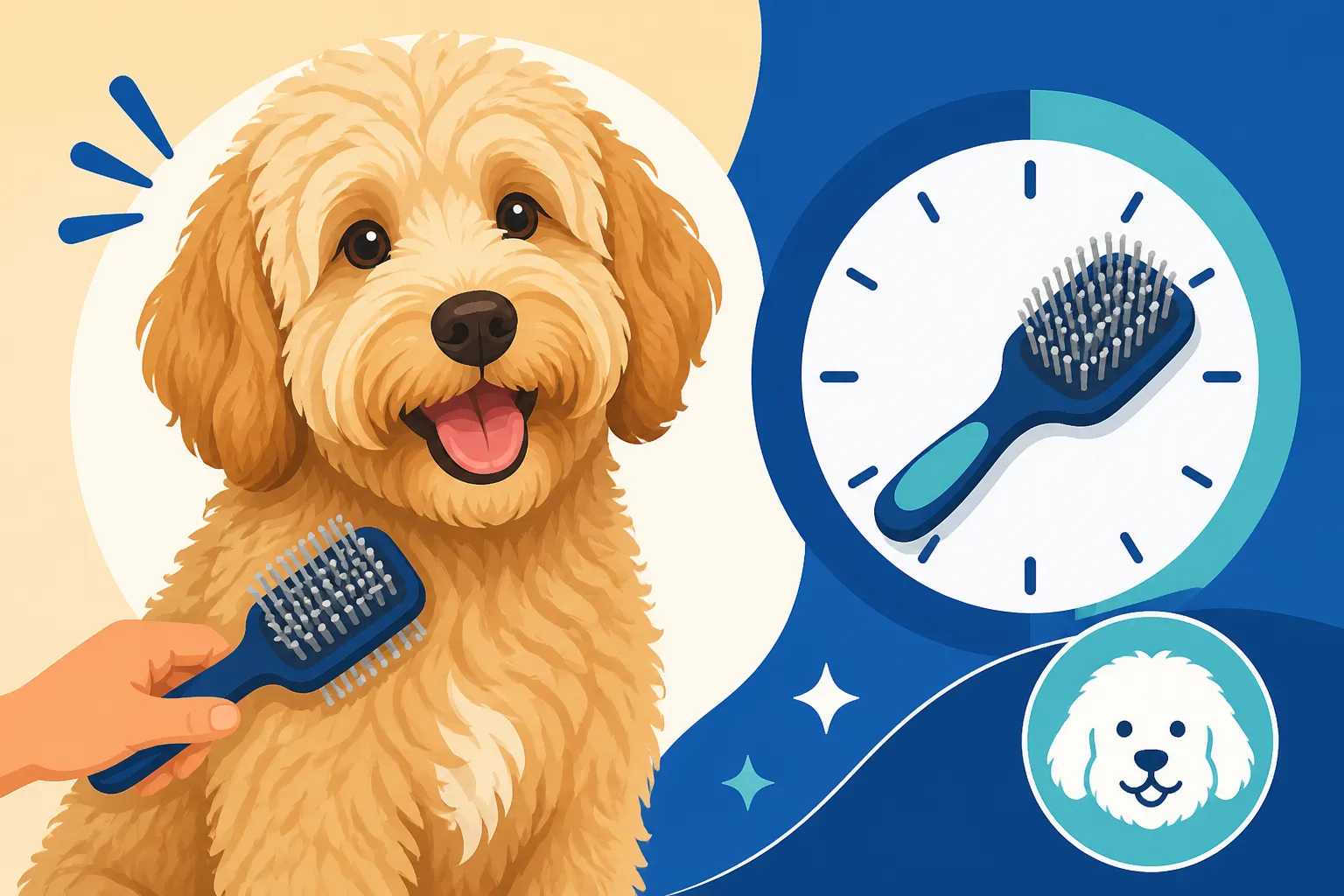
So, what's the real minimum? For most Labradoodles, especially those with the highly sought-after fleece or wool coats, you're looking at a bare minimum of 30-60 minutes of dedicated line brushing per week, spread across at least two to three sessions. This isn't just a quick once-over; this is a thorough, systematic brushing process that gets down to the skin to prevent mats from forming at the base of the hair shaft. Think of it less like styling and more like preventative maintenance on a very important, living piece of equipment. If you skip a session, those small tangles can quickly become tight, painful mats that are much harder and more time-consuming to remove. This is especially true during key developmental stages, like when they go through The Coat Change That Hits a Labradoodle at Nine Months.
Why Your Labradoodle Isn't Like a Short-Haired Breed
Unlike a Labrador Retriever with its smooth, shedding coat, or even a Poodle with its dense but uniformly curly hair, the Labradoodle's coat often combines the worst of both worlds. You get the double coat tendencies of the Labrador, meaning a shedding undercoat, with the non-shedding, mat-prone qualities of the Poodle. This unique combination means their hair grows continuously and, without proper care, the shed undercoat gets trapped within the longer outer coat, forming dense mats that pull on the skin and can be incredibly painful. This isn't just about aesthetics; a matted coat can lead to skin infections, hot spots, and general discomfort for your dog, impacting their quality of life. Understanding The Three Labradoodle Coats: Hair, Fleece and Wool will give you a better grasp of why each type demands specific attention.
Factors Influencing Brushing Time
The amount of time you spend brushing your Labradoodle each week isn't a fixed number; it's a dynamic calculation influenced by several key factors. Understanding these can help you anticipate the demands and prepare accordingly.
Impact of Coat Type: Fleece, Wool, and Hair
The single biggest determinant of brushing time is your Labradoodle's coat type.
- Wool Coats: These are typically the most demanding. Thick, dense, and tightly curled, wool coats are fantastic for allergy sufferers but are mat magnets. If your Labradoodle has a true wool coat, expect to spend closer to 60 minutes or more per week, often requiring daily short sessions, especially if kept long. Owners often find themselves asking Whether a Wool Coat Labradoodle Needs Daily Work because neglecting it for even a few days can lead to significant matting.
- Fleece Coats: This is often considered the "ideal" Labradoodle coat – soft, wavy, and lower shedding. While less demanding than wool, fleece coats still require consistent attention. You're likely looking at 45-60 minutes per week spread across 2-3 sessions to keep it free of tangles. The softness can sometimes make it prone to static and friction mats.
- Hair Coats: Resembling more of a wiry or straight Labrador coat, these often shed more than the other types. Ironically, they can be easier to brush as the hair typically doesn't hold mats as tightly. However, they can still have a dense undercoat. You might get away with 30-45 minutes per week, but don't assume a hair coat means no brushing. It still needs attention to remove loose hair and prevent tangles.
Size and Age Considerations
A bigger dog simply means more surface area to brush. A standard Labradoodle will naturally take longer to groom than a miniature one, simply because there's more coat to cover. Think about the difference between brushing a small throw blanket and a king-sized comforter; it's a similar principle.
Age also plays a significant role. Puppies have softer, finer "puppy coats" that are generally easier to manage, though they still need to be introduced to brushing early and often to build good habits. The real challenge often hits around 6-12 months when the puppy coat starts to shed out and the adult coat comes in. This transition, known as "blowing coat," can be incredibly challenging, and you might find yourself needing to dedicate double the usual brushing time. Getting your Labradoodle through this period, as discussed in Getting a Labradoodle Through Its Coat Change, requires diligence. Later in life, as dogs age, their skin can become more delicate, and they may be less tolerant of long grooming sessions. Their coat texture might also change, sometimes becoming coarser or finer, which can affect matting tendencies. What Changes in a Labradoodle's Coat After Ten can shed more light on these age-related shifts.
Dealing with Mats and Tangles
Mats are the bane of every Labradoodle owner's existence, and they can drastically increase your brushing time. A mat forms when hair becomes tangled and then tightens, often close to the skin. Common culprits include friction from collars and harnesses, rubbing against furniture, or simply neglected brushing. Mats love to hide in specific spots: behind the ears, in the armpits, on the belly, under the collar, and on the legs. Knowing Where Mats Form First on a Labradoodle can help you target these areas. If you encounter a mat, simply trying to brush through it can cause pain and skin irritation. Detangling sprays and a good metal comb are essential, but working out even a small mat can add 10-15 minutes to a single session. Multiple mats mean significantly more time, and severe matting might even require professional intervention, as a groomer might charge by the hour.
Seasonal Changes and Shedding Cycles
While Labradoodles are often advertised as low-shedding, it's not entirely true, especially for those with hair or fleece coats. Many Labradoodles will still "blow their coat" seasonally, typically in spring and fall, as they adjust to temperature changes. During these periods, you'll notice more loose hair, and this shed hair, if not brushed out, will quickly become trapped in the growing coat, leading to increased matting. This means that during seasonal changes, your weekly brushing commitment might jump from 45 minutes to an hour or even more, as you work to remove the dead undercoat before it can cause problems. Even dogs that don't visibly "shed" much still have hair that dies and needs to be brushed out to prevent matting.
Weekly Brushing Routine Breakdown
Knowing how long brushing might take is one thing; actually doing it effectively is another. A systematic approach ensures you cover all areas, get to the root of the problem (literally!), and keep your Labradoodle comfortable.
Gathering Your Essential Tools
You wouldn't attempt a home renovation without the right tools, and grooming your Labradoodle is no different. Investing in quality equipment from the start will save you time, frustration, and potentially painful experiences for your dog.
Here's what you'll need:
- Slicker Brush: This is your primary weapon against tangles. Look for one with firm, bent wire bristles. It's excellent for working through the coat and lifting shed hair. Brands like Chris Christensen offer highly regarded slicker brushes that many doodle owners swear by, and you can find a variety on Amazon or Chewy.
- Metal Comb: A good quality, sturdy metal comb with both wide and fine teeth is crucial. After using the slicker brush, the comb is your "mat detector." If the comb can't pass easily through the coat, there's still a tangle or mat lurking.
- De-matting Spray/Conditioning Spray: These sprays help lubricate the hair, making it easier to brush through tangles and mats without causing damage or discomfort. They can be invaluable for working out knots.
- Force Dryer (Optional but Recommended): While an investment, a good dog force dryer can drastically reduce drying time after baths and help "blow out" loose undercoat, making brushing more efficient.
- Scissors/Shears (Blunt-nosed safety preferred): For carefully trimming small mats that cannot be brushed out, or for tidying up areas like around the eyes or paw pads. Always use extreme caution.
For a deeper dive into specific tools, check out The Slicker, Rake and Comb a Labradoodle Takes.
A Step-by-Step Guide to Effective Line Brushing
The key to preventing mats and ensuring a thorough job is "line brushing." This technique ensures you're brushing all the way down to the skin, not just skimming the surface.
- Start with a Calm Dog: Choose a time when your Labradoodle is relaxed, perhaps after a walk. A designated grooming spot, like a grooming table (even a sturdy kitchen counter for smaller dogs), can help set the expectation. Providing treats and praise throughout the session, as suggested in Teaching a Labradoodle to Lie Still for a Ninety Minute Groom, is essential for a positive experience.
- Section the Coat: This is the core of line brushing. Start at the bottom of a leg or flank. Use one hand to hold up the top layers of the coat, exposing a small "line" of hair underneath.
- Brush the Line: With your slicker brush, brush this small section of hair down and out from the skin. Work in small strokes, making sure the bristles penetrate all the way to the base of the hair.
- Comb to Check: Once you've brushed a section, use your metal comb to gently comb through it. If the comb catches, go back with the slicker brush until it glides smoothly.
- Work Your Way Up: Drop a little more of the upper coat and repeat the brushing and combing process, working in horizontal lines across the body and upwards.
- Progress Systematically: Move around your dog's body, section by section, ensuring no area is missed. Don't forget the tail, paws, and underside.
This methodical approach might seem slow at first, but it is the most effective way to prevent severe matting and minimize overall brushing time in the long run.
Focusing on Trouble Spots
Certain areas on a Labradoodle are notorious for matting because of friction and moisture. These areas require extra attention during your weekly brushing sessions.
- Behind the Ears: This is a prime matting zone due to rubbing, scratching, and general movement. Always start here, or at least give these areas a thorough comb-through early in your session.
- Armpits and Groin: These areas experience a lot of friction from movement and often trap moisture. They can mat up quickly and cause great discomfort if neglected.
- Under the Collar/Harness: If your dog wears a collar or harness regularly, the fur underneath can become compressed and matted. Ensure you remove their gear before brushing and pay close attention to these areas.
- Paws and Between the Pads: Hair between the paw pads can trap dirt, debris, and moisture, leading to mats and potential skin issues. It's also important to trim this hair periodically.
- Tail: The tail swishes constantly, creating friction. Make sure to brush the tail thoroughly.
By giving these "hot spots" extra focus during each session, you can catch minor tangles before they escalate into painful, time-consuming mats.
Integrating Brushing with Positive Reinforcement
For many dogs, especially puppies, grooming can be a strange and sometimes scary experience. It's vital to make it as positive as possible from the very beginning.
- Short, Frequent Sessions: Don't try to do an hour-long session right away with a puppy. Start with just a few minutes, focusing on one small area, and gradually increase the duration as your dog gets comfortable.
- High-Value Treats: Keep a stash of really good treats on hand. Reward your Labradoodle frequently for standing still, allowing you to brush, and for remaining calm. A Lick Mat smeared with peanut butter can be a fantastic distraction.
- Gentle Handling: Always be gentle. If you hit a snag, stop, apply de-matting spray, and slowly work it out with your fingers or the wide teeth of your comb. Never yank or pull through a mat, as this will teach your dog to fear the brush.
- Praise and Play: End each session, even a short one, with enthusiastic praise and a bit of playtime. This reinforces the idea that grooming leads to good things. By consistently making brushing a positive experience, you'll build a cooperative relationship with your Labradoodle, making the weekly commitment much more manageable for both of you.
Minimizing Brushing Time
While brushing is a non-negotiable part of Labradoodle ownership, there are definitely strategies you can employ to make the process more efficient and reduce the overall time commitment.
Regularity is Key: Preventing Problems Before They Start
This might sound counterintuitive, but brushing more frequently can actually save you time in the long run. A quick 15-minute brush every other day is often far more effective and less time-consuming than trying to tackle a heavily matted coat once a week. Think of it like doing dishes; a few minutes after each meal is easier than a mountain of dirty plates after a week. Regular brushing prevents small tangles from becoming giant, impenetrable mats. When mats are allowed to form, they pull on the skin, causing pain and making your dog less cooperative for future grooming sessions. Consistent grooming also helps distribute natural skin oils, promoting a healthy, shiny coat.
| Coat Type | Minimum Weekly Brushing (Minutes) | Recommended Frequency | Notes |
|---|---|---|---|
| Hair Coat | 30-45 | 2-3 times a week | Less prone to mats, but still needs de-shedding. |
| Fleece Coat | 45-60 | 3-4 times a week | Most common, prone to static & friction mats. |
| Wool Coat | 60+ (often daily short sessions) | Daily | Most dense, highest risk of matting. |
Professional Grooming Schedules and Their Benefits
Even the most dedicated home groomers often find immense value in regular professional grooming. While you might be aiming for a specific look, the primary benefit of a professional groomer is their ability to thoroughly de-shed, de-mat, and trim your Labradoodle's coat, setting you up for easier maintenance at home. Many owners schedule professional grooms every 6-8 weeks, depending on their dog's coat and lifestyle, as highlighted in The Six to Eight Week Clock on a Labradoodle's Coat.
A groomer has specialized tools, such as high-velocity dryers, industrial clippers, and expert knowledge of different coat types. They can often remove undercoat and tangles far more efficiently than you can at home. After a professional groom, your dog's coat will be clean, knot-free, and often shorter, making your interim home brushing sessions much faster and more effective. It's like getting a fresh start, a reset button for your grooming routine. While there's a cost associated with professional grooming, it can be a wise investment in your dog's comfort and your peace of mind, potentially saving you from extreme matting scenarios that could lead to even higher vet bills for skin issues.
Shortening the Coat for Easier Maintenance
One of the most straightforward ways to reduce weekly brushing time is to keep your Labradoodle's coat shorter. While the long, flowing "teddy bear" cut is undeniably adorable, it also requires the most diligent home maintenance. A shorter clip, like a "kennel clip" or a "sport clip," leaves the coat at a manageable length (often 1-2 inches), drastically cutting down on matting potential and brushing time.
Discuss with your professional groomer what length would work best for your lifestyle and your dog's coat type. They can achieve a cute, practical look that allows your Labradoodle to still look like a doodle but with much less daily fuss. While some owners worry about Whether a Shaved Labradoodle Comes Back Woollier or if Whether a Labradoodle's Coat Grows Back the Same, a well-executed shorter trim is a purely practical decision that can significantly improve your dog's comfort and reduce your grooming burden without any long-term negative impacts on the coat quality. It's about finding a balance between the aesthetic you love and the practicalities of dog ownership.
When to Seek Professional Help
There comes a point for many Labradoodle owners when the home grooming routine, despite best efforts, just isn't enough. Recognizing when to call in the professionals isn't a sign of failure; it's a responsible choice for your dog's well-being.
Recognizing When Mats Become Unmanageable
You've tried your de-matting spray, you've spent an hour with your slicker and comb, and those mats are still there, hard as rocks, pulling on your dog's skin. Or maybe you've discovered a mat in a sensitive area that your dog simply won't let you touch. This is the moment to pick up the phone and call a professional groomer. Unmanaged mats aren't just unsightly; they are painful. They restrict movement, pull on the skin, and can create an environment for skin infections, parasites, or even fungal growth underneath. Trying to "power through" severe matting at home can be agonizing for your dog and can damage your bond. A groomer has specialized tools and techniques to remove even the most severe mats safely and efficiently, often needing to shave the coat down to the skin underneath the mat to relieve the tension. While this may mean a very short haircut for your Labradoodle, it's often the kindest solution.
Health Implications of Neglected Coats
A matted coat is more than a cosmetic issue; it's a health risk. Beyond the immediate pain and skin irritation, severe matting can lead to a cascade of problems:
- Skin Infections: Mats trap moisture and dirt against the skin, creating a perfect breeding ground for bacteria and yeast. This can result in painful hot spots or widespread skin infections.
- Parasites: Fleas, ticks, and other parasites can hide deep within matted fur, making them incredibly difficult to detect and remove.
- Restricted Movement: Tight mats can pull the skin so severely that they restrict your dog's natural movement, leading to gait changes or even lameness. Imagine trying to run with your hair tightly pulled and tangled.
- Overheating: A dense, matted coat prevents air circulation, making it difficult for your Labradoodle to regulate their body temperature, especially in warmer weather.
These health issues are not just uncomfortable; they can be serious and require veterinary intervention, adding to your dog's distress and your financial burden. Companies like Ollie, which focus on fresh, healthy dog food, often emphasize overall wellness, and a healthy coat is a huge part of that, preventing these kinds of issues.
The Cost-Benefit of a Professional Intervention
It's tempting to try and save money by doing all the grooming yourself, but sometimes, avoiding a professional groom can actually cost you more in the long run. If your Labradoodle develops severe matting, a professional groomer will often charge a de-matting fee on top of their standard grooming price, simply because of the extra time, effort, and specialized tools required. In extreme cases, a matted dog might even require sedation from a veterinarian to safely remove the mats, adding significant veterinary costs to the bill.
Consider the cost of a regular professional groom (say, every 6-8 weeks) versus the potential veterinary bills for skin infections, pain medication, or even surgical mat removal under sedation. When you factor in the peace of mind, your dog's comfort, and the time saved by having a professionally managed coat, regular trips to the groomer become a wise investment. It's about proactive care rather than reactive crisis management. Don't be afraid to utilize the expertise of a professional to keep your Labradoodle happy, healthy, and looking their best.
Disclaimer
This article is for general informational purposes only and does not constitute professional advice. Laws, prices and regulations vary by location and change over time. Consult a qualified professional for guidance on your specific situation.