Whether Salt Hurts a Labradoodle’s Feet
The crisp winter air can be exhilarating for you and your furry companion, but for many Labradoodle owners, that beautiful snowy landscape or icy sidewalk brings a hidden worry: the harsh reality of salt and de-icing chemicals on their dog's sensitive paws. It's a common frustration, seeing your bouncy Labradoodle suddenly lift a paw or start limping, all because of the irritants designed to make our paths safer. This guide will walk you through why salt is such a problem for your Labradoodle's feet, how to spot the signs of irritation, and most importantly, how to protect those precious paws so your winter walks can remain joyful and pain-free.
Why Salt on Pavement is a Problem for Your Labradoodle's Paws
It’s not just a minor irritation; the salts and chemicals used to melt ice on sidewalks and roads can be genuinely damaging to your Labradoodle's paw pads. Think of it like walking barefoot on very rough sandpaper, then adding a burning chemical to the mix. It's not a pleasant thought, and it's certainly not pleasant for our dogs.
The Corrosive Nature of De-Icing Agents
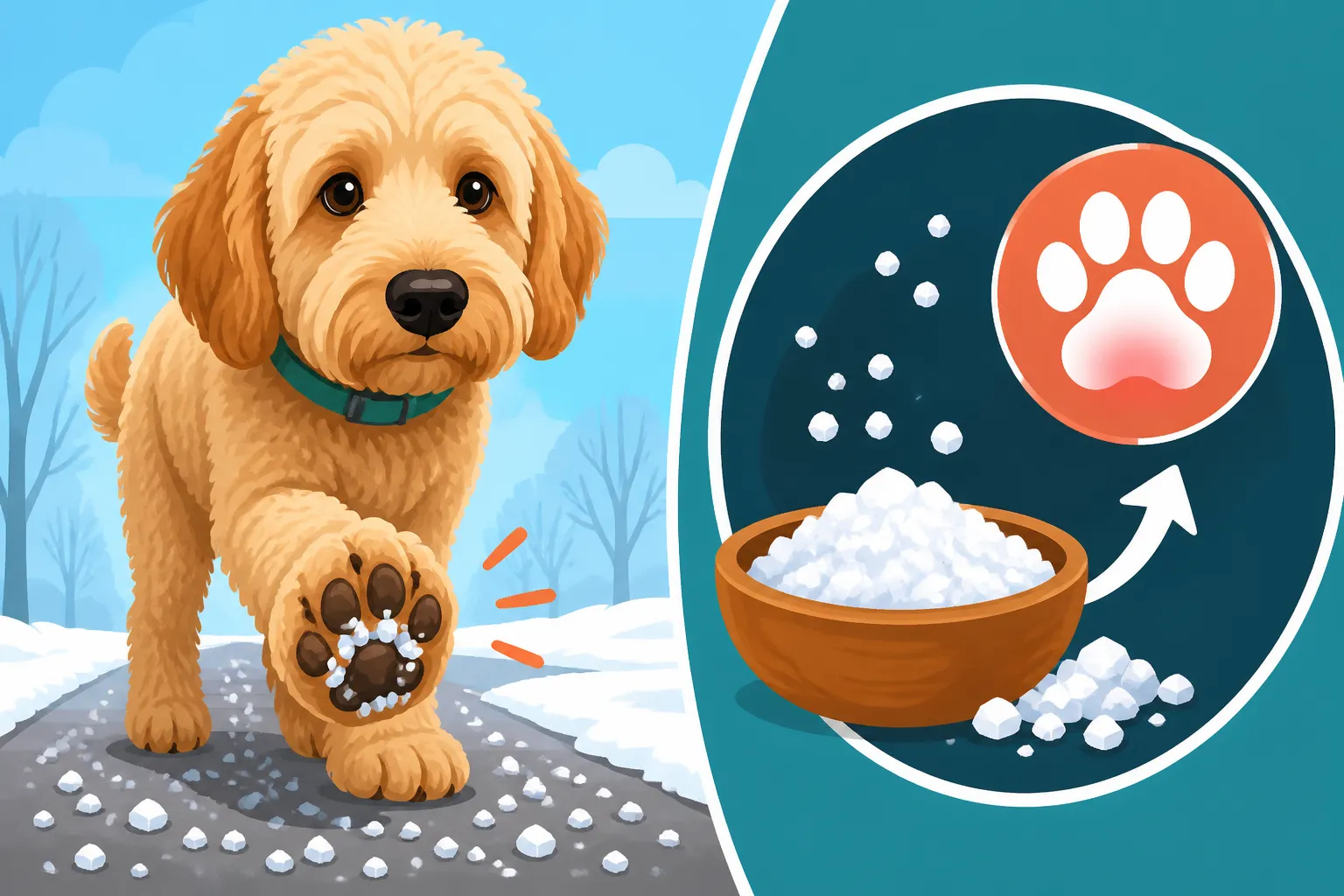
The de-icing products commonly found on streets and driveways aren't just simple table salt. While sodium chloride (rock salt) is often used, many formulations also include calcium chloride, magnesium chloride, potassium chloride, and urea. These chemicals are highly effective at melting ice, but they are also incredibly corrosive and dehydrating. When your Labradoodle walks on these surfaces, the crystals can get lodged between their paw pads and toes, where they begin to draw moisture out of the skin. This leads to dryness, cracking, and irritation, similar to severe chapping on human hands. The sheer chemical nature can also cause outright burns, especially with prolonged contact.
Moreover, the cold temperatures already make paws more susceptible to damage. The natural oils and moisture in paw pads are vital for their flexibility and protection. When exposed to freezing temperatures and then corrosive salts, this protective barrier breaks down rapidly. Your Labradoodle's normally robust paw pads can become raw, tender, and incredibly painful, making even short walks a dreaded chore. This isn't just a concern for those living in snowy regions; even a thin layer of ice melt on sidewalks in more temperate climates can pose a risk.
Ingestion Risks from Paw Licking
It’s a natural instinct for dogs: if something feels uncomfortable on their paws, they're going to lick it off. Unfortunately, this protective behavior can introduce a whole new set of problems when it comes to de-icing salts. After a walk, your Labradoodle will likely start grooming their paws, and in doing so, they'll ingest whatever chemicals have clung to their fur and paw pads. While small amounts might only cause mild stomach upset, larger quantities or prolonged ingestion can lead to more serious issues.
Symptoms of ingesting de-icing chemicals can range from excessive drooling, vomiting, and diarrhea to more severe signs like lethargy, loss of appetite, and in rare, extreme cases, even kidney damage or seizures, depending on the specific chemicals and the amount ingested. Owners often miss the connection, assuming their dog just has a sensitive stomach, when in reality, it's the aftermath of a salty walk. This makes prevention not just about paw health, but about your Labradoodle's overall well-being. Keeping an eye on your Labradoodle's habits and understanding these risks is part of What a Labradoodle Needs Daily.
Recognizing the Signs of Salt Irritation and Injury
Knowing what to look for can help you intervene quickly and prevent minor irritation from becoming a serious injury. Labradoodles, with their playful and often stoic nature, might not always make it obvious they're in pain until the problem is quite advanced.
Visible and Behavioral Clues on Walks
The most immediate signs often appear while you're still out on your walk. You might notice your Labradoodle lifting a paw, holding it up for a moment, and then putting it down gingerly. They might start to limp or walk on the very tips of their toes, trying to minimize contact with the ground. Some dogs will try to shake their paws vigorously, as if something is stuck to them. If you’re walking with a leash, you might feel them suddenly pull back or resist moving forward, trying to avoid a particularly salty patch of pavement.
Another common sign is excessive licking or chewing at their paws immediately after coming inside. This isn't just a casual grooming session; it's an urgent attempt to relieve discomfort. You might also see visible signs on their paw pads: they could appear red, inflamed, or cracked. In more severe cases, you might notice small cuts, blisters, or even bleeding. If the problem has been ongoing, the paw pads might look unusually dry and rough, losing their natural elasticity. Sometimes, this can mimic other skin issues, but if it happens consistently after winter walks, salt is a prime suspect. Understanding these subtle cues is crucial, especially for Caring for a Labradoodle Past Ten, as older dogs might be less resilient.
Differentiating Salt Burns from Other Paw Issues
It's important to distinguish salt irritation from other common paw problems, as the treatment can vary. While salt burns typically present as redness, rawness, and cracking, sometimes accompanied by blisters, other issues might look similar but have different underlying causes. For example, rough terrain could cause abrasions, or allergies might lead to itchy, inflamed paws year-round. Hot Spots on a Labradoodle That Swims can also cause redness and irritation, but they usually appear as localized, moist lesions.
Here's a quick comparison of common paw issues:
| Paw Issue | Common Appearance | Primary Cause | Key Differentiating Factors |
|---|---|---|---|
| Salt Irritation/Burn | Red, inflamed, cracked pads; blisters | De-icing salts, chemicals | Appears after winter walks; often affects all four paws |
| Allergies | Red, itchy, often swollen; excessive licking | Environmental allergens, food sensitivities | Can be seasonal or year-round; may affect other body parts |
| Abrasions/Cuts | Visible cuts, scrapes, raw spots | Rough surfaces, sharp objects | Localized injury; clear wound |
| Yeast/Bacterial Inf. | Red, itchy, greasy or crusty; cheesy odor | Fungal or bacterial overgrowth | Often associated with dampness; distinct odor, usually between toes |
| Punctures | Small, deep hole; often causes limping | Thorns, glass, sharp debris | Localized, deep wound; sudden onset of lameness |
If you're unsure, or if the symptoms are severe, persistent, or accompanied by other signs of illness, it’s always best to consult your veterinarian. They can provide an accurate diagnosis and recommend the most appropriate course of action for your Labradoodle's specific situation.
Practical Steps to Protect Your Labradoodle's Paws from Salt
Proactive measures are key to keeping your Labradoodle’s paws healthy and happy during the winter months. A little preparation can go a long way in preventing pain and discomfort.
Pre-Walk Protection Strategies
Before you even step out the door, there are several things you can do to create a barrier between your Labradoodle’s paws and the harsh chemicals outside. One of the most popular and effective methods is using paw balms or waxes. These products create a protective layer on the paw pads, acting as a shield against salt, ice, and even hot pavement in the summer. Look for balms with natural ingredients like beeswax, shea butter, or vitamin E. Brands like Musher's Secret or Bag Balm are often recommended, and you can find a good selection on platforms like Chewy or Amazon. Apply a generous amount to your Labradoodle’s paw pads and between their toes, ensuring full coverage, a few minutes before you head out. This gives it a chance to absorb slightly and create that protective barrier.
Another excellent option, especially for Labradoodles who are prone to paw irritation or live in areas with extremely heavy salt use, is dog boots. While some dogs take a little time to get used to them, boots offer the most complete protection. They shield the entire paw from contact with salt, ice, and cold pavement. When choosing boots, look for ones that are durable, waterproof, have good traction, and fit snugly without being too tight. You want them to stay on during walks but not restrict circulation. Measuring your Labradoodle's paws carefully is crucial to get the right size. Start by introducing boots gradually at home, with plenty of positive reinforcement, to help your Labradoodle get comfortable wearing them. This might be especially helpful if your Labradoodle has sensitive skin due to Allergies Behind a Labradoodle's Itching.
Post-Walk Paw Care Rituals
The moment you get back inside, immediate paw care is essential. Don't wait for your Labradoodle to start licking or showing discomfort. The first step is to thoroughly clean their paws. A simple rinse with lukewarm water is often sufficient to remove salt and chemicals. You can use a small basin, a dog paw washer, or simply lead your Labradoodle into a shower stall or tub for a quick wash. Make sure to get between the toes and around the pads where salt crystals tend to hide.
After rinsing, it's crucial to thoroughly dry their paws. Leaving moisture between the toes can lead to other problems, like yeast infections. Gently towel dry each paw, again paying attention to those hidden crevices. Once dry, you can reapply a thin layer of paw balm to moisturize and soothe the pads, helping to repair any minor dryness that may have occurred. This routine is non-negotiable during winter for any Labradoodle that regularly walks on treated surfaces. Establishing this habit makes it just another part of their daily routine, much like their meal times or playtime. Trimming The Hair That Grows Where a Labradoodle's Ear Should Drain is important, and similarly, keeping the hair between their paw pads trimmed can also make cleaning easier and prevent salt from sticking.
What to Do If Your Labradoodle's Paws Are Already Affected
Despite your best efforts, sometimes salt irritation still happens. Knowing how to provide immediate relief and care is vital for your Labradoodle's comfort and recovery.
Immediate Soothing and Cleaning
If you notice your Labradoodle's paws are red, irritated, or they're constantly licking them after a walk, immediate action is needed. The very first step is a thorough cleaning. Don't just rinse – gently wash their paws with lukewarm water and a mild, pet-safe soap if you suspect a significant chemical exposure. Dish soap is sometimes recommended in a pinch for oil-based contaminants, but for salt, a gentle dog shampoo or even just warm water is usually fine. Lather gently, focusing on the pads and between the toes, then rinse completely. The goal is to remove any residual salt crystals and neutralize the irritating chemicals.
After washing, carefully pat the paws completely dry with a clean towel. Avoid rubbing vigorously, which could further irritate already sensitive skin. Once dry, apply a soothing balm or ointment. Products containing aloe vera, vitamin E, or calendula can help to calm inflammation and promote healing. You can find many excellent paw balms on Chewy or Amazon designed for irritated skin. If your Labradoodle tries to lick it off immediately, you might need to use a soft, breathable bootie or an Elizabethan collar (cone) for a short period to allow the balm to absorb and do its work. Keep a close eye on the paws over the next few hours for any worsening symptoms.
When to Seek Veterinary Attention
Most mild salt irritations can be managed at home with diligent cleaning and soothing balms. However, there are times when a trip to the vet is absolutely necessary. You should contact your veterinarian if you observe any of the following:
- Severe Redness, Swelling, or Blistering: If the paw pads look severely inflamed, swollen, or if you see actual blisters forming, this indicates a significant chemical burn that likely requires professional medical attention.
- Deep Cracks or Bleeding: Any open wounds, deep cracks that extend beyond the superficial layer of the paw pad, or persistent bleeding increases the risk of infection and needs a vet's assessment.
- Persistent Limping or Reluctance to Walk: If your Labradoodle continues to limp, avoids putting weight on a paw, or shows extreme discomfort for more than a day, it's time to seek veterinary advice. This could indicate a deeper injury or infection.
- Signs of Infection: Look for pus, foul odor, increasing warmth, or spreading redness around the paw. These are clear indicators of infection that will need prescription medication.
- Systemic Symptoms: If your Labradoodle shows signs beyond paw irritation, such as vomiting, diarrhea, lethargy, loss of appetite, or excessive drooling, especially after licking their paws, they may have ingested a harmful amount of de-icing chemicals. This is a medical emergency that requires immediate veterinary care.
Your vet can properly diagnose the extent of the damage, clean wounds thoroughly, prescribe appropriate medications (like antibiotics for infection or pain relief), and recommend specialized wound care if necessary. Don't hesitate to reach out to them; catching problems early can prevent more severe complications and ensure your Labradoodle gets back to their happy, bouncy self as quickly as possible. The Yearly Screening a Labradoodle Should Get often includes a physical exam that can catch chronic paw issues, but acute injuries always warrant immediate attention.
Disclaimer
This article is for general informational purposes only and does not constitute professional advice. Laws, prices and regulations vary by location and change over time. Consult a qualified professional for guidance on your specific situation.