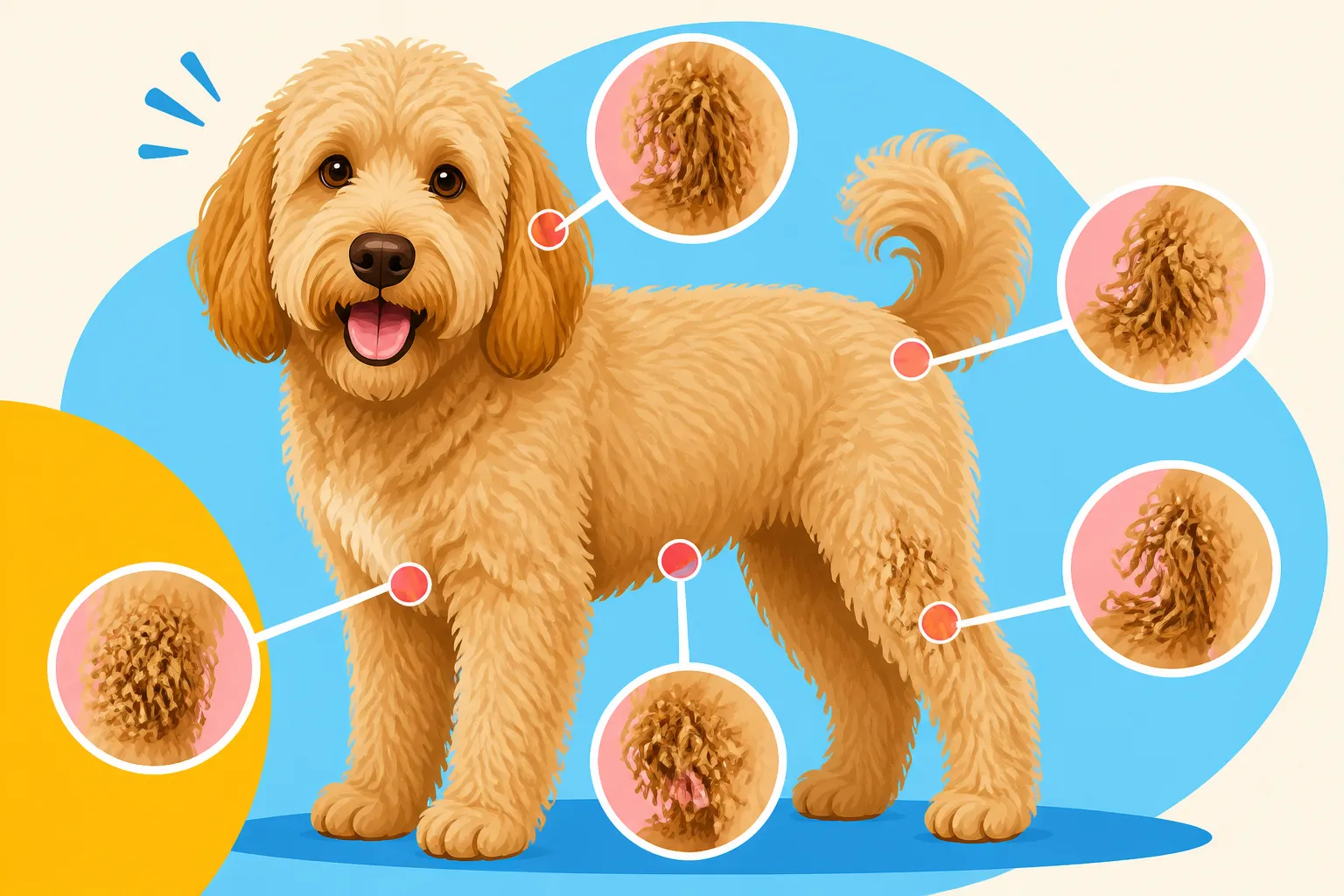
Where Mats Form First on a Labradoodle
Oh, the joy and the struggle of that gorgeous Labradoodle coat! It's one of the first things that draws us to these wonderful dogs, isn't it? That soft, often curly, seemingly non-shedding fur promises a dream. But if you're a Labradoodle parent, you know that dream can quickly turn into a matted nightmare, especially in certain sneaky spots. This guide is here to walk you through exactly where those dreaded mats typically form first, why they happen, and how you can get ahead of them to keep your doodle's coat healthy and happy.
Understanding Your Labradoodle's Magnificent (But Mat-Prone) Coat
Before we dive into the nitty-gritty of where mats appear, it's crucial to understand what makes a Labradoodle's coat so special and, frankly, so prone to matting in the first place. These aren't your average dog coats; they demand a specific kind of care.
The Unique Characteristics of Labradoodle Coats
Labradoodles are a cross between a Labrador Retriever and a Poodle, and their coats can inherit traits from either side, or a beautiful, often unpredictable, mix of both. This results in a range of textures, but generally, we talk about three main types: hair, fleece, and wool. Each has its own characteristics, but all are susceptible to matting if not properly maintained.
The "hair" coat is often closest to a Labrador's, typically straighter and more prone to shedding, yet it can still mat, especially if it has some Poodle curl mixed in. The "fleece" coat is often considered the ideal – soft, wavy or spiraling, and low-shedding. This coat type feels wonderfully soft to the touch, like a fleecy lamb. However, that very softness and wave also makes it prone to tangling. Then there's the "wool" coat, which is dense and curly, much like a Poodle's, and feels like soft lamb's wool. While often excellent for allergy sufferers, its tight curls are perhaps the biggest challenge when it comes to preventing mats. The truth is, that wonderful, low-shedding quality means dead hair doesn't fall out; instead, it gets trapped within the existing coat, creating knots and tangles that quickly become dense mats. We often discuss The Three Labradoodle Coats: Hair, Fleece and Wool when advising new owners because understanding which coat type you have is the first step in effective grooming.
Why Labradoodle Coats Are a Matting Magnet
It really comes down to how these coats are structured. Unlike a shedding dog where loose hair falls away, a Labradoodle's coat holds onto that dead hair. Imagine trying to comb out hair that's tangled up with more hair that's still attached at the root – it's a recipe for disaster. Add to that the natural oils in the coat, environmental debris like twigs and leaves, and everyday friction, and you have a perfect storm for mat formation.
Mats aren't just an aesthetic issue, either. They can pull on your dog's skin, causing pain and discomfort. Severe matting can even restrict movement, hide skin infections, parasites, or other dermatological problems, and make your dog utterly miserable. It's not just about vanity; it's about their health and well-being. Even if your Labradoodle has a relatively "easy" hair coat, any curl or wave means that shed hairs can get caught and start the matting process. For those with the coveted fleece or dense wool coats, it's a constant battle against the forces of nature, but one that is absolutely winnable with consistent effort and the right approach.
The Usual Suspects: Where Mats Love to Hide and Grow
You might think mats would appear evenly across your Labradoodle's body, but experience tells us that certain areas are notorious hotspots. These are the places where friction, moisture, and fine hair conspire to create tangles faster than anywhere else. Knowing these areas is half the battle, as it allows you to focus your grooming efforts where they're most needed.
Behind the Ears: The Silent Aggressor
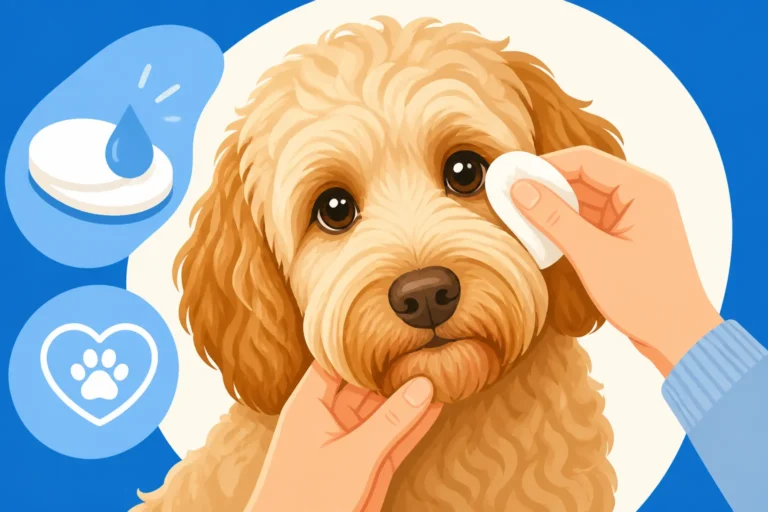
Ah, behind the ears. This is arguably the number one spot where new Labradoodle owners discover their first significant mats. Why here? Several reasons conspire against us. Firstly, the hair behind a Labradoodle's ears is often finer and softer than the rest of the coat. This delicate texture makes it more prone to tangling. Secondly, it's a high-friction area. Every time your Labradoodle shakes their head, scratches an itch, or rubs against furniture, friction is created, encouraging those fine hairs to knot together.
Thirdly, this area can get surprisingly damp. If your dog has been playing in water, had a bath, or even just gotten a little sweaty during exercise, moisture can contribute to mats forming and tightening as the hair dries. Many owners miss this spot because it's not immediately visible, tucked away as it is. By the time you feel a lump, it can already be a stubborn, pancake-flat mat. Always make sure to dedicate extra time to this area during your brushing sessions, gently working your comb right down to the skin. Ignoring it, even for a few days, can lead to a significant problem that requires much more effort to resolve. Keeping an eye out for Mats Behind a Labradoodle's Ears is critical for proactive care.
Armpits, Legs, and Friction Zones: Where Movement Creates Mayhem
Think about where your dog's body parts rub together or rub against other things during their daily activities. These are prime matting territories. The armpits, or axillary regions, are a huge culprit. Every time your Labradoodle walks, runs, or stretches, their front legs are moving against their body, creating constant friction. The hair in these areas is also often quite fine and soft, just like behind the ears, making it an easy target for tangles.
Similarly, the hair on the insides of the hind legs, where they rub against each other, and on the lower legs, especially where they brush against tall grass or rough terrain during walks, are also prone to matting. Even the little "feathering" behind the joints can gather debris and knot up quickly. These areas demand diligent attention, often requiring more frequent brushing than the broader parts of their back or sides. If your Labradoodle loves to explore bushes or go swimming, these lower body mats can become particularly challenging due to the added moisture and debris.
Under Collars, Harnesses, and Even the Tail: Everyday Wear and Tear
Our dogs wear collars and harnesses almost constantly, and while essential for safety and control, these accessories are also a major source of matting. The constant rubbing of a collar around the neck, or a harness across the chest and under the belly, creates friction that can quickly felt the hair. You might notice a distinct ring of dense, compacted hair around the collar area, or flattened mats where the harness straps lie. This is especially true if the collar or harness is left on for extended periods, or if it's not fitted correctly.
It's a good practice to remove your Labradoodle's collar and harness for brushing sessions and overnight, if safe to do so. This allows air to circulate and gives you access to those often-neglected areas. Pay particular attention to the chest area where a harness sits, as this can be a difficult spot to brush thoroughly. Even the base of the tail, where it often rubs against the body, or where a wagging tail might pick up burrs and twigs, is another common matting zone that owners sometimes overlook. Don't underestimate the impact of everyday items; even a poorly fitted harness can cause severe matting, which is why we often explore Whether a Harness Mats a Labradoodle's Chest and similar issues.
Navigating the Dreaded "Coat Change" Phenomenon
If you thought puppyhood matting was challenging, just wait for the coat change! This period can be one of the most frustrating times for Labradoodle owners, as their previously manageable puppy fluff transforms into the dense adult coat. It's often the point where many owners throw up their hands and book an emergency shave down.
What Actually Happens During the Puppy to Adult Coat Transition
Around 7 to 14 months of age, your Labradoodle puppy will undergo what is affectionately (or perhaps not so affectionately!) known as the "coat change." This is when their soft, fluffy puppy coat begins to shed out, making way for the thicker, denser, and often curlier adult coat. The problem isn't necessarily excessive shedding, but rather that the dead puppy hair gets trapped within the emerging adult coat. It creates a tangled mess of different textures and lengths, all trying to occupy the same space.
This transition period makes matting incredibly easy and incredibly rapid. What might have been a minor tangle one day can become a solid mat the next. It's almost as if the coat actively tries to bond together. This phenomenon is a huge reason why we delve into The Coat Change That Hits a Labradoodle at Nine Months in such detail. Many owners describe it as their dog's coat going from being fairly easy to manage to suddenly matting overnight, even with regular brushing. It's a natural developmental stage, but one that requires a serious ramp-up in your grooming routine.
Survival Strategies for the Coat Change Matting Onslaught
Surviving the coat change requires dedication, patience, and often, an increase in grooming frequency. Daily, thorough brushing is not just recommended; it's practically mandatory. You'll need to use your slicker brush and a good metal comb diligently to work through the layers of the coat, ensuring you're reaching right down to the skin to remove all that trapped puppy hair. If you only brush the surface, you'll create a "surface fluff" that looks good but hides a dense layer of mats underneath.
Many owners find it helpful to slightly trim the coat shorter during this period to make it more manageable. This doesn't mean a full shave, but perhaps a shorter length that reduces the surface area for tangles. Detangling sprays can also become your best friend, helping to lubricate the hair and make the process less painful for your dog. Remember, this phase doesn't last forever, but consistent effort during these crucial months will save you and your Labradoodle a lot of discomfort and potentially costly trips to the groomer. It's all about Getting a Labradoodle Through Its Coat Change with minimal stress and maximum success.
Your Anti-Matting Arsenal: Prevention is Key
When it comes to Labradoodle grooming, prevention is always, always easier than cure. Once a mat forms, it's a battle. If you can prevent them from taking hold in the first place, you'll save yourself time, your dog discomfort, and your wallet from expensive professional dematting fees.
Essential Tools and How to Use Them
Having the right tools is non-negotiable for a Labradoodle owner. You can't fight a matting battle with a flimsy brush meant for a short-haired dog. Here's a breakdown of the essentials:
| Tool Type | Purpose | Best For | Frequency of Use |
|---|---|---|---|
| Slicker Brush | Removing loose hair, detangling light mats, fluffing coat | All coat types, daily brushing to separate hair | Daily |
| Metal Comb (Greyhound Comb) | Finding hidden mats, line brushing, finishing work | All coat types, after brushing to ensure no tangles | Daily |
| Undercoat Rake | Penetrating dense coats, removing dead undercoat | Wool/Fleece coats, especially during coat change | 2-3 times/week or as needed |
| Dematting Rake/Tool | Cutting through tight mats (use with extreme caution!) | Severely matted areas, only when absolutely necessary | Sparingly, if ever; professional use preferred |
| Detangling Spray | Lubricating hair, easing mat removal, reducing static | All coats, before brushing or dematting | As needed, especially for drier coats |
| Blunt-Tipped Scissors | Safely cutting away from skin for very small, isolated mats | Very small, isolated mats, only if comfortable | Rarely, with extreme care |
You can find all these tools from reputable pet suppliers like Chewy or on Amazon. Investing in good quality tools might seem like an upfront cost, but it will save you so much in the long run. Cheap brushes can be ineffective and even painful for your dog. For instance, a high-quality slicker brush with firm pins will effectively grab and separate hairs without simply gliding over the surface. The goal is to keep the coat free of tangles so that when we talk about The Slicker, Rake and Comb a Labradoodle Takes, you know exactly what tools are meant for what job.
Mastering the Art of Consistent, Effective Brushing
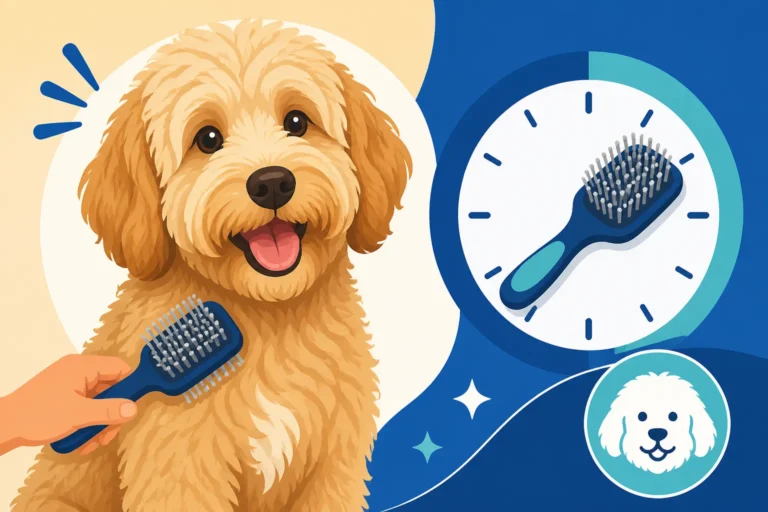
It's not enough to have the tools; you have to know how to use them, and consistently. "Surface brushing" is the biggest mistake new Labradoodle owners make. It makes the top layer of the coat look fluffy and nice, but deep down, against the skin, huge mats are developing unnoticed. The secret is "line brushing" or "section brushing."
To line brush, you effectively part your dog's coat in small sections, much like styling human hair. You start at the bottom of a leg or the belly, hold the top layers of hair up and out of the way, and brush a small section from the skin outwards. Once that section is tangle-free, you drop a bit more hair down and repeat the process, working your way up and across the dog's body. Use your slicker brush first, then follow with a metal comb. If the comb glides through easily, you've done a good job. If it snags, go back with the slicker brush until it passes smoothly. Consistency is key; aim for at least 15-20 minutes every other day, or daily during the coat change, to keep ahead of tangles. This deep dive into Brushing a Labradoodle to the Skin, Not the Surface is not just a technique; it's a philosophy for successful Labradoodle coat care.
When to Call in the Professionals
While daily home grooming is essential, professional grooming is also a crucial part of Labradoodle care. Even the most diligent owners will benefit from a professional groomer's expertise, especially with more challenging coat types or during specific life stages like the coat change. A good groomer has powerful dryers, specialized tools, and the experience to handle knots and tangles safely and effectively.
Aim for professional grooming every 6-8 weeks. This schedule helps maintain the coat length, removes any stubborn knots you might have missed, and allows the groomer to check for skin issues. If you fall behind, and your dog develops severe matting, please don't try to tackle it all yourself at home. Trying to cut out large mats with scissors can be extremely dangerous, as it's very easy to accidentally cut your dog's skin. Professional groomers are trained to safely demat or, if necessary, humanely shave down a severely matted dog. Always be upfront with your groomer about the state of your dog's coat, and remember that What to Ask a Groomer For on a Labradoodle extends beyond just a stylish haircut; it's about coat health.
When Mats Happen: Dealing with the Inevitable
Despite your best efforts, sometimes mats just happen. Life gets busy, a walk through a thorny patch turns your dog into a burr magnet, or perhaps you've just underestimated the coat change. The key is to address them quickly and gently, before they become bigger, more painful problems.
Gentle Methods for Detangling Smaller Mats
For small, isolated mats that are not too tight against the skin, you can try to detangle them at home. The golden rule here is patience. Never yank or pull on a mat, as this will cause pain and make your dog associate grooming with discomfort, making future sessions much harder.
Here’s a gentle approach:
- Isolate the Mat: Gently separate the mat from the surrounding hair. You might need to hold the hair at the base of the mat (closest to the skin) to minimize pulling on the skin.
- Apply Detangling Spray: Liberally spray a good quality detangling spray or conditioner specifically designed for dogs onto the mat. Let it soak in for a few minutes. This lubricates the hair strands, making them easier to separate. Brands like those found on Amazon or Chewy often carry excellent options.
- Use Your Fingers and a Comb: Start by gently pulling apart the edges of the mat with your fingers. Then, using the wide-toothed end of your metal comb, or even just the very tips of the teeth, start picking at the outer edges of the mat, working in small sections, always from the outside in.
- Work Slowly: Take your time. Don't try to pull the comb straight through the mat. Instead, use a "picking" motion, gently teasing out individual strands or small clumps of hair. Switch to the finer-toothed end of the comb as the mat loosens.
- Praise and Treats: Keep the experience positive with plenty of praise and high-value treats (like those from Ollie, perhaps!). If your dog shows signs of discomfort, take a break.
Remember, this method is only for small, superficial mats. Attempting this on large, tight mats can be agonizing for your dog and ultimately unsuccessful.
Knowing When It's Time for Professional Intervention
There's a point where home detangling crosses the line from helpful to harmful. If a mat is large, solid, close to the skin, or if your dog is showing significant pain or aggression during your attempts to remove it, it's time to call a professional groomer. Do not feel guilty about this; it's the responsible choice for your dog's well-being.
A professional groomer has specialized dematting tools and techniques, including powerful high-velocity dryers that can sometimes help loosen mats. More importantly, they know how to work safely around a dog's skin, which can be easily cut under a tight mat. If the matting is severe, the groomer may recommend a full shave down. While this can be a shock to see your beautiful fluffy Labradoodle shorn, it's often the kindest and safest option for the dog. It removes all the painful mats, allows their skin to breathe, and gives you a fresh start to implement a consistent grooming routine. It's a tough decision, but sometimes, a clean slate is the best solution for Whether a Tight Matted Labradoodle Has Any Other Option.
Disclaimer
This article is for general informational purposes only and does not constitute professional advice. Laws, prices and regulations vary by location and change over time. Consult a qualified professional for guidance on your specific situation.