What Guide Dog Schools Look For in a Labradoodle
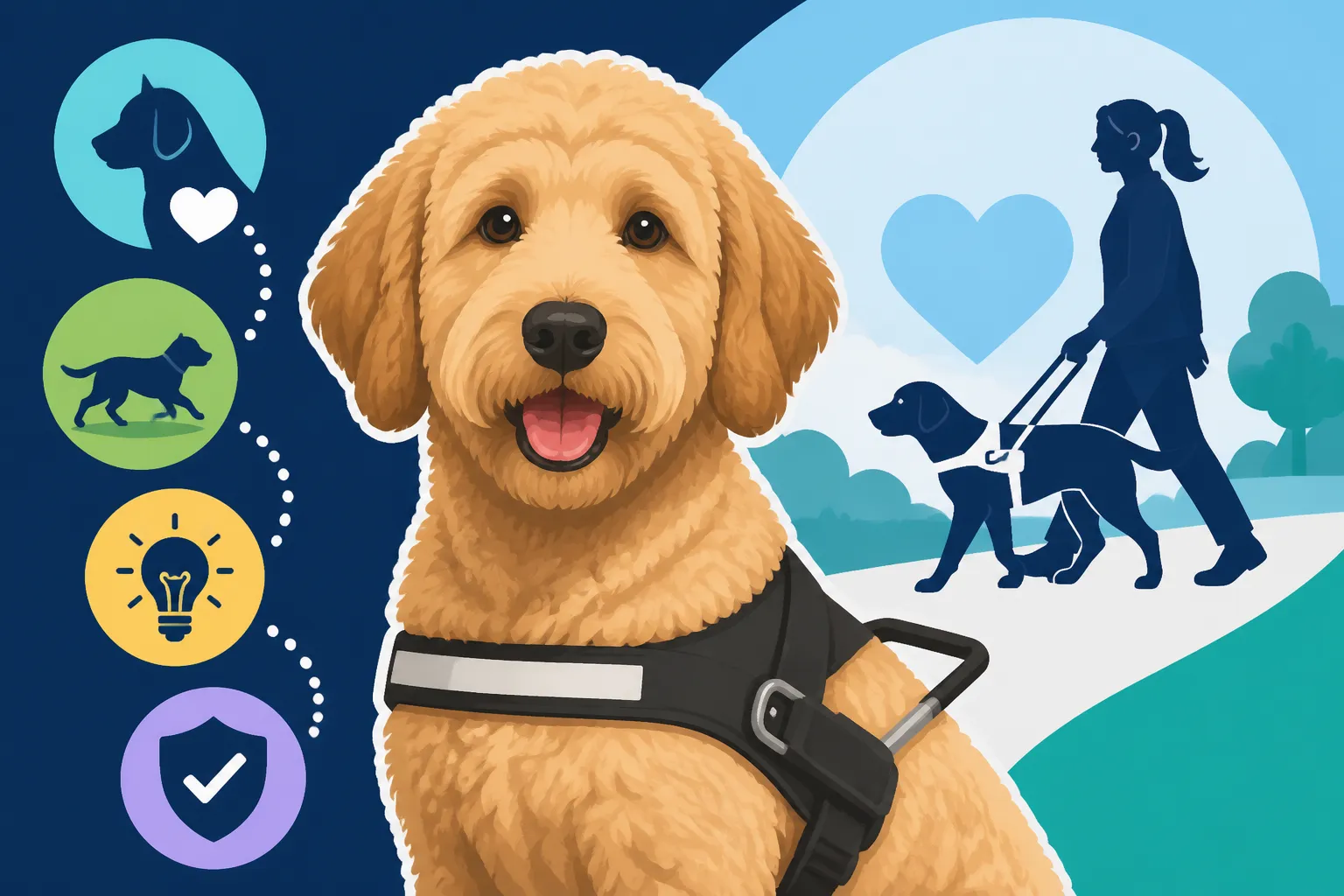
Bringing a Labradoodle into your home is often a dream for families who have fallen in love with their charming looks and reputation. Many envision a calm, intelligent companion, perhaps even one with the potential for service work. However, the path to finding a Labradoodle suitable for rigorous roles like a guide dog isn't as straightforward as it might seem. This guide will delve into the specific traits, both physical and behavioral, that guide dog schools originally sought in the Labradoodle, the challenges they encountered, and what these insights mean for anyone looking to bring home a well-adjusted, trainable Labradoodle companion.
The Original Vision: Labradoodles as Guide Dogs
The Labradoodle's story began with a very specific, noble purpose: to create an assistance dog for a person with visual impairment whose spouse suffered from severe dog allergies. It was a pioneering effort to blend the best qualities of two beloved breeds into one ideal working companion.
The Genesis of the Labradoodle for Service Work
Back in the late 1980s, Wally Conron, the breeding manager for the Royal Guide Dogs Association of Australia, faced a unique request. A blind woman in Hawaii needed a guide dog, but her husband was allergic to dogs. This presented a significant challenge. Guide dog schools typically relied on breeds like Labradors and Golden Retrievers, known for their excellent temperaments and trainability, but these dogs shed and produce dander that triggers allergies.
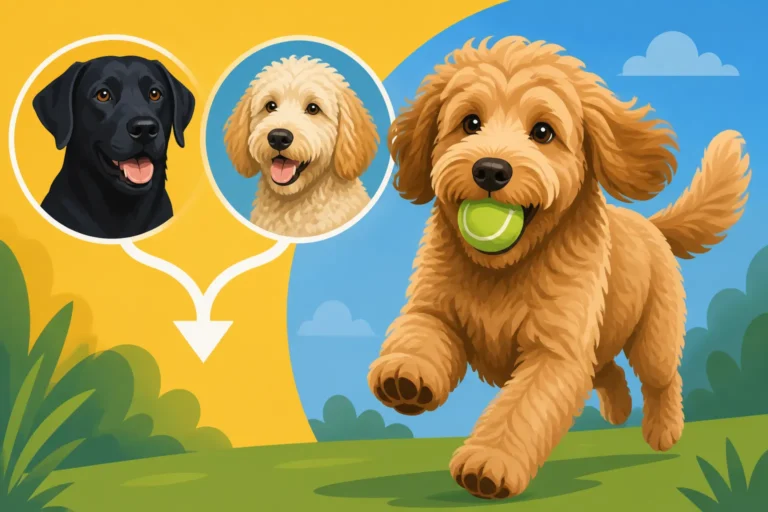
Conron’s solution was to cross a Labrador, known for its superb guide dog qualities, with a Standard Poodle, famous for its intelligence and non-shedding coat. The goal was simple yet profound: to produce a dog with the biddability and temperament of a Labrador, combined with the hypoallergenic coat of a Poodle. The first successful pairing resulted in a litter of puppies, including the now-famous Sultan, who ultimately served as a guide dog in Hawaii, fulfilling that initial, critical need. This marked The 1989 Cross That Made the First Labradoodle.
Early Promise and Breed Development Goals
The early success of dogs like Sultan offered tremendous hope. The vision was clear: to create a new line of dogs that consistently possessed the intelligence and desire to work from the Poodle, married with the calm disposition, strong retrieving drive, and eager-to-please nature of the Labrador. Breeders and guide dog programs alike were excited about the potential for a dog that could open up assistance dog ownership to a wider population, specifically those affected by allergies.
The development goals weren't just about the coat, however. They aimed for a dog with robust health, a stable and predictable temperament, and an inherent drive to perform tasks for its human partner. The hope was that careful selection of parent stock would lead to a repeatable outcome, where each litter produced puppies with the ideal blend of traits. The Royal Guide Dogs Program Behind the Labradoodle was actively involved in exploring this potential, understanding the immense value of a guide dog that wouldn't compromise a handler's health or living situation.
Key Temperamental Traits for Guide Work
When selecting a dog for guide work, temperament is arguably the most crucial factor. A guide dog is not just a pet; it's a partner whose unwavering focus, resilience, and calm demeanor directly impact its handler's safety and independence.
Calmness Under Pressure and Resilience
Imagine navigating a busy city street, crossing intersections with blaring horns, or walking through a crowded airport. A guide dog needs to remain utterly calm and focused amidst these intense distractions. Any dog considered for guide work must demonstrate exceptional resilience – the ability to bounce back quickly from startling noises or unexpected movements without losing focus or becoming reactive. A sudden bark at a squirrel, a lunge at another dog, or a fear response to a dropped package could have severe consequences for a visually impaired handler.
Guide dog schools look for puppies and young dogs that show a natural inclination towards self-control, remaining steady and unruffled. They assess how a dog reacts to novel stimuli, preferring those that show curiosity rather than fear or aggression. This innate unflappability is a cornerstone of a reliable guide dog, allowing them to remain a steadfast anchor in a chaotic world.
Focus, Biddability, and Softness
Beyond just being calm, a guide dog must possess an intense level of focus on its handler and its tasks. This means ignoring enticing smells from street vendors, playful puppies in the park, or even people trying to interact with it. Biddability, or a strong desire to please and cooperate, is paramount. These dogs need to be highly motivated by praise and positive reinforcement, eager to learn and follow directions.
Guide dog programs also value what is often referred to as "softness" in a dog's temperament. This doesn't mean weak or timid; rather, it refers to a dog that is highly responsive to gentle guidance and correction, often through verbal cues or slight leash pressure, without becoming resistant or shutting down. Dogs that require harsh methods to train are generally unsuitable, as the relationship between a handler and their guide dog relies on trust and subtle communication. The Poodle's innate intelligence and sensitivity can contribute to this desirable "softness," making them highly receptive learners. What Public Access Training Asks of a Labradoodle goes into more detail about the rigorous demands placed on these working dogs.
Social Maturity and Public Confidence
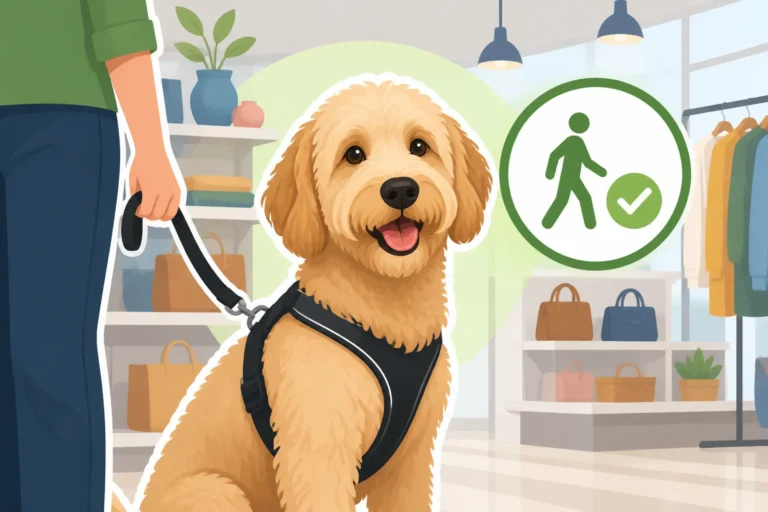
A guide dog lives and works in the public eye, constantly interacting with people and other animals. Therefore, it needs to exhibit social maturity – acting appropriately and confidently in all situations without being overly boisterous or timid. While friendliness is a desirable trait, an excessive need to greet every stranger or dog encountered is a distraction that can compromise safety. Guide dogs are trained to be present but unobtrusive.
Confidence is key; a dog that is easily startled or anxious in new environments will struggle to perform its duties reliably. They need to walk with purpose, maintain a steady pace, and be unfazed by unfamiliar sights, sounds, and smells. This balanced social disposition ensures that the dog can be a constant, reassuring presence for its handler without drawing undue attention or causing disturbances.
Physical Attributes and Health Requirements
Beyond temperament, the physical characteristics and robust health of a dog are non-negotiable for guide work. A working dog needs to be fit, structurally sound, and free from debilitating health conditions that could shorten its career or impact its ability to perform.
Desired Size and Structure for Mobility
Guide dogs need to be the right size for their role. For most roles, a medium to standard-sized dog is preferred – large enough to be easily handled, provide a sturdy presence for bracing or guiding, and reach necessary touch points, but not so large as to be cumbersome or difficult to manage in tight spaces like crowded buses or small shops. A dog that is too small might not have the physical presence to guide effectively, while one that is too large could be unwieldy for certain handlers.
Crucially, excellent structural health is paramount. This means sound hips, elbows, and patellas, as these dogs will spend years walking, navigating obstacles, and performing repetitive movements. Any orthopedic issues, even minor ones, could lead to pain, premature retirement, and significant veterinary expenses. Guide dog programs conduct extensive screenings to ensure their dogs have the best possible chance at a long, healthy working life. This is why considerations like Hips and Elbows in a Sixty Pound Labradoodle are so vital.
Coat Type and Maintenance for Allergen Reduction
The primary reason the Labradoodle was conceived was to produce a low-shedding, allergy-friendly coat. For a dog to be a guide for an allergic handler, its coat must minimize the release of dander and hair. The ideal coats sought were the fleece and wool coats, known for their minimal shedding and soft texture. These coats were a direct inheritance from the Poodle side of the lineage.
However, these coats also come with significant maintenance requirements. While they don't shed much, they are prone to matting if not brushed regularly and thoroughly. A matted coat can cause discomfort, skin infections, and distract a working dog. Guide dog schools also had to consider the practicality of grooming for busy handlers, recognizing that excessive coat care might not be feasible for everyone. The aim was a coat that was both hypoallergenic and manageable. Understanding The Fleece Coat and Why Breeders Aim For It helps to illustrate this delicate balance.
Comprehensive Health Screening
To ensure a long and healthy working life, guide dog schools put immense emphasis on comprehensive health screening of breeding stock. This isn't just a recommendation; it's a strict requirement. They test for a wide array of genetic conditions that could affect the dog's ability to perform its duties, including:
- Hip and Elbow Dysplasia: To prevent crippling joint disease.
- Eye Conditions: Such as Progressive Retinal Atrophy (PRA), which can lead to blindness. The prcd-PRA Test Both Labradoodle Parents Need is a common test.
- Cardiac Health: To rule out heart conditions.
- Patellar Luxation: Especially important for smaller dogs.
- Thyroid Function: To detect autoimmune thyroiditis.
- Addison's Disease: A severe autoimmune condition that can affect Poodle lines.
- Exercise Induced Collapse (EIC): A condition found in Labradors that can cause collapse during strenuous activity.
By rigorously screening parents, programs aim to produce puppies with the highest probability of good health, minimizing the risk of inherited diseases that could lead to early retirement or necessitate extensive medical care. Whether Health Tested Parents Add Years to a Labradoodle is a question that programs consider foundational to their breeding decisions.
Trainability and Intelligence
A guide dog is not simply a well-behaved pet; it is a highly trained professional capable of understanding complex commands, problem-solving, and even making independent decisions to ensure its handler's safety. This requires a specific blend of intelligence and a strong desire to cooperate.
Responsiveness to Complex Command Sequences
Guide dogs learn far more than "sit" and "stay." They are taught intricate sequences of commands, such as "forward," "find the curb," "find the door," "left," "right," "wait," and "obstacle." They must learn to interpret their handler's subtle cues and adapt their responses based on the environment. This means they need to be quick learners with excellent memory and the ability to process multiple pieces of information simultaneously.
The responsiveness of a Labradoodle is a blend of its parent breeds. The Labrador contributes its eagerness to please and strong work ethic, while the Poodle brings its renowned intelligence and problem-solving skills. Guide dog schools are looking for that sweet spot where a dog is intelligent enough to grasp complex concepts but also motivated enough to perform them consistently, even when there are tempting distractions.
Problem-Solving and Independent Thought
Perhaps the most remarkable aspect of a guide dog's training is the concept of "intelligent disobedience." This means the dog must be able to assess a situation and, if following a command would put its handler in danger (e.g., walking into a busy road despite a "forward" command), disobey the command. This isn't stubbornness; it's a critical level of independent thought and judgment.
Guide dogs are trained to identify overhead obstacles, navigate around construction zones, and safely guide their handler through unfamiliar environments. This requires more than rote memorization; it demands the ability to analyze, anticipate, and make decisions that protect their human partner. The inherent intelligence from both the Poodle and Labrador side of the Labradoodle can be a significant asset here, but it needs to be channeled correctly through dedicated training. The Retrieving Drive a Labradoodle Gets From the Labrador shows one aspect of their natural inclination to engage in tasks, which can be harnessed for this purpose.
Building a Strong Working Partnership
Ultimately, a guide dog's success hinges on its ability to form an incredibly strong bond and working partnership with its handler. The dog needs to be attuned to the handler's movements, subtle vocalizations, and even their emotional state. This deep connection allows for seamless communication and mutual trust, which are vital for navigation and safety.
Guide dog schools look for dogs that thrive on this connection, finding satisfaction and motivation in working closely with a human. They want a dog that isn't just performing tasks but is genuinely invested in its role as a partner. This emotional intelligence and capacity for bonding are often evident even in puppyhood and are fostered throughout the extensive training process.
Challenges and Why Programs Moved On
Despite the initial optimism and the incredible success of dogs like Sultan, the Labradoodle's journey as a primary guide dog breed faced significant hurdles, leading many programs to eventually shift their focus.
Inconsistent Traits Across Generations
The biggest challenge for guide dog schools was the inherent unpredictability that comes with a first-generation hybrid cross (F1) and even subsequent generations (F1b, F2). While some Labradoodles perfectly embodied the desired traits – low-shedding coat, excellent temperament, and robust health – many did not. It was a genetic lottery. Some puppies inherited the shedding coat of the Labrador, others had temperaments that were too excitable or difficult to train for the demands of guide work, and health issues could still manifest.
This inconsistency made it incredibly difficult for programs to scale up a reliable breeding operation. They needed a high success rate to meet demand, and the variability within Labradoodle litters meant a significant number of dogs "washed out" of training, representing a substantial investment of time, resources, and emotional labor without the desired outcome. Why Conron Called the Labradoodle a Mistake reflects the frustration many felt when the vision of a consistently perfect guide dog didn't materialize across the board.
Grooming Demands and Practicality
While the non-shedding aspect of the Poodle coat was a major draw, the practicalities of managing it proved to be a significant challenge for a working guide dog and its handler. Fleece and wool coats, if not meticulously brushed daily, quickly mat, especially in areas of friction like behind the ears, in the armpits, and under harnesses.
This constant grooming requirement added an unexpected layer of burden. For a visually impaired handler, regular, thorough brushing can be difficult. Professional grooming appointments, needed every 6-8 weeks, add significant cost and time commitment, which can be an obstacle for many. A matted coat is not only uncomfortable for the dog but can also interfere with harness fit and overall well-being, potentially distracting the dog from its vital work. Why a Wool Coated Labradoodle Costs More to Groom highlights the financial reality of this coat type.
The Shift Towards Australian Labradoodles and Purebreds
Faced with these inconsistencies, guide dog programs began to re-evaluate their strategies. Some turned their attention to the developing Australian Labradoodle, which was being established as a multi-generational breed incorporating other breeds like the Cocker Spaniel and Irish Water Spaniel to achieve greater consistency in temperament, coat, and health over many generations. The idea was that by introducing more breeds and carefully breeding generation after generation, the desired traits would become more predictable.
However, many established guide dog organizations ultimately decided to revert to their proven purebred lines, primarily Labradors and Golden Retrievers. They found that through decades of careful breeding and temperament testing, they could achieve a higher success rate with these breeds, despite the shedding. While they couldn't offer a hypoallergenic solution, the consistency in temperament and trainability outweighed the benefits of the Labradoodle's coat for many programs. This explains why organizations moved on from the standard Labradoodle, and why Why an Australian Labradoodle Is Not a Labradoodle is an important distinction to make.
What Aspiring Owners Can Learn
Even if you're not planning for your Labradoodle to become a guide dog, the criteria and challenges faced by guide dog schools offer invaluable lessons for any prospective owner. Understanding what makes a truly good companion animal, and how to select and raise one, can lead to a happier, healthier relationship.
Prioritizing Health and Temperament in a Puppy
The number one takeaway from guide dog programs is the absolute necessity of prioritizing health and temperament above all else when choosing a puppy. A reputable breeder, whether they breed Labradoodles or purebreds, will conduct extensive health testing on both parent dogs. Don't be swayed by cute photos or claims of "rare colors." Ask to see certifications for hip and elbow clearances, eye exams (CAER), and genetic tests for conditions common in Labradors and Poodles, such as PRA, EIC, and Addison's. These tests are not cheap, and a breeder who invests in them is investing in the future health of their puppies.
Just as important is assessing temperament. A good breeder will be transparent about their puppies' personalities and the temperaments of the parent dogs. Look for puppies that are curious and friendly, but not overly boisterous or timid. Observe how the puppies interact with their littermates and with people. A puppy that displays extreme shyness or aggression, even playfully, might signal future challenges. Don't hesitate to ask about the parents' personalities, and if possible, meet them. These early indicators are crucial for predicting how a dog will mature. The Health Tests a Labradoodle Breeder Should Show is a critical reference point for anyone looking at puppies.
Early Socialization and Consistent Training
Guide dog programs begin socialization and basic training almost from birth. This proactive approach is essential for any Labradoodle. Expose your puppy to a wide variety of sights, sounds, people, and safe environments during its critical socialization period (roughly 8-16 weeks). This helps them develop into confident, well-adjusted adults who are less likely to be fearful or reactive. Think about sounds like vacuums, children playing, traffic, and different floor textures.
Consistent, positive reinforcement training from day one is also non-negotiable. Labradoodles are intelligent and eager to please, but they also have energy and can be easily distracted. Enroll in puppy classes, or utilize online resources. Platforms like BAXTER & Bella offer comprehensive online puppy training programs that guide you through every step, from basic obedience to more advanced manners, helping you build a strong foundation and partnership. Early training teaches good habits, prevents problem behaviors, and strengthens your bond. It's much easier to teach a puppy good manners than to try and correct bad habits in an adult dog. Teaching a Labradoodle to Lie Still for a Ninety Minute Groom starts with these early socialization and training principles.
Managing Coat Care Proactively
The Labradoodle's coat, while often touted as low-shedding, is not maintenance-free. If you're bringing home a fleece or wool-coated Labradoodle, prepare for regular, thorough grooming. Invest in the right tools: a good quality slicker brush, a metal comb, and potentially a de-matting rake. Learning to line brush "to the skin, not just the surface" is critical to prevent matting. Brushing a Labradoodle to the Skin, Not the Surface is not just a phrase; it's a technique that needs to be mastered.
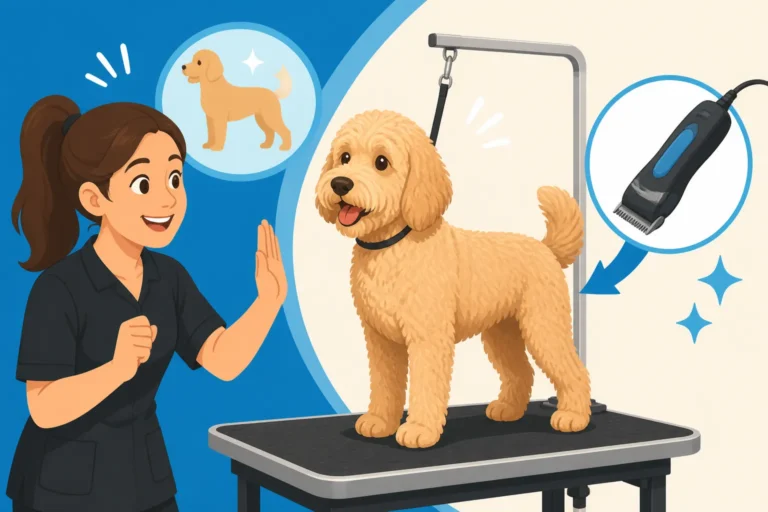
Start grooming your puppy early, making it a positive experience with treats and praise. Get them accustomed to being handled, brushed, and having their paws, ears, and tail touched. Regular professional grooming appointments, typically every 6-8 weeks, will be a necessary part of your budget and schedule. You can find many of the essential grooming tools, from brushes to clippers for paw pads, readily available on Amazon, making it convenient to stock up on everything you need to keep your Labradoodle's coat healthy and mat-free. Proactive coat care will save you headaches, discomfort for your dog, and expensive dematting fees down the line.
Disclaimer
This article is for general informational purposes only and does not constitute professional advice. Laws, prices and regulations vary by location and change over time. Consult a qualified professional for guidance on your specific situation.