How Many Puppies Were in the First Labradoodle Litter
When people talk about the beginnings of the Labradoodle, there's often a sense of mystery surrounding the very first litter. Many wonder how many puppies emerged from that groundbreaking cross, and what became of them. This guide delves into the historical moment that created the Labradoodle, shedding light on the precise number of puppies in that initial litter and their unexpected journey into the world.
The Spark of an Idea: Wally Conron's Vision
The story of the Labradoodle truly begins with Wally Conron, the breeding manager for the Royal Guide Dogs Association of Australia in the late 1980s. He was a dedicated professional, deeply committed to providing guide dogs that could truly transform lives. But he faced a unique challenge that ultimately led to an accidental revolution in the world of dog breeds.
The Need for an Allergy-Friendly Guide Dog
Wally received a request from a blind woman in Hawaii, Pat Blum, who desperately needed a guide dog but whose husband suffered from severe dog allergies. This wasn't just a minor sniffle; it was a serious medical concern that made traditional guide dog breeds, like Labradors, unsuitable. Wally knew he couldn't just dismiss her plea; the need for an allergy-friendly service animal was profound and urgent. The goal was to create a dog that possessed the calm temperament and trainability of a guide dog, but with a coat that wouldn't trigger allergic reactions. This quest for a hypoallergenic helper animal was the driving force behind the creation of the Labradoodle, even if the "hypoallergenic" aspect would later prove more complex than initially hoped. The Royal Guide Dogs Program Behind the Labradoodle
Choosing the Parent Breeds
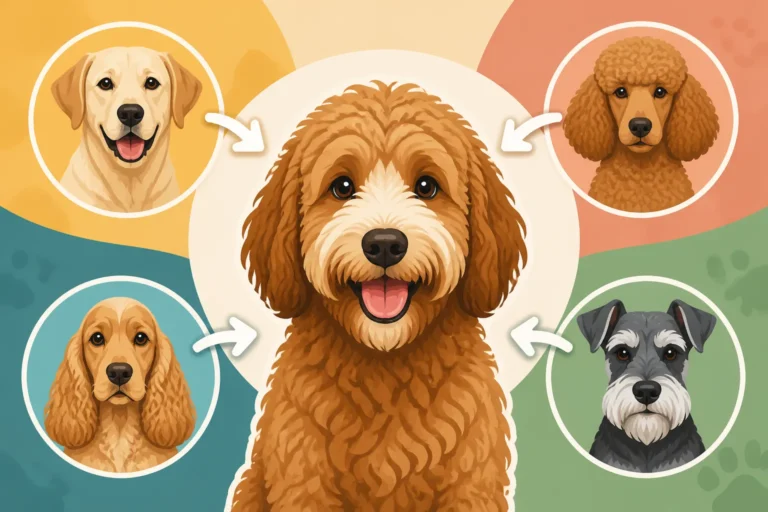
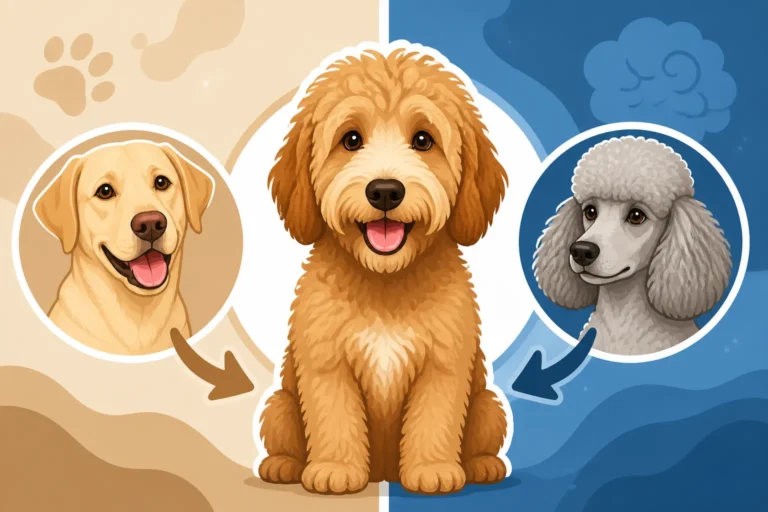
With the unique allergy challenge in mind, Wally Conron set out to find a solution. His first thought was a Standard Poodle, known for its intelligent, trainable nature and its low-shedding, curly coat, which often works well for people with allergies. However, he found that purebred Poodles, while intelligent, sometimes lacked the robustness and eager-to-please temperament often desired in guide dogs compared to the steady reliability of a Labrador. He decided the best approach would be a crossbreed, hoping to combine the best traits of two established breeds. This led him to the idea of mating a Standard Poodle with a Labrador Retriever, bringing together the Poodle's coat and intelligence with the Labrador's renowned calm disposition and strong working drive.
The Historic Mating That Started It All
Once the decision was made, the search began for suitable parent dogs for this experimental pairing. This wasn't just about finding any Labrador and any Poodle; it was about selecting individuals with the right health clearances, temperaments, and genetic backgrounds to maximize the chances of producing successful guide dogs.
The Labrador Retriever Parent
For the Labrador Retriever side of the equation, Wally chose a calm, well-regarded female named Brandy. Brandy embodied the classic Labrador traits: friendly, intelligent, eager to please, and possessing the strong retrieving drive that is so beneficial in guide dog work. She had the steady, confident nature that was crucial for producing offspring capable of handling the demanding life of a service animal. Her role was to contribute the robust physique, the biddable temperament, and the trainability that the guide dog program so highly valued. This was a crucial foundation for what they hoped to achieve.
The Standard Poodle Parent
The male chosen for the cross was a Standard Poodle named Harley. Harley was selected for his excellent health, calm demeanor, and, most importantly, his non-shedding coat. The Poodle's coat structure, with its tight curls, traps dander and hair, making it less likely to trigger allergies compared to a Labrador's shedding double coat. The hope was that Harley's genetics would temper the shedding of the Labrador, resulting in a guide dog that was suitable for an allergic household. This choice highlights the primary goal of the breeding program: to address the specific allergy concerns of the prospective owner.
Unveiling the First Labradoodle Litter
After the careful selection and pairing of Brandy and Harley, the breeding took place. The anticipation must have been palpable within the Royal Guide Dogs Association, as this was an entirely novel experiment. The outcome would dictate whether Wally Conron's innovative idea had any real potential.
The Exact Number of Puppies in the Litter
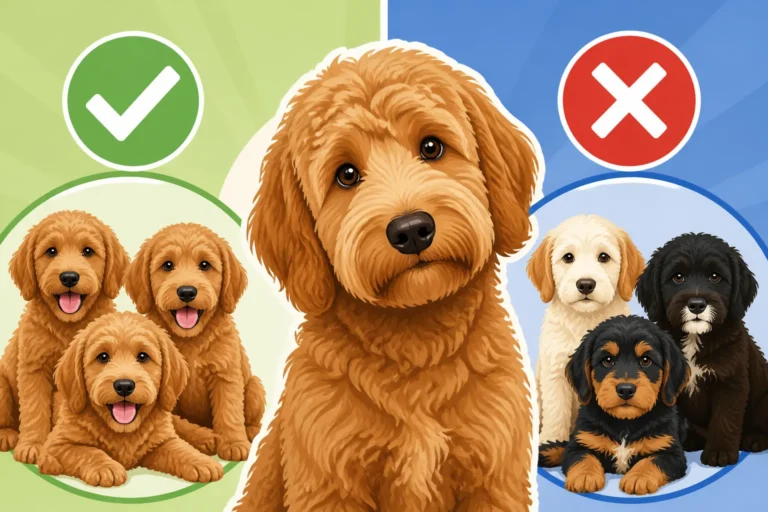
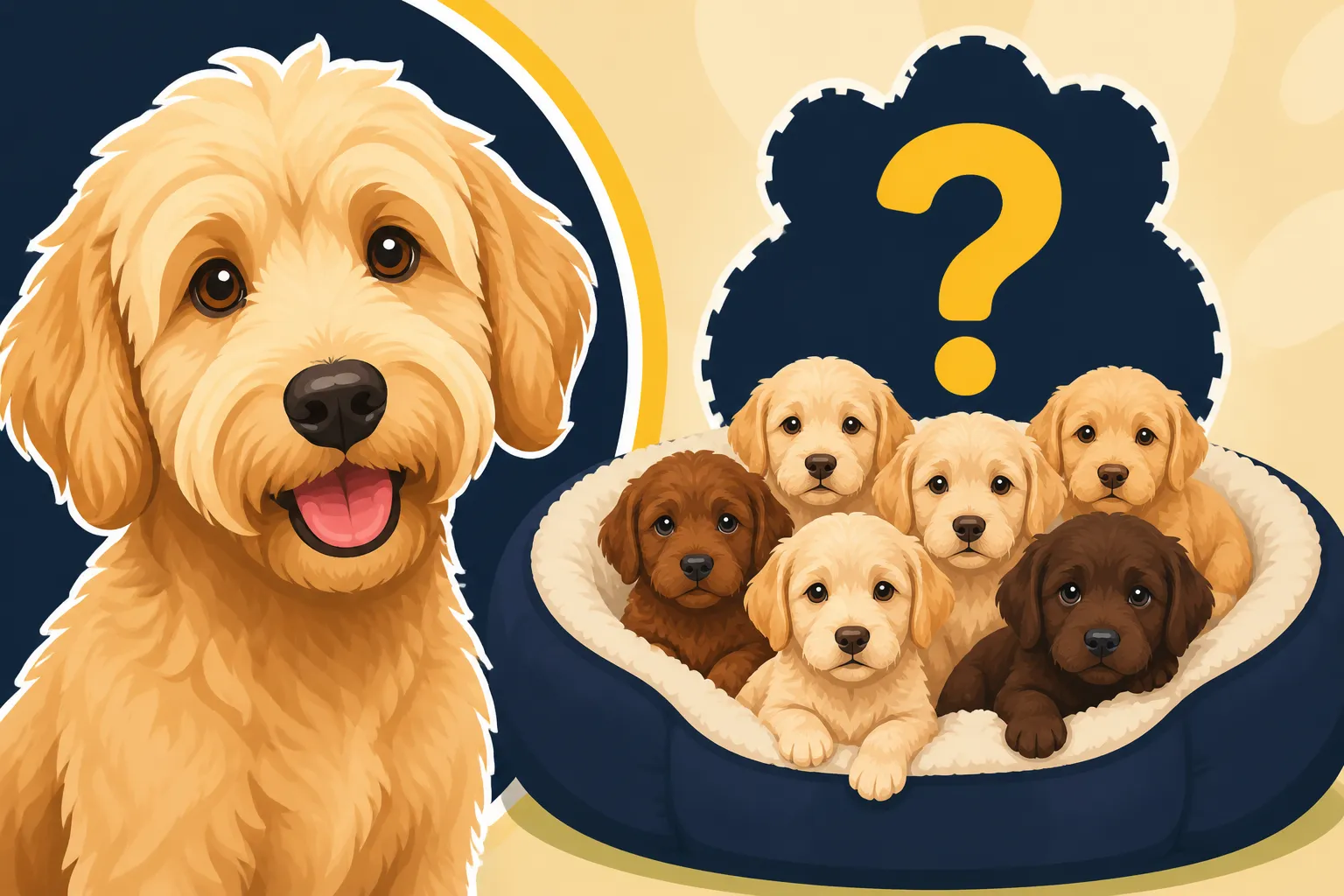
The historic mating of Brandy the Labrador and Harley the Standard Poodle resulted in a litter of three puppies. It wasn't a huge litter, but it was enough to begin the evaluation process. These three little beings were the very first "Labradoodles," though the name hadn't quite stuck yet. Each one was a testament to a groundbreaking effort to combine desired traits from two distinct breeds for a very specific, compassionate purpose. They represented the start of a phenomenon, even if their early days were fraught with uncertainty. The 1989 Cross That Made the First Labradoodle
What Happened to the First Labradoodle Puppies
Of the three puppies born, only one, named Sultan, proved to be suitable for guide dog work and, crucially, exhibited a coat that did not trigger the client's allergies. Sultan was a success story; he went on to serve Pat Blum in Hawaii, validating Wally Conron's initial hypothesis. The other two puppies, unfortunately, didn't quite fit the specific criteria for guide dog placement or didn't meet the hypoallergenic standard to the same degree. This highlights the inherent unpredictability of hybrid vigor and genetics in a first-generation cross (F1), where traits can vary widely even within the same litter. Finding suitable homes for the two non-guide-dog puppies proved to be an unexpected challenge, as the public was largely unfamiliar with this new "crossbreed."
The Immediate Aftermath and Public Reception
The creation of the first Labradoodle litter, while a scientific and compassionate endeavor, wasn't immediately met with widespread acclaim. In fact, Wally Conron faced unforeseen hurdles both in placing the puppies and in managing the public's perception of his new creation.
Conron's Initial Hopes for the Litter
Wally Conron's hope was simple: to create a healthy, intelligent, and allergy-friendly guide dog. The success of Sultan in meeting the specific needs of Pat Blum was, in that regard, a triumph. He had proven that the cross could indeed produce a working assistance dog for someone with allergy concerns. He envisioned a future where more people with similar needs could benefit from this unique blend of Labrador temperament and Poodle coat. This achievement, however, was just one part of the story, as the broader implications and challenges of bringing a new crossbreed into the world were only just beginning to unfold. Sultan, the Labradoodle That Proved the Idea
The Unexpected Challenges of Placement
Despite Sultan's success, the other two puppies from that first litter were difficult to place. People were wary of a "mongrel" or "crossbreed," preferring the predictability and status of purebred dogs. This public resistance frustrated Conron, as he knew the potential value of these dogs. He realized that to generate interest and find homes for the other two puppies, he needed to give them a catchy, memorable name. It was at this point that he coined the term "Labradoodle." He believed that a unique, appealing name would help overcome the stigma associated with mixed breeds and highlight their intentional breeding for a specific purpose. This marketing move, born out of necessity, ironically led to the explosion in popularity that he later came to regret. Why Nobody Wanted the First Labradoodle Puppies
The Legacy of the Groundbreaking Litter
The three puppies from Wally Conron's initial cross, especially Sultan, laid the foundation for an entirely new category of dogs. What started as a focused experiment for a specific need quickly blossomed into a global phenomenon, changing perceptions about crossbreeds forever.
Paving the Way for a Global Phenomenon
Wally Conron’s naming of the "Labradoodle" was remarkably effective. Suddenly, what was once seen as an undesirable mix became a desirable, even trendy, companion. People began seeking out these dogs not just for allergy reasons, but for their perceived combination of intelligence, friendly disposition, and often appealing shaggy coats. This initial litter sparked a massive demand for Labradoodles and, in turn, other "doodle" crosses, leading to a worldwide fascination with designer dogs. It's a testament to how one carefully considered cross, and a bit of clever naming, can fundamentally alter the canine landscape.
Understanding Early Labradoodle Genetics
The first litter also offered crucial insights into the genetics of the Labradoodle. As an F1 cross (first generation), the puppies displayed a range of traits from both parents, illustrating the genetic lottery that can occur. Sultan had the desired coat and temperament, while his littermates might have leaned more towards one parent or the other, or simply not met the strict criteria for guide dog work. This variability in F1 litters is a key reason why later breeders worked on multi-generational crosses, like the Australian Labradoodle, to try and achieve more consistent traits in temperament, health, and coat type. Understanding this initial genetic variability helps us appreciate the complexity involved in establishing a consistent "type" for any crossbreed. What F1 Means on a Labradoodle
Common Characteristics of First Generation (F1) Labradoodles
When we talk about the initial Labradoodle puppies, like those in Wally Conron's first litter, we are generally referring to what breeders call an F1 cross. This means a direct pairing of a purebred Labrador Retriever with a purebred Standard Poodle. The characteristics of these first-generation dogs can be quite varied, which is both a charm and a challenge for owners.
Coat Types in F1 Litters
One of the most noticeable areas of variability in an F1 Labradoodle litter is the coat. Unlike the often-consistent fleece or wool coats seen in later generations, F1 puppies can exhibit a wide spectrum. Some might have a straighter, more Labrador-like hair coat that sheds quite a bit. Others might have a wavy "fleece" coat, which is typically low-shedding, and a lucky few might even develop the curlier "wool" coat that most closely resembles a Poodle's. This is why Wally Conron found that not all his first puppies were allergy-friendly, as the shedding trait isn't guaranteed in the first cross. This unpredictability means that if you're looking at an F1 Labradoodle, it's wise to spend time with the specific puppy and its parents if possible, to get a better sense of what its adult coat might be like.
Temperament and Trainability
Just like with coats, the temperament of F1 Labradoodles can also show a mix of their parent breeds. You might have one puppy with the mellow, eager-to-please nature of a Labrador, while another might lean into the spirited, highly intelligent, and sometimes more sensitive personality of a Poodle. Generally, both parent breeds are highly intelligent and trainable, which is a big plus. Owners often report that F1 Labradoodles are very bright and pick up on commands quickly. However, the energy levels can vary. Some might be quite active, requiring significant daily exercise and mental stimulation, while others might be more content with moderate activity. This means a consistent training regimen, starting from puppyhood, is essential, and good quality training treats are always a good idea, which you can find readily on sites like Chewy.
Health Considerations
While the idea of "hybrid vigor" often suggests that crossbreeds are inherently healthier than purebreds, it's not a guarantee, especially in an F1 cross from untested parents. F1 Labradoodles can inherit genetic predispositions from either the Labrador or the Poodle side. This means concerns like hip and elbow dysplasia from both breeds, eye conditions like progressive retinal atrophy (PRA) from the Poodle, and even conditions like Exercise Induced Collapse (EIC) from the Labrador side can still be present. Reputable breeders today rigorously health test their parent dogs for these conditions, which significantly reduces risk. However, in the very first litter, such extensive testing might not have been as standardized or understood for this specific cross. It’s a stark reminder that even with the best intentions, the health outcomes in any litter, particularly a novel cross, can have unexpected variations.
Table: The First Labradoodle Litter at a Glance
To summarize the key points about the groundbreaking litter that started it all, here's a quick overview:
| Aspect | Detail | Significance |
|---|---|---|
| Year Bred | 1989 | Marked the official beginning of the Labradoodle |
| Breeder | Wally Conron, Royal Guide Dogs Association of Australia | Initiated the cross for a specific assistance dog need |
| Dam (Mother) | Brandy (Labrador Retriever) | Contributed trainability, steadiness, and working drive |
| Sire (Father) | Harley (Standard Poodle) | Contributed intelligence, low-shedding coat |
| Number of Puppies | Three | A small, but historically significant, first litter |
| Most Famous Puppy | Sultan | Successfully became an allergy-friendly guide dog for Pat Blum |
| Initial Placement | Difficult for non-guide-dog puppies | Led to the coining of the "Labradoodle" name to boost appeal |
| Genetic Type | F1 (First Generation) | Direct cross of two purebred parents, showing genetic variability |
Caring for an Early Labradoodle Generation
Even with all the advancements in breeding and understanding Labradoodles, the core needs of these dogs remain relatively consistent, particularly for those with early-generation genetics. Providing the right care means acknowledging their origins and preparing for their potential traits.
Grooming for Varied Coats
As we've discussed, early generation Labradoodles can have a variety of coat types. This means your grooming routine needs to be adaptable. If your F1 Labradoodle has a more Labrador-like coat, it might shed seasonally, requiring regular brushing to manage loose hair. However, if they inherit a wavy fleece or curly wool coat, you'll be dealing with potential matting. These coats need consistent line brushing to the skin, several times a week, to prevent painful mats from forming. Tools like a slicker brush and a metal comb are indispensable. Even if you plan on professional grooming, which can be easily booked via services found through a quick search on Chewy, it's essential to get your puppy used to handling and brushing from a young age. The Coat Change That Hits a Labradoodle at Nine Months
Training and Socialization Needs
The combination of Labrador and Poodle intelligence means Labradoodles are generally quick learners, but they also thrive on mental stimulation and consistent training. Early and ongoing socialization is critical to ensure they grow into well-adjusted adults, especially given their potential for high energy and their desire to be involved with their families. Puppy classes are highly recommended, not just for obedience but also for safe exposure to other dogs and people. Remember, a bored Labradoodle can easily become a mischievous one, finding its own "job" which might involve chewing furniture or counter-surfing for snacks. Regular training sessions, even short ones, help to reinforce good behavior and strengthen your bond. The Ten Month Old Labradoodle That Forgets Everything
Exercise for a Balanced Life
Both parent breeds of the Labradoodle are active dogs, and this typically carries over to their offspring. An F1 Labradoodle, depending on which parent's energy levels they inherit more strongly, will likely need a good amount of daily exercise. This isn't just a quick stroll around the block. Think brisk walks, games of fetch, or even activities like swimming, which many Labradors adore. Mental exercise, like puzzle toys or scent work, can also be invaluable for tiring out an intelligent Labradoodle brain. Under-exercised Labradoodles can develop behavioral issues, ranging from excessive barking to destructive chewing. Ensuring they get proper outlets for their energy is key to having a happy, well-behaved companion. The Exercise a Labradoodle Needs Before It Behaves
Disclaimer
This article is for general informational purposes only and does not constitute professional advice. Laws, prices and regulations vary by location and change over time. Consult a qualified professional for guidance on your specific situation.