Whether an Australian Labradoodle Breeds True
Many prospective Labradoodle owners find themselves understandably confused by the term "Australian Labradoodle" and what it actually implies for a puppy's predictability. It's a valid frustration when you're hoping for specific traits, only to hear conflicting information about consistency. This guide will delve deep into the concept of "breeding true" as it applies to the Australian Labradoodle, helping you understand the genetic reality behind this much-loved breed-in-development.
Understanding "Breeding True" in Dogs
The idea of a dog "breeding true" is fundamental to how recognized purebreds came to be, and it's a concept often misunderstood when we talk about hybrid dogs like the Labradoodle. It's not just about looking similar; it's about reliable consistency across generations.
What Does "Breeding True" Really Mean?
When we say a dog breed "breeds true," we're talking about its ability to consistently produce offspring that largely resemble the parents and the breed standard, both in physical appearance and predictable temperament traits. Think of a Golden Retriever: you know, with a high degree of certainty, what a Golden Retriever puppy will look like, how big it will get, and what its general disposition will be. This consistency is the hallmark of a true breed. It means that most puppies from a given pairing will share the breed's signature coat type, ear set, build, size, and behavioral tendencies, making them highly predictable for future owners.
This reliability comes from generations of careful, selective breeding where specific traits are chosen and solidified within the gene pool. Over time, undesirable variations are bred out, and the desired characteristics become homozygous, meaning the dog inherits two identical copies of a gene for a particular trait. This stable genetic blueprint allows breeders to confidently predict the outcome of their litters, which is crucial for maintaining the integrity and purpose of a recognized breed.
The Genetic Basis of Consistency
At its core, the ability of a dog to breed true lies in its genetic makeup. Purebred dogs have highly uniform genetics for many of their defining traits. They are largely homozygous for the genes that determine their appearance, temperament, and even many health predispositions. This means that when two purebreds of the same breed are mated, their puppies inherit a very similar set of genes, resulting in predictable outcomes. The more generations of selective breeding that occur, the more homozygous the gene pool becomes for those desired traits.
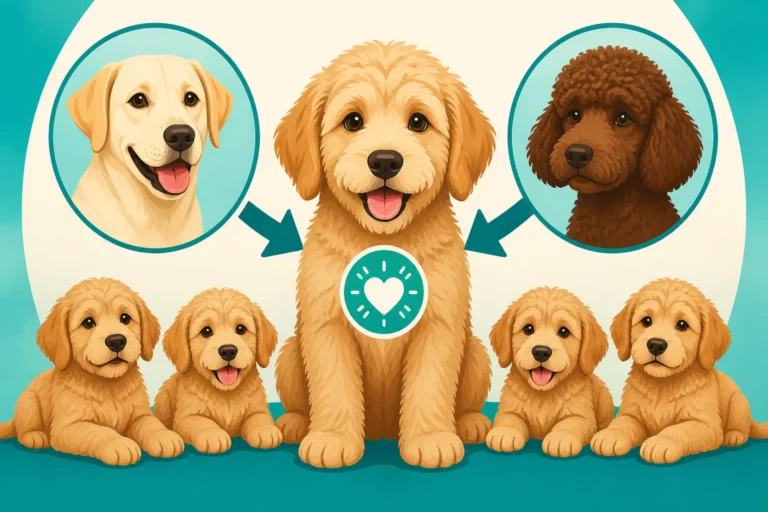
In contrast, a first-generation cross (an F1 dog) is highly heterozygous, meaning it has many differing gene pairs. When you breed two purebreds from different breeds, like a Labrador Retriever and a Poodle, the resulting F1 puppies are a genetic toss-up. They can inherit a wide array of traits from either parent, leading to significant variation even within the same litter. Some might lean heavily towards the Labrador, others towards the Poodle, and some a mix. This unpredictability is precisely what breeders developing new breeds or consistent hybrid lines aim to overcome, gradually working to stabilize the gene pool through careful selection.
Challenges in Hybrid Breeding
The path to creating a breed that "breeds true" from a hybrid origin is a long and challenging one. The initial variability seen in F1 crosses, where each puppy can be a unique blend of its two purebred parents, makes consistent outcomes extremely difficult. For example, in an F1 Labradoodle, you might get puppies with a true Poodle coat, a shedding Labrador coat, or something in between. Temperaments can also vary wildly, from placid to highly energetic.
This unpredictability extends beyond appearance and temperament into health traits as well. While hybrid vigor can sometimes reduce the incidence of certain genetic diseases present in a single purebred line, the lack of a stable gene pool means that without extensive multi-generational selection and health testing, you don't necessarily know which health predispositions a hybrid puppy might inherit. Breeders embarking on the journey to establish a new breed must commit to many generations of careful pairing, trait selection, and comprehensive health screening to move from this unpredictable hybrid state to a consistent, "true breeding" line.
The Unique History of the Australian Labradoodle
When people talk about "Labradoodles" today, they often imagine a fluffy, non-shedding companion. However, the history of this cross is more complex, particularly when distinguishing between the original concept and the carefully developed Australian Labradoodle.
Beyond the F1 Labradoodle
The very first Labradoodle was an F1 cross, a straightforward pairing of a Labrador Retriever and a Standard Poodle. This was initiated in 1989 by Wally Conron for Guide Dogs Victoria in Australia, with the specific goal of creating a guide dog for a vision-impaired woman whose husband had allergies. The idea was brilliant: combine the Labrador's trainability and gentle nature with the Poodle's low-shedding coat. For more on this pivotal moment, you can read The 1989 Cross That Made the First Labradoodle.
However, as Wally Conron himself later expressed regret, the initial F1 crosses, while sometimes successful, were incredibly unpredictable. Litters could produce puppies with a range of coats, from flat and shedding like a Labrador to dense and curly like a Poodle. Temperaments also varied. Conron lamented that the widespread popularity of the "Labradoodle" led to indiscriminate breeding without a focus on consistency or health, as discussed in Wally Conron and the Labradoodle He Regrets. This variability made it clear that simply crossing two breeds wasn't enough to create a truly consistent companion dog.
The Multi-Generational Approach
Recognizing the potential of the Labradoodle but also its inherent unpredictability in early generations, a group of dedicated Australian breeders took a different path. They weren't satisfied with simply producing F1 crosses; their vision was to develop a consistent breed. This began a multi-generational breeding program where specific dogs were carefully selected for desired traits – consistent non-shedding coats, stable temperaments, and good health. To achieve this, they strategically introduced other breeds, primarily the English Cocker Spaniel, American Cocker Spaniel, and Irish Water Spaniel, into the Labradoodle lines.
These additional breeds were chosen to enhance certain characteristics, such as improving coat texture, refining temperament, and solidifying the overall conformation. This intricate blending of The Four Breeds Inside an Australian Labradoodle allowed breeders to widen the gene pool slightly while actively selecting for consistency. For instance, the Cocker Spaniel infusion, as explored in The Cocker Spaniel Infusion in the Australian Labradoodle, helped reinforce the desirable fleece and wool coat types and contributed to a more compact structure. Similarly, The Irish Water Spaniel in the Australian Labradoodle played a role in adding depth to the coat and temperament. This multi-generational, multi-breed approach is what truly distinguishes an "Australian Labradoodle" from a simple Labradoodle cross.
The Journey Towards a "Developing Breed"
The process of developing the Australian Labradoodle is a classic example of how a new breed is forged over many decades. It’s not just about mixing breeds; it’s about meticulous selection, consistent breeding goals, and careful documentation. Organizations like the Australian Labradoodle Association of America (ALAA) and the Worldwide Australian Labradoodle Association (WALA) have been instrumental in establishing stringent breeding standards, health testing protocols, and ethical guidelines. These associations maintain pedigrees and encourage breeders to work towards the ultimate goal of genetic consistency.
While not yet recognized by major kennel clubs like the AKC, the Australian Labradoodle is widely considered a "developing breed." This means it's on a journey to stabilize its traits to the point where it consistently produces predictable offspring, much like a purebred. This long-term commitment by dedicated breeders is what allows the Australian Labradoodle to offer a much higher degree of predictability than its earlier F1 or F2 counterparts. The ongoing effort to refine and standardize the breed is a testament to the commitment to fulfilling the original promise of a consistent, allergy-friendly companion dog.
Consistency in Australian Labradoodle Traits
One of the primary reasons people seek out an Australian Labradoodle over a standard Labradoodle or other "doodles" is the promise of greater consistency in their traits. This wasn't achieved overnight but through years of dedicated, multi-generational breeding efforts.
Coat Type Predictability
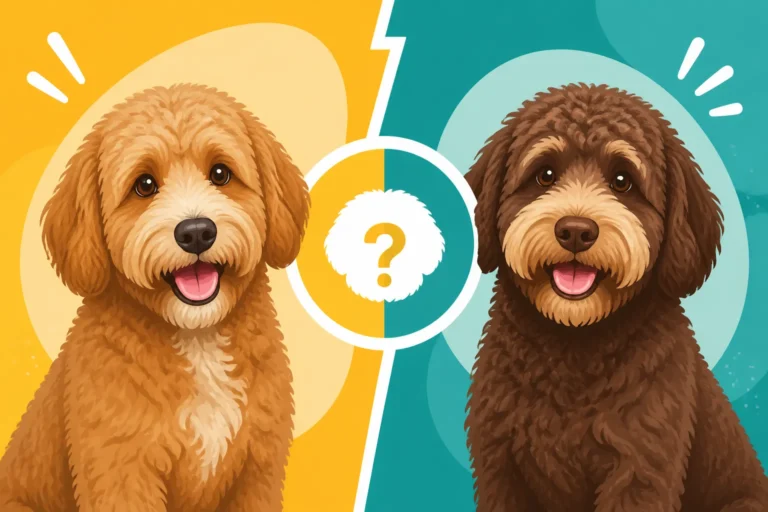
The coat is often the first thing people think of when they consider a Labradoodle, especially if they have allergies. In the early F1 Labradoodles, predicting coat type was a real gamble. You could end up with a smooth, shedding "hair" coat, a wavy "fleece" coat, or a tightly curled "wool" coat, sometimes all in the same litter. This variability was a significant challenge for allergy sufferers.
However, the Australian Labradoodle breeding program has made remarkable strides in standardizing coat types. Through careful selection and the strategic introduction of other breeds known for non-shedding qualities, breeders have largely refined the coats to consistently produce fleece and wool textures. The aim is to breed dogs that have what are called "furnishings" – the characteristic mustache, beard, and eyebrows that prevent shedding and give the classic "doodle" look. Breeders now use DNA testing to identify dogs carrying genes for desirable coat types, ensuring that most puppies produced will indeed have the low-shedding, allergy-friendlier coats that owners desire. While no dog is 100% hypoallergenic, the Australian Labradoodle offers a much higher likelihood of consistency in its coat, making it a more reliable choice for those with sensitivities. For more detail on these coat types, see The Fleece Coat and Why Breeders Aim For It and The Wool Coat Labradoodle and Its Upkeep.
Temperament and Trainability
Beyond just their charming looks and low-shedding coats, the Australian Labradoodle was also deliberately bred for a specific temperament. The original intention for guide dog work required a dog that was intelligent, biddable, calm under pressure, and inherently friendly. While both the Labrador and Poodle contribute positive traits, combining them doesn't automatically guarantee a perfect blend. Some F1 crosses might lean too heavily on one side, resulting in a dog that's too high-strung or too independent.
Australian Labradoodle breeders have focused heavily on selecting for a balanced, social, and intuitive temperament over many generations. They prioritize dogs that are intelligent, easy to train, eager to please, and possess a gentle nature. This deliberate selection aims to produce dogs that are excellent family companions, often described as "Velcro dogs" due to their desire to be close to their human families. This consistency in temperament makes them well-suited for a variety of roles, from therapy work to active family life, and helps ensure that the puppies inherit a generally stable and predictable disposition. Understanding The Temperament a Labradoodle Gets From Each Parent highlights this careful balancing act.
Health Screening and Genetic Stability
One of the most critical aspects of "breeding true" is the commitment to health. Early Labradoodle crosses sometimes faced the challenge of inheriting potential genetic issues from both parent breeds. The Australian Labradoodle movement recognized this and implemented extensive health screening protocols as a cornerstone of their breeding philosophy. Reputable Australian Labradoodle breeders conduct comprehensive genetic testing for conditions common in the Poodle, Labrador Retriever, and the other foundation breeds, such as hip and elbow dysplasia, various eye conditions (like PRA), Von Willebrand's disease, and Addison's disease.
This rigorous screening, combined with the multi-generational breeding program, aims to reduce the incidence of these hereditary conditions across the breed. By carefully selecting breeding pairs that are clear of known genetic diseases, breeders work to create a healthier, more robust gene pool. While no breed can ever be entirely free of health issues, the goal is to significantly lower the risk of common genetic ailments and provide owners with a dog that has a more predictable health outlook. This meticulous approach to health is a huge benefit, offering more assurance than a haphazard cross, and contributing to the idea that Whether Health Tested Parents Add Years to a Labradoodle is indeed true.
Challenges and Nuances in Achieving "True Breeding"
While the Australian Labradoodle has come a long way in establishing consistency, it's important for prospective owners to understand that the journey to becoming a fully "true breeding" purebred is an ongoing process. There are inherent challenges and nuances that distinguish it from centuries-old established breeds.
The Ongoing Nature of Breed Development
It takes many, many generations of selective breeding to solidify traits to the point where a breed "breeds true" with near-perfect consistency. The Australian Labradoodle, despite its impressive progress, is still a relatively young breed in development. This means that while predictability is significantly higher than in early F1 or F2 crosses, it's not yet on par with breeds that have been refined over hundreds of years. You might still see occasional variations in coat texture, size, or specific nuances of temperament, even within well-bred Australian Labradoodle litters.
The genetic diversity, while intentionally broader than a single purebred line due to the foundation breeds, still needs further stabilization. Breeders are continually working to refine the breed standard and ensure that the desired characteristics become more and more fixed within the gene pool. This commitment to continuous improvement means that owners are part of a dynamic story, supporting the development of a breed rather than acquiring a finished product. It's a spectrum, and the Australian Labradoodle sits proudly on the side of "highly predictable for a hybrid," but not yet "perfectly uniform" like an ancient breed.
The Role of Responsible Breeding
The degree to which an Australian Labradoodle "breeds true" is profoundly dependent on the practices of individual breeders. There's a stark difference between a backyard breeder who simply crosses dogs and calls them "Australian Labradoodles" and a dedicated, ethical breeder committed to the breed's development. Responsible breeders adhere to strict standards set by associations like the ALAA and WALA. They conduct all recommended health tests, meticulously track pedigrees, and select breeding pairs based on temperament, health, and conformation to the breed standard. For example, What ALAA Membership Requires of a Labradoodle Breeder involves rigorous health testing and adherence to ethical guidelines.
A breeder who is truly invested in the Australian Labradoodle's future will be transparent about their dogs' lineage, health clearances, and breeding goals. They will also be able to explain the specific generation of their puppies (Multi-generational, not just F1 or F1b, which are often mistakenly marketed as Australian Labradoodles). The lack of universal kennel club recognition means that "buyer beware" is a real concern, and it's up to the prospective owner to thoroughly vet their breeder. Resources, like those you might find on Chewy, can even guide you towards understanding proper care for well-bred pups. Understanding What WALA Does for Labradoodle Pedigrees can help you discern genuine claims from less legitimate ones.
Understanding Generation Labels
The term "Australian Labradoodle" specifically refers to a multi-generational (Multigen) dog whose lineage can be traced back to the original foundation breeds and has been selectively bred for consistency. This is a crucial distinction. An F1 Labradoodle (Poodle x Labrador) is not an Australian Labradoodle. Neither is an F1b or F2, which are typically crosses of an F1 with a Poodle, or two F1s together. These earlier generations, while sometimes lovely dogs, still carry a high degree of genetic variability.
The consistency that people associate with the "Australian Labradoodle" comes from the rigorous, multi-generational breeding program where dogs are bred to other multi-generational Australian Labradoodles. This process, known as The Multigen Program That Made the Australian Labradoodle, is designed to reduce genetic surprises and solidify the desired traits across the board. If a breeder claims to have Australian Labradoodles but cannot provide a multi-generational pedigree that traces back through the foundation breeds, they are likely selling a different type of Labradoodle, and the promises of consistency may not hold true.
What "Breeding True" Means for Prospective Owners
For anyone considering bringing an Australian Labradoodle into their home, understanding the nuances of "breeding true" is paramount. It helps set realistic expectations and guides you toward making an informed choice.
Increased Predictability, Not Perfect Uniformity
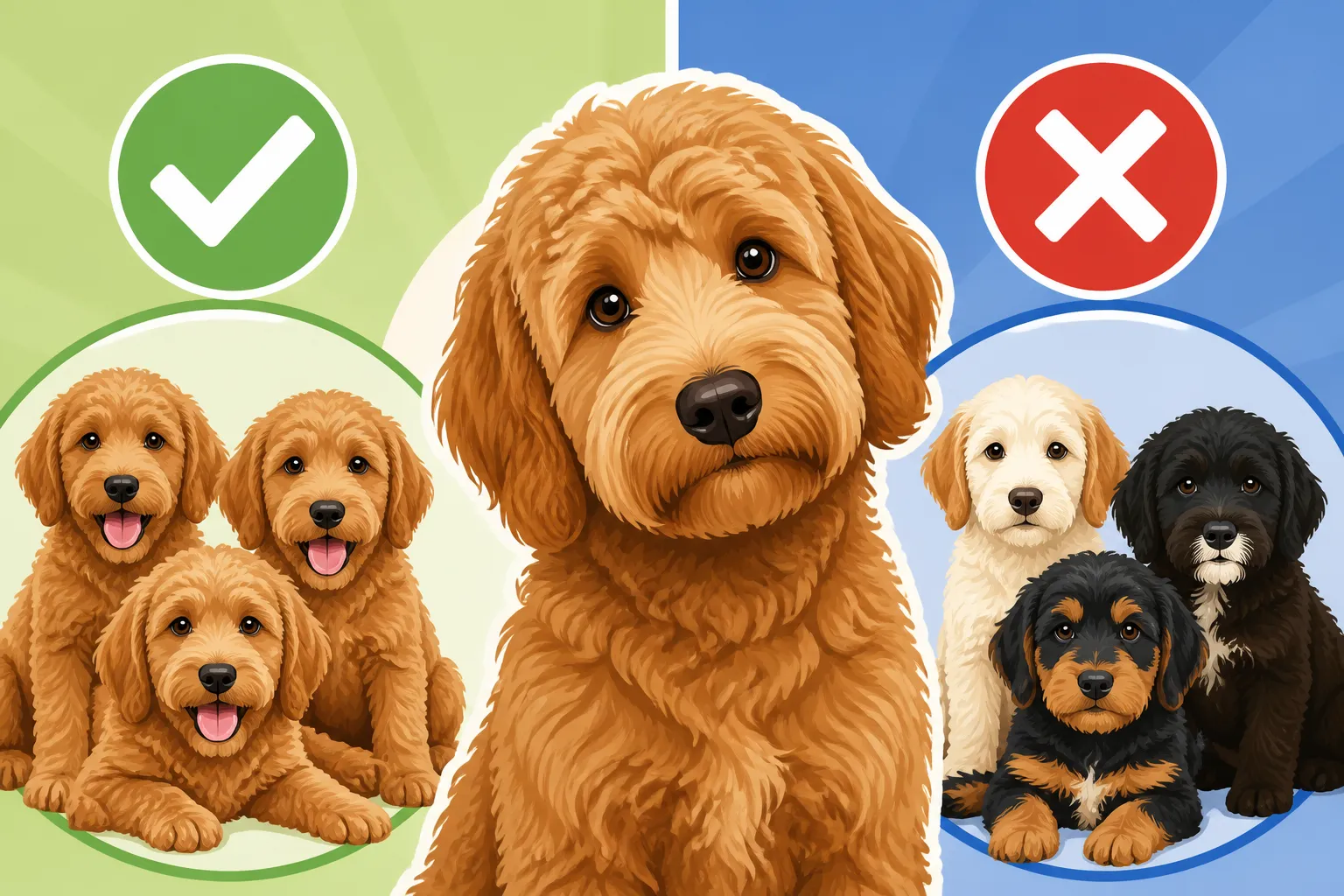
The most important takeaway for prospective owners is that the Australian Labradoodle offers a significantly increased predictability compared to earlier Labradoodle crosses, but not perfect uniformity like a long-established purebred. You can expect a high likelihood of a non-shedding, allergy-friendlier coat (typically fleece or wool), a generally stable and intelligent temperament, and a healthier genetic profile due to extensive health testing. This predictability is a huge advantage for families, especially those with allergy concerns or specific lifestyle needs.
However, it's vital to remember that each dog is an individual. Just like in any breed, there will be variations in personality, energy levels, and even slight differences in appearance. One puppy might be a little more reserved, another more outgoing. One might have a slightly curlier coat than its sibling. These minor variations are part of the charm of living with a developing breed. The consistency comes in the range of expected traits being much narrower and more reliably within the desired "Australian Labradoodle" characteristics.
Researching Pedigrees and Breeders
Given the ongoing nature of breed development and the importance of responsible breeding, doing your homework on breeders is absolutely critical. Don't just take a breeder's word that their dogs are "Australian Labradoodles." Ask to see pedigrees that demonstrate multi-generational breeding within established Australian Labradoodle lines. Look for breeders who are registered with reputable organizations like the ALAA or WALA, as these groups enforce strict ethical and health testing standards.
A transparent breeder will readily provide proof of health clearances for both parent dogs, including hip and elbow evaluations, eye certifications, and genetic testing results for common inheritable diseases. They should also be eager to talk about their breeding program's goals, the temperament of their parent dogs, and how they socialize their puppies. Don't shy away from asking tough questions; a good breeder will appreciate your thoroughness. This diligent research ensures you're getting a genuine Australian Labradoodle from a responsible source, significantly increasing the likelihood that your puppy will embody the consistent traits you're hoping for. Furthermore, purchasing your pet supplies from trusted sources like Chewy can help ensure your new puppy has everything it needs to thrive.
Long-Term Benefits of a More Stable Genetic Pool
The concerted effort by Australian Labradoodle breeders to establish a more stable genetic pool yields significant long-term benefits for owners. When you bring home an Australian Labradoodle from a reputable breeder, you are benefiting from years of selective breeding aimed at producing healthy, happy, and predictable companions. This stability translates to fewer surprises down the line, whether it's unexpected shedding, unforeseen temperament quirks, or the devastating discovery of a preventable genetic disease.
While the upfront cost might be higher for a well-bred Australian Labradoodle, the investment often pays off in reduced vet bills for hereditary conditions, a more harmonious family life with a dog whose temperament aligns with expectations, and the joy of a companion with a consistent, manageable coat. The dedication to "breeding true" creates a more defined and reliable experience for families, fulfilling the promise of a wonderful, consistent companion dog.
| Feature | F1 Labradoodle (Labrador x Poodle) | Australian Labradoodle (Multi-generational) |
|---|---|---|
| Coat Type | Highly Variable (Hair, Fleece, Wool) | Highly Consistent (Fleece, Wool) |
| Shedding | Variable (Can shed heavily or be low-shed) | Low-shedding, generally allergy-friendlier |
| Temperament | Variable (Mix of Poodle & Labrador traits) | Consistent (Bred for calm, intelligent, social) |
| Size Predictability | Variable within Standard/Mini ranges | More consistent within designated size categories |
| Health Predictability | Can inherit issues from either parent; depends on individual parents' health | Higher due to extensive multi-generational screening & selection |
| Genetic Makeup | First-generation hybrid; highly heterozygous | Multi-generational; more homozygous for desired traits |
| Breed Recognition | Not a recognized breed | Developing breed; recognized by specific associations (ALAA, WALA) |
Disclaimer
This article is for general informational purposes only and does not constitute professional advice. Laws, prices and regulations vary by location and change over time. Consult a qualified professional for guidance on your specific situation.