Why the First Labradoodles Were All F1
When you first start looking into Labradoodles, it can feel like you're diving into a whole new language. You hear terms like "F1," "F1b," "Multigen," and it’s easy to get lost in the alphabet soup, especially when you're just trying to understand the basics of this wonderful crossbreed. What many new prospective owners don't realize is that this complex world of generations actually started very simply, with every single early Labradoodle falling into just one category. This guide will take a deep dive into why all of the very first Labradoodles were, by their very definition, F1 and what that means for their history and our understanding of the breed today.
The Genesis of the Labradoodle: A Story of Necessity
The story of the Labradoodle is a fascinating one, born not out of a desire for a trendy new designer dog, but from a very specific need. Back in the late 1980s, in Australia, a woman with a visual impairment required a guide dog that wouldn't trigger her husband's allergies. This seemingly simple request set the stage for a groundbreaking cross that would eventually capture the hearts of families worldwide.
The Royal Guide Dogs Program and Sultan
The individual tasked with this challenge was Wally Conron, then the breeding manager for the Royal Guide Dogs Association of Australia. He was approached by Pat Blum, the Hawaiian woman whose husband suffered from allergies, and her need became his mission. The Labrador Retriever was already well-established as a superb guide dog, known for its intelligence, biddability, and calm demeanor. However, its shedding coat was a non-starter for an allergic household. Conron's innovative solution was to look to the Standard Poodle, a breed renowned for its non-shedding, hypoallergenic coat, as well as its high intelligence and trainability. It felt like a perfect match on paper, a true blend of purpose and practicality.
The first successful pairing was between a Labrador Retriever named Harley and a Standard Poodle named Sheilah. From this litter, a puppy named Sultan emerged, destined to become the world's first documented Labradoodle. This initial cross, driven by a genuine need for an allergy-friendly guide dog, was a defining moment. It wasn't about creating a "doodle" trend; it was about solving a very real problem for a deserving individual. You can learn more about this initial journey in The 1989 Cross That Made the First Labradoodle and Sultan, the Labradoodle That Proved the Idea.
Conron's Vision and Early Regrets
While Sultan proved to be an excellent guide dog for Pat Blum, the wider implications of this cross quickly became apparent. Conron himself has often spoken about his subsequent regret over popularizing the breed, largely due to the explosion of unregulated breeding practices that followed. His initial vision was noble: to combine the best traits of two exceptional breeds to create a functional assistance dog. The "allergy-friendly" aspect of the Poodle's coat, combined with the Labrador's working drive, was the primary goal.
However, the reality quickly diverged from his intent. As word spread about these charming, intelligent, and often lower-shedding dogs, demand skyrocketed. Many breeders jumped on the bandwagon without the same rigorous health testing or ethical considerations that guide dog programs uphold. This led to a dilution of the initial breeding goals and an influx of dogs with unpredictable temperaments and coats, sometimes even with significant health issues. It's a complex legacy, where a good intention paved the way for both widespread joy and significant challenges within the burgeoning "doodle" market. Wally Conron and the Labradoodle He Regrets delves deeper into his perspective.
Decoding F1: What Does "First Generation" Truly Mean?
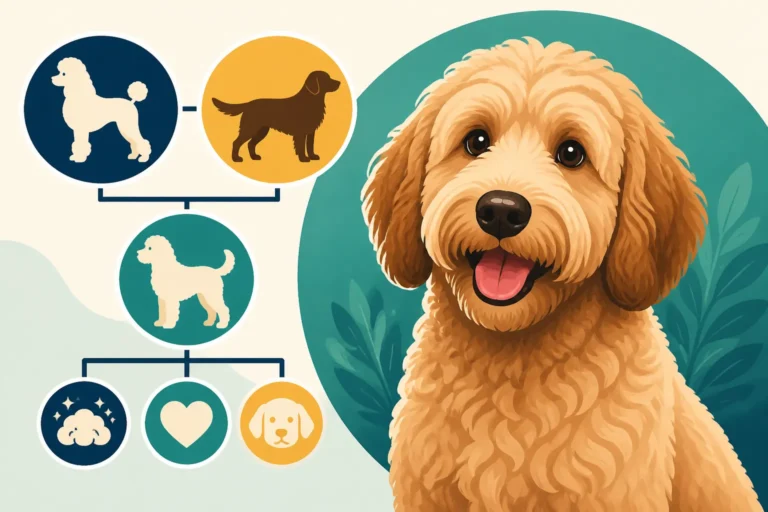
The term "F1" is fundamental to understanding Labradoodle genetics and why the initial dogs were exclusively of this type. It stands for "Filial 1," which is a scientific term used in genetics to denote the first filial generation. In simpler terms, it refers to the direct offspring of two distinct, purebred parents.
The Purebred Parentage Definition
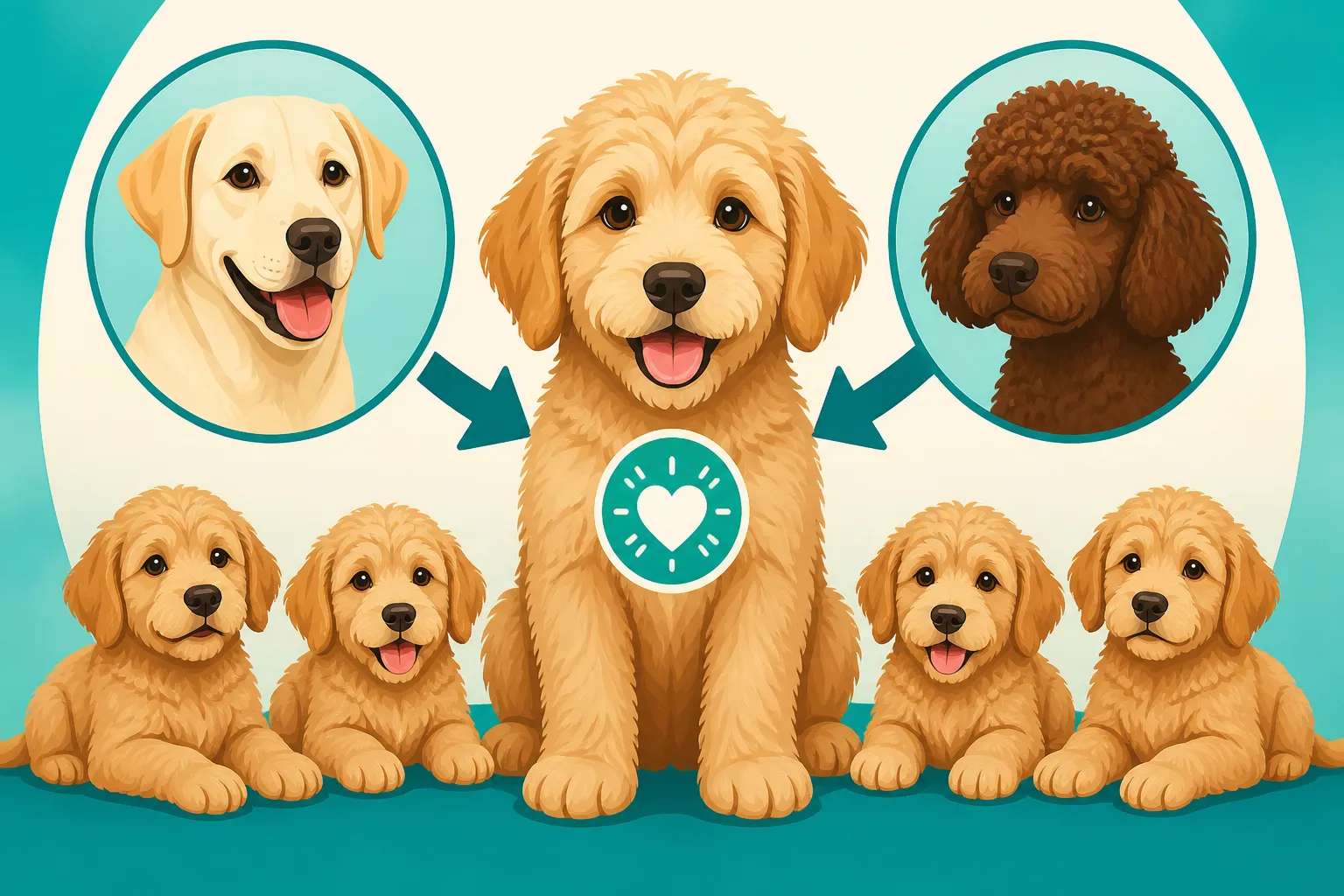
For a Labradoodle to be an F1, its parents must be a purebred Labrador Retriever and a purebred Standard Poodle. There are no other breeds involved, no previous Labradoodle generations, just the direct crossing of these two distinct purebred lines. This direct, first-generation cross is the very definition of an F1. It represents the purest form of the hybrid, the initial blend where the genetic contributions of both parent breeds are theoretically 50/50.
This means that an F1 Labradoodle inherits a complete set of chromosomes from its Labrador parent and a complete set from its Poodle parent. While the genetic expression of these traits can vary wildly (which we'll discuss more), the underlying genetic makeup is a straightforward combination of the two. This is why the early breeders found it simple to understand and replicate, at least in theory. You can find more specific details on this in What F1 Means on a Labradoodle.
The Genetic Mélange of the F1 Coat
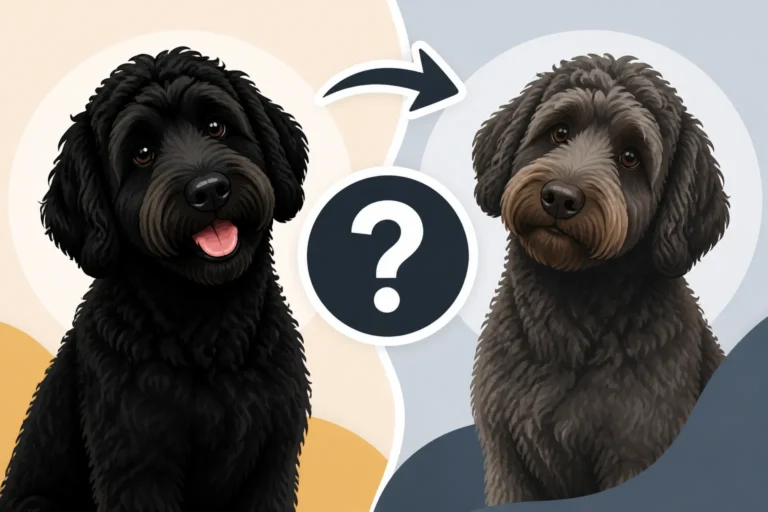
One of the most defining and often unpredictable aspects of the F1 Labradoodle is its coat. Because it's a first-generation cross, the genetic lottery truly comes into play. You don't know which genes for coat type (shedding, texture, length) will be dominant or recessive from each parent. This often leads to a wide variety of coat types within the same litter, let alone across different F1 litters.
Some F1 Labradoodles might inherit more of the Labrador's smooth, shedding coat, resulting in what's often called a "hair coat." Others might lean more towards the Poodle's curly, non-shedding coat, producing a "wool coat" or a "fleece coat," which is typically wavy and soft. And many fall somewhere in between, with varying degrees of wave and shedding. This unpredictability was a significant challenge for the original guide dog program, as the goal was specifically a low-shedding, allergy-friendly dog. When you're dealing with an F1, there's no guarantee on the coat, which is why breeders later began to introduce backcrosses and multi-generational breeding to achieve more consistent results. Whether an F1 Labradoodle's Coat Is a Gamble really dives into this uncertainty.
The Simple Logistics of a First Cross
The reason all early Labradoodles were F1 is rooted in simple logistics and the foundational steps of creating any new crossbreed. You have to start somewhere, and that starting point is always a direct cross between the two parent breeds. There's no "previous generation" to build upon yet.
The Unavoidable Starting Point
Imagine you want to bake a cake with a new flavor profile using two existing recipes. You can't make a second-generation cake without first making the original hybrid cake! Similarly, to create the first Labradoodle, you had to breed a Labrador Retriever with a Standard Poodle. This wasn't a choice; it was the only way to initiate the cross. There were no "Labradoodle A" and "Labradoodle B" to breed together yet, nor were there F1 Labradoodles to breed back to Poodles to create F1bs. The genetic pool was entirely composed of purebreds.
This straightforward approach meant that the first breeders weren't navigating complex pedigrees or trying to predict the outcome of multi-generational breeding. Their primary focus was on the immediate parents: ensuring they were healthy, had good temperaments, and possessed the desired traits that they hoped to combine. This simplicity in parental selection, while still requiring careful consideration, was logistically the easiest and only path forward.
Limited Breeding Stock and Genetic Pool
In the very early days, the pool of potential Labradoodle parents was, by definition, limited to purebred Labrador Retrievers and purebred Standard Poodles. There wasn't a readily available "Labradoodle" population to draw from, because they hadn't been created yet! This inherently meant that any initial breeding effort would be an F1 cross. Breeders couldn't pick and choose from a diverse range of Labradoodle generations; they simply had to select the best possible purebred parents for their initial crosses.
This limited genetic pool for starting the cross had both advantages and disadvantages. An advantage was that the genetics were well-documented for each purebred parent, allowing breeders to understand the potential health concerns and temperament traits passed down. However, it also meant that they were always dealing with the full spectrum of possible outcomes when combining two very different sets of genes, particularly concerning physical characteristics like coat type. The initial focus was therefore on the quality of the purebred parents, ensuring they represented the best of their respective breeds to maximize the chances of a successful F1 offspring.
Breeding Goals and Early Challenges
The fundamental aim behind the first Labradoodles was remarkably clear: to create an assistance dog with a hypoallergenic coat and the working aptitude of a Labrador. This clarity of purpose, however, was immediately met with significant challenges due to the unpredictable nature of hybrid genetics.
The Elusive Allergy-Friendly Coat
One of the biggest hurdles for the early breeders was consistently achieving the desired allergy-friendly coat. While the Poodle parent contributed genes for a non-shedding coat, the Labrador parent contributed genes for a shedding coat. In an F1 cross, the expression of these genes is essentially a toss-up. You might get a puppy with a beautiful, low-shedding fleece coat, or you might get one that sheds almost as much as a Labrador. This genetic lottery made it incredibly difficult to guarantee "hypoallergenic" results, which was the entire impetus for the cross in the first place.
This unpredictability meant that even though the goal was clear, the results were often inconsistent. For a guide dog program, where consistency is paramount, this was a significant drawback. It necessitated careful assessment of each F1 puppy's coat, often leading to many puppies being "washed out" of the program if their coats weren't suitable for allergic individuals. This was one of the key reasons why the development of later generations became necessary, as breeders sought to increase the reliability of the non-shedding trait. The Hair Coat Labradoodle That Sheds elaborates on this very issue.
Combining Temperament and Trainability
Beyond the coat, the early breeding goals also focused on temperament and trainability. The Labrador Retriever is celebrated for its eager-to-please nature, intelligence, and stable temperament, making it an ideal candidate for assistance work. The Standard Poodle is equally intelligent and highly trainable, but sometimes carries a reputation for being more sensitive or having a stronger "guard dog" instinct. The hope was that the F1 cross would inherit the best of both worlds – the Labrador's robust, friendly disposition with the Poodle's keen intelligence and lower-shedding coat.
For the most part, the early F1 Labradoodles did exhibit a fantastic blend of these traits, demonstrating high intelligence, a desire to please, and generally stable temperaments. This success in blending behavioral characteristics was a major factor in the cross's early popularity. However, just like with coats, there could still be variations. Some F1s might lean more towards the Poodle's energy or reserved nature, while others might be all Labrador. This is why thorough temperament testing of both parent dogs and careful observation of the puppies were crucial steps for the pioneering breeders. You can read more about what the early programs looked for in What Guide Dog Schools Look For in a Labradoodle.
The Genetic Simplicity of the F1 Cross
From a genetic perspective, the F1 cross is the simplest to understand, even if its outcomes can be diverse. It's a direct combination, offering a snapshot of what happens when two distinct purebred genomes meet.
Hybrid Vigor in the First Generation
One of the most touted benefits of any F1 cross, including the Labradoodle, is "hybrid vigor," also known as heterosis. This refers to the increased health and vitality often seen in the first generation offspring of two genetically distinct parents. The theory is that by crossing two unrelated purebreds, you reduce the chances of both parents carrying the same recessive genes for genetic diseases. If a disease-causing gene is rare, the likelihood of a purebred Labrador and a purebred Poodle both carrying it is lower than if you were to breed two related purebreds or even two F1 Labradoodles (which might carry the same problematic genes from their shared purebred lineage).
This genetic diversity can lead to a more robust immune system and a reduced incidence of certain inherited conditions in F1s compared to some purebred lines. While it's not a guarantee against all health issues – no dog is immune – it's a significant factor that contributed to the initial optimism surrounding the Labradoodle. For a breeder trying to produce healthy dogs, starting with two healthy, unrelated purebreds is a very sound genetic strategy. Whether Hybrid Vigor Is Real in a Labradoodle explores this concept in detail.
Understanding Phenotypic Variation
While the genotype (genetic makeup) of an F1 Labradoodle is a predictable 50/50 split between its purebred parents, the phenotype (the observable physical and behavioral traits) is where the real variation comes in. This is why you can see such a wide range of looks, coat types, and even temperamental nuances within a single F1 litter. One puppy might look very Poodle-like, another more Labrador, and a third a true mix.
This phenotypic variation is simply a consequence of how genes are expressed. Some genes are dominant, some are recessive, and many traits are polygenic, meaning they are influenced by multiple genes. When you combine two breeds with different dominant and recessive traits, the shuffling of the genetic deck can produce many different combinations. This variation was both a charm and a frustration for early breeders: a charm because it made each dog unique, but a frustration because it made consistent results for specific traits (like the low-shedding coat) harder to achieve. For families, embracing this variety is part of the F1 experience.
Beyond F1: The Road to Multigenerational Labradoodles
While the F1 cross was the necessary starting point, breeders quickly realized its limitations, particularly concerning the consistency of coat type and other desired traits. This recognition paved the way for the development of subsequent generations and the concept of multi-generational breeding.
The Introduction of Backcrosses (F1b)
To address the inconsistency in coat and other traits, breeders began to introduce "backcrosses." An F1b (Filial 1 backcross) Labradoodle is the result of breeding an F1 Labradoodle back to one of its purebred parents, almost always a Standard Poodle. The "b" stands for backcross, and the reason for breeding back to a Poodle is to increase the likelihood of inheriting the Poodle's non-shedding coat genes. By having roughly 75% Poodle genetics, an F1b is much more likely to have a curly, low-shedding coat, making it a more reliable choice for allergy sufferers.
This strategic breeding decision marked a significant step in the evolution of the Labradoodle. It allowed breeders to "fix" certain traits, moving beyond the random genetic lottery of the F1 generation. While F1s are still bred today, F1bs often offer a more predictable outcome for those specifically seeking a very low-shedding dog. This progression demonstrates the learning curve and adaptive strategies employed by dedicated breeders to refine the Labradoodle's characteristics. When considering a puppy, understanding these generational differences, especially with grooming and food, can impact what you purchase from a place like Chewy.
The Development of Multigenerational Labradoodles
The eventual goal for many serious Labradoodle breeders was to create a dog that "breeds true," meaning puppies would consistently inherit the desired traits over many generations, much like a recognized purebred. This led to the development of multi-generational (Multigen) Labradoodles. These are dogs that are the result of breeding two F1bs, or an F1b with a Multigen, or two Multigens together. The idea is to select for the most desirable traits – stable temperament, consistent coat type (usually fleece or wool, low-shedding), and good health – over several generations.
This process involves careful selection of breeding stock, extensive health testing, and a deep understanding of genetics. It's a much more involved and long-term commitment than simply producing F1 crosses. The Australian Labradoodle, for example, is a prime example of a multi-generational breeding program that evolved from the initial F1 concept, eventually incorporating other breeds to achieve its distinct characteristics. While the very first Labradoodles were all F1 by necessity, the subsequent journey into F1b and Multigen breeding reflects the ongoing efforts to refine and stabilize the Labradoodle as a consistent and beloved companion. For new owners, this means more predictability in terms of coat and size, which can simplify choosing appropriate food and toys from retailers like Chewy.
The Importance of Early Labradoodle Health Screenings
In the early days of any crossbreed, the health of the parent stock is paramount. Since the first Labradoodles were all F1, the health screenings performed on the purebred Labrador Retriever and Standard Poodle parents were crucial. These initial health checks laid the groundwork for responsible breeding practices that aimed to mitigate potential genetic health issues in the resulting F1 puppies.
Screening the Purebred Parents
When Wally Conron began his breeding program, he relied on the well-established health screening protocols already in place for Labrador Retrievers and Standard Poodles. This meant ensuring that both parent dogs were free from common hereditary conditions known to affect their respective breeds. For Labradors, hip and elbow dysplasia are significant concerns, while Poodles can be prone to conditions like Progressive Retinal Atrophy (PRA), Addison's Disease, and certain cardiac issues. By selecting only parents with clear health certifications, Conron and other early responsible breeders aimed to "stack the deck" in favor of healthy offspring.
This diligence in screening purebred parents is a cornerstone of ethical breeding, regardless of whether you're breeding purebreds or crossbreeds. Without a dedicated Labradoodle health registry or specific breed standards initially, relying on the robust health testing of the parent breeds was the only logical and responsible approach. It highlighted the importance of transparency and careful selection that owners should still look for today, even when buying food from Chewy, for example, which emphasizes pet health. The Health Tests a Labradoodle Breeder Should Show is a critical read for any prospective owner.
Anticipating Potential Hybrid Health Issues
Even with careful parent screening, crossing two breeds means anticipating a blend of potential health issues from both sides. While hybrid vigor can offer some protection, it doesn't eliminate the risk entirely. For F1 Labradoodles, breeders had to be aware of the conditions that could potentially be inherited from either the Labrador or the Poodle. This included eye conditions like PRA, joint problems such as hip and elbow dysplasia, and endocrine disorders like Addison's disease.
Monitoring the health of the F1 generation became essential to understand which conditions, if any, were appearing more frequently in the cross. This ongoing observation helped inform future breeding decisions and the development of more specific health screening recommendations for Labradoodles as the cross became more established. The commitment to health, starting with the F1 generation, remains a vital part of responsible Labradoodle breeding today, influencing decisions from vet visits to the selection of specialized diets and supplements, many of which can be found conveniently on Chewy. Addison's Disease a Labradoodle Inherits From the Poodle provides valuable information on one such condition.
Conclusion
The journey of the Labradoodle, from a single guide dog named Sultan to the diverse and beloved companion animal it is today, began with a fundamental truth: all first Labradoodles were F1. This direct cross between a purebred Labrador Retriever and a purebred Standard Poodle was the only logical and logistical starting point for creating this unique hybrid. While F1s introduced an exciting blend of intelligence, temperament, and the promise of an allergy-friendly coat, they also presented challenges in terms of consistency and predictability. These initial experiences with the F1 generation were vital, serving as the foundation upon which all subsequent Labradoodle breeding programs were built. Understanding this origin not only sheds light on the history of the breed but also helps prospective owners appreciate the thought, effort, and sometimes the happy accidents that led to the wonderful Labradoodles we share our lives with today.
Disclaimer
This article is for general informational purposes only and does not constitute professional advice. Laws, prices and regulations vary by location and change over time. Consult a qualified professional for guidance on your specific situation.