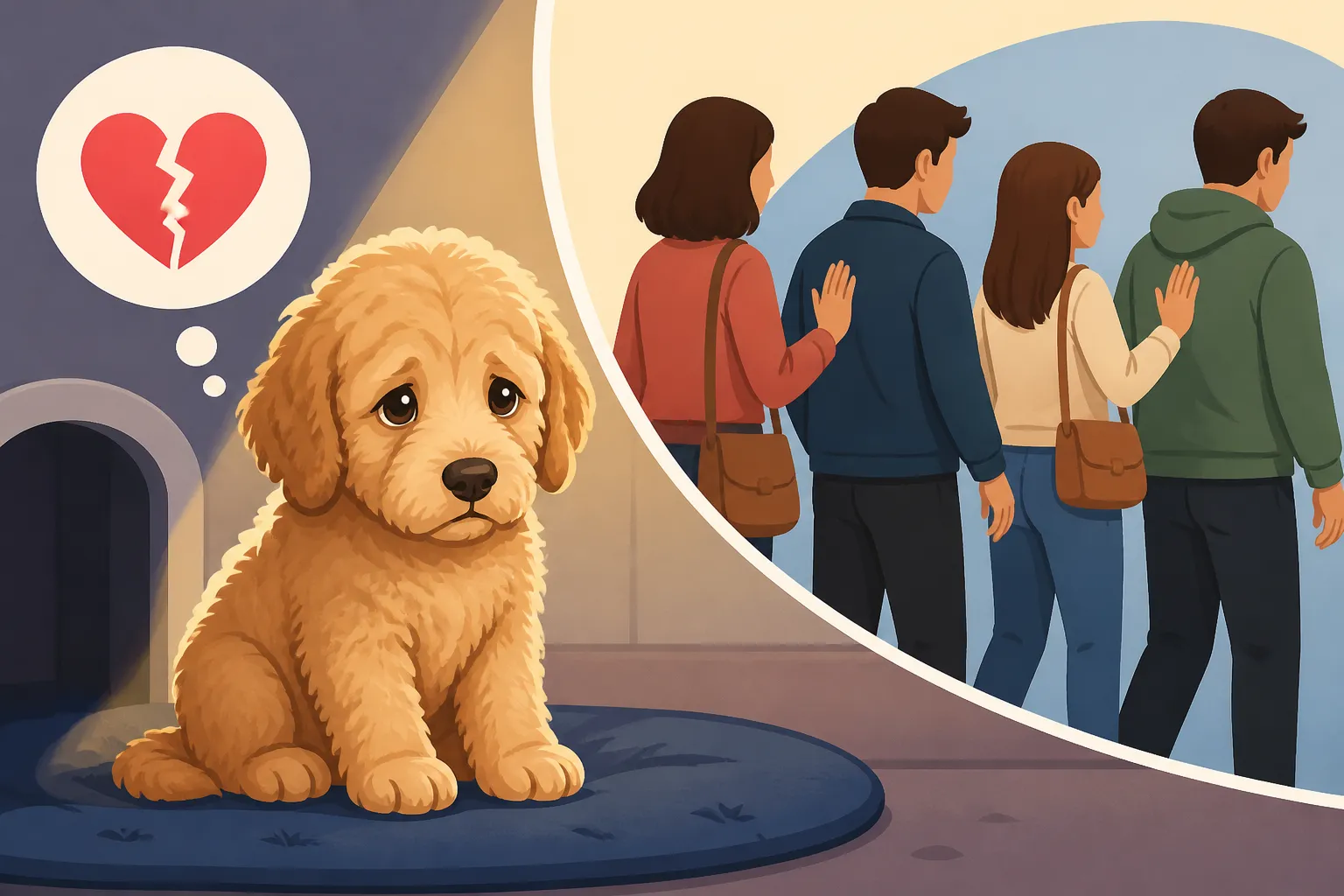
Why Nobody Wanted the First Labradoodle Puppies
It’s almost impossible to imagine now, isn’t it? These days, Labradoodles are everywhere – in our parks, on our social media feeds, and warmly nestled in our homes. They’re celebrated for their charming personalities and those cuddly, often low-shedding coats. But rewind to the very beginning, when the first litter of Labradoodles was born, and you’d find a starkly different reception. Believe it or not, these pioneering pups struggled to find homes. This guide will take you back to the genesis of the Labradoodle, exploring the unique circumstances, prevailing attitudes, and genuine misunderstandings that initially led to these puppies being unwanted, before they eventually captured the hearts of millions.
The Birth of an Idea and Its Unexpected Reception
The story of the Labradoodle begins with a noble purpose, far from the "designer dog" label it would eventually acquire. In 1989, Wally Conron, the breeding manager for the Royal Guide Dogs Association of Australia, had a specific challenge. A blind woman in Hawaii needed a guide dog, but her husband was severely allergic to dogs. Conron's mission was clear: create a guide dog with the temperament of a Labrador Retriever and the non-shedding, allergy-friendly coat of a Standard Poodle. He embarked on The 1989 Cross That Made the First Labradoodle, breeding a Standard Poodle named Harley with a Labrador Retriever named Brandy.
The Original Vision for a Guide Dog
Conron's focus was purely on utility. He wasn't trying to create a new pet trend; he was trying to solve a real, pressing problem for a client. He carefully selected his parent dogs, prioritizing health, temperament, and the potential for a specific coat type. The hope was that the resulting puppies would inherit the best traits from both breeds, especially the Poodle's coat, to minimize allergen exposure. His understanding of Why a Guide Dog Had to Be Allergy Friendly drove this entire project. Three puppies were born in that first litter, and from them, one named Sultan showed immense promise as a guide dog, eventually making his way to Hawaii and proving the concept. Sultan, the Labradoodle That Proved the Idea was a success story for the individual client.
A Surplus of Unrecognized Talent
However, not all puppies in that inaugural litter could become guide dogs, nor were all of them destined for the perfect allergy-friendly coat. While Sultan went on to fulfill his destiny, his siblings, equally wonderful puppies in their own right, didn't fit the exact, stringent criteria for service work. It's a common outcome in any breeding program; not every animal makes the cut for a highly specialized role. The Royal Guide Dogs Association had three lovely puppies, but only one met the specific guide dog requirements. What about the others? This is where the unexpected problem arose. There simply wasn't a recognized market or demand for these specific crossbreed puppies. People weren't lining up to adopt them because the "Labradoodle" wasn't a known entity, and their unique qualities, outside of the guide dog context, were largely misunderstood.
The "Mutt" Stigma and Public Skepticism
In the late 1980s, the concept of intentionally breeding two different purebreds to create a "designer dog" was virtually unheard of and, to many, quite unappealing. The dog-owning world was heavily steeped in the tradition of purebreds, with their pedigrees, breed standards, and predictable traits. A crossbreed, regardless of its parents, was often simply viewed as a "mutt."
The Purebred Bias of the Era
Back then, the prevailing attitude was that if you wanted a dog, you got a purebred, or perhaps a rescue from a shelter with an unknown lineage. The idea of paying for a crossbreed was, to many, preposterous. Purebred dogs came with a certain prestige, a known history, and often, documentation of their lineage and health clearances. They were registered with kennel clubs like the AKC, providing a sense of legitimacy and a clear understanding of what to expect in terms of appearance and temperament.
The term "Labradoodle" itself was so new, some might not have even known how to pronounce it, let alone what it signified. Whether the Word Labradoodle Was Invented in 1989 marks a pivotal moment, but it wasn't an instant sensation. Without a recognized "breed" status, these puppies lacked the perceived value and desirability that purebreds enjoyed. It was a time before the internet made information about novel breeds and crosses widely accessible, before you could scroll through a site like Chewy and find dedicated sections for "doodle" mixes.
Confusion Over Predictability and Purpose
One of the biggest hurdles was the sheer unpredictability of an F1 (first generation) cross. While Conron hoped for the best of both worlds, the reality of genetics is often a lottery. Some puppies might have shed like a Labrador, while others might have had a Poodle-like coat. Some might have inherited a blend of temperaments, others leaning more heavily towards one parent or the other. This variability, while natural, was a major deterrent for potential owners seeking specific traits.
People wanted to know: Will it shed? How big will it get? What will its personality be like? Without established breed standards or a long history of breeding, these questions were hard to answer definitively for an F1 Labradoodle. The uncertainty surrounding temperament and physical characteristics made them a harder sell than a purebred dog, where expectations were more clearly defined. This confusion over what exactly a "Labradoodle" was contributed significantly to their initial lack of demand, contrasting sharply with how easily pet parents now find specific items like a The Growth Formula a Standard Labradoodle Needs or grooming tools for particular coat types on platforms like Chewy.
Breeder Hesitation and the Unpredictability Factor
It wasn't just the public who were hesitant; the established dog breeding community also viewed these early Labradoodles with a degree of skepticism, if not outright disdain. The concept of "hybrid vigor" was not widely accepted or understood in the way it is today, and the idea of a planned crossbreed was often seen as diluting purebred lines rather than creating something new and beneficial.
The Unknowns of the First Generation
For a responsible breeder, predictability is key. They strive to produce puppies that consistently meet a certain standard in terms of health, temperament, and appearance. With the very first Labradoodle litter, this predictability was a massive question mark. A first-generation (F1) cross, as these puppies were, could exhibit any combination of traits from their Poodle and Labrador parents. This meant some puppies might have retained the shedding coat of a Labrador, while others might have had the Poodle's characteristic curl. The blend of physical attributes and temperamental quirks was an exciting experiment for a guide dog program, but a huge unknown for someone looking for a pet.
The genetic lottery inherent in an F1 cross meant there were no guarantees. For instance, What F1 Means on a Labradoodle is purely a first-generation cross, and while it introduces genetic diversity, it doesn't guarantee a specific coat type. Whether an F1 Labradoodle's Coat Is a Gamble highlights this uncertainty; some were low-shedding, some weren't. This lack of a consistent "type" was off-putting for many who desired a specific aesthetic or functional trait. Moreover, the professional dog world had concerns about the long-term health implications, questioning whether these crosses would truly be healthier or merely combine the predispositions of two different breeds.
The "Mistake" Conron Regretted
Perhaps the most telling aspect of the early perception comes from Wally Conron himself. While he succeeded in creating Sultan, the allergy-friendly guide dog, he later expressed profound regret for having popularized the cross. Wally Conron and the Labradoodle He Regrets is a well-documented sentiment, and he went so far as to call the creation of the Labradoodle his "life's regret" and a "Frankenstein's monster."
His remorse stemmed from the uncontrolled explosion of "doodle" breeding that followed. Many people, seeing the Labradoodle's popularity grow, began breeding them without the same rigorous health testing, temperament screening, or ethical considerations that Conron himself had employed. This led to a proliferation of poorly bred dogs with unpredictable temperaments, significant health issues, and coats that shed, ultimately undermining the very purpose he had intended. His frustration was not with the original dogs, but with the irresponsible breeding practices that blossomed in the wake of his initial success. Why Conron Called the Labradoodle a Mistake reflects this disappointment, showing how the unintended consequences overshadowed his initial positive outcome.
The Slow Burn to Popularity: From Unwanted to Sought-After
The journey from being an "unwanted" crossbreed to one of the most beloved companion dogs was a gradual one, driven by word-of-mouth, changing societal attitudes, and the inherent charm of the dogs themselves. What started as a niche solution for a specific problem slowly morphed into a widespread phenomenon.
Shifting Perceptions and Growing Awareness
Despite the initial skepticism, the positive traits of the early Labradoodles, particularly their intelligence, friendly nature, and reduced shedding for some, slowly began to win people over. Owners who experienced these dogs firsthand became advocates, sharing stories of their delightful companions. This grassroots appreciation gradually chipped away at the "mutt" stigma.
As more responsible breeders, inspired by the success of dogs like Sultan, began to refine their breeding programs, the consistency in temperament and coat quality improved. Generations beyond the F1 cross, such as F1b and Multigen Labradoodles, aimed for greater predictability in traits like non-shedding coats. This evolution helped solidify the breed's reputation. People started to realize that an intentional cross could indeed offer unique benefits, and the once-unfamiliar name "Labradoodle" became synonymous with a friendly, intelligent, and often allergy-friendly family dog. This shift was profound, turning a formerly unwanted pup into a highly desired companion, for whom owners would now browse extensive pet supplies on platforms like Chewy.
The Rise of the "Designer Dog" Phenomenon
The Labradoodle inadvertently spearheaded the entire "designer dog" movement. Its popularity paved the way for other Poodle crosses like Goldendoodles, Bernedoodles, and countless others. As celebrities and public figures started adopting Labradoodles, their visibility skyrocketed, further legitimizing them in the public eye. This wasn't just a trend; it was a fundamental shift in how people viewed crossbreeds. The initial reluctance to accept a dog without a traditional pedigree faded as the demand for dogs with specific traits, such as those that were good with families or had hypoallergenic potential, grew.
Today, Labradoodles are frequently considered for a range of roles, from family pets to therapy dogs, and even as assistance animals. Their versatility and appealing characteristics are undeniable. This journey from an experiment with unwanted puppies to a global sensation is a testament to their enduring appeal and the power of word-of-mouth. While Why No Kennel Club Registers the Labradoodle still remains true, their popularity is a testament to their intrinsic value, not their official recognition. Today, equipping a Labradoodle with everything it needs, from specialized food to robust toys, is as simple as a visit to an online retailer like Chewy.
How Initial Perceptions Differ from Today's Reality
Let's take a moment to reflect on just how much perceptions have changed for these wonderful dogs:
| Feature | Initial Perception (Late 1980s) | Modern Perception (Today) |
|---|---|---|
| Breed Status | "Mutt" or accidental crossbreed; lacking prestige | "Designer dog," intentional crossbreed; highly sought after |
| Coat Predictability | Highly variable, uncertain shedding; genetic gamble | More predictable with later generations; often low-shedding |
| Temperament | Unknown, blend of two breeds; potential for variability | Generally friendly, intelligent, adaptable, good family pet |
| Purpose | Niche guide dog solution; pets were an afterthought | Companion animal, family dog, therapy dog, assistance dog |
| Availability | Limited, hard to place; perceived as unwanted | Widespread, long waiting lists; high demand |
| Information & Supplies | Scarce; specific needs unaddressed by market | Abundant resources, specialized products (e.g., on Chewy) |
This table truly shows the incredible transformation in the Labradoodle's standing. From a small, unheralded litter that struggled to find homes, they've become a beloved icon in the dog world, a testament to how public perception, knowledge, and consistent breeding efforts can reshape a breed's destiny. Owners today have the luxury of easily finding anything their Labradoodle needs, from grooming supplies for their unique coats to dietary supplements for their The Twelve to Fifteen Years a Labradoodle Lives, all thanks to readily available resources on platforms like Chewy. The journey these dogs have taken is quite remarkable.
Disclaimer
This article is for general informational purposes only and does not constitute professional advice. Laws, prices and regulations vary by location and change over time. Consult a qualified professional for guidance on your specific situation.