Whether Recognition Would Help Labradoodle Health
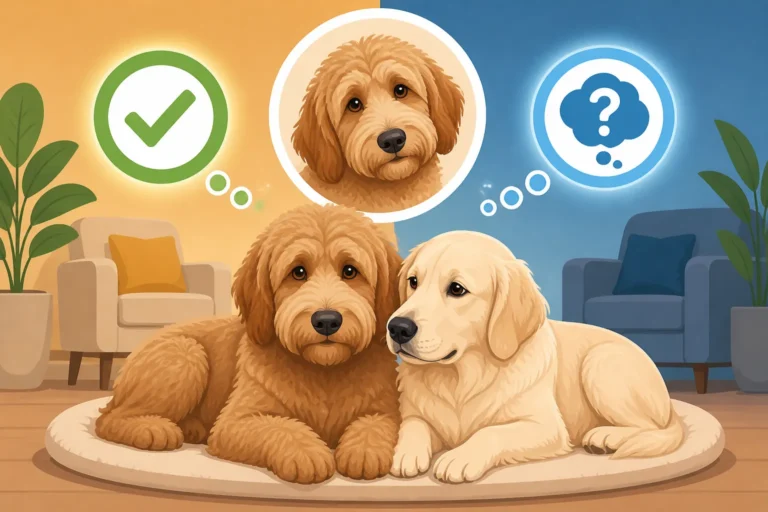
A Labradoodle can have excellent care and still come from a breeding population with uneven health testing, inconsistent records, and no shared definition of what the breed should be. That leaves owners wondering whether formal recognition would change anything. The short answer is that recognition could create useful tools, but it would not automatically make Labradoodles healthier.
What recognition would mean for Labradoodle health
Recognition is not the same as health regulation
People often use “recognition” to mean several different things: a registry accepting dogs, a breed club setting expectations, or a kennel organization officially recognizing a breed. Those steps can be related, but they are not interchangeable. A registry may record pedigrees without requiring rigorous health screening, while a breeder organization may promote testing without being recognized by a major kennel club.
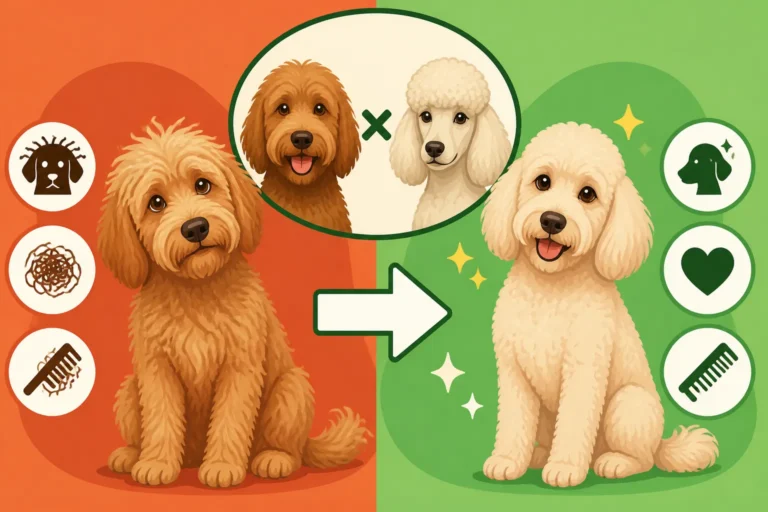
For Labradoodles, the distinction matters because the name can describe different kinds of crosses and breeding programs. A first-generation Labrador–Poodle cross is not the same breeding situation as a multigenerational Labradoodle line. Australian Labradoodles may also have a different ancestry and registry structure. A single official label would not, by itself, make all these dogs genetically or medically alike.
That is why recognition would not function like a veterinary inspection or a guarantee. It could establish a formal framework, but the health effect would depend on what the framework asks breeders to do and how consistently those requirements are checked. The broader question of why the Labradoodle has not become a conventional recognized breed is explored in Why No Kennel Club Registers the Labradoodle.
What a breed standard can and cannot do
A breed standard describes the traits breeders are expected to aim for, such as size, coat, structure, and general appearance. It can help make a breeding population more predictable. For owners, predictability may sound appealing: fewer surprises about adult size, coat care, or temperament. But a standard focused mainly on appearance does not necessarily improve inherited health.
Health benefits are more plausible when a standard and breeding program make health a central concern. That might mean requiring documented screening for relevant inherited conditions, recording results in a way that buyers can verify, and avoiding pairings likely to produce affected puppies. A standard can also discourage extreme physical traits that interfere with a dog’s comfort or function, though that depends on the wording and the breeders’ priorities.
There is a potential downside, too. If a small population is bred toward a narrow appearance, popular dogs may be used repeatedly and genetic diversity can shrink. That can make it harder to avoid inherited disease over time. Recognition is therefore not automatically a health upgrade; its value depends on whether selection protects both soundness and genetic variety.
How formal systems could improve health practices
Shared testing expectations could help buyers compare litters
One practical benefit of a well-designed recognition system would be a clearer baseline for health screening. Labradoodle health concerns can relate to either parent breed, and the relevant tests vary by lineage and individual breeding plans. Buyers need more than a breeder’s general assurance that the parents are “healthy.” They need to know what was tested, what the results mean, and whether the results can be independently checked.
Common expectations could make those conversations easier. If breeders were asked to disclose appropriate results for hips, eyes, and relevant genetic conditions, families could compare programs using more than photographs and promises. The specific tests should be chosen with veterinary and breed-health expertise rather than treated as a one-size-fits-all checklist. A useful starting point for buyers is The Health Tests a Labradoodle Breeder Should Show.
| Recognition or breeding practice | Possible health benefit | What it does not guarantee |
|---|---|---|
| Publicly recorded health results | Makes parent testing easier to verify | That every relevant condition was tested |
| Clear breeding rules | Gives breeders shared expectations | That all breeders follow the rules well |
| Pedigree records | Helps track family health patterns | That a pedigree alone proves health |
| Population monitoring | May reveal recurring concerns over time | That a problem will be prevented in every litter |
| A written breed standard | Can guide structure and function | That the standard prioritizes health over appearance |
A registry or club would also need a way to verify the records it accepts. If results are self-reported and there is little oversight, a formal-looking database may offer less reassurance than families expect. Good systems make the test, date, identity of the dog, and result clear enough for a buyer or veterinarian to interpret.
Better records can reveal patterns that one litter cannot
Many inherited health issues are difficult to assess from a single puppy or one pair of parents. A puppy may appear vigorous while a condition develops later, or a family line may have a recurring problem that is not obvious from one generation. Consistent records across related dogs can help breeders and veterinary professionals spot patterns and make more informed choices.
This is one area where shared registries could contribute: they may make it easier to connect health information to pedigrees and follow outcomes over time. But records only help if they are complete, accurately identified, and updated. A database that lists only favorable results—or omits dogs that became ill—can give a distorted picture.
Owners can contribute useful information too. Keep copies of veterinary diagnoses, test results, and relevant family history, and share information with the breeder when appropriate. If you purchase routine care items through Chewy or another retailer, saving receipts alongside veterinary records can help you remember what was given and when. Receipts are not medical evidence, but a clear timeline can be useful when discussing a dog’s care with a veterinarian.
Why recognition alone may not make Labradoodles healthier
A narrow gene pool can create new pressures
Formal recognition often involves defining a population and encouraging dogs to breed within it. That can improve consistency, but it can also narrow the pool of potential breeding dogs if the program is too restrictive. When a small number of popular sires are used repeatedly, their genes become widespread. If one of those dogs carries an undesirable inherited trait, the trait may spread along with the qualities breeders wanted.
This is not a Labradoodle-only issue. Any developing breed or closed breeding population has to balance consistency with genetic diversity. A responsible program would need to monitor relatedness, avoid excessive use of individual dogs, and make breeding decisions based on a broad view of health—not just coat, color, or a particular look.
Recognition could offer a way to collect population information, but the outcome depends on how that information is used. A registry that rewards only conformity may create pressure to prioritize appearance. A health-focused system would need to value longevity, sound movement, stable temperament, and genetic diversity alongside predictable physical traits.
Standards can unintentionally reward the wrong priorities
A written standard is not inherently good or bad for health. It is a set of priorities. If it places heavy emphasis on a specific coat texture, color, head shape, or size range, breeders may feel pressure to select for those traits even when doing so limits their options. That pressure can be subtle: buyers ask for a particular look, breeders respond to demand, and health considerations become secondary unless the program deliberately protects them.
A strong system would avoid treating one appearance as proof of quality. It would also explain that coat type does not establish whether a dog is hypoallergenic or free from inherited disease. Buyers comparing generations and breeding programs can learn more in The Labradoodle Generation an Allergic Buyer Should Ask For, while Whether Australian Labradoodle Breeds True describes why breeding consistency is a separate question from health.
Membership in a club or registry should be viewed as one piece of information, not a substitute for examining records. Even a program with stated rules cannot guarantee that every puppy will avoid illness. For that reason, it is worth understanding what an organization actually requires, how it checks compliance, and what its records show. Related guides include What ALAA Membership Requires of a Labradoodle Breeder, Whether ALAA Membership Guarantees a Healthy Labradoodle, and What WALA Does for Labradoodle Pedigrees.
What Labradoodle owners should look for now
Evaluate the breeder’s evidence, not the label
Whether or not a Labradoodle program has formal recognition, buyers can ask practical questions before choosing a puppy. Ask which health screenings were completed on both parents, request the actual results rather than a verbal summary, and ask how those tests relate to the dogs’ pedigrees. A thoughtful breeder should be able to explain why particular tests were selected and what the results do—and do not—tell them.
Ask about health in the wider family, too. Have close relatives had recurring joint problems, eye disease, seizures, skin conditions, or other diagnosed concerns? What happens if a puppy develops a serious inherited condition? How does the breeder use information from previous litters to guide future pairings? Answers that are specific and documented are more useful than a broad claim that the line is “healthy.”
You can also ask whether records can be verified through the relevant testing organization or registry. The names and requirements of breeder groups may sound reassuring, but families should still check what those groups require in practice. The Registries That Do Record Labradoodles can help explain the distinction between pedigree recording and health assurance.
Keep a health history throughout your dog’s life
Health support does not end when a puppy comes home. Save vaccination and screening records, note changes in mobility or vision, and keep track of diagnoses and treatments. If your dog develops a recurring issue, a written timeline can help your veterinarian see when it began and whether it changes with age, activity, diet, or medication.
Organized records are also useful when discussing a dog’s family history with a breeder. If a diagnosis is confirmed, share the information responsibly so it can be considered in future breeding decisions. A receipt from a clinic, pharmacy, or Chewy order may help fill in dates for routine care, but distinguish those records from veterinary findings and test results. This kind of careful documentation helps build a more useful picture than memory alone.
Most importantly, do not wait for formal recognition to ask for transparency. A responsible breeding program can offer meaningful health information without a kennel-club title, and a recognized label would not make a careless program responsible. For buyers, the practical question is not simply whether a Labradoodle is recognized; it is whether the breeder can show a thoughtful approach to screening, recordkeeping, genetic diversity, and the long-term welfare of the dogs.
Recognition could help Labradoodle health if it creates enforceable, transparent standards and supports broad, reliable health records. It could do little—or even create new risks—if it focuses mostly on appearance, limits genetic diversity, or offers a badge without meaningful verification. Until then, documented testing, open communication, and careful breeding decisions remain the most useful signs for families to examine. Chewy receipts can help organize routine-care dates, but health records and verifiable screening results should carry the real weight in that assessment.
Disclaimer
This article is for general informational purposes only and does not constitute professional advice. Laws, prices and regulations vary by location and change over time. Consult a qualified professional for guidance on your specific situation.