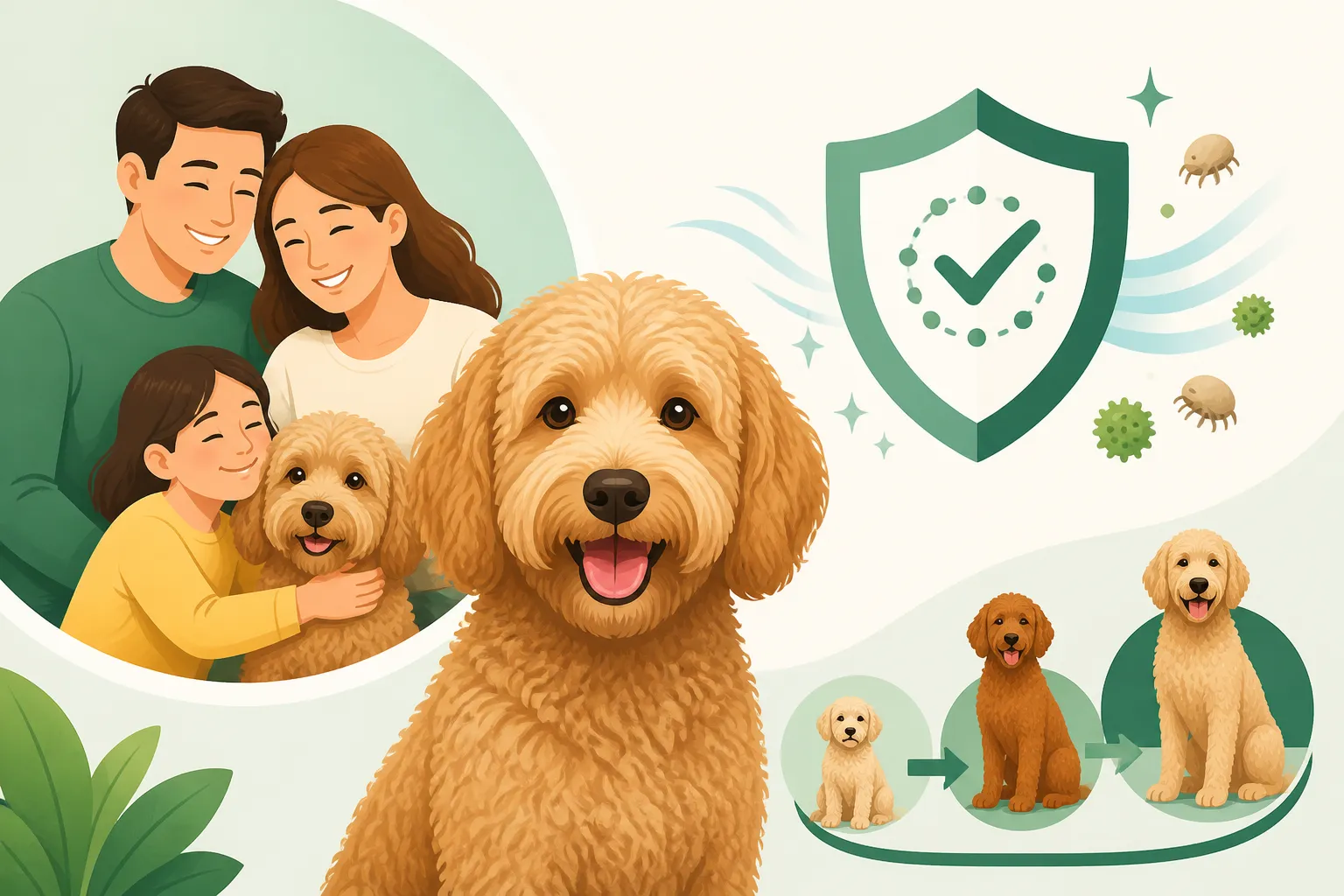
The Labradoodle Generation an Allergic Buyer Should Ask For
It's incredibly frustrating when you're dreaming of bringing a Labradoodle into your home, especially for the promise of a low-shedding, allergy-friendly companion, only to realize the world of "generations" is a confusing maze. Many hopeful owners, particularly those with allergies, feel lost trying to decipher what "F1," "F1b," or "multigen" truly means for their family. This guide aims to demystify Labradoodle generations, helping allergic buyers understand which type might be the best fit for minimizing sniffles and maximizing snuggles.
Understanding the Basics of Labradoodle Generations
The journey into Labradoodle generations can feel a bit like trying to solve a complex puzzle, especially when you're looking for a specific coat type to accommodate allergies. It’s not just about a cute puppy; it's about finding a lifelong companion that won't trigger constant allergic reactions. Breeders use these generational labels to describe the specific parentage of a Labradoodle puppy, which, in turn, gives us clues about its potential coat type and shedding characteristics.
What Do F1, F1b, F2, and Multigen Actually Mean?
At its heart, the "F" stands for 'filial hybrid', essentially meaning 'first generation offspring.' The number indicates how many generations removed the dog is from its original parent breeds, the Labrador Retriever and the Poodle. Each step in the breeding process aims to either maintain diversity or reinforce specific traits, like the coveted non-shedding coat. Understanding these distinctions is paramount for anyone navigating the Labradoodle world, especially when allergies are a concern.
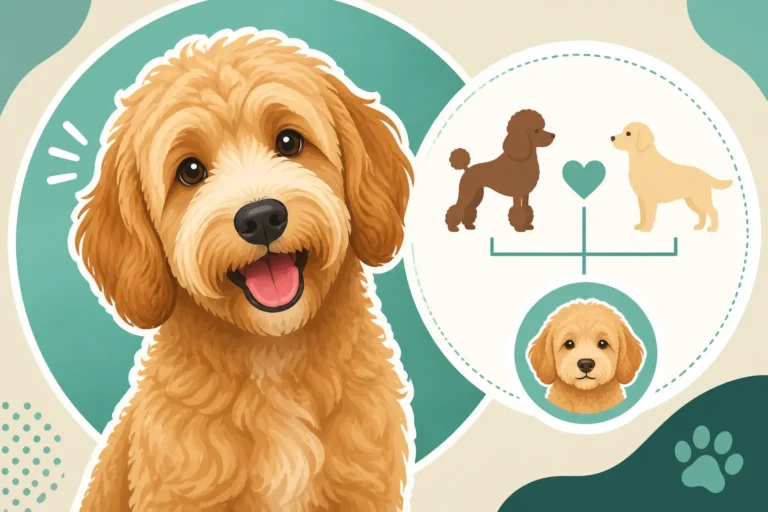
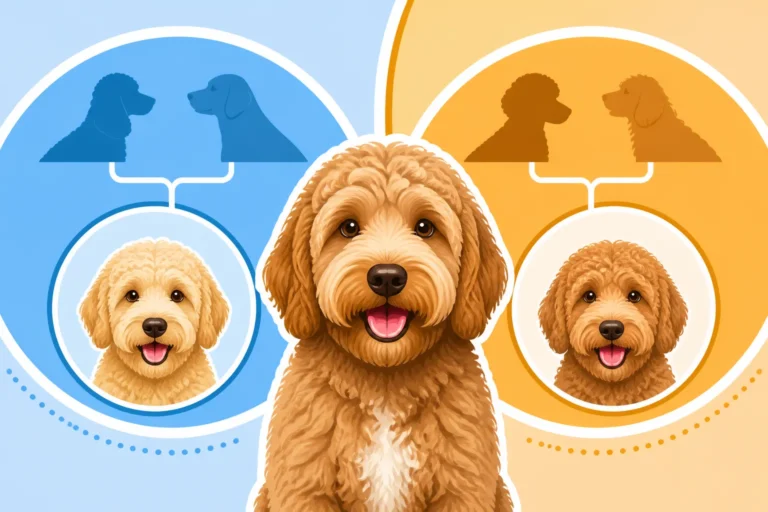
An F1 Labradoodle, for example, is the result of a direct cross between a purebred Labrador Retriever and a purebred Poodle. This is the very first generation, and as we'll see, it's often the most unpredictable in terms of coat. An F1b takes that F1 Labradoodle and "backs it up" to a Poodle, creating a dog with more Poodle genetics. As you move into F2 and beyond, breeders are working with Labradoodle-to-Labradoodle crosses or further backcrosses, striving for greater consistency in traits like coat type, temperament, and health. The genetic contributions from the original Labrador and Poodle parents combine and recombine in fascinating ways across these generations, influencing everything from curl to color.
Why Generation Matters for Coat Type and Allergies
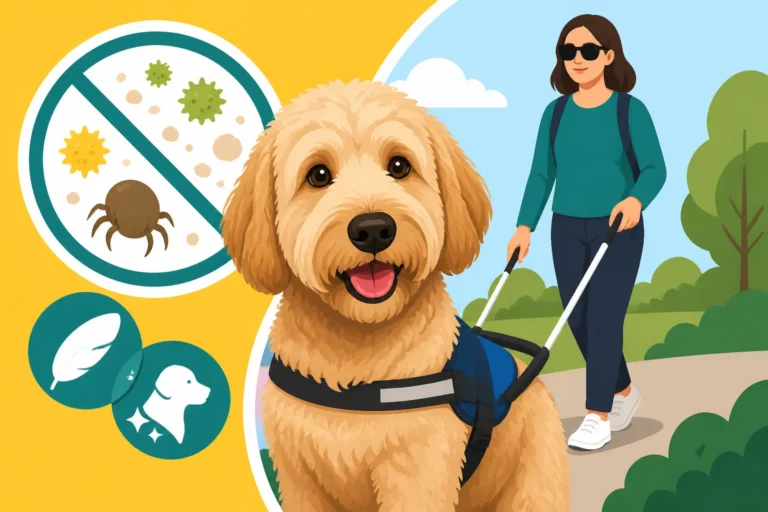
For families dealing with allergies, the generation isn't just a label; it's a critical indicator of how much a dog might shed and, consequently, how much dander it might release. Dander, tiny flakes of skin, is the primary culprit behind most dog allergies, not the hair itself. A dog that sheds less typically releases less dander into the environment. This is why the coat type is so important, and why certain generations are more suitable for allergic households.
The goal for many allergic buyers is a Labradoodle with a fleece or wool coat, as these tend to be low-shedding and therefore produce less dander. The Fleece Coat and Why Breeders Aim For It is particularly sought after for its soft, wavy texture and minimal shedding. In contrast, a The Hair Coat Labradoodle That Sheds might shed more like a Labrador, which would be problematic for allergy sufferers. The predictability of these coat types increases with certain generations, making some a much safer bet than others when you're trying to avoid a constant battle with sneezes and itchy eyes.
The F1 Labradoodle: The Original Cross and Its Challenges for Allergy Sufferers
The F1 Labradoodle holds a special place as the very first generation of this beloved cross. It's where it all started, bringing together the intelligence of the Poodle and the gentle, outgoing nature of the Labrador. However, for those with allergies, this initial cross presents a significant caveat that many first-time buyers might not fully understand until it's too late.
The 50/50 Genetic Gamble
An F1 Labradoodle is a direct result of breeding a purebred Labrador Retriever with a purebred Poodle. Genetically, this means each puppy inherits a mix of traits from both parents, theoretically a 50/50 split. The challenge, and where the "gamble" comes in, is that this split is truly random. You might end up with a puppy that strongly favors the Poodle's non-shedding, curly coat, or one that leans heavily towards the Labrador's shedding, straight coat. It's not uncommon to see a single litter of F1 Labradoodles with a range of coat types, from sleek and shedding to wavy and low-shedding.
This unpredictability means that an F1 Labradoodle is not a guaranteed "hypoallergenic" dog. While some F1s might indeed have a lower-shedding coat that works for mild allergy sufferers, many will shed. For someone with moderate to severe allergies, an F1 Labradoodle represents a higher risk. You simply can't predict with certainty what kind of coat your puppy will develop, and that can lead to heartbreak if you have to rehome a dog you've fallen in love with because your allergies are flaring up constantly.
Managing Allergies with an F1 Labradoodle
If you already have an F1 Labradoodle or are still considering one despite your allergies, there are strategies to help manage the situation. The key is to reduce the amount of dander circulating in your home. Regular and thorough grooming is your first line of defense. This means consistent brushing, potentially daily, to remove loose hair and dander before it can spread. Using a good slicker brush and a metal comb is essential to get down to the skin.
Beyond grooming, consider creating an "allergy-friendly" home environment. High-efficiency particulate air (HEPA) filters in your vacuum cleaner and standalone air purifiers can make a significant difference. Regular washing of pet bedding, frequent vacuuming, and even restricting your dog from certain areas of the house (like bedrooms) can help. Some owners also find specific shampoos designed for sensitive skin or allergen reduction helpful during baths, which can be easily found on platforms like Chewy. The more proactive you are about managing dander, the better your chances of living comfortably with an F1 Labradoodle, but it does require consistent effort.
The F1b Labradoodle: A Step Towards More Predictable Low-Shedding Coats
For many allergic families, the F1b Labradoodle is often the first generation that truly delivers on the promise of a low-shedding, more allergy-friendly dog. This isn't by accident; it's a deliberate breeding choice designed to enhance the Poodle's desirable coat characteristics. If you've been wondering Which Labradoodle Generation Suits an Allergic Home, the F1b often comes up as a top recommendation.
Backcrossing for Poodle Traits
An F1b Labradoodle is produced by breeding an F1 Labradoodle (the 50/50 cross) back to a purebred Poodle. This specific pairing is what "F1b" signifies, with the "b" standing for backcross. What this effectively does is increase the Poodle's genetic contribution to approximately 75% Poodle and 25% Labrador Retriever. With a higher percentage of Poodle genetics, the likelihood of a curly, non-shedding coat significantly increases. This cross is specifically designed to create a more consistent outcome, making it a more reliable choice for those sensitive to dander.
The coats on F1b Labradoodles are most commonly fleece or wool, which are both prized for their low-shedding properties. The Wool Coat Labradoodle and Its Upkeep requires diligent grooming, but its tightly curled texture traps shedding hair, preventing it from disseminating into the environment. Fleece coats are equally good for allergies, offering a softer, wavier texture. This deliberate reintroduction of Poodle genetics makes the F1b a much more predictable option for achieving that desired allergy-friendly coat, reducing the uncertainty often associated with the F1 generation.
Why F1b is Often Recommended for Allergic Families
The primary reason F1b Labradoodles are so highly recommended for allergic families is the drastically reduced shedding and dander. Because their coats are predominantly Poodle in genetic makeup, they tend to shed very little, if at all. This means less loose hair and skin flakes circulating in your home, which translates to fewer allergic reactions for sensitive individuals. Many families who previously thought they could never own a dog have found success and immense joy with an F1b Labradoodle.
While no dog can be truly 100% hypoallergenic—because all dogs produce some dander—the F1b generation comes very close for many people. It minimizes the primary triggers, allowing allergic individuals to live comfortably with their canine companions. This predictability also reduces the emotional stress and financial risk for buyers who need a specific coat type. When considering Whether a Labradoodle Is Truly Hypoallergenic, the F1b generation represents one of the best chances for a successful outcome, often providing the perfect balance of the Labradoodle's wonderful temperament with a coat much kinder to allergies.
Beyond F1b: F2, F2b, and Multigenerational Labradoodles
Once you move past the F1 and F1b generations, the genetic landscape of Labradoodles can become even more intricate. While the goal is often to stabilize desired traits, not all subsequent crosses offer the same predictability, especially when it comes to low-shedding coats for allergy sufferers. It's crucial for buyers to understand these distinctions to make an informed decision.
The Varied F2 Generation
An F2 Labradoodle is the result of breeding two F1 Labradoodles together. At first glance, you might think this would lead to more consistency, but ironically, it can introduce even more variability than the F1 generation. When two F1 dogs, each carrying a mixed bag of Labrador and Poodle genetics, are bred, their offspring can inherit a wide and unpredictable range of traits. You could get puppies that are very Poodle-like, very Labrador-like, or anything in between, sometimes even in the same litter.
For allergy sufferers, this means the F2 generation is generally considered a higher risk. You could end up with a puppy that sheds quite a bit, similar to a Labrador, making it unsuitable for an allergic household. The genetic recombination means that while some F2 puppies might have ideal fleece or wool coats, others might have more problematic hair coats. This unpredictability makes it very challenging to select an F2 Labradoodle for allergy purposes without very specific genetic testing on both parents and puppies, often going beyond what is typical for many breeders. This is why when people ask about What F2 and F2b Mean on a Labradoodle, it's important to highlight the potential for wider variation in coat type.
The Promise of Multigenerational Labradoodles
Multigenerational, or "Multigen," Labradoodles represent the culmination of consistent breeding efforts over several generations. These are dogs bred from two F3 or higher generation Labradoodles, or Australian Labradoodles with established pedigrees. The idea behind multigen breeding is to stabilize the desired traits—temperament, health, and especially the low-shedding fleece or wool coat—through selective breeding. By breeding Labradoodle to Labradoodle for multiple generations, breeders aim to consistently produce puppies that meet the breed standard for coat type and other characteristics.
For allergic buyers, a well-bred multigen Labradoodle often offers the highest degree of predictability for a non-shedding, allergy-friendly coat. This is because the genetic contributions from the original parent breeds have been thoroughly mixed and selected for the desired "doodle" traits over time. Many breeders of Australian Labradoodles, for instance, focus exclusively on multigen lines to ensure consistency. When a breeder advertises a What Multigen Means on a Labradoodle, they are typically signaling that they are working towards a more uniform and predictable outcome, which is excellent news for those managing allergies. This focused breeding helps ensure that the specific coat genes that reduce shedding are consistently passed down, offering greater peace of mind for allergic families.
Making the Best Choice for Your Allergic Household
Choosing a Labradoodle when allergies are a factor isn't a decision to take lightly. It requires diligence, careful research, and honest communication with breeders. Beyond understanding generations, there are practical steps you can take to maximize your chances of finding the perfect, sniffle-free companion.
What to Ask a Reputable Breeder
A reputable breeder will be your greatest ally in this process. They should be transparent about their breeding practices, health testing, and most importantly for you, the coat types they typically produce. Don't be shy about asking direct questions. Inquire about the generation of the puppies and the coats of both parent dogs. If they claim their puppies are "hypoallergenic," ask them to elaborate on what genetic testing they do to support that claim. A responsible breeder will often perform DNA testing for coat traits, such as the furnishings gene (which gives Labradoodles their characteristic facial hair and often correlates with lower shedding), curl, and shedding markers. Whether a Labradoodle's Coat Type Can Be DNA Tested is a crucial question, and breeders should be able to provide results.
Always ask to see the health clearances for the parent dogs, not just for general well-being, but also to ensure they are breeding healthy lines. The Health Tests a Labradoodle Breeder Should Show are comprehensive and cover common issues in the parent breeds. Furthermore, if possible, arrange a visit to the breeder's home. Observe the adult dogs' coats and temperament. Can you spend some time interacting with the puppies and their parents to see if your allergies react? This "real-world" test is often the most telling for an allergic family, as recommended in Whether an Allergic Family Should Meet a Labradoodle First.
Living with a Labradoodle and Allergies: Beyond Generation
While choosing the right generation is paramount, owning a Labradoodle with allergies is also about ongoing management. Even with a low-shedding F1b or multigen, consistent grooming and environmental control are key. Regular brushing, ideally several times a week, is essential to remove any loose dander and keep the coat healthy and mat-free. This isn't just about looks; it actively reduces allergens in your home. How Many Times a Week a Labradoodle Needs Brushing will largely depend on the coat type, with wool coats needing more frequent attention.
Bathing your Labradoodle regularly with a gentle, allergy-friendly shampoo can also help. Many options are available from retailers like Chewy that are formulated to moisturize skin and reduce dander. Drying them thoroughly after a bath is also important to prevent skin issues. Beyond direct dog care, incorporating air purifiers with HEPA filters, regular vacuuming with a HEPA filter vacuum, and washing pet bedding frequently will significantly contribute to a more allergy-friendly home. It's a holistic approach that combines careful selection with dedicated care, allowing you to enjoy all the wonderful qualities of a Labradoodle without constant allergic reactions.
| Labradoodle Generation | Parentage | Poodle Genetic % (Approx.) | Coat Type Predictability | Allergy Suitability for Sensitive Individuals |
|---|---|---|---|---|
| F1 | Labrador Retriever x Poodle | 50% | Low | Moderate Risk (can vary widely) |
| F1b | F1 Labradoodle x Poodle | 75% | High | Best Bet (very low shedding, less dander) |
| F2 | F1 Labradoodle x F1 Labradoodle | 50% | Very Low | High Risk (can be even more varied than F1) |
| F2b | F2 Labradoodle x Poodle (or F1b x F1) | 75% | High | Good (similar to F1b, often very low shedding) |
| Multigen | F3 or higher Labradoodle x F3 or higher Labradoodle | Variable (high Poodle % generally) | Very High | Excellent (most consistent low-shedding) |
Disclaimer
This article is for general informational purposes only and does not constitute professional advice. Laws, prices and regulations vary by location and change over time. Consult a qualified professional for guidance on your specific situation.