What F2 and F2b Mean on a Labradoodle
One of the most common points of confusion for prospective Labradoodle owners revolves around the alphabet soup of F1, F1b, F2, and F2b generations. It's a natural source of frustration because these terms aren't just technical jargon; they directly impact what kind of dog you might bring home, especially when it comes to predicting traits like coat type, shedding, and even temperament. This guide will demystify the F2 and F2b classifications, helping you understand their significance and what to expect from a Labradoodle of these generations.
Decoding the Labradoodle Generations: Understanding the "F" System
When you start looking for a Labradoodle, you'll quickly encounter terms like F1, F1b, F2, and F2b. These designations refer to the "filial generation" of the crossbreed, essentially tracking how many generations removed the dog is from its purebred Labrador Retriever and Poodle ancestors. Understanding this system is crucial because it gives you a glimpse into the genetic lottery that dictates many of the traits you desire in a Labradoodle, particularly its coat.
The Foundation: What F1 Means for a Labradoodle
The "F1" Labradoodle is the original cross, the first generation, resulting from breeding a purebred Labrador Retriever with a purebred Poodle. This is where the magic (and sometimes the unpredictability) of hybrid vigor begins. F1 Labradoodles are known for their robust health, a common benefit of mixing two distinct gene pools. However, their coats can be quite variable. Some might have a more Poodle-like coat, others more Labrador, and many fall somewhere in between with a wavy or "fleece" texture. The shedding can also be a mixed bag; while many F1s shed less than a Labrador, some will still shed, which can be a surprise for allergic families. It's truly a toss-up in this first generation. If you're keen to dive deeper into the basics, you can read more about What F1 Means on a Labradoodle.
Why Breeders Developed Further Generations
The driving force behind developing subsequent generations like F1b, F2, and F2b was often the desire to achieve more predictable traits, particularly the coveted non-shedding, allergy-friendly coat. While F1s brought some wonderful qualities, their coat variability meant that not every dog was suitable for homes with severe allergies. Breeders sought to "fix" certain traits, essentially trying to stack the genetic deck in favor of the Poodle's low-shedding qualities, or to refine temperament and conformation. It's a continuous process of selective breeding, aiming to create a more consistent and predictable outcome for future owners.
What an F2 Labradoodle Brings to the Table
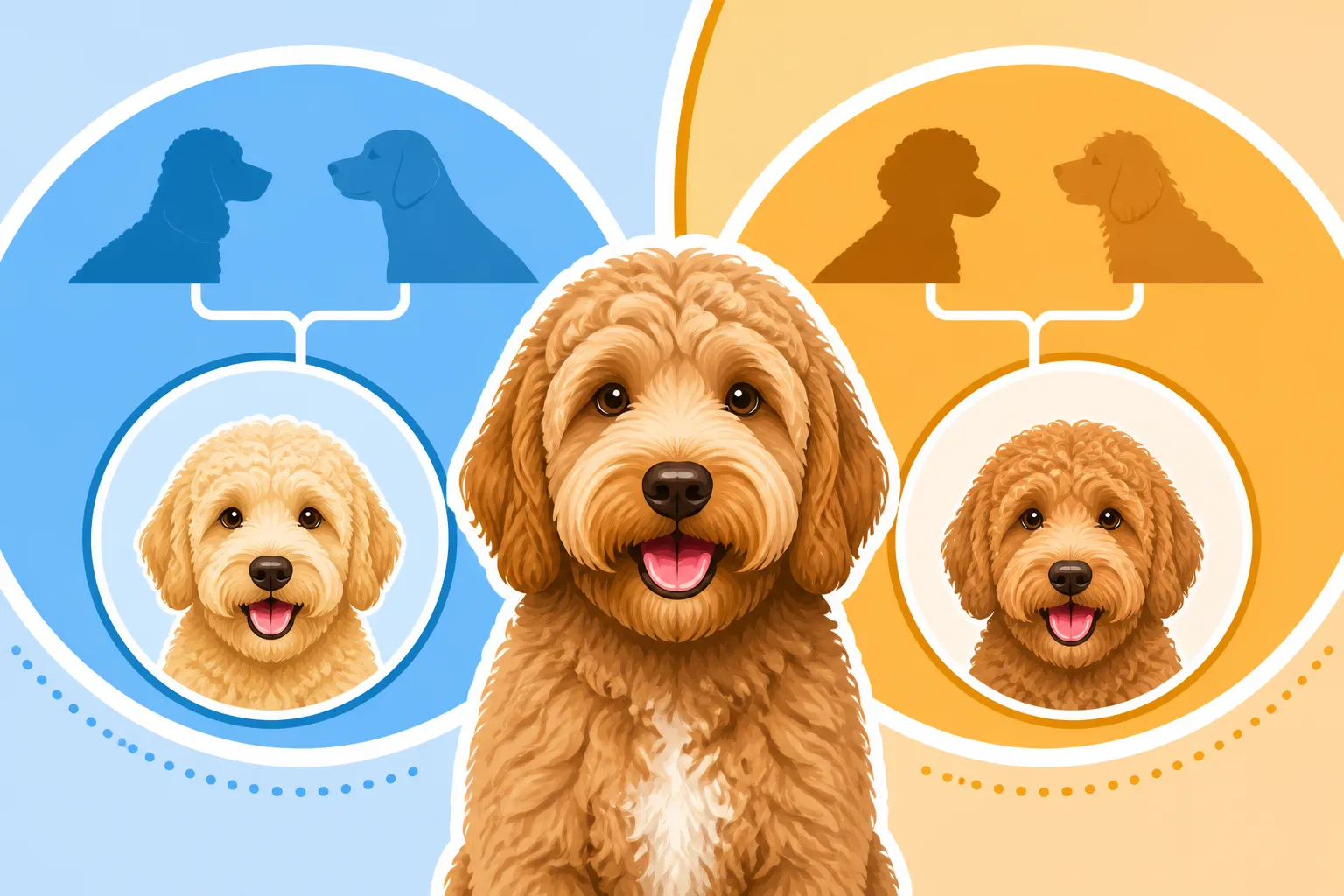
Now we get to the heart of the matter: the F2 Labradoodle. An F2 Labradoodle is the result of breeding two F1 Labradoodles together. It's the "second filial generation" of this particular cross. The logic here is that by breeding two dogs that already possess the desired mix of Poodle and Labrador traits, you might get a more consistent outcome. However, the reality can be a bit more complex.
The Genetic Mix of an F2 Labradoodle
Genetically, an F2 Labradoodle is still a 50/50 mix of Labrador and Poodle, on average. However, because both parents are already mixed breeds, the way those genes reshuffle and express themselves in the F2 puppies can lead to a wider variation than some might expect. Imagine shuffling two decks of cards, each already containing a mix of different suits. The resulting hand can still be quite diverse. This means that within a single F2 litter, you could see puppies with very Poodle-like traits, very Labrador-like traits, and everything in between. This genetic variability is part of the charm for some, but a challenge for others seeking extreme predictability.
Predicting Coat and Temperament in F2s
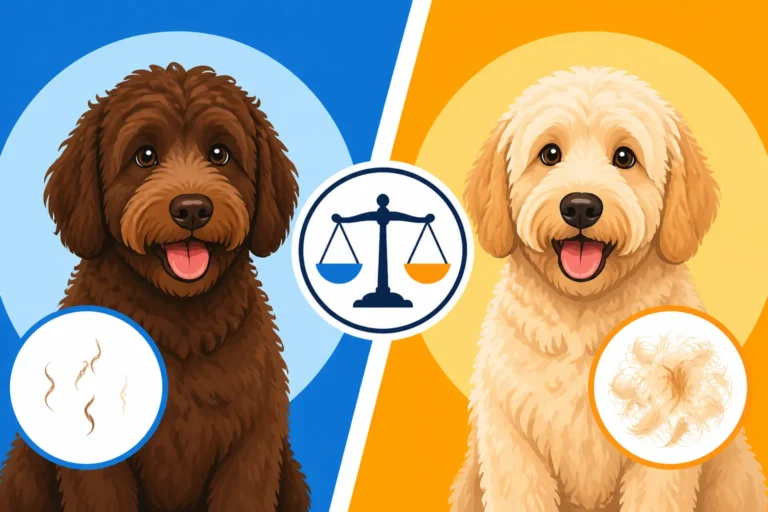
Predicting the coat of an F2 Labradoodle can be even more of a gamble than with an F1. Because both F1 parents carry a mix of shedding and non-shedding genes, their offspring have a higher chance of reverting to either purebred type. You might get puppies with a very curly, low-shedding Poodle-like coat, alongside siblings with a straighter, shedding Labrador-like coat, and a range of fleece coats in between. This variability makes F2 Labradoodles less predictable for those seeking a truly hypoallergenic dog.
When it comes to temperament, F2s generally inherit the wonderful, friendly, and intelligent nature that Labradoodles are known for. However, just like coat, the specific blend of Poodle intelligence and Labrador biddability can vary more widely compared to an F1b, for example. Some F2s might lean more towards the Poodle's energetic and quick-witted nature, while others might exhibit the more laid-back, eager-to-please traits of a Labrador. This is why meeting the parents and observing the puppies' individual personalities is so crucial, no matter the generation. You might find some excellent grooming supplies for any coat type on sites like Chewy, which can be a lifesaver when dealing with an unpredictable F2 coat.
Potential Health Considerations for F2 Generations
Health is always a paramount concern when bringing a new puppy into your home. While hybrid vigor is often discussed, it's not a blanket guarantee. In F2 Labradoodles, the genetic diversity can still offer some protection against recessive diseases common to both parent breeds. However, if both F1 parents carry a genetic predisposition for a specific health issue, then the F2 offspring have a higher chance of inheriting it. This underscores the critical importance of choosing a reputable breeder who conducts comprehensive health testing on both F1 parents. Tests for conditions like hip and elbow dysplasia, eye diseases (like progressive retinal atrophy), and genetic conditions such as Addison's Disease a Labradoodle Inherits From the Poodle or Exercise Induced Collapse and the Labradoodle's Labrador Half are essential, regardless of the generation. Always ask for clear documentation of these health clearances.
The F2b Labradoodle: A Backcross for Specific Traits
When breeders want to further refine traits, especially to enhance the non-shedding aspect, they often turn to a "backcross." This is where the F2b designation comes in. The "b" stands for backcross, meaning an F2 Labradoodle has been bred back to a purebred Poodle.
The Purpose of the "b" in F2b
The primary purpose of breeding an F2 Labradoodle back to a purebred Poodle is to increase the Poodle's genetic contribution. This results in a dog that is approximately 75% Poodle and 25% Labrador. By doing this, breeders aim to achieve a more consistent and predictable coat type, favoring the Poodle's low-shedding and often curly or wavy texture. This generation is often sought after by individuals or families who suffer from allergies and need a higher assurance of a non-shedding dog than an F1 or F2 might offer. This backcross helps in stabilizing the desired coat traits.
Enhanced Coat Predictability and Allergy Friendliness
The F2b Labradoodle typically offers much greater predictability in terms of coat type. You're far more likely to get the wavy or curly fleece and wool coats that are often associated with the Labradoodle ideal, and these coats are generally considered very low-shedding or non-shedding. This makes the F2b a popular choice for those with mild to moderate allergies, as the increased Poodle genetics greatly reduce the amount of dander and loose hair. If an allergy-friendly home is your priority, the F2b generation often provides a higher degree of confidence. Understanding Which Labradoodle Generation Suits an Allergic Home can help you make an informed decision.
Temperament and Health in F2b Labradoodles
While the F2b leans heavily into the Poodle's coat genetics, the temperament generally remains a delightful blend. You can still expect the intelligence and trainability of the Poodle, combined with the friendly, eager-to-please nature that is a hallmark of the Labrador. However, with a higher Poodle percentage, some F2b Labradoodles might exhibit a bit more of the Poodle's natural energy and need for mental stimulation. They are still highly sociable and make wonderful family companions. You might notice subtle differences in how Generation Affects a Labradoodle's Temperament.
From a health perspective, F2b Labradoodles benefit from the continued hybrid vigor, but again, due diligence with health testing is paramount. Because of the increased Poodle influence, breeders should pay particular attention to health concerns prevalent in Poodles, such as The prcd-PRA Test Both Labradoodle Parents Need and certain thyroid conditions. A responsible breeder will have clear health clearances for both the F2 parent and the purebred Poodle parent. Never hesitate to ask for proof of these tests, as they are crucial for ensuring the long-term health of your furry friend.
Navigating Your Choice: Which Generation is Right for You?
Deciding on the right Labradoodle generation can feel overwhelming, but understanding the nuances of each can help you narrow down your options. It's not just about the numbers; it's about matching the dog's potential traits with your family's lifestyle and needs.
Comparing F1, F1b, F2, and F2b Characteristics
To help visualize the differences, here's a brief comparison of the common characteristics you might expect from each generation:
| Characteristic | F1 Labradoodle (Labrador x Poodle) | F1b Labradoodle (F1 x Poodle) | F2 Labradoodle (F1 x F1) | F2b Labradoodle (F2 x Poodle) |
|---|---|---|---|---|
| Genetic Makeup (Approx) | 50% Labrador / 50% Poodle | 25% Labrador / 75% Poodle | 50% Labrador / 50% Poodle | 25% Labrador / 75% Poodle |
| Coat Predictability | Variable (straight, wavy, curly) | High (wavy to curly) | Highly Variable (wide range) | Very High (wavy to curly/wool) |
| Shedding Level | Moderate to low | Very Low to Non-shedding | Variable (can shed more) | Very Low to Non-shedding |
| Allergy Friendliness | Moderate | High | Moderate | Very High |
| Temperament Consistency | Generally good, can vary slightly | Excellent, slightly more Poodle | Can vary widely | Excellent, slightly more Poodle |
| Hybrid Vigor | Highest | High | Moderate | High |
This table provides a general guideline, but remember that individual puppies within a litter can always be exceptions to the rule. For example, even in an F2b litter, a single puppy might inherit a combination of genes that leads to a coat that sheds more than its siblings. Genetics are fascinating, but rarely 100% predictable!
The Importance of Reputable Breeders and Health Testing
No matter which generation you're interested in, the single most important factor is choosing a reputable breeder. A good breeder prioritizes the health and temperament of their dogs above all else. They will be transparent about the genetic history of their breeding pair, readily provide health clearances, and be able to explain the pros and cons of each generation honestly. They'll perform all the necessary tests, such as those covered in The Health Tests a Labradoodle Breeder Should Show.
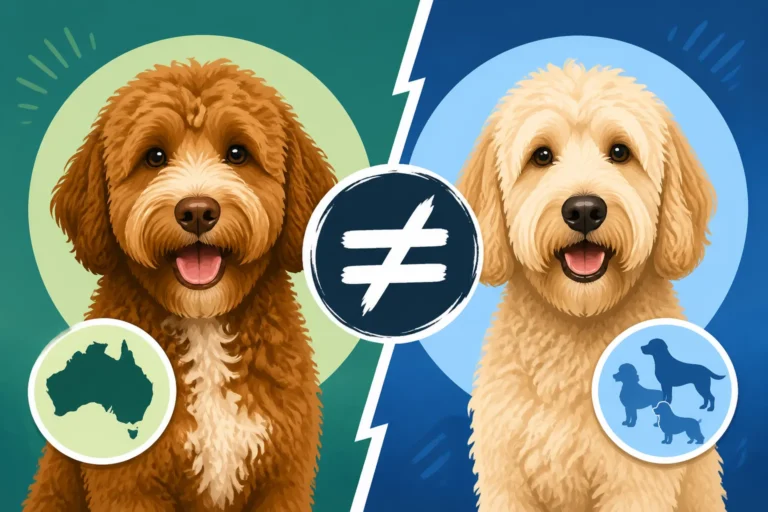
Be wary of breeders who can't (or won't) provide documentation for health testing, or who make grand claims about "hypoallergenic" qualities without understanding the genetic realities of coat types. A truly responsible breeder will guide you through the process, help you understand what an Australian Labradoodle Is Not a Labradoodle if you're confused by various types, and ensure you're a good fit for one of their puppies, regardless of generation. Many breeders also have waitlists, and being prepared with supplies from retailers like Chewy beforehand can make the transition smoother.
Living with a Labradoodle: Beyond the Generation Label
Ultimately, while generations give us a framework for understanding potential traits, living with a Labradoodle is about so much more. Every dog is an individual, shaped by its genetics, yes, but also by its early experiences, training, and the environment you provide. Whether you bring home an F1, F1b, F2, or F2b, consistent training, proper socialization, and lots of love are what truly make a happy, well-adjusted companion.
Regardless of their generation, Labradoodles are intelligent, active dogs that thrive on interaction. They need regular exercise, mental stimulation, and dedicated grooming. Even the "non-shedding" coats require consistent brushing to prevent matting. So, do your research, find a responsible breeder, and prepare to welcome a wonderful, loving member into your family, generation label notwithstanding. Don't forget to stock up on essentials like quality food, toys, and grooming tools, perhaps even from a convenient online store like Chewy, to ensure your new family member has everything they need right from day one. You'll also want to consider what The Twelve to Fifteen Years a Labradoodle Lives really means in terms of commitment.
Disclaimer
This article is for general informational purposes only and does not constitute professional advice. Laws, prices and regulations vary by location and change over time. Consult a qualified professional for guidance on your specific situation.