Which Labradoodle Generation Suits an Allergic Home
It's a heartbreaking scenario many prospective dog owners face: falling head over heels for the charming, intelligent Labradoodle, only to have the joy overshadowed by concerns about allergies. You dream of that soft, curly coat and loving nature, but the fear of constant sneezing, itchy eyes, or worse, making a family member miserable, can stop you in your tracks. This guide is here to shed light on which Labradoodle generations offer the best hope for an allergy-friendly home, helping you navigate the genetics behind their coats and make an informed decision for your family.
Understanding the Labradoodle Genetic Blueprint for Allergic Homes
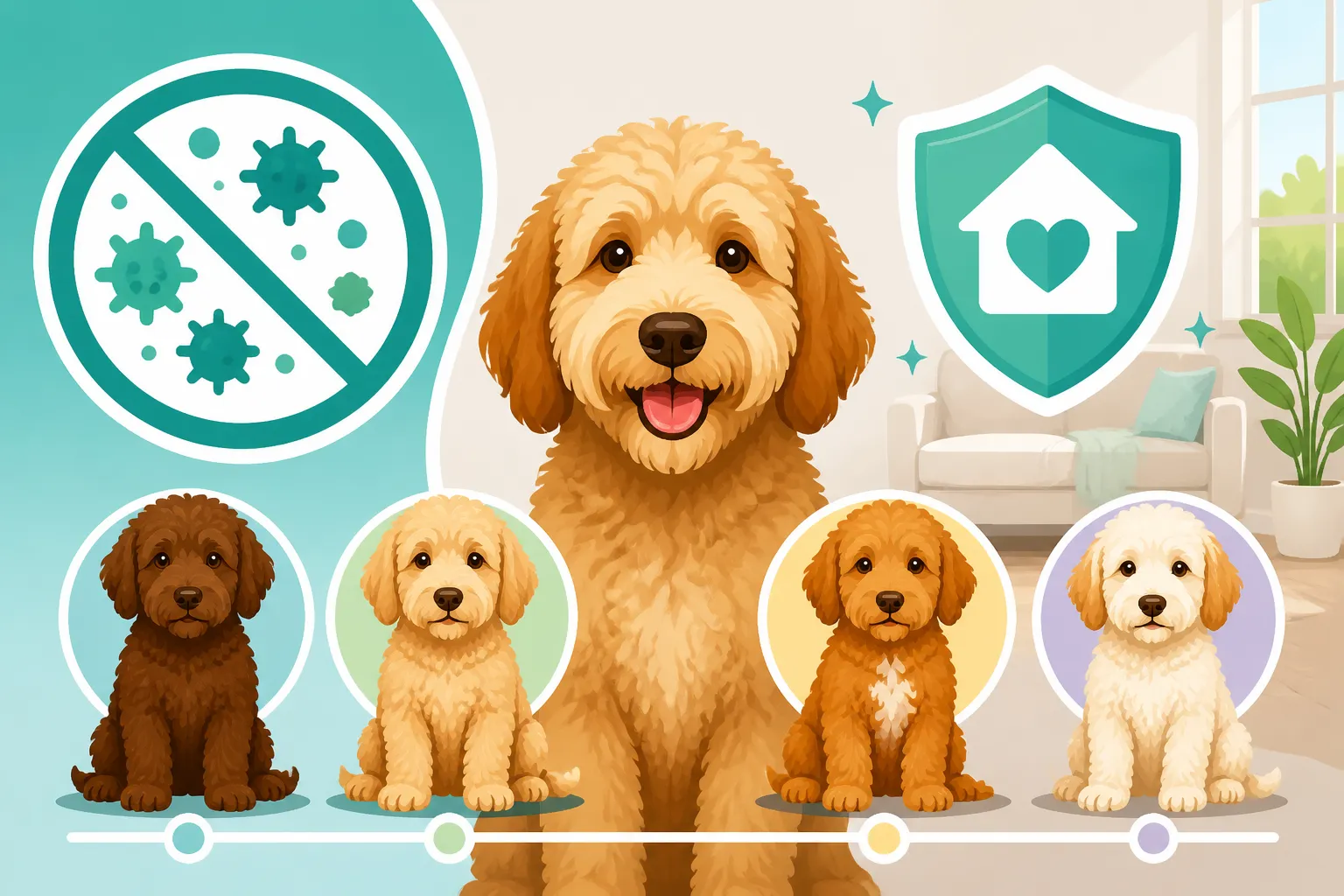
When we talk about dog allergies, it's a common misconception that the hair itself is the primary culprit. While hair can carry allergens, the real troublemakers are microscopic proteins found in a dog's dander (dead skin flakes), saliva, and urine. These allergens cling to hair, carpet fibers, furniture, and anything else in your home, and when a dog sheds its coat, it disperses these allergens more widely. This is why "hypoallergenic" dogs are often those that shed very little hair and, consequently, less dander.
The Labradoodle, being a crossbreed, inherits a mix of genes from its two parent breeds: the Labrador Retriever and the Poodle. The Labrador is known for its dense, double coat that sheds quite a bit, especially seasonally. The Poodle, on the other hand, boasts a curly, single coat that grows continuously and sheds minimally, trapping dander within its curls instead of releasing it into the environment. The quest for an allergy-friendly Labradoodle is essentially a quest for a coat that favors the Poodle's characteristics. Understanding the specific genetic makeup of each Labradoodle generation is key to predicting how much Poodle-like coat they might inherit, and therefore, how suitable they might be for an allergic household.
This genetic lottery is what makes choosing a Labradoodle for an allergic home a bit more complex than simply picking a breed. There's a spectrum of coat types even within the Labradoodle family, ranging from more Labrador-like hair coats to tightly curled wool coats that closely resemble a Poodle's. The goal for allergy sufferers is to find a Labradoodle that leans heavily towards the low-shedding Poodle side of the family tree. This doesn't just mean less hair on your furniture; it means fewer allergenic proteins being spread throughout your living space, making it a much more comfortable environment for those sensitive to pet dander.
Unpacking Labradoodle Generations and Their Coat Characteristics
The term "generation" refers to how many steps removed a Labradoodle is from its purebred Poodle and Labrador ancestors, and it's crucial for understanding coat predictability. Let's break down the most common generations and what they generally mean for allergy sufferers.
F1 Labradoodles: The First Generation Gamble
An F1 Labradoodle is a direct cross between a purebred Labrador Retriever and a purebred Poodle. This is the original Labradoodle, the very first generation. Genetically, these puppies are 50% Labrador and 50% Poodle. The coat outcomes in an F1 litter can be incredibly varied. You might see puppies with sleek, shedding hair coats much like a Labrador, others with wavy fleece coats, and some with curlier, more Poodle-like wool coats. This wide range is due to the first mix of dominant and recessive genes from two distinct breeds.
For an allergic home, an F1 Labradoodle is generally considered the riskiest choice. While some F1s might inherit a desirable low-shedding coat, there's no guarantee. You could end up with a dog that sheds significantly, making allergy symptoms worse. It's truly a genetic lottery, and it's almost impossible to predict the exact coat type and shedding level of an F1 puppy when it's just a few weeks old. This unpredictability is a significant challenge for families prioritizing allergy-friendliness. While the idea of Whether Hybrid Vigor Is Real in a Labradoodle might suggest improved health, it doesn't guarantee a hypoallergenic coat.
F1b Labradoodles: Backcrossed for Better Predictability
The "b" in F1b stands for "backcross," meaning an F1 Labradoodle has been bred back to one of its purebred parents, typically a Poodle. So, an F1b Labradoodle is usually 75% Poodle and 25% Labrador. This increased Poodle percentage significantly boosts the likelihood of inheriting a Poodle-like, low-shedding coat. The goal here is to consistently produce a more predictable coat that is curlier and retains more of the Poodle's non-shedding qualities.
F1b Labradoodles are often the first recommendation for homes with moderate allergies. While no dog is truly 100% hypoallergenic, F1bs typically have fleece or wool coats that shed minimally, trapping dander and preventing its widespread dispersion. Their coats require consistent grooming, but the trade-off is often a much more comfortable living situation for allergy sufferers. You might still find some variation in curl and texture, but the extreme shedding seen in some F1s is far less common in this generation. Understanding What F1b Means on a Labradoodle is vital when discussing allergy suitability.
F2 and F2b Labradoodles: Continuing the Mix
An F2 Labradoodle is the result of breeding two F1 Labradoodles together. This generation can bring back a similar level of coat unpredictability as the F1 generation, sometimes even more so, because you're essentially mixing two already mixed genetic blueprints. You might see puppies with wonderful fleece coats, but also others with much more shedding, Labrador-like coats, or even what breeders call "improper coats" that are wiry and shed. The genetic traits have had another chance to reshuffle, and while desirable traits might emerge, so can less desirable ones.
An F2b Labradoodle, like the F1b, is a backcross. This typically means an F2 Labradoodle bred back to a Poodle, making it approximately 87.5% Poodle and 12.5% Labrador. Similar to the F1b, the F2b aims to maximize the Poodle characteristics, leading to a much higher chance of a low-shedding coat suitable for allergy sufferers. If you're looking into these generations, always inquire about the specific parentage and coat types of the breeding dogs, and remember that Whether a Labradoodle Without Papers Is Cheaper for a Reason can be a red flag regarding health and coat predictability.
Multigen and Australian Labradoodles: Bred for Consistency
Multigenerational (Multigen) Labradoodles are the result of breeding two F3 or later-generation Labradoodles, or breeding an F3 or later-generation Labradoodle back to a Poodle (e.g., F3b). The key here is consistency. After several generations of careful breeding, breeders are aiming to produce dogs with stable, predictable traits, including coat type. These dogs are often bred to have the desired fleece or wool coats that are typically low-shedding and most compatible with allergic individuals.
The Australian Labradoodle, while sharing a common ancestor with the original Labradoodle, has evolved into a distinct breed in development. It was infused with other breeds like the English Cocker Spaniel and Irish Water Spaniel (though many lines no longer carry these infusions) specifically to achieve a consistent temperament, conformation, and, crucially, a non-shedding, allergy-friendly coat. The Four Breeds Inside an Australian Labradoodle contribute to its unique genetic makeup. Australian Labradoodles are highly sought after by allergy sufferers because their coats are bred for predictability, almost exclusively falling into the fleece or wool categories, which shed very little. This selective breeding over many generations aims to eliminate the unpredictable coat types seen in earlier Labradoodle generations.
For families with significant allergy concerns, Multigen and Australian Labradoodles generally offer the highest likelihood of getting a dog with a consistently low-shedding, allergy-friendly coat. Reputable breeders focusing on these lines will have a deep understanding of coat genetics and should be able to provide clear expectations regarding a puppy's adult coat.
Here's a quick comparison of Labradoodle generations and their general suitability for allergic homes:
| Generation | Poodle Percentage (Approx.) | Coat Predictability | Shedding Level | Suitability for Allergic Homes |
|---|---|---|---|---|
| F1 | 50% | Highly Variable | Moderate to High | Risky, unpredictable results |
| F1b | 75% | More Predictable | Low | Good choice for moderate allergies |
| F2 | 50% (from F1 x F1) | Highly Variable | Moderate to High | Risky, similar to F1 |
| F2b | 87.5% | Very Predictable | Very Low | Excellent choice for allergies |
| Multigen | Varies, usually High Poodle | Very Predictable | Very Low | Excellent choice for allergies |
| Australian Labradoodle | Varies, usually High Poodle | Consistently Predictable | Very Low | Excellent choice for allergies |
Beyond Generation: Holistic Strategies for an Allergy-Friendly Home
Even if you choose a Labradoodle from a generation known for low shedding, remember that no dog is truly 100% hypoallergenic. The goal is to minimize allergens in your home environment. This means taking a holistic approach that goes beyond just the dog's genetics.
Prioritizing Proactive Grooming
Regular and thorough grooming is your first line of defense against allergens, regardless of generation. Even low-shedding fleece or wool coats can trap dander and other environmental allergens like pollen. Daily brushing, using tools like a slicker brush and a metal comb (you can find great options on Chewy), helps remove loose hair and dander before it has a chance to spread throughout your home. Focus on Brushing a Labradoodle to the Skin, Not the Surface to effectively remove trapped debris.
Beyond daily brushing, regular professional grooming or diligent at-home clipping is essential. A Labradoodle's coat, especially the wool or fleece type, grows continuously and can mat easily if not properly maintained. Mats can trap even more dander and dirt. Schedule professional grooms every 6-8 weeks, or commit to learning how to trim and bathe your dog at home. Washing your Labradoodle regularly with a hypoallergenic shampoo can also help rinse away dander and other irritants.
Managing the Home Environment
Your home environment plays a massive role in managing allergies. Create "allergy-free zones" where your dog isn't allowed, such as bedrooms, to give allergy sufferers a sanctuary. Use HEPA air purifiers in main living areas and bedrooms to filter out airborne allergens. Vacuum frequently with a vacuum cleaner equipped with a HEPA filter. Regularly wash dog beds, blankets, and any fabrics your Labradoodle comes into contact with. Choosing hard flooring over carpet can also significantly reduce allergen accumulation.
Consider investing in washable slipcovers for furniture your dog uses, making cleanup much easier. Even simple things like wiping down hard surfaces regularly can make a big difference in the overall allergen load of your home. Think of it as a multi-pronged attack: reducing the source (your dog's shedding/dander) and reducing the spread and accumulation of those allergens in your living space.
Nutrition and Overall Health
A healthy dog often has a healthier coat and skin, which can indirectly impact allergen production. Feeding your Labradoodle a high-quality, balanced diet supports skin health and can lead to less dry, flaky dander. Some owners find that certain supplements, like omega-3 fatty acids, can improve coat condition. Always discuss dietary changes or supplements with your veterinarian.
Ensuring your Labradoodle is well-hydrated is also important for skin health. Provide fresh, clean water at all times. If you have concerns about skin issues that might be contributing to dander, like dry skin or allergies, consult your vet. They might suggest specific shampoos, dietary adjustments, or medications to alleviate skin conditions, which can, in turn, reduce dander. Many specialized foods and supplements can be conveniently ordered from online retailers like Chewy.
Early Exposure and Testing
Before bringing any Labradoodle home, especially if you have severe allergies, spend time with the specific puppy or adult dog you are considering. Whether an Allergic Family Should Meet a Labradoodle First is not just good advice, it's crucial. Visit the breeder's home (or foster home for a rescue) and interact directly with the dog. See if your allergies are triggered. Remember that a puppy's coat can change as it matures, especially during The Coat Change That Hits a Labradoodle at Nine Months. If possible, spend time with the adult parents of a puppy you are considering, as their coat type will be a better indicator of what the puppy's adult coat might become.
Some breeders offer "sleeve tests," where a piece of cloth is rubbed on a puppy and then given to the allergic individual to expose themselves to the dander in a controlled way. While not foolproof, it can provide an early indication. Ultimately, an informed decision involves combining genetic understanding, proactive environmental management, and direct interaction with the dog to assess personal allergic reactions. Don't be afraid to ask breeders for photos of parents and older siblings to get a sense of the typical coat types they produce. You can also ask for recommendations on specific grooming products or food brands from them, which you can then research further on sites like Chewy.
Final Considerations for Your Allergy-Friendly Companion
Choosing the right Labradoodle for an allergic home is a journey that requires research, patience, and a bit of luck. While opting for F1b, Multigen, or Australian Labradoodle generations significantly increases your chances of a low-shedding, allergy-friendly dog, it’s not a perfect science. Individual dogs, even within the same litter, can have variations in their coat properties.
Always prioritize responsible breeders who are transparent about their breeding practices, health testing, and the coat genetics of their dogs. A good breeder will understand your concerns about allergies and work with you to find a puppy that has the highest likelihood of suiting your family's needs. They should be able to explain The Three Labradoodle Coats: Hair, Fleece and Wool and help you identify which type your chosen puppy is most likely to develop. Remember that while genetics play a huge role, ongoing care, including regular grooming and maintaining a clean home environment, are equally vital in minimizing allergy triggers. With the right approach, you can welcome a wonderful Labradoodle into your life, even with allergies.
Disclaimer
This article is for general informational purposes only and does not constitute professional advice. Laws, prices and regulations vary by location and change over time. Consult a qualified professional for guidance on your specific situation.