The Four Breeds Inside an Australian Labradoodle
It’s easy to get confused when you hear terms like "Labradoodle" and "Australian Labradoodle" thrown around interchangeably. Many prospective owners assume the "Australian" simply refers to where the dog originated, but it actually signifies a much more complex and intentional genetic blueprint. This guide aims to clear up that confusion, diving deep into the fascinating story of the Australian Labradoodle and revealing the specific foundation breeds that contribute to their unique characteristics and why they differ from a simple Labrador-Poodle cross.
Decoding the "Australian Labradoodle" Moniker
When we talk about a "Labradoodle," people often picture a cute, curly-haired dog that’s a mix of a Labrador Retriever and a Poodle. And for the most part, that's what an F1 Labradoodle (first generation cross) is. But the "Australian Labradoodle" is a whole different ballgame, and understanding this distinction is crucial for anyone hoping to bring one of these wonderful dogs into their home. It's not just a fancy way of saying a Labradoodle from down under; it represents a specific lineage and a carefully curated genetic heritage.
More Than Just a Geographic Label
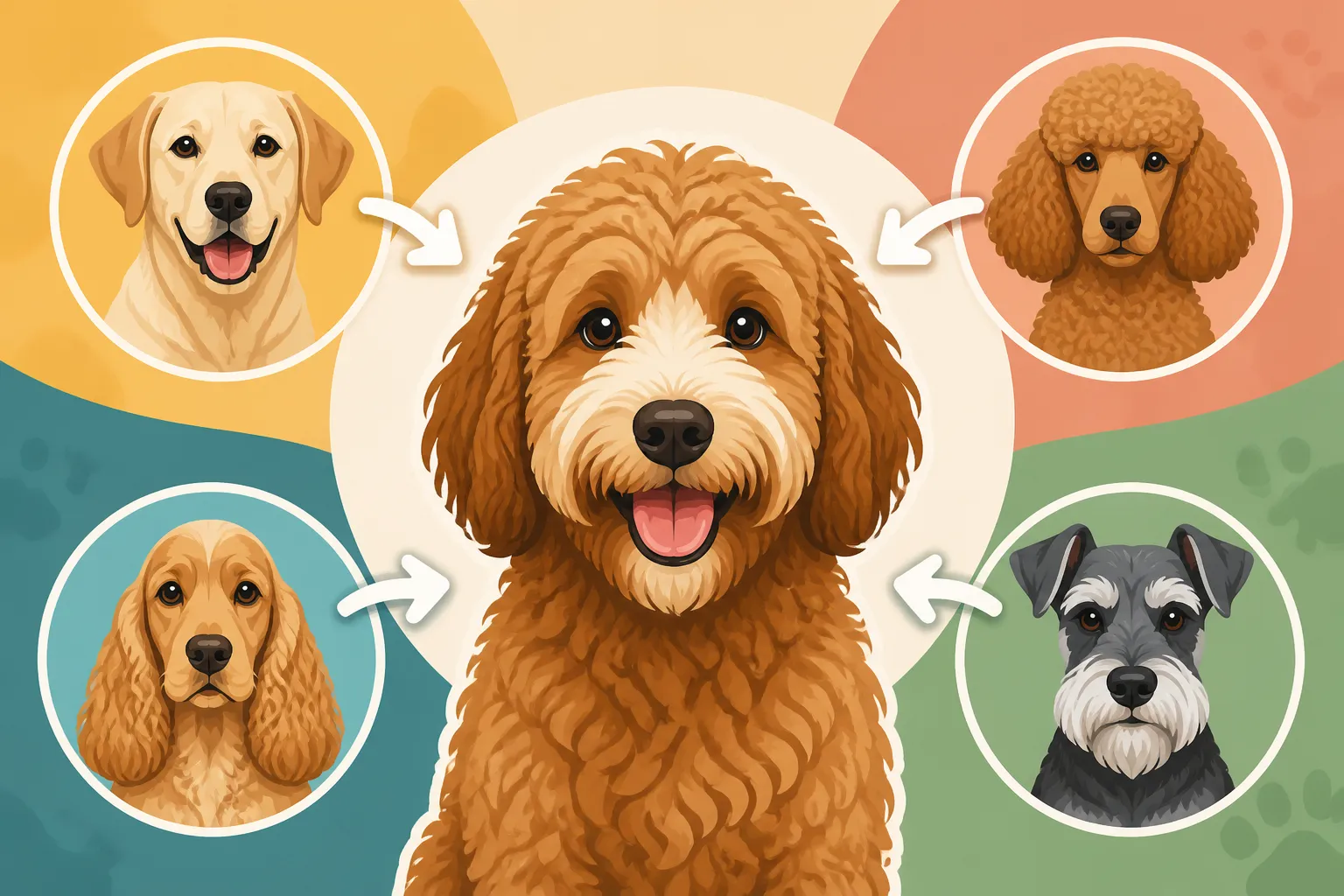
The term "Australian" in Australian Labradoodle goes far beyond its initial country of origin. It specifically denotes a multi-generational breeding program that started in Australia with the explicit goal of creating a consistent, healthy, and low-shedding companion dog. Unlike the early Labradoodle crosses, which were often a straightforward pairing of a Labrador and a Poodle, the Australian Labradoodle was developed by infusing several other breeds into the mix. This wasn't done on a whim, but with very clear intentions to stabilize desired traits and move away from the often unpredictable outcomes of a first-generation cross.
Think of it this way: if a regular Labradoodle is a delicious smoothie made from just two fruits, an Australian Labradoodle is a gourmet blend with a secret recipe, carefully perfected over time. Breeders aiming for the Australian Labradoodle standard are working with dogs whose ancestry consistently includes these additional breeds, sometimes going back many generations. This focused approach means that when you get an Australian Labradoodle, you're looking for a dog that embodies a certain look, temperament, and coat type that is much more reliable than what you might find in an F1 or even F1b Labradoodle. This consistency is a huge part of its appeal, especially for families with allergy concerns or specific temperament hopes. It’s why you'll find dedicated associations and breeders specifically focusing on this lineage. If you want to dive deeper into this distinction, check out our piece on Why an Australian Labradoodle Is Not a Labradoodle.
The Genesis of a New Breed
The story of the Labradoodle, and subsequently the Australian Labradoodle, begins with a very noble purpose: to create an allergy-friendly guide dog. Back in the late 1980s, a request from a blind woman in Hawaii for a guide dog that wouldn't aggravate her husband's allergies led to the famous first cross between a Standard Poodle and a Labrador Retriever. While the initial result, a dog named Sultan, was successful, it quickly became apparent that not all offspring from such a cross would reliably inherit the desired low-shedding coat or consistent temperament needed for assistance work. There was too much variability.
Breeders in Australia recognized this challenge. They saw the incredible potential of the Labradoodle but understood that a more structured approach was needed if they were to create a truly consistent and predictable companion. They weren't satisfied with a simple 50/50 genetic gamble. Their vision was to develop a dog that consistently displayed the best traits of its parent breeds, both in terms of health, temperament, and that coveted allergy-friendly coat. This ambition led them to introduce additional breeds into the existing Labrador-Poodle lines, meticulously recording lineages and refining their breeding programs. It was a conscious effort to transition from a "designer cross" to a developing breed with a stable genetic foundation. This dedication to consistency is truly what sets the Australian Labradoodle apart. For more on the original cross, read The 1989 Cross That Made the First Labradoodle.
The Foundational Breeds: Labrador Retriever and Standard Poodle
At the heart of any Labradoodle, Australian or otherwise, lie the two original parent breeds. Their influence is undeniable, shaping the core characteristics that make these dogs so beloved. Understanding what each of these breeds brings to the genetic table helps us appreciate the complexity and intentionality behind the Australian Labradoodle's development.
The Labrador Retriever's Enduring Influence
The Labrador Retriever is one of the most popular dog breeds in the world, and for good reason. They are renowned for their friendly, outgoing, and eager-to-please nature, making them incredibly trainable and wonderful family companions. From the Labrador side, the Australian Labradoodle inherits a strong retrieving drive, a playful spirit, and a generally robust constitution. Many Labradoodle owners will tell you stories of their dogs happily fetching toys for hours or instinctively carrying things in their mouths with a soft grip, which is a clear nod to their Labrador heritage. This drive to work alongside humans and please their owners is a huge asset in training, whether it's for basic obedience or more advanced tasks.
However, the Labrador also brings certain traits that the Australian Labradoodle program sought to refine. While generally good-natured, their double coat is a significant shedder, which was the primary reason for breeding with the Poodle in the first place. They can also be boisterous, especially as puppies and adolescents, and require consistent training and plenty of exercise to channel their energy positively. While the Australian Labradoodle breeders aimed to minimize the shedding coat, they definitely wanted to retain that friendly, loyal, and biddable Labrador temperament, which is highly valued in family pets and assistance dogs alike. Their easy-going nature around children and other animals is often a direct inheritance. To learn more about this specific trait, check out The Retrieving Drive a Labradoodle Gets From the Labrador.
The Standard Poodle's Elegant Contribution
The Standard Poodle often gets a bad rap, sometimes unfairly perceived as a "frou-frou" dog. Yet, beneath their meticulously groomed exterior lies an incredibly intelligent, athletic, and versatile companion. The Poodle's primary contribution to the Labradoodle and Australian Labradoodle is, of course, its single-layered, low-shedding coat, which is famously allergy-friendly. This was the holy grail for the original guide dog mission. But beyond the coat, Standard Poodles are highly intelligent, quick learners, and possess a dignified yet playful demeanor. They excel in obedience, agility, and many other dog sports, showcasing their sharp minds and athletic prowess.
This intelligence and eagerness to learn are vital traits that the Australian Labradoodle inherits. It contributes significantly to their overall trainability, making them receptive to new commands and routines. Poodles can be sensitive and intuitive, which blends beautifully with the Labrador's warmth to create a dog that is often described as "empathetic" or "intuitive." While the Poodle's grooming needs are high, their non-shedding coat is a huge win for allergy sufferers. The challenge for breeders was to combine these Poodle traits with the Labrador's without losing the beloved aspects of either. The elegant posture and sometimes mischievous intelligence you see in an Australian Labradoodle often comes straight from their Poodle ancestors. If you're curious about all the Poodle brings to the mix, read our article Which Labradoodle Traits Come From the Poodle.
The Strategic Additions: Cocker Spaniel and Irish Water Spaniel
This is where the Australian Labradoodle truly distinguishes itself from its simpler Labradoodle cousins. To achieve greater consistency in coat, temperament, and overall type, Australian breeders deliberately introduced two additional breeds into their lines. These infusions weren't random; they were strategic choices made to fine-tune the emerging breed.
The Gentle Temperament and Coat Refinement of the Cocker Spaniel
The Cocker Spaniel, both English and American varieties, was one of the breeds strategically introduced into the Australian Labradoodle lines. What did they bring to the table? Primarily, a refinement of temperament and further contributions to the desired coat characteristics. Cocker Spaniels are known for their gentle, affectionate, and cheerful dispositions. They are typically very biddable, eager to please, and make wonderful family pets. Infusing these qualities helped to solidify the consistently friendly, sociable, and easy-going nature that Australian Labradoodle breeders were striving for. It helped iron out any potential "rough edges" or inconsistencies that might arise from just the Labrador and Poodle combination, ensuring a softer, more predictable family companion.
Beyond temperament, the Cocker Spaniel's coat, while requiring grooming, contributed to the development of the soft, wavy "fleece" coat that is so characteristic of many Australian Labradoodles. Their coat texture helped in the quest to create a low-shedding, allergy-friendly dog with that signature "teddy bear" look. The Cocker Spaniel’s smaller size also played a role in developing the different size varieties of Australian Labradoodles, particularly influencing the genetics for the medium and miniature versions. Imagine a multi-generational Australian Labradoodle that has that wonderfully sweet, soulful expression and an uncanny ability to snuggle right into your heart – that affectionate trait often has a strong Cocker Spaniel influence. This intentional inclusion helped ensure that the desired traits were more reliably passed down through generations. To learn more about this infusion, take a look at The Cocker Spaniel Infusion in the Australian Labradoodle.
The Unique Texture and Health Robustness of the Irish Water Spaniel
Perhaps the most surprising and least known addition to the Australian Labradoodle's genetic cocktail is the Irish Water Spaniel. This breed is quite unique, with a distinctive coat and a robust, active nature. Its inclusion was a deliberate move to further enhance the developing breed, both in terms of coat quality and overall genetic health. The Irish Water Spaniel boasts a dense, tightly curled, water-resistant coat that is naturally low-shedding. This texture was highly valuable in reinforcing the desired fleece and wool coat types and improving their overall consistency within the Australian Labradoodle lines. They contributed to the robust health and athleticism that is also part of the desired Australian Labradoodle type, ensuring a hardy and active companion.
Beyond their coat, Irish Water Spaniels are intelligent, often playful, and possess a unique sense of humor. While not as universally known as the Labrador or Poodle, their genetic contribution was significant in broadening the gene pool. By introducing genetics from an entirely different line, breeders could potentially mitigate certain health issues common to the more frequently bred Labrador and Poodle lines, fostering a more genetically diverse and robust dog. This move reflects a deep understanding of canine genetics and a commitment to the long-term health and vitality of the Australian Labradoodle. It also helped to stabilize the desired non-shedding coat traits across multiple generations. For an even deeper dive, our article The Irish Water Spaniel in the Australian Labradoodle sheds more light on this fascinating aspect.
Why These Specific Breeds? The Blending of Traits
The decision to introduce additional breeds into the Labradoodle line wasn't taken lightly. It was a calculated move by dedicated breeders in Australia who understood that simply crossing a Labrador and a Poodle didn't guarantee the consistent results they needed for a truly exceptional, reliable companion animal. Their goal was to create a dog that could reliably serve as an assistance animal while also being a fantastic, low-allergy family pet. This required more than just luck; it required a thoughtful blend of specific canine characteristics.
The Quest for Consistency in Temperament
One of the primary frustrations with early Labradoodles, particularly F1 crosses, was the unpredictability of their temperament. While many were wonderful dogs, some might lean heavily towards the high-energy, boisterous side of the Labrador, while others might exhibit the more sensitive or occasionally reserved traits of the Poodle. For a dog destined to be an assistance animal or a reliable family member, consistency is key. The strategic introduction of the Cocker Spaniel and Irish Water Spaniel aimed to create a more uniform and universally desirable temperament profile.
Cocker Spaniels brought their well-known sweetness, eagerness to please, and gentle nature, helping to soften any potential over-exuberance. The Irish Water Spaniel, with its intelligent and sometimes comical disposition, added to the overall biddability and robustness. The combined genetic influences from all four breeds worked to create an Australian Labradoodle that is consistently intelligent, sociable, intuitive, and calm when properly exercised and trained. This blend means you are more likely to get a dog that is adaptable to various household dynamics, eager to learn, and less prone to extreme personality quirks. Families often choose Australian Labradoodles because they are looking for a dog that is not only friendly and playful but also possesses a steady, sensitive nature, making them excellent with children and wonderful emotional support animals. This intentional blending of traits is why the temperament of an Australian Labradoodle is often more predictable and consistently delightful. Our guide on The Temperament a Labradoodle Gets From Each Parent further elaborates on these inherited qualities.
Crafting the Desired Hypoallergenic Coat
Another significant challenge with early Labradoodles was the coat. While the Poodle introduced the low-shedding gene, the outcome wasn't always guaranteed in F1 crosses. Some would still shed like a Labrador, causing disappointment for allergy sufferers. The Australian Labradoodle program was explicitly designed to solidify the presence of the "furnishings" gene (the gene responsible for facial hair, eyebrows, and mustache, which is also linked to the low-shedding trait) and produce a consistently low-shedding coat. The Poodle's non-shedding quality, combined with the Cocker Spaniel's coat contributions and the Irish Water Spaniel's dense, curly texture, created a stronger genetic foundation for the iconic Australian Labradoodle fleece and wool coats.
The goal was to move away from the "hair" coat, which can shed significantly, and consistently produce the soft, wavy "fleece" coat or the denser, curly "wool" coat. These coats are not only aesthetically pleasing but are also the reason many people with allergies can finally welcome a dog into their lives. Achieving this consistency wasn't accidental; it was the direct result of carefully managing the genetic contributions from all four breeds. This means that when you choose an Australian Labradoodle, you have a much higher probability of getting the desired low-shedding coat type. However, it's important to remember that "low-shedding" doesn't mean "no grooming." These coats still require diligent care to prevent matting. Brands like Chewy offer an extensive range of slicker brushes, combs, and detangling sprays specifically designed for maintaining these unique coats, ensuring they stay beautiful and mat-free. To understand the different coat types and their care, our article The Three Labradoodle Coats: Hair, Fleece and Wool is an invaluable resource.
The Result: The Australian Labradoodle as a Developing Breed
The meticulous breeding program, integrating the four distinct parent breeds, wasn't just about creating a cute new dog; it was about establishing a consistent, predictable, and healthy line of dogs that could eventually be recognized as a true breed. This ongoing dedication is what elevates the Australian Labradoodle above many other "designer dog" mixes.
Moving Beyond the "Designer Dog" Label
The term "designer dog" often implies a first-generation cross, where two purebred dogs are bred together, sometimes with less emphasis on the consistency of the resulting litter. While early Labradoodles certainly fit this description, the Australian Labradoodle has evolved significantly beyond that. Through multi-generational breeding, involving careful selection and a precise infusion of the four foundation breeds, breeders have worked tirelessly to achieve what's known as "breeding true." This means that when two Australian Labradoodles are bred together, their offspring reliably exhibit the desired characteristics – consistent temperament, coat type, and conformation – that define the Australian Labradoodle.
This intentional stabilization makes the Australian Labradoodle a far more predictable choice than an F1 or F1b Labradoodle. It allows prospective owners to have a much clearer expectation of what their puppy will look like and what its general disposition will be as an adult. It's a testament to the years of effort by dedicated breeders who have envisioned a dog that is more than just a passing trend. They are aiming for breed recognition, a goal that requires stringent adherence to a breed standard and consistent production of dogs that meet that standard. This journey from a simple cross to a developing breed is what makes the Australian Labradoodle truly unique in the doodle world. For a deeper understanding of this fascinating evolution, our article Whether an Australian Labradoodle Breeds True provides excellent insights.
Health and Genetic Diversity Considerations
One of the often-cited benefits of hybrid vigor, or heterozygosity, is the idea that crossing two different breeds can lead to a healthier animal due to a broader gene pool. While this can be true in a first-generation cross (F1), simply crossing two purebreds doesn't magically eliminate all potential health issues. Both Labradors and Poodles have their own breed-specific health concerns. The genius of the Australian Labradoodle breeding program was to strategically introduce additional breeds, thereby further widening the genetic pool beyond just two parents. This thoughtful infusion can help to dilute the prevalence of certain genetic conditions that might be more common in specific purebred lines.
However, "genetic diversity" doesn't mean "no health testing." Responsible Australian Labradoodle breeders are incredibly diligent about health testing all their breeding stock for conditions relevant to all four foundation breeds. This includes screenings for hip and elbow dysplasia, various eye conditions like Progressive Retinal Atrophy (PRA), and specific genetic conditions like von Willebrand's disease or Addison's disease. The aim is not just to have a diverse gene pool, but a healthy diverse gene pool. Many reputable breeders collaborate and share genetic information to ensure they are making the best possible breeding decisions. They invest significantly in DNA testing through companies that can screen for a wide panel of inherited diseases, providing as much assurance as possible for the health of their puppies. While hybrid vigor is often mentioned, the real health benefit comes from responsible breeding practices across all foundation breeds. Dive into Whether Hybrid Vigor Is Real in a Labradoodle to learn more about this concept.
Understanding the Australian Labradoodle's Unique Characteristics
Because of the intentional blending of four breeds, the Australian Labradoodle possesses a distinct set of characteristics that set it apart. From its coat to its temperament, these dogs often have a very predictable and desirable profile, making them a popular choice for many families.
Coat Types and Grooming Needs
The most iconic feature of the Australian Labradoodle is undoubtedly its coat. Unlike the often-unpredictable F1 Labradoodle, which can have a shedding "hair" coat, Australian Labradoodles are specifically bred to have low-shedding coats: the fleece coat and the wool coat. The fleece coat is soft, silky, and can be wavy or spiraling, often described as feeling like angora. The wool coat is denser, more tightly curled, and has a texture similar to a sheep's wool, but still soft to the touch. Both types are generally considered allergy-friendly.
However, "low-shedding" absolutely does not mean "no grooming." In fact, these coats are prone to matting if not meticulously maintained. Regular brushing, at least a few times a week, if not daily, is essential to prevent painful mats from forming, especially in areas like behind the ears, in the armpits, and on the legs. You'll need a good quality slicker brush and a metal comb to brush all the way to the skin. During the "coat change" phase, typically between 8-12 months, brushing needs to be even more frequent. Professional grooming every 6-8 weeks is also a must to keep their coat healthy and tidy. Ignoring grooming can quickly lead to severe matting, which may necessitate shaving the dog down, potentially causing discomfort and stress. Many owners find their grooming arsenal includes items from places like Chewy, from brushes to special shampoos and conditioners designed for curly coats. Regular grooming isn't just about looks; it's vital for their comfort and skin health. For comprehensive grooming advice, our post Brushing a Labradoodle to the Skin, Not the Surface is a must-read.
Temperament and Trainability
The intentional breeding program behind the Australian Labradoodle has resulted in a remarkably consistent and desirable temperament. These dogs are generally known for being intelligent, intuitive, sociable, and eager to please. They possess a keen sense of loyalty and thrive on being part of the family, often described as "Velcro dogs" due to their desire to be close to their human companions. Their friendly nature makes them excellent with children and other pets, provided they are properly socialized from a young age.
Their intelligence and biddability, inherited from the Poodle and Labrador, make them highly trainable. They respond very well to positive reinforcement methods and enjoy having a "job" to do, even if that job is simply learning new tricks or accompanying you on daily errands. This makes them suitable for a variety of roles, including therapy work and, as originally intended, assistance dog work. However, their intelligence means they can also be prone to boredom if not mentally stimulated, which can sometimes lead to mischievous behavior. Consistent training, early socialization, and plenty of enrichment activities are key to raising a well-adjusted Australian Labradoodle. They thrive in environments where they are integrated into family life and given opportunities to use their brains. If you're wondering if a Labradoodle is the right fit for your home, our article The Household a Labradoodle Actually Suits offers some valuable perspective.
Distinguishing the Australian Labradoodle from Other Doodles
With so many "doodle" mixes out there, it's easy for terms to become muddled. However, the Australian Labradoodle has a very specific genetic makeup and a distinct history that sets it apart from both the original Labradoodle and other poodle crosses. Knowing these differences can help prospective owners make an informed decision and find the right dog for their lifestyle.
Key Differences from the Original Labradoodle
The most significant distinction between an Australian Labradoodle and an "original" or "early generation" Labradoodle (F1, F1b, F2) lies in their genetic composition and the consistency of their traits. A standard Labradoodle is primarily a cross between a Labrador Retriever and a Poodle. While an F1 Labradoodle can be wonderful, there's often a wide variation in coat type, shedding, and even temperament within a single litter. Some might have a hair coat that sheds, others a fleece coat, and their personalities can range from very Poodle-like to very Labrador-like.
The Australian Labradoodle, on the other hand, is a multi-generational dog with a more complex genetic tapestry, intentionally including the Cocker Spaniel and Irish Water Spaniel. This careful breeding program aimed to stabilize traits, leading to a much higher predictability in terms of coat type (almost exclusively fleece or wool, meaning low-shedding), consistent temperament, and uniform conformation. This means that if you are looking for specific traits, especially a guaranteed low-shedding coat, an Australian Labradoodle is generally a more reliable choice. It's not just a cross; it's a carefully developed line with a clear vision. Our table below summarizes these key differences. For more information on the subtle yet significant distinctions, be sure to read What Makes a Labradoodle Australian.
| Characteristic | Original Labradoodle (F1, F1b) | Australian Labradoodle (Multi-gen) |
|---|---|---|
| Parent Breeds | Labrador Retriever, Poodle | Labrador Retriever, Poodle, Cocker Spaniel, Irish Water Spaniel |
| Genetic Consistency | Can be highly variable in traits | Bred for greater consistency across generations |
| Coat Predictability | Variable (shedding or non-shedding) | Typically low-shedding (fleece/wool) |
| Temperament Focus | Mix of parent traits | Intentional blend for calm, intelligent nature |
| Development Status | Crossbreed, hybrid | Developing breed (multi-generational) |
| Primary Goal | Initial allergy-friendly guide dog | Consistent companion & assistance dog |
Australian Labradoodles vs. Australian Cobberdogs
To add another layer of complexity, within the lineage that makes up the Australian Labradoodle, another distinct breed has emerged: the Australian Cobberdog. The Australian Cobberdog shares a very similar foundational history and many of the same original breeds as the Australian Labradoodle. In fact, many Australian Cobberdogs have Australian Labradoodle ancestry. However, the key difference lies in the ongoing goals and registries. The Australian Cobberdog breeders have taken the development a step further, with an even more stringent focus on establishing a purebred status through specific registries, a formalized breed standard, and a commitment to consistently reproducing specific characteristics.
While both dogs aim for consistency and a gentle, intuitive temperament, the Australian Cobberdog has been established with a slightly different trajectory towards becoming a recognized pure breed. It means that while they look very similar and share many characteristics, the emphasis on official breed recognition and a closed studbook (meaning only registered Cobberdogs can be bred together to produce future Cobberdogs) is more pronounced with the Cobberdog. For the average pet owner, the practical differences might seem minor, but for breeders and those interested in the formal development of breeds, these distinctions are important. They both represent highly desirable, well-thought-out companion dogs with incredible temperaments and low-shedding coats. If this distinction sparks your curiosity, our article The Australian Cobberdog and Its Separate Name provides more context.
Disclaimer
This article is for general informational purposes only and does not constitute professional advice. Laws, prices and regulations vary by location and change over time. Consult a qualified professional for guidance on your specific situation.