The Australian Cobberdog and Its Separate Name
It's completely understandable if you've found yourself scratching your head, staring at two seemingly identical furry faces and wondering what the real difference is between an "Australian Labradoodle" and an "Australian Cobberdog." This isn't just a marketing gimmick or some clever trick of semantics; there's a fascinating story behind why one of these beloved dogs has carved out its own unique identity with a separate name, and it has significant implications for breeders, owners, and the future of these wonderful companions.
Unraveling the Nomenclature: Australian Labradoodle vs. Australian Cobberdog
The world of Labradoodles can feel like a labyrinth, especially when you start delving into the different "types" and names. It's not just about F1, F1b, or Multigen anymore; there's a whole other layer of distinction, and it often begins with geography and a very specific vision for the future of a breed. The separation of the Australian Cobberdog from the broader "Australian Labradoodle" umbrella is a testament to the dedication of some breeders who sought a more defined and consistent path for their dogs.
The Genesis of the Australian Labradoodle
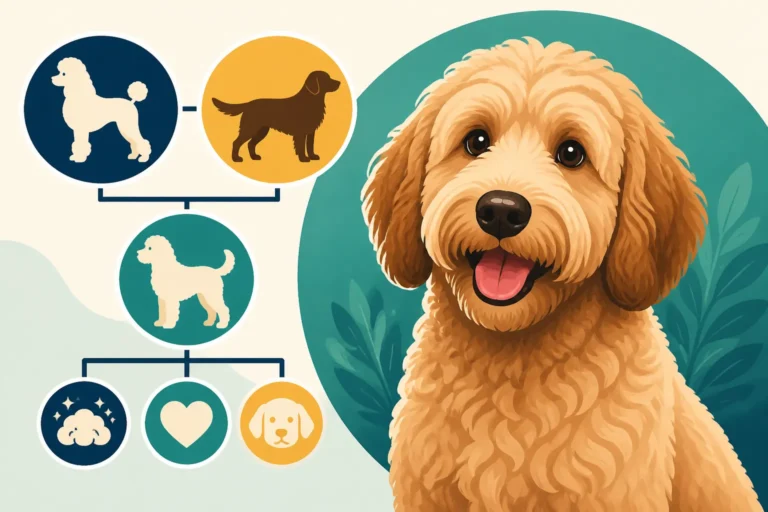
The original Labradoodle, as many of us know, was a cross between a Labrador Retriever and a Standard Poodle, initially bred in Australia in the late 1980s with the goal of creating a guide dog for a woman with allergies. This first cross, the F1 generation, often resulted in varied coats and temperaments, which, while charming, made consistency challenging for specific working roles or for allergy sufferers.
Over time, particularly in Australia, breeders recognized the potential of this cross but also saw the need for greater predictability. To achieve more consistent traits, especially the desired low-shedding coat and a specific temperament, several other breeds were carefully introduced into the lines. These infusions typically included the English Cocker Spaniel, American Cocker Spaniel, and the Irish Water Spaniel. These additions were not random; they were strategic choices aimed at solidifying the desired characteristics, leading to what became known as the "Australian Labradoodle." This multi-generational dog, often abbreviated to ALD, was developed with specific goals in mind: a non-shedding, allergy-friendly coat, a stable, intelligent, and intuitive temperament, and a healthy lineage. Many breeders associated with organizations like the Australian Labradoodle Association of America (ALAA) or the Worldwide Australian Labradoodle Association (WALA) continue to champion these dogs under the Australian Labradoodle name, focusing on robust health testing and ethical breeding practices to maintain the breed's integrity. What an ALAA Labradoodle Breeder Must Prove
The Emergence of the Australian Cobberdog
So, if the Australian Labradoodle was already a well-established multi-generational cross, why the need for a separate name like "Australian Cobberdog"? This is where the story takes a turn towards formal breed recognition and a distinct philosophical approach to breeding. The term "Cobberdog" was first coined by a dedicated group of Australian breeders who felt that the "Australian Labradoodle" name, while popular, was becoming too broad and encompassed too many diverse breeding programs without a unified direction. They desired to create a truly registered breed with a formalized, consistent standard, moving beyond the "designer dog" label that often accompanies crossbreeds.
The intent behind the Australian Cobberdog was to establish a dog with a verifiable pedigree and consistent, predictable traits across generations, with a particular emphasis on health, temperament for therapy and assistance work, and a hypoallergenic coat. Essentially, they sought to solidify the Australian Labradoodle's best qualities and present them under a new, distinct banner that would signify a recognized, purebred status, rather than a crossbreed in various stages of development. It’s a move towards creating a canine legacy, ensuring that the wonderful traits cultivated over decades are preserved and developed within a recognized breed framework.
Key Distinctions in Breed Development
The fundamental distinction lies in their developmental goals and recognition pathways. The Australian Labradoodle, while having a rich history and specific desired traits, largely remains a hybrid or a crossbreed in the eyes of major kennel clubs. Its development has been guided by breed associations and dedicated breeders, but without the official "purebred" designation from large international registries. The goal is often to produce a consistent companion animal with specific traits rather than adhering to a strict, universal breed standard for formal recognition.
On the other hand, the Australian Cobberdog was developed with the explicit intention of achieving purebred status. Its advocates sought formal recognition from breed registries, aiming to establish a distinct breed standard, maintain official pedigrees, and ensure consistency through generations. This meant a rigorous selection process, careful genetic tracking, and adherence to a defined set of characteristics from the very beginning. This pursuit of official breed status means a much tighter genetic pool and a more standardized appearance and temperament, allowing for less variation than you might find within the broader Australian Labradoodle population. It’s about creating a defined identity that can stand alone in the canine world.
The Quest for Breed Status and Recognition
For many dog lovers, whether a dog is "officially recognized" or not doesn't really matter as long as they're a healthy, happy companion. But for dedicated breeders and those with specific goals in mind, like assistance work, breed recognition can be a really big deal. It influences everything from how dogs are bred and registered to their public perception and long-term health prospects. The journey of the Australian Cobberdog towards this recognition is a fascinating case study in canine development.
The Role of Breed Clubs and Registries
When we talk about "breed recognition," we're usually talking about national or international kennel clubs and breed registries. These organizations set the standards for what defines a "purebred" dog. For the Australian Labradoodle, groups like the ALAA (Australian Labradoodle Association of America) and WALA (Worldwide Australian Labradoodle Association) have been instrumental. They establish codes of ethics for breeders, require specific health testing, and maintain pedigrees within their own systems. Their focus is on the responsible breeding and perpetuation of the Australian Labradoodle as a consistent, multi-generational cross. What WALA Does for Labradoodle Pedigrees
However, these organizations operate independently of major all-breed kennel clubs like the American Kennel Club (AKC) or the Fédération Cynologique Internationale (FCI). This means that while an Australian Labradoodle might have a robust pedigree within ALAA or WALA, it's not recognized as a purebred by the AKC, for example. This is not a knock against Australian Labradoodles; it simply means they exist in a different category within the wider dog world. Breeders within these associations are dedicated to the careful development of the Australian Labradoodle, focusing on traits and health that make them excellent companions, even without that formal purebred stamp from every corner.
The Australian Cobberdog's Path to Pedigree
The Australian Cobberdog, on the other hand, has been bred with the explicit intention of achieving purebred status from the ground up. This means following a much more rigorous and specific path. The MDBA (Master Dog Breeders and Associates) in Australia is the primary registry that officially recognizes the Australian Cobberdog as a purebred breed. This organization has accepted its breed standard, tracks its unique lineage, and maintains its studbook, much like a traditional kennel club does for established breeds.
This recognition by the MDBA is a crucial step because it means the Australian Cobberdog is no longer considered a "crossbreed" or a "designer dog" within that specific registry. It has its own unique identity, its own specific breed characteristics, and a dedicated pathway for future development as a distinct breed. Breeders of Australian Cobberdogs adhere strictly to this MDBA standard, which outlines everything from coat texture and color to temperament and ideal size. This approach aims to create a dog with an even higher level of predictability and consistency, reinforcing its suitability for specialized roles like therapy or assistance work, where consistency is paramount. Whether an Australian Cobberdog Is Priced Above a Labradoodle
Why Formal Recognition Matters (or Doesn't) to Owners
For you, the potential owner, what does this formal recognition truly mean? On one hand, purchasing an Australian Cobberdog through an MDBA-registered breeder means you're getting a dog from a program that is striving for the utmost consistency. You might have a higher degree of predictability in terms of temperament, coat type, and even adult size. This can be particularly appealing if you have specific needs, such as a dog for assistance work, or if you simply prefer the idea of owning a dog from a formally recognized, stabilized breed. There's a certain assurance that comes with knowing the breed has a defined standard and a meticulously tracked lineage.
However, for many families just looking for a wonderful, healthy pet, the lack of "official" purebred status from a major kennel club for an Australian Labradoodle might not be a deal-breaker. A well-bred Australian Labradoodle from a reputable breeder, who performs all the necessary health testing and adheres to ethical breeding practices, can be just as fantastic a companion. The crucial factor often isn't the specific label, but the integrity of the breeder and the care taken in producing healthy, well-socialized puppies. Ultimately, whether you choose an Australian Labradoodle or an Australian Cobberdog, doing your homework on the breeder and meeting the parents is far more important than any name or piece of paper alone.
Here's a quick look at some of the distinguishing elements:
| Feature | Australian Labradoodle (ALD) | Australian Cobberdog (ACD) |
|---|---|---|
| Origin | Multi-generational cross developed in Australia | Descendant of the ALD, further developed for breed recognition |
| Parent Breeds | Labrador Retriever, Poodle, Cocker Spaniel (English/American), Irish Water Spaniel | Same founding breeds as ALD, with a focus on specific lines for stabilization |
| Primary Goal | Consistent temperament, non-shedding coat, family companion, therapy/assistance potential | Achieving purebred status, highly predictable traits, specific focus on therapy/assistance |
| Main Registries/Associations | ALAA, WALA (breed associations for Labradoodles) | MDBA (Master Dog Breeders and Associates) – recognized as a pure breed |
| Breed Status | Generally considered a multi-generational crossbreed/hybrid | Recognized as a distinct purebred dog by the MDBA |
| Predictability | High, but can still have some variation | Extremely high, due to strict adherence to breed standard and lineage |
| Focus | Health, temperament, coat for allergy sufferers | Health, temperament for service, verifiable pedigree, formal breed standard |
Temperament and Physical Traits: Are They Truly Different?
When you look at an Australian Labradoodle and an Australian Cobberdog side-by-side, it's often hard to tell them apart just by sight. They share so much genetic heritage that their physical appearances can be remarkably similar. However, the intent behind the Cobberdog's separate name and breed development was to refine and solidify certain traits, aiming for an even greater level of consistency. Let's delve into whether these intentions have resulted in tangible differences in their temperament, physical characteristics, and overall health.
Temperament Ideals: A Shared Vision?
Both the Australian Labradoodle and the Australian Cobberdog were developed with a strong emphasis on temperament. The original goal for the Labradoodle was a dog suitable for assistance work, and that focus has carried through to both its Australian Labradoodle and Australian Cobberdog descendants. Breeders for both types strive for dogs that are intelligent, eager to please, friendly, intuitive, and possess a gentle nature. This makes them highly trainable and excellent candidates for therapy work, assistance roles, and as devoted family companions. You'll hear phrases like "Velcro dog" often applied to both, highlighting their strong desire to be close to their human families. The Velcro Labradoodle That Cannot Be Left
However, the Australian Cobberdog's journey towards formal breed status has put an even more intense focus on consistently achieving this specific temperament. The MDBA breed standard for the Cobberdog explicitly details the desired traits, placing a premium on a calm, sensitive, and intelligent disposition, specifically tailored for companionship and therapeutic roles. While many Australian Labradoodles certainly fit this description, the Cobberdog aims to minimize variability, ensuring that these ideal traits are consistently present across all individuals in the breed line. It's not about making them different, but making them more reliably the same in their excellent disposition.
Physical Characteristics: Subtle Nuances
Physically, the shared ancestry means both dogs typically boast those iconic wavy or curly, low-shedding coats that are so appealing to allergy sufferers. They come in a range of sizes—miniature, medium, and standard—and a delightful array of colors. The "furnishings" (the beard and eyebrows) are characteristic of both, giving them that endearing, teddy bear look. The Furnishings Gene Behind a Labradoodle's Beard Many of the features that make a Labradoodle so recognizable, from their soulful eyes to their joyful gait, are common to both.
Where subtle nuances might appear for the Australian Cobberdog is in the stricter adherence to a defined breed standard. The MDBA standard for the Cobberdog may call for specific head shapes, ear sets, or tail carriages that breeders meticulously aim for. This might mean that over many generations, the "average" Australian Cobberdog could exhibit a slightly more uniform appearance than the broader "Australian Labradoodle" population, where breeders within different associations might have slightly different ideal types, even while working towards similar goals. For instance, the Cobberdog standard might lean towards a specific curl pattern or coat texture, aiming for a consistent, non-shedding, easy-care coat type that is universally recognized for the breed. If you're looking for dog food or grooming supplies, remember that a site like Chewy offers a wide range of products suitable for dogs with these distinctive coats.
Health and Genetic Considerations
Health is paramount for any responsible breeder, regardless of the breed name. Both Australian Labradoodle and Australian Cobberdog breeders place a strong emphasis on health testing their breeding stock. This includes screening for common genetic conditions found in their parent breeds, such as hip and elbow dysplasia, various eye conditions like The Progressive Retinal Atrophy Labradoodles Are Tested For, and other issues like Addison's Disease a Labradoodle Inherits From the Poodle or Exercise Induced Collapse and the Labradoodle's Labrador Half. The goal is always to minimize the risk of passing on hereditary diseases to puppies.
Because the Australian Cobberdog has a formalized breed standard and lineage tracked by the MDBA, there is often a very transparent and centralized approach to health data. This rigorous documentation is part of what allows a breed to progress towards recognition; it demonstrates a commitment to genetic health. While Australian Labradoodle associations also mandate extensive health testing, the Cobberdog's structure aims for a more unified and controlled breeding pool. Prospective owners should always ask for health clearances, regardless of the specific designation, and verify them through official databases when possible. It's the health testing, not just the name, that truly speaks volumes about a dog's genetic foundation.
Choosing Your Companion: What Does the Name Mean for You?
Navigating the choice between an Australian Labradoodle and an Australian Cobberdog can feel overwhelming, especially with the passionate arguments you might hear from either side. It’s not just about the name; it’s about understanding what that name signifies in terms of breeding practices, goals, and ultimately, what kind of dog you're bringing into your home. Making an informed decision means looking beyond the labels and into the heart of the breeding program.
Understanding Breeder Practices and Claims
When you start looking for a Labradoodle-type dog, you'll encounter a vast spectrum of breeders. Those who breed Australian Labradoodles often belong to associations like the ALAA or WALA, which have established codes of ethics, health testing requirements, and pedigree databases for their registered dogs. These breeders are dedicated to producing consistent, healthy, and well-tempered multi-generational Labradoodles, and they often provide extensive information on their breeding dogs' clearances. Whether Australian Labradoodle Breeders Test More They aim for that ideal combination of Poodle and Labrador traits, often with the added influence of the spaniel lines, resulting in a dog celebrated for its companion qualities.
Australian Cobberdog breeders, on the other hand, will proudly emphasize their MDBA registration and adherence to the official Cobberdog breed standard. They will highlight the specific lineage and the meticulous tracking of genetic health and temperament, aiming for the highest degree of predictability. Their focus is on stabilizing the breed's characteristics, ensuring that each generation consistently embodies the traits outlined in the MDBA standard. When you speak with any breeder, regardless of their specific designation, it's crucial to ask detailed questions about health testing, parent temperaments, socialization practices, and their overall breeding philosophy. A reputable breeder will be transparent and eager to share this information with you.
The Impact on Availability and Cost
The distinction between Australian Labradoodle and Australian Cobberdog can also affect their availability and cost. Because the Australian Cobberdog is working towards a stricter, formally recognized purebred status, its breeding pool might be more controlled and smaller in number compared to the broader population of Australian Labradoodles. This can sometimes translate into longer waitlists and potentially a higher initial purchase price, reflecting the significant investment breeders make in genetic testing, documentation, and adhering to strict breed standards. The idea is that you're investing in a dog with a guaranteed, predictable lineage and traits.
Australian Labradoodles, while still often expensive due to demand and the care taken by ethical breeders, might be more widely available. The cost will vary greatly depending on the breeder's reputation, location, and the specific lines. While you won't get a formal "purebred" certificate from a major kennel club with an Australian Labradoodle, you can still find exceptional dogs from breeders who are committed to health and temperament through their own associations. Remember, if a price seems too good to be true for either an Australian Labradoodle or an Australian Cobberdog, it often is. Be wary of breeders who don't prioritize health testing or offer detailed insights into their breeding practices. When it comes to everyday supplies for your new puppy, whether it's an Australian Labradoodle or an Australian Cobberdog, reputable retailers like Chewy can be a great resource for everything from crates to specialized grooming tools.
Beyond the Label: Focusing on the Individual Dog
Ultimately, when you're welcoming a new furry family member into your home, the most important factors extend far beyond a specific label or name. Whether you choose an Australian Labradoodle or an Australian Cobberdog, focus on the individual puppy and its parents. A well-socialized puppy from health-tested parents, raised in a loving and stimulating environment, is far more likely to thrive than a puppy from questionable origins, regardless of its breed designation. Spend time with the puppies and their mother if possible, observe their temperaments, and ensure they are well-adjusted.
Consider your lifestyle, your home environment, and your expectations for a dog. Both types are generally intelligent, active, and require consistent training and grooming. The Yearly Grooming Total on a Standard Labradoodle Ask yourself: Are you prepared for the commitment? Do you prefer a dog with a very standardized look and temperament, or are you comfortable with a bit more natural variation? Both the Australian Labradoodle and the Australian Cobberdog offer incredible companionship, intelligence, and potential for a variety of activities. Your focus should be on finding a healthy, happy puppy whose individual personality and needs align with what you can provide, ensuring a wonderful, lasting relationship. And for all your dog's needs throughout their life, from puppy food to senior supplements, resources like Chewy provide a convenient way to keep them happy and healthy.
Disclaimer
This article is for general informational purposes only and does not constitute professional advice. Laws, prices and regulations vary by location and change over time. Consult a qualified professional for guidance on your specific situation.