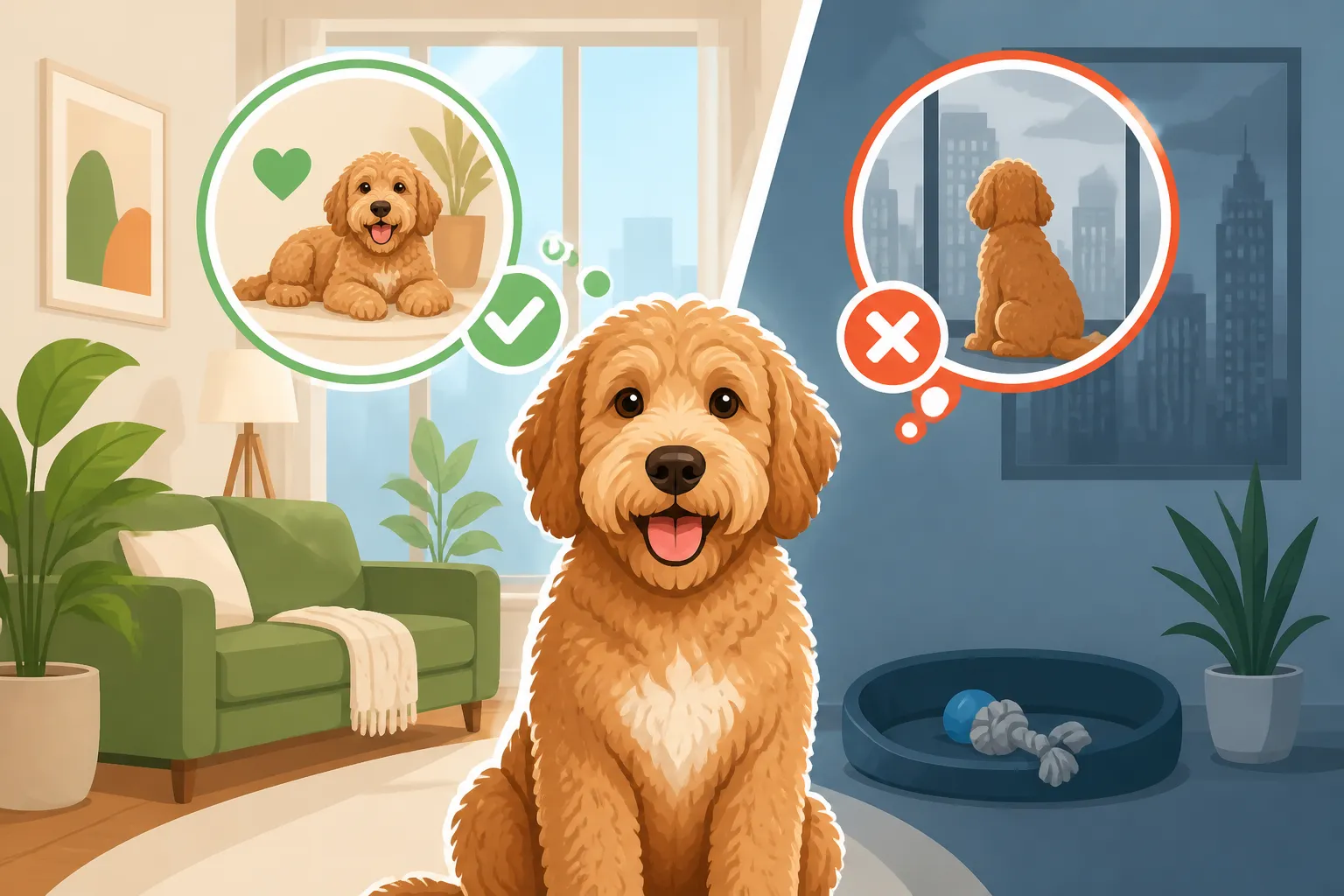
Whether a Standard Labradoodle Fits an Apartment
It's a common dream: picturing a beautiful, happy Labradoodle curled up at your feet, sharing your cozy apartment life. But then the questions flood in: Is my apartment big enough for a dog that can reach sixty pounds? Will they be miserable without a huge yard? This guide is here to help you realistically assess whether apartment living can truly work for a standard Labradoodle, and what it takes to make it a success.
Understanding the Standard Labradoodle's Core Needs
Before diving into apartment specifics, it's crucial to understand what makes a Labradoodle tick, especially a standard-sized one. These aren't tiny lapdogs, and their needs extend far beyond just physical space.
Physical Size and Space Requirements
A standard Labradoodle can weigh anywhere from 50 to 65 pounds and stand 21 to 24 inches tall at the shoulder. That's a substantial dog! While they're generally known for their affectionate, "Velcro dog" nature, they still need enough room to stretch out, turn around comfortably in their crate (if you use one), and move without constantly bumping into furniture or tripping over people.
Think about it this way: a Labradoodle isn't just a static object in your home. They'll walk, run, play, and often want to be near you. If your apartment is so cramped that every movement is a navigation challenge, it might become frustrating for both of you. However, a dog's need for space is often more about activity than square footage. A smaller apartment with ample outdoor access and a dedicated exercise routine can be far more suitable than a sprawling house with no owner interaction or walks. Many Labradoodles are happy to snuggle on the couch, but they do need room to zoom around when excited, even if it's just for a few minutes indoors before a walk.
Exercise Requirements Beyond the Backyard
One of the biggest misconceptions about dogs in apartments is that they absolutely must have a yard to be happy. This isn't necessarily true, especially for a Labradoodle. What they truly need is consistent, appropriate exercise, and that can come from many sources other than a private fenced yard. Labradoodles are an active breed, blending the retrieving instincts of the Labrador with the intelligence and stamina of the Poodle. This means they need both physical exertion and mental stimulation.
Simply letting them out into a yard for 10 minutes doesn't cut it. They need brisk walks, games of fetch, runs, or structured play sessions. Without adequate exercise, a Labradoodle, regardless of living situation, can develop destructive behaviors, excessive barking, or anxiety. A standard Labradoodle typically needs at least 60-90 minutes of dedicated, vigorous exercise daily. This might be split into a few longer walks, a trip to the dog park, or a combination of activities. For busy owners, exploring options like dog walkers or reputable doggy daycares can be essential for meeting these needs. The Exercise a Labradoodle Needs Before It Behaves delves deeper into just how much activity these dogs require.
Mental Stimulation and Enrichment
Beyond physical exercise, Labradoodles are smart cookies. They inherit a keen intelligence from both parent breeds, and if their minds aren't engaged, they can get bored, and a bored dog is often a mischievous dog. In an apartment setting, where physical space for independent exploration might be limited, providing mental stimulation becomes even more critical.
This can involve puzzle toys, treat-dispensing toys, training sessions, or even scent work games around the house. Consider rotating their toys to keep things fresh and exciting. If you work from home, short training bursts throughout the day can keep their mind active. If you're out for extended periods, a long-lasting chew toy or a KONG filled with frozen peanut butter can provide enrichment. Brands like Chewy and Amazon offer a wide array of interactive toys that can keep a Labradoodle's brain buzzing, even in a smaller living space. Ignoring this need for mental engagement is a recipe for a frustrated dog, no matter the size of your home.
Adapting Apartment Living for a Standard Labradoodle
Making an apartment work for a standard Labradoodle requires proactive planning and a commitment to their well-being. It's less about the size of your space and more about how you use it and what routines you establish.
Establishing a Robust Exercise Routine
Since a private yard isn't available, your daily exercise routine becomes the cornerstone of a happy apartment-dwelling Labradoodle. This means being consistent, rain or shine.
- Morning Wake-Up: Start the day with a substantial walk or a vigorous game of fetch at a nearby park. This helps burn off pent-up energy from the night and sets a calm tone for the day. For instance, a 30-45 minute brisk walk or jog.
- Mid-Day Break (if possible): If you work from home, or have a dog walker, a mid-day potty break combined with a short walk or play session is ideal. This breaks up their alone time and provides another outlet for energy.
- Evening Wind-Down: Another significant walk, a trip to the dog park, or a long play session. This is often when owners have more time to dedicate. Dog parks can be great for socialisation and burning off steam, but always ensure your Labradoodle is well-socialised and plays appropriately with other dogs. If your Labradoodle struggles with other dogs, focus on individual activities.
- Weekend Adventures: Weekends are perfect for longer hikes, trips to dog-friendly beaches or trails, or even structured dog sports like agility or obedience classes. The Age Exercise Induced Collapse First Shows in a Labradoodle is a good read if you're concerned about pushing your dog too hard.
Remember, a tired Labradoodle is a good Labradoodle. If they're getting enough physical and mental exercise outside the apartment, they're much more likely to be calm and settled inside.
Maximizing Indoor Space and Enrichment
Even without a sprawling backyard, you can make your apartment a rich environment for your Labradoodle. It’s all about smart space utilization and consistent enrichment.
- Designated Dog Zones: Create specific areas for your Labradoodle. This might be a comfortable dog bed in a quiet corner, a crate for downtime, or a mat where they can chew a bone undisturbed. Having their "own" space helps them feel secure and gives them a place to retreat. You can find excellent, durable dog beds on Chewy that fit various apartment sizes.
- Vertical Space: Utilize vertical space for storage, keeping things off the floor that your Labradoodle might be tempted to chew or knock over. Consider a raised feeder if your vet recommends it, which can also free up some floor space.
- Puzzle Toys and Interactive Feeders: These are invaluable. Instead of simply putting food in a bowl, make your Labradoodle "work" for their meals using puzzle feeders. This engages their brain and slows down eating, which can be beneficial. Brands like Outward Hound, available on Amazon, have many options.
- Indoor Training and Games: Short bursts of training sessions (5-10 minutes, several times a day) can be mentally exhausting for a Labradoodle. Teach new tricks, practice obedience commands, or play hide-and-seek with toys or treats. This builds your bond and provides mental exercise. The Ten Month Old Labradoodle That Forgets Everything highlights the importance of consistent training through all stages of their development.
Training for Apartment Life
Specific training can make or break apartment living with a Labradoodle. Their intelligence makes them highly trainable, but consistency is key.
- Crate Training: A crate can be a lifesaver in an apartment. It provides a safe den for your dog, helps with potty training, and prevents destructive chewing when you can't supervise. It also teaches them to be calm when left alone, which is crucial in an apartment building where neighbors might be sensitive to noise. Ensure the crate is appropriately sized – large enough for them to stand, turn around, and lie down comfortably.
- Impulse Control: Teach "leave it" and "stay" commands rigorously. This is vital for managing interactions with neighbors, preventing jumping on guests, and keeping them safe from dropped food or hazards inside and outside the apartment.
- Leash Manners: A well-behaved Labradoodle on a leash is non-negotiable for apartment dwellers. You'll be taking many walks, often in crowded areas. Investing time in loose-leash walking training will make your daily outings much more enjoyable and less stressful for both of you. Teaching a Sixty Pound Labradoodle Not to Pull offers great advice on this.
- "Place" or "Mat" Training: Teach your Labradoodle to go to a designated "place" (their bed or mat) and stay there until released. This is incredibly useful when guests come over, during meal times, or if you need them settled in a specific spot.
Overcoming Common Apartment Challenges
Living in an apartment with a large, active dog like a Labradoodle comes with its own set of unique hurdles. But with a bit of foresight and consistent effort, these can be managed effectively.
Managing Noise and Neighbor Relations
One of the most frequent concerns for apartment dwellers with dogs is noise. A barking dog can quickly sour neighbor relations and even lead to complaints from your landlord. Labradoodles, with their intelligent and sometimes vocal nature, can be prone to barking if not managed.
- Address Barking Triggers: Identify what makes your Labradoodle bark. Is it people in the hallway? Other dogs? Sirens? Once you know the trigger, you can work on desensitization and counter-conditioning. For instance, if they bark at hallway noises, reward them for staying quiet when sounds occur, gradually increasing the intensity of the noise.
- Prevent Boredom: A bored Labradoodle is more likely to bark out of frustration or attention-seeking. Ensure they are well-exercised physically and mentally before you leave them alone.
- Sound Masking: Use a white noise machine or leave a radio/TV on at a low volume to mask external sounds that might trigger barking while you're out.
- Crate Training for Alone Time: As mentioned, a well-crate-trained dog is often calmer and less prone to separation anxiety-induced barking.
- Transparency with Neighbors: A little communication goes a long way. Let your immediate neighbors know you have a dog and encourage them to alert you if there are any issues. Being proactive and approachable can prevent small issues from escalating.
Navigating Building Rules and Amenities
Every apartment building has its own set of rules regarding pets. It's essential to understand and adhere to them, as violating policies can have serious consequences.
- Pet Policy Review: Before you even bring a Labradoodle home, thoroughly review your lease's pet policy. Look for weight restrictions, breed restrictions (though Labradoodles are often seen as less problematic than some "bully breeds"), and any specific rules about leashing in common areas, waste disposal, or noise.
- Common Area Etiquette: Always keep your Labradoodle on a leash in hallways, lobbies, and elevators. Teach them to sit patiently while waiting for an elevator or passing other residents. Clean up after your dog immediately and completely in any designated pet relief areas or public spaces. Carry extra waste bags.
- Designated Pet Areas: Some buildings offer dog runs or pet washing stations. Utilize these amenities, but also respect their rules and keep them clean. These can be valuable resources for apartment dwellers.
- Elevator Training: Teach your Labradoodle to enter and exit elevators calmly, sitting or standing close to you without jumping on other people. This is part of responsible Public Access Training Asks of a Labradoodle you might find useful, even if your dog isn't a service animal.
Socialization and Safe Public Interactions
In an apartment setting, your Labradoodle will constantly encounter new people, dogs, and environments outside your home. Proper socialization is paramount to ensure they are well-adjusted and safe in public.
- Early and Ongoing Socialization: From a young age, expose your Labradoodle puppy to a wide variety of sights, sounds, people, and friendly dogs. This helps them learn to be confident and comfortable in different situations. Continue this throughout their lives.
- Dog Parks: Dog parks can be a fantastic way for your Labradoodle to burn energy and socialize. However, always supervise closely and ensure the interactions are positive. If your dog is overwhelmed or showing signs of aggression, it’s best to leave. Not all dogs enjoy dog parks, and that’s perfectly fine.
- Doggy Daycare: If your Labradoodle is social and enjoys the company of other dogs, doggy daycare can be an excellent option, especially if you work long hours. It provides supervised play, exercise, and mental stimulation.
- Puppy Classes and Obedience Training: These classes not only teach your Labradoodle manners but also provide structured socialization opportunities in a controlled environment. They're a great way to bond with your dog and build their confidence in new settings.
Making the Right Decision for You and Your Labradoodle
Deciding whether a standard Labradoodle is the right fit for your apartment lifestyle is a significant choice. It requires honest self-assessment and a deep understanding of the commitment involved.
Pros and Cons of Apartment Living with a Standard Labradoodle
Let's lay out some of the practical considerations to help you weigh your options:
| Aspect | Pros of Apartment Living with Labradoodle | Cons of Apartment Living with Labradoodle |
|---|---|---|
| Exercise | Encourages more dedicated, structured outdoor time. | Requires commitment to daily outdoor exercise regardless of weather. |
| Mental Stimulation | Necessitates creative indoor games and training, strengthening bond. | Boredom can lead to destructive behavior if not addressed. |
| Socialization | Frequent exposure to people/dogs in common areas, fostering good manners. | Less independent outdoor access, relies heavily on owner-initiated encounters. |
| Bonding | Closer quarters can lead to a stronger bond between dog and owner. | Limited space might feel cramped for both dog and owner without proper routine. |
| Cost | Potentially lower housing costs (no yard maintenance). | Potential costs for dog walkers, daycare, or specialized apartment gear. |
| Responsibility | Forces owner to be highly disciplined with care and training. | Greater reliance on public spaces for potty breaks and exercise. |
Self-Assessment: Are You Ready for the Commitment?
Beyond the dog's needs, consider your own lifestyle and willingness to adapt. Bringing a standard Labradoodle into an apartment isn't a passive decision; it's an active commitment.
- Time: Do you have at least 60-90 minutes daily, split into multiple sessions, for dedicated exercise? This isn't just a quick potty break; it's about vigorous activity. Can you commit to regular training sessions to keep their mind engaged?
- Energy Levels: Are your energy levels compatible with a breed that often retains a puppy-like enthusiasm well into adulthood? Are you prepared to walk them in the rain, snow, or heat?
- Financial Resources: Can you afford dog walkers, doggy daycare, or extra enrichment toys if your schedule demands it? Remember that the general cost of owning a Labradoodle is significant, from What a Labradoodle's First Puppy Trim Costs to vet bills.
- Patience and Consistency: Are you prepared to be patient with training, especially regarding impulse control and noise management? Consistency is key in an apartment setting.
- Lifestyle: Are you a homebody, or do you have an active lifestyle that naturally includes your dog? An active Labradoodle will thrive with an owner who enjoys getting out and about.
- Grooming: Don't forget their coat. A Labradoodle's coat, especially fleece or wool, requires significant regular grooming to prevent matting. The Coat Change That Hits a Labradoodle at Nine Months can be particularly challenging, and in an apartment, you'll need space and tools for this.
If you can honestly say yes to these questions, then a standard Labradoodle in an apartment could absolutely work. The size of your home is often less important than the size of your commitment and the lifestyle you provide.
The Role of Breeders and Rescues
When looking for your Labradoodle, communicate openly about your living situation. Reputable breeders and rescues prioritize placing their dogs in appropriate homes.
- Reputable Breeders: A good breeder will ask about your living situation, including whether you live in an apartment. They aren't trying to judge you, but rather to ensure a good match. Be honest about your home and your plans for exercise and enrichment. They might even be able to guide you towards a puppy in their litter that has a slightly lower energy drive, though Labradoodles are generally active. You might want to ask The Health Tests a Labradoodle Breeder Should Show to ensure you're getting a healthy puppy, regardless of your housing.
- Rescue Organizations: If you're considering adopting, rescue groups often have a wealth of knowledge about individual dogs' temperaments and needs. They can help you find an adult Labradoodle whose personality is well-suited to apartment life. Many older or calmer Labradoodles end up in rescue, and they might be a perfect fit if you're not ready for the full-on puppy energy. Organizations like IDOG Rescue or Doodle Rock Rescue are excellent resources.
Ultimately, a standard Labradoodle can absolutely thrive in an apartment, provided their human companions are fully committed to meeting their physical and mental needs through consistent exercise, training, and enrichment. It takes effort, creativity, and dedication, but the reward is a loyal, loving companion who brightens your apartment life immeasurably.
Disclaimer
This article is for general informational purposes only and does not constitute professional advice. Laws, prices and regulations vary by location and change over time. Consult a qualified professional for guidance on your specific situation.