Whether the Coat Is Why People Regret a Labradoodle
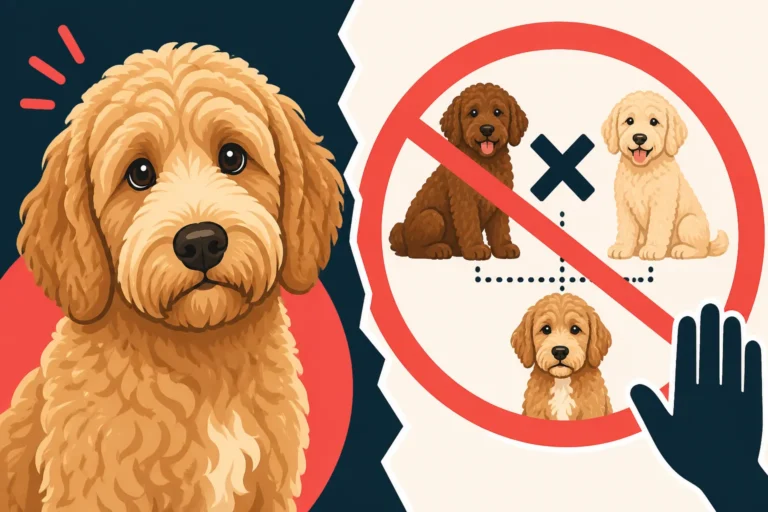
A Labradoodle’s coat can become a real source of regret when owners expect “low-shedding” to mean low-maintenance. Instead, many coats need regular brushing, careful drying, and frequent professional grooming to prevent painful mats. This guide explains what coat care actually involves, why it catches people off guard, and how to decide whether the work fits your household.
Why the Labradoodle coat can surprise new owners
Low shedding does not mean low maintenance
Labradoodles can inherit different coat types from their Poodle and Labrador parents, and their coats don’t all behave alike. Some shed more noticeably; others hold onto loose hair, which can tangle with the growing coat instead of falling away. A dog that leaves little hair on the sofa may still need extensive brushing to keep its coat comfortable.
That distinction often gets missed when people focus mainly on allergies or a tidy home. There is no guarantee that a Labradoodle will be allergy-friendly, and low visible shedding does not mean no allergens. Dander and saliva can also trigger symptoms. If allergies are a concern, spend time around the particular dog or its relatives before committing, and discuss the situation with an appropriate healthcare professional. For a closer look, see Whether a Labradoodle Is Truly Hypoallergenic and Whether Dander or Hair Sets Off Allergies Around a Labradoodle.
The coat can also change as a puppy grows. A soft, easy-to-fluff puppy coat may become denser, curlier, or more prone to tangling as the adult coat develops. Owners who brush occasionally during the puppy months may find themselves suddenly facing knots that form close to the skin. The Coat Change That Hits a Labradoodle at Nine Months explains why that transition can feel so abrupt.
Coat type changes the amount of work
The common labels are hair, fleece, and wool, but dogs within a label can still vary. A hair coat may shed more like a Labrador’s and can be easier to brush, though it still needs routine care. Fleece coats are often soft and wavy or loosely curled; they can mat when neglected, particularly behind the ears and where a collar or harness rubs. Wool coats tend to be dense and curly, so they can require frequent, thorough brushing and skilled clipping.
A coat’s appearance from the outside can be misleading. A fluffy dog might have tangles tucked underneath, where a quick surface brush won’t reach. Owners sometimes discover this when a comb catches near the skin or a groomer finds tight mats under the ears, around the armpits, or along the legs. The Three Labradoodle Coats: Hair, Fleece and Wool gives a useful overview of how these coat types differ.
| Coat feature | What owners may notice | Common care challenge |
|---|---|---|
| Hair | Straighter texture and more visible loose hair | Shedding and routine brushing |
| Fleece | Soft, wavy, or loosely curled texture | Tangles where the coat rubs or gets damp |
| Wool | Dense curls and a fuller appearance | Mats close to the skin and frequent clipping |
These are general patterns, not promises about an individual dog. Coat genetics, length, grooming habits, and the dog’s activities all matter. A Labradoodle who swims, romps through wet grass, or wears a harness for long walks may need more hands-on checks than one with a short clip and a calmer routine. To understand why a particular puppy’s adult coat can be hard to predict, see Whether an F1 Labradoodle's Coat Is a Gamble.
What coat care looks like in everyday life
Brushing means reaching the skin
A quick pass over the visible curls can make a dog look tidy without clearing tangles underneath. Effective brushing needs to work through small sections of coat, from near the skin outward, without scraping or pulling. Follow with a comb to check whether it can pass through the coat all the way to the skin. If the comb snags, that spot needs attention rather than another quick brush over the top.
The routine is easier when it becomes ordinary, short handling instead of one long wrestling match. For example, you might brush the legs and chest after a walk, then handle the ears and tail later while the dog is relaxed. Give the dog breaks and use gentle rewards, especially if they are new to grooming. Starting when the dog is young can help them become more comfortable with being touched, though even an adult dog can learn gradually. Brushing a Labradoodle to the Skin, Not the Surface and The Line Brushing a Labradoodle Coat Needs cover practical techniques in more detail.
Pay special attention to friction and moisture. Mats commonly form behind the ears, under a collar or harness, in the armpits, between the legs, and around the tail and rear. After rain or a swim, check these areas rather than assuming the coat will dry neatly on its own. A wet, tangled coat can become harder to work through as it dries. If you use a detangling product, follow its directions and avoid yanking on a tight knot.
Grooming appointments are part of ownership
Many Labradoodles need regular professional trims, with the interval depending on coat type, length, growth, and how well the coat is maintained at home. Between appointments, owners still need to brush, check for tangles, keep the face clear, and attend to nails and ears as appropriate. Grooming is therefore not a task that disappears after a salon visit; it is ongoing home care plus periodic clipping.
It helps to find a groomer before the coat becomes difficult to manage. Ask what styles they recommend for your dog’s coat, how much home brushing the style needs, and what to do if you find mats. A shorter, practical clip can reduce the daily workload, though it won’t eliminate routine brushing or appointments. Bring reference photos if you have a particular look in mind, but be open to a groomer explaining what is realistic for your dog’s coat condition.
Be honest about what brushing has been like at home. Tight mats can be uncomfortable, and trying to cut them out with household scissors risks injuring the skin, which may be pulled up into the knot. If the coat is severely matted, a groomer may need to clip it short rather than detangle it. That can be disappointing when you had a fluffy style in mind, but comfort and skin safety come first. For more on the options, see Whether a Tight Matted Labradoodle Has Any Other Option and What to Ask a Groomer For on a Labradoodle.
Why owners regret the coat and how to avoid the mismatch
The workload can conflict with real schedules
Coat care may sound manageable when described as “a little brushing,” but regular upkeep takes time and consistency. A busy household might find that brushing gets postponed after work, then postponed again during a rainy week. By the time someone notices a knot, it may be tight enough that brushing becomes uncomfortable. That cycle can lead to frustration for the owner and an unpleasant grooming experience for the dog.
The mismatch is often about expectations rather than a “bad” coat. Someone who wants a wash-and-go dog may be unhappy with a coat that needs frequent attention, even if they love the dog’s temperament. A family that enjoys hands-on care, keeps a comb nearby, and can plan grooming appointments may find the same coat rewarding. Consider the routine you can reliably maintain on an ordinary week, not just the routine you imagine having on a quiet weekend.
Before choosing a puppy, ask what the parents’ coats are like and what care those dogs receive. Ask the breeder how the puppies are introduced to brushing and grooming, while remembering that a puppy’s eventual coat is not perfectly predictable. If adopting an adult dog, ask about its grooming history, how it responds to brushing, and whether there are areas that tend to mat. What Labradoodle Owners Say They Underestimated is a useful companion read when weighing the less glamorous parts of ownership.
Build a realistic routine before tangles appear
Start by assembling basic tools that suit the dog’s coat, such as an appropriate slicker brush and a metal comb. Ask a groomer to demonstrate how to use them gently and check the coat all the way down to the skin. A pet-supply retailer such as Chewy may be one place to compare brushes, combs, and coat-care products, but the right choice depends on the dog’s texture and sensitivity. Don’t assume a tool is suitable just because it is marketed for doodles.
A simple routine might look like this:
- Check high-friction areas after walks, play, and time in wet conditions.
- Brush small sections of dry coat with gentle strokes, working methodically instead of rushing.
- Run a comb through each section to find knots the brush may have missed.
- Stop if the dog seems uncomfortable or a mat is tight; ask a groomer for help rather than pulling.
- Keep grooming appointments on a calendar and adjust the coat length if home maintenance is becoming unrealistic.
If you are comparing products, Chewy can also be a convenient place to look for grooming essentials such as detangling sprays or dog shampoo. Check that any product is intended for dogs and follow its label. A product can help with manageability, but it cannot replace brushing or make a neglected coat mat-free. For a step-by-step approach to choosing tools, see The Slicker, Rake and Comb a Labradoodle Takes.
Owners who want a shorter, easier-to-manage coat can talk through clip options with a groomer. Chewy may be useful for locating basic home-care supplies, but a groomer can assess the actual coat and advise on a style that suits its condition and the dog’s tolerance for brushing. Keep the conversation practical: ask what the style will require between appointments, not just how it will look when freshly clipped.
Is the coat a reason not to get a Labradoodle
Match the coat to your capacity, not an idealized image
The coat may be a genuine reason to choose another dog if you dislike brushing, have limited time for routine grooming, or cannot comfortably budget for professional care. That doesn’t mean Labradoodles are unsuitable in general. It means the coat is a substantial part of the commitment, and it deserves the same attention as exercise needs, training, and temperament.
Think through an average month. Can someone in the household brush the dog consistently? Is there a groomer you can reach and work with? Will you be comfortable choosing a shorter clip if a long, fluffy style proves too demanding? If you travel often or have a packed schedule, who will handle brushing and coat checks while you are away? These questions are more useful than relying on a broad claim that one generation or coat type is automatically easy-care.
A short-coated dog may still require regular grooming and maintenance, but the daily coat routine can be different. If minimizing brushing is your priority, compare the likely coat and care needs of Labradoodles with other breeds and individual dogs, and spend time with dogs whose adult coats resemble what you are considering. A breeder’s estimate can offer clues, not certainty. Where to See Labradoodles Before You Commit can help you think about meeting dogs before making a decision.
A coat problem is manageable when expectations are clear
Many owners do not regret the dog; they regret being unprepared for the coat. Once they learn to line-brush, keep the coat at a practical length, and schedule grooming before mats become severe, the routine can feel much more manageable. Others discover that even with a plan, regular coat care is not a good fit for their lifestyle. It is better to recognize that possibility before bringing a puppy home than to feel trapped by a commitment nobody explained clearly.
If you already have a Labradoodle and feel overwhelmed, start with one manageable change. Book a grooming consultation, ask for a length that suits your brushing habits, and learn how to check the coat properly. Set a repeatable schedule instead of waiting until the dog looks tangled. Chewy can be one option for replenishing basic grooming supplies, while your groomer can guide you on tools and techniques suited to your dog.
The bottom line is that the Labradoodle coat can be a major source of regret, but it is not inevitable. Its impact depends on the individual dog’s coat, the style you maintain, and whether the household can keep up with brushing and grooming. When those expectations are clear in advance, you can make a more confident choice—and avoid mistaking a high-maintenance coat for an easy-care one.
Disclaimer
This article is for general informational purposes only and does not constitute professional advice. Laws, prices and regulations vary by location and change over time. Consult a qualified professional for guidance on your specific situation.