What a Skin Biopsy Costs on a Labradoodle
It’s truly disheartening when your beloved Labradoodle starts experiencing skin issues, whether it's persistent itching, mysterious hair loss, or a new lump you’ve discovered. You watch them scratch and worry, and often, after initial treatments don't yield answers, your vet suggests a skin biopsy. This can feel like a big step, both emotionally for your furry friend and financially for your wallet. This guide will walk you through what a skin biopsy for your Labradoodle entails and, importantly, what costs you can expect to encounter along the way, helping you understand each component so you're better prepared for the journey ahead.
Why a Skin Biopsy Becomes Necessary for Your Labradoodle
When your Labradoodle develops a skin problem, it’s not always a straightforward case of dry skin or fleas. Sometimes, despite your best efforts and initial treatments, the issue persists, or even worsens. That’s when your veterinarian might recommend a skin biopsy—a small tissue sample taken from the affected area for laboratory analysis. It's a crucial diagnostic tool that helps unravel complex dermatological mysteries that can’t be solved by just looking or scraping.
When to Suspect a Skin Issue Beyond Simple Allergies
You know your Labradoodle's skin better than anyone. You notice the subtle changes, the new patterns of itching, or areas where their beautiful coat seems to be thinning. While many skin issues start with common culprits like fleas, environmental allergies, or dietary sensitivities, sometimes the problem runs deeper. You might notice unusual scabs, persistent pustules, areas of thickened or darkened skin, or non-healing sores. Perhaps there are specific lumps or bumps that are growing or changing in appearance. These are the kinds of signs that can make a vet pause and consider something more involved, something that needs a definitive diagnosis. Conditions like Sebaceous Adenitis in a Labradoodle's Skin, an inflammatory disease affecting the sebaceous glands, or persistent bacterial or fungal infections that don't respond to standard antibiotics, often require a biopsy for accurate identification. You might also notice widespread Allergies Behind a Labradoodle's Itching that just don't clear up, or even suspicious changes like discolored patches or scaling that could indicate more serious underlying problems.
For example, imagine your Labradoodle, Charlie, a lively two-year-old, starts scratching incessantly behind his ears and on his flanks, even after you’ve ensured he's flea-free and tried various anti-itch shampoos. His skin looks red and inflamed, and patches of hair are starting to thin. Your vet might initially try allergy medications or a course of antibiotics. If, after several weeks, Charlie is still uncomfortable and new lesions appear, that's a strong indicator that a deeper investigation is needed. A biopsy can differentiate between a severe allergic reaction, an autoimmune disease, or even certain skin cancers, guiding your vet toward the correct treatment path.
The Diagnostic Process Leading Up to a Biopsy
It's rare for a veterinarian to jump straight to a skin biopsy. Typically, there's a methodical process of elimination that precedes it. First, your vet will perform a thorough physical exam, often looking closely at the affected skin areas. They'll ask you a lot of questions about when the problem started, what you've observed, and what treatments you've already tried.
Next, they’ll likely perform some initial, less invasive diagnostic tests. These might include:
- Skin scrapes: To check for microscopic mites like Demodex or Sarcoptes.
- Cytology: Examining cells from the skin surface or from a pustule under a microscope to look for bacteria, yeast (like Yeast Trapped Under a Labradoodle's Coat), or inflammatory cells.
- Fungal cultures: To identify ringworm or other fungal infections.
- Allergy testing: If allergies are suspected, your vet might discuss options for dietary elimination trials or even specialized allergy blood tests.
If these initial tests don't provide a clear diagnosis, or if the condition is unusual, worsening, or unresponsive to therapy, your vet may recommend a dermatology referral for a Labradoodle to a specialist. This is a common step before a biopsy, as a veterinary dermatologist has advanced training and equipment to handle complex skin cases. They might perform further tests, or agree that a biopsy is the most direct route to a definitive answer. Sometimes, even blood work is performed to check for systemic illnesses that can manifest as skin problems, or to ensure your Labradoodle is healthy enough for anesthesia, especially if conditions like The Vague Signs of Addison's in a Labradoodle are in the differential.
For instance, if your Labradoodle, Daisy, develops a persistent, non-healing lesion on her leg that doesn't respond to antibiotics or topical creams, and skin scrapes are negative, a biopsy becomes essential. It helps determine if it's a stubborn infection, a benign growth, or something more concerning that requires specialized treatment. The cost of these preliminary tests, consultations, and potential specialist referrals are all part of the overall financial picture leading up to the biopsy itself.
Deconstructing the Cost of a Labradoodle Skin Biopsy
Understanding the different components of a skin biopsy can help you anticipate the total cost. It's not just the price of taking the sample; it's a whole process from initial assessment to final diagnosis and treatment planning.
Initial Consultation and Pre-Biopsy Diagnostics
Before any biopsy takes place, there’s typically an initial veterinary consultation. This visit alone can range in cost, depending on your location and whether you're seeing your regular vet or a specialist. During this consult, the vet will assess the affected area, discuss your dog's history, and determine if a biopsy is indeed the next best step.
Beyond the consultation fee, there are often pre-biopsy diagnostics that add to the cost. For any procedure requiring sedation or general anesthesia, your Labradoodle will need a pre-anesthetic blood panel. This blood work screens for underlying health issues, such as kidney or liver disease, that could complicate anesthesia. A healthy, young Labradoodle might need a basic panel, while an older dog or one with suspected systemic issues might require more comprehensive tests, like those needed if your vet is investigating Whether an Addisonian Labradoodle Needs Bloodwork More Often. These tests are vital for your dog's safety and will be factored into the total bill.
For example, imagine your Labradoodle, Cooper, is developing thinning patches of coat and scaly skin, leading your vet to suggest a biopsy. Before the procedure, you'll pay for the consultation fee, which might be one amount for your primary vet and a higher amount if you've been referred to a veterinary dermatologist. Then, you'll incur charges for the necessary pre-anesthetic blood tests, which could be a few hundred dollars alone, depending on how extensive they need to be. These steps ensure that when Cooper goes under anesthesia for the biopsy, all precautions have been taken.
The Biopsy Procedure Itself
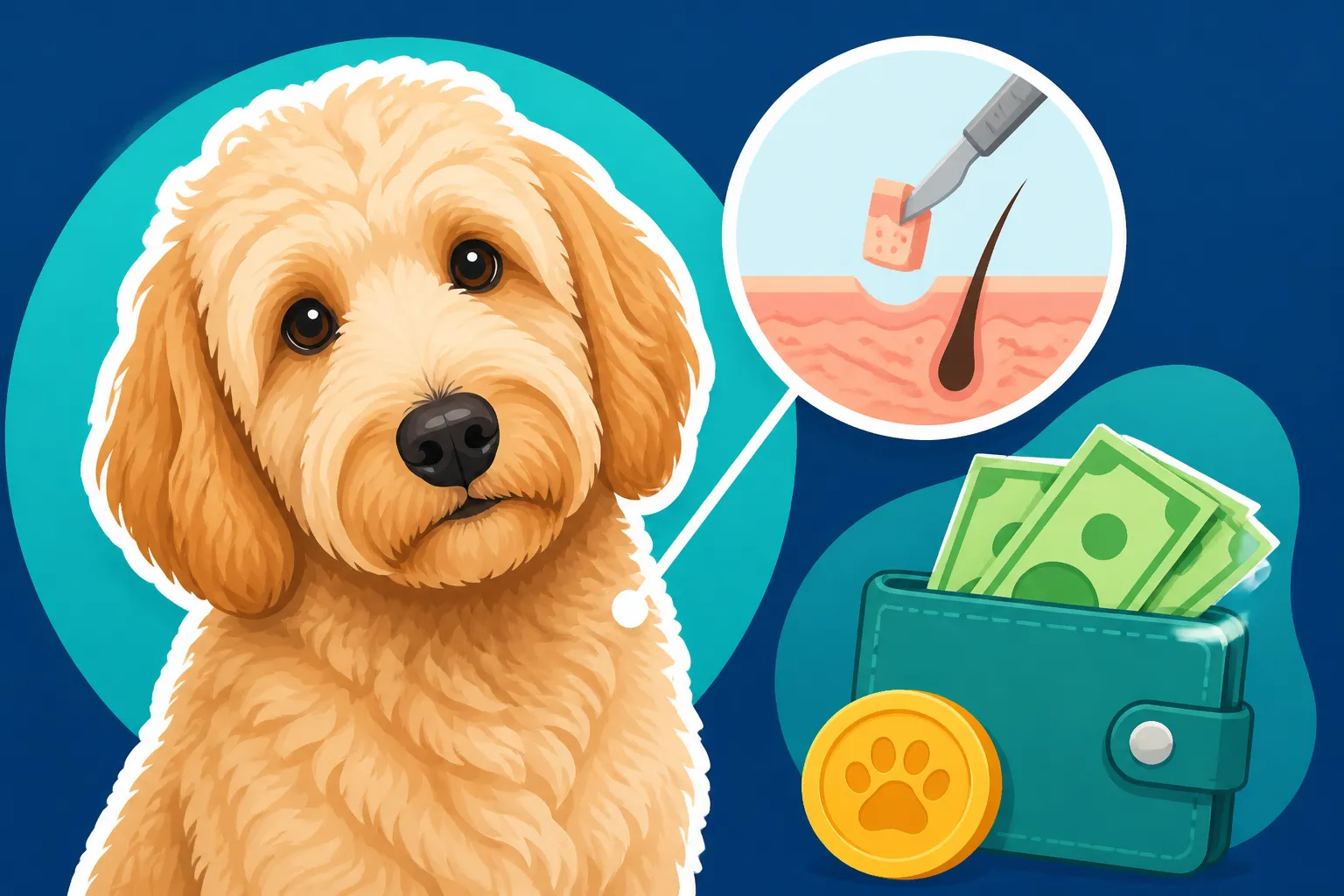
This is the core of the cost. The actual biopsy procedure involves taking one or more small pieces of tissue from the affected skin. There are a few different ways this can be done, and the method can impact the cost:
- Punch Biopsy: This is the most common method for skin lesions. A circular instrument (like a cookie cutter) is used to remove a small core of tissue. It's relatively quick and often requires only local anesthesia or light sedation, though general anesthesia is common to ensure the dog remains perfectly still and comfortable.
- Incisional Biopsy: This involves removing a wedge or a small piece of a larger lesion.
- Excisional Biopsy: The entire suspicious mass or lesion is removed. This is often done when the vet suspects a benign tumor or a small, easily removable growth, and simultaneously serves as both diagnosis and treatment.
The cost for the procedure itself will include the veterinary surgeon's fee, the cost of anesthesia (which is often calculated by time), any necessary sutures, and potentially post-operative pain medication. The complexity of the lesion, its location, and the number of samples taken can also influence this portion of the bill. For instance, a biopsy from a delicate area like an eyelid might be more complex than one from the flank.
Let's say your Labradoodle, Luna, has a suspicious lump on her side. The vet decides on an excisional biopsy to remove the whole lump. This will involve more extensive anesthesia and surgical time compared to a simple punch biopsy, and therefore a higher procedural cost. You'll see charges itemized for anesthesia, the surgical procedure, and potentially a recovery room fee.
Laboratory Analysis and Pathology Report
Once the tissue samples are collected, they are sent to a specialized veterinary pathology laboratory for analysis. This is where the definitive diagnosis is made, and it constitutes a significant part of the overall cost. The pathologist, a veterinarian with advanced training in diagnosing diseases by examining tissues, will prepare the samples, examine them under a microscope, and write a detailed report.
This report will identify the type of cells present, look for any abnormalities, and provide a diagnosis. For instance, if your Labradoodle is experiencing a specific condition like The Age Sebaceous Adenitis Appears in a Labradoodle, the pathologist's report will confirm the presence of affected sebaceous glands. They might also suggest other underlying causes or potential treatments based on their findings. This expertise comes at a cost, as it requires specialized equipment, stains, and highly trained personnel. The lab fee usually includes the preparation of the samples (histopathology) and the pathologist's interpretation.
Here’s a rough breakdown of typical cost components:
| Cost Component | Description | Estimated Range (USD) |
|---|---|---|
| Initial Exam/Consultation | Vet visit fee to assess skin issue and discuss biopsy. | $60 – $150 |
| Pre-Anesthetic Bloodwork | Blood tests to ensure safety for anesthesia. | $100 – $300 |
| Sedation/Anesthesia | Cost for medications and monitoring during the procedure (often time-based). | $200 – $600+ |
| Biopsy Procedure Fee | Vet's fee for taking the tissue sample(s) – punch, incisional, or excisional. | $150 – $500 |
| Pathology/Lab Analysis | Fee for the specialist pathologist to analyze the sample and issue a report. | $150 – $400 |
| Medications | Post-procedure pain relief, antibiotics, anti-inflammatories. | $30 – $100 |
| Follow-Up Visit | Recheck appointment to discuss results and treatment plan. | $40 – $100 |
| Total Estimated Cost | $730 – $2150+ |
Please remember these are general estimates and actual costs will vary significantly based on location, clinic, and individual circumstances.
Follow-Up Consultations and Treatment Planning
Once the pathology report is back from the lab, your veterinarian will schedule a follow-up consultation with you. This is an essential part of the process where they will explain the findings, discuss the diagnosis, and outline a tailored treatment plan for your Labradoodle. This follow-up visit is typically charged as a standard consultation fee.
The treatment plan could involve various strategies depending on what the biopsy revealed. For instance, if it’s an immune-mediated condition, medications might be prescribed. If it’s a specific type of infection, a targeted antibiotic or antifungal course will be necessary. If a mass was removed and identified as cancerous, further diagnostics or referral to an oncologist might be discussed. The cost of these medications and any ongoing treatments will be an additional expense, but without the biopsy, you wouldn't have the clarity needed to proceed effectively. This follow-up also allows you to ask questions and ensure you understand how to best care for your Labradoodle moving forward. Your vet might even suggest specific dietary changes or supplements, and you might find useful resources for these, and for ongoing medication needs, through reputable online pet supply retailers.
Factors Influencing the Final Bill for Your Labradoodle's Biopsy
The price tag on a Labradoodle's skin biopsy isn't a fixed number. Several variables can push the cost up or down, making it a bit challenging to predict without a specific quote from your veterinary clinic. Understanding these factors can help you gauge what to expect.
Geographic Location and Veterinary Practice Differences
Just like real estate or human healthcare, veterinary costs vary significantly depending on where you live. A clinic in a major metropolitan area, like Los Angeles or New York, will almost certainly have higher overhead costs—rent, staff salaries, advanced equipment—which translate into higher prices for services, including biopsies. Conversely, a rural veterinary practice in a less populated area might offer the same procedure at a considerably lower rate.
Beyond the general region, the type of veterinary practice also plays a role. A small, independent general practice might have different pricing structures compared to a large, multi-specialty veterinary hospital or a university teaching hospital. Specialty dermatology clinics, while offering unparalleled expertise, often come with higher consultation and procedural fees due to their specialized equipment and the advanced training of their staff. For instance, if your Labradoodle needs a dermatology referral for a Labradoodle, be prepared for potentially higher costs than if your primary vet performs the procedure in-house. It’s always a good idea to call around for estimates if you have multiple options, but remember that the lowest price isn't always the best indicator of quality of care.
The Complexity and Type of Biopsy
As we discussed earlier, not all biopsies are created equal. The specific method used to obtain the tissue sample can directly affect the cost. A simple punch biopsy, where a small circular piece of skin is removed, is generally less expensive than an excisional biopsy, which involves surgically removing an entire lump or a larger section of tissue.
- Number of Samples: If your Labradoodle has multiple affected areas, the vet might recommend taking several samples to get a comprehensive picture. Each additional sample collected will typically add to the procedural cost.
- Location of the Lesion: Biopsies from sensitive or hard-to-access areas, like near the eye, on a paw pad, or in skin folds, might require more intricate surgical techniques and longer anesthesia times, thereby increasing the fee.
- Need for Specialist Equipment: Some complex cases might require specialized instruments or imaging techniques to guide the biopsy, which would contribute to the overall cost. For example, investigating unusual growths on paws could involve more detailed imaging before a biopsy is even considered, to rule out bone involvement.
Consider a situation where your Labradoodle, Max, has a single, small, suspicious growth on his back. A vet might opt for a punch biopsy, which is relatively quick and simple. However, if Max has widespread, patchy hair loss and scaling across his body, the vet might take several punch biopsies from different areas to capture the full scope of the condition, making the procedure longer and more expensive. Conversely, if Max has a larger, well-defined mass, an excisional biopsy might be performed, where the entire mass is removed. This would be a more involved surgical procedure with a commensurately higher cost.
Anesthesia and Sedation Requirements
Most skin biopsies require some form of sedation or general anesthesia to ensure your Labradoodle remains still, comfortable, and pain-free during the procedure. The cost of anesthesia is often a significant portion of the total bill and depends on several factors:
- Duration of the Procedure: Longer procedures require more anesthetic agents and longer monitoring, increasing the cost.
- Type of Anesthesia: While many biopsies use injectable anesthetics, inhalant anesthesia (gas) often requires more sophisticated equipment and closer monitoring, which can add to the expense.
- Anesthetic Monitoring: During anesthesia, your Labradoodle's vital signs (heart rate, respiration, blood pressure, oxygen saturation) are continuously monitored. The level of monitoring can vary, with more intensive monitoring for older dogs or those with pre-existing health conditions, leading to higher costs.
- Pre-existing Health Conditions: If your Labradoodle has any underlying health issues, such as heart murmurs or kidney problems, they might require a more customized and carefully managed anesthetic protocol, often involving more expensive medications and closer observation by a veterinary technician or even a board-certified anesthesiologist, especially when considering Whether Anesthesia Is Safe for an Addisonian Labradoodle.
For instance, an active, young Labradoodle with no health concerns might have a straightforward anesthetic protocol for a quick punch biopsy. However, an older Labradoodle, like one around The Birthday a Labradoodle Counts as Senior, with a history of a heart murmur and a more extensive skin lesion requiring multiple samples, will likely need a more comprehensive and cautious anesthetic approach, leading to a higher cost for the anesthesia and monitoring portion of the bill. This careful approach is crucial for minimizing risks, but it does add to the financial outlay.
Potential for Additional Testing
While a skin biopsy is aimed at providing a definitive diagnosis, sometimes the results might be inconclusive, or they might reveal a condition that warrants further investigation. For example, the pathology report might suggest an immune-mediated disease, which could then necessitate specialized blood tests to confirm the specific condition. Or, if a cancerous lesion is identified, further imaging (like X-rays or ultrasound) might be recommended to check for metastasis, and a referral to a veterinary oncologist could follow.
These additional tests, while not part of the initial biopsy cost, are often a direct consequence of the biopsy's findings. It's important to be aware that a biopsy is a step in the diagnostic journey, and sometimes that journey continues beyond the initial pathology report. This proactive approach ensures your Labradoodle receives the most accurate diagnosis and effective treatment plan possible, even if it means incurring additional costs. For instance, if the biopsy results for your Labradoodle, Bella, point towards a rare autoimmune condition, your vet might recommend additional blood tests that weren't part of the initial pre-biopsy panel. This means more appointments and more lab fees, all stemming from the original biopsy's insights.
Managing the Financial Aspect: Insurance and Payment Options
Discovering your Labradoodle needs a skin biopsy, on top of the worry for their health, can bring financial stress. However, there are several ways to make these necessary veterinary expenses more manageable.
How Pet Insurance Can Help
Pet insurance has become an invaluable tool for many pet owners, turning unexpected large vet bills into predictable monthly payments. If your Labradoodle is enrolled in a comprehensive pet insurance plan, such as those offered by Healthy Paws, the cost of a skin biopsy—including the initial consultations, pre-anesthetic bloodwork, the procedure itself, and the pathology analysis—is typically covered, provided the condition isn't pre-existing before your policy began.
Most pet insurance policies work on a reimbursement model: you pay the vet bill upfront, and then submit a claim to your insurance provider. After your deductible is met, and based on your reimbursement percentage (e.g., 80% or 90%), you’ll get a portion of the costs back. This can significantly reduce your out-of-pocket expenses for a procedure like a skin biopsy. For instance, if your Labradoodle, Gus, needs a biopsy costing $1,500, and you have a $250 deductible with 90% reimbursement, after paying the first $250, the insurance company would cover 90% of the remaining $1,250 ($1,125), leaving you to pay only $375 in total.
It’s crucial to understand your specific policy’s details, including deductibles, annual limits, and what's covered versus excluded. Some plans may not cover certain hereditary or congenital conditions, so always clarify this with your provider. Investing in pet insurance early, especially for a breed like the Labradoodle which can be prone to various health issues (you can read more about The Yearly Screening a Labradoodle Should Get to understand preventative care), can provide immense peace of mind when unexpected diagnostic procedures like a biopsy become necessary.
Other Financial Assistance Options
If pet insurance isn't an option, or if you find yourself facing an unexpected bill beyond your coverage, there are other avenues for financial assistance:
- Veterinary Payment Plans: Many veterinary clinics understand that pet care can be expensive and offer their own in-house payment plans, allowing you to pay for the biopsy over several weeks or months. Don't hesitate to ask your vet's office if this is something they provide.
- Veterinary Credit Cards: Specific credit cards designed for healthcare expenses, often called "care credit," are widely accepted at veterinary practices. These cards typically offer promotional periods with deferred interest, which can be a lifesaver for managing larger bills, provided you can pay off the balance before the interest-free period ends.
- Emergency Funds/Savings: Ideally, setting aside an emergency fund specifically for pet care is a smart financial move. Even a small amount saved monthly can add up and provide a cushion for unforeseen expenses like a biopsy.
- Non-Profit Organizations: In some communities, there are local or national non-profit organizations that offer financial aid for pet owners who cannot afford necessary veterinary care. These are often need-based and might require an application process. While they might not cover the full cost, any assistance can make a difference.
- Crowdfunding: For some, online crowdfunding platforms can be a way to rally support from friends, family, and compassionate strangers to help cover veterinary costs.
Having a plan for how you’ll manage veterinary expenses is as important as any other aspect of responsible pet ownership. Whether it's through robust pet insurance like Healthy Paws, or having access to flexible payment options, being prepared ensures that your Labradoodle can get the diagnostic care they need, like a skin biopsy, without unnecessary delay due to financial constraints.
Disclaimer
This article is for general informational purposes only and does not constitute professional advice. Laws, prices and regulations vary by location and change over time. Consult a qualified professional for guidance on your specific situation.