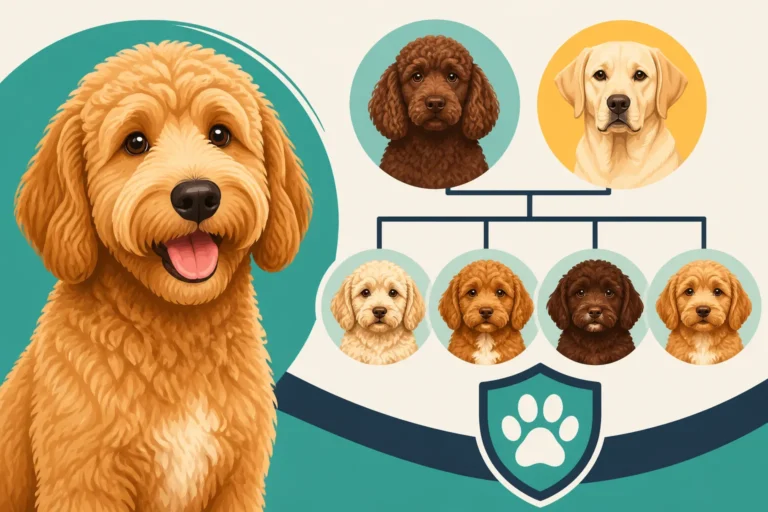
The Labradoodle Against the Goldendoodle
Choosing between a Labradoodle and a Goldendoodle can feel like an impossible decision for many prospective dog owners. Both breeds are incredibly popular for their charming personalities and those wonderfully soft, teddy bear looks, but underneath the fluffy exterior, there are distinct differences that could make one a much better fit for your family and lifestyle than the other. This guide will meticulously break down the nuances between these two beloved "doodles" to help you navigate the choice with confidence, understanding the genuine expectations that come with each.
Origins and Breed Development: More Than Just "Poodle Mixes"
It's easy to lump Labradoodles and Goldendoodles into the same "designer dog" category, seeing them simply as Poodle crosses. While they do share the intelligent Poodle as a parent breed, their other foundational genetics – the Labrador Retriever and the Golden Retriever – imbue them with unique traits and histories that set them distinctly apart. Understanding where they come from is the first step to truly appreciating their individual characteristics.
The Genesis of the Labradoodle
The Labradoodle, in its original conception, wasn't just some whimsical experiment to create a cute, fluffy dog. Its story begins with a very specific, heartfelt need. In 1989, Wally Conron, the breeding manager for the Royal Guide Dogs Association of Australia, was approached by a visually impaired woman in Hawaii who needed a guide dog. The catch? Her husband was allergic to dogs. Conron set out to breed a dog with the trainability and temperament of a Labrador Retriever, combined with the low-shedding, allergy-friendly coat of a Standard Poodle. He successfully bred a litter of three puppies from a Standard Poodle named Harley and a Labrador Retriever named Sultan. One of these puppies, also named Sultan, became the very first Labradoodle to serve as a guide dog for the woman in Hawaii.
Initially, Conron struggled to find homes for the other two puppies, as people weren't interested in "mutts." It was only when he coined the catchy term "Labradoodle" that public interest exploded. His original intention was noble and practical: to create a working assistance dog for people with allergies. What he unleashed, however, was a worldwide phenomenon that quickly spiraled beyond his control, leading to many subsequent crosses by less scrupulous breeders. This rapid expansion meant that not every Labradoodle you encounter today strictly adheres to that initial ideal, as many are bred without the same meticulous health and temperament considerations.
The Rise of the Goldendoodle
The Goldendoodle's story, while also rooted in the desire for a low-shedding companion, doesn't carry the same "guide dog" origin tale as the Labradoodle. Goldendoodles emerged a little later, primarily in North America, as breeders and owners sought a companion dog that combined the beloved traits of the Golden Retriever with the Poodle's intelligence and coat advantages. The Golden Retriever has long been celebrated for its gentle disposition, unwavering loyalty, and friendly nature, making it a fantastic family dog. The idea was to retain these cherished qualities while introducing the Poodle's hypoallergenic-adjacent coat.
Unlike the Labradoodle's more defined initial purpose, the Goldendoodle's development was largely driven by the demand for a friendly, adaptable family pet suitable for those with allergies. They quickly gained popularity in the 1990s and early 2000s, becoming a favorite in homes across the country. Their development has been more varied, with breeders focusing on different combinations of the parent breeds to achieve desired coat types and temperaments. While some Goldendoodles are bred with working dog potential in mind, the vast majority are beloved companions.
The Australian Labradoodle Factor
Here's where things get a little more intricate, and it's a critical distinction often misunderstood. When we talk about "Labradoodle," people often picture the well-established, consistent breed that's gained immense popularity. However, what many people are actually thinking of, or what many breeders are now aiming for, is specifically the Australian Labradoodle. This isn't just a Labradoodle bred in Australia; it's a multi-generational cross that has additional breeds infused into its lineage.
After Wally Conron’s initial cross, Australian breeders continued the development, eventually adding other breeds to the mix to achieve greater consistency in temperament, coat, and health. This meticulous process over decades led to the Australian Labradoodle, which today is considered a distinct breed in development, not just a crossbreed. The core parent breeds are still the Labrador Retriever and the Poodle, but infusions of Cocker Spaniel (English and American) and Irish Water Spaniel were carefully introduced. The Four Breeds Inside an Australian Labradoodle
This multi-generational breeding program aimed to create a predictable dog in terms of size, coat, and temperament – something the original F1 (first-generation) Labradoodle often lacked due to the unpredictable genetic lottery of a first cross. The Australian Labradoodle often boasts a more consistent non-shedding, allergy-friendly fleece or wool coat and a generally calm, intelligent, and intuitive temperament, making it highly sought after for therapy and assistance work. When comparing the "Labradoodle against the Goldendoodle," it's often this more established, multi-generational Australian Labradoodle that people have in mind, which further complicates the comparison with the straightforward Golden Retriever-Poodle cross.
Temperament and Personality: Who's the Better Fit for Your Home?
The heart of choosing any dog lies in their personality. Both Labradoodles and Goldendoodles are renowned for their wonderful temperaments, but the distinct influences of their foundational breeds create subtle yet significant differences that can dictate which one truly thrives in your unique household. It's not just about what they are, but what they do and need.
The Labradoodle's Affectionate and Energetic Blend
A well-bred Labradoodle often inherits a fantastic blend of traits from both the Labrador Retriever and the Poodle. From the Labrador side, you get that classic, outgoing friendliness and a deep desire to be involved in family activities. They often possess a joyful, sometimes goofy, enthusiasm for life. They love people, usually greeting everyone like a long-lost friend, and can be remarkably patient and gentle, especially if they’ve been properly socialized from a young age. This makes them excellent candidates for families, often adapting well to the hustle and bustle of a busy home.
The Poodle lineage contributes significantly to their intelligence and an eagerness to please, which makes them highly trainable. Labradoodles are quick learners, often picking up new commands and routines with impressive speed. However, this intelligence also means they need mental stimulation to prevent boredom, which can lead to destructive behaviors if not met. They are generally quite energetic, especially in their younger years, requiring substantial daily exercise – think long walks, fetch sessions, or even jogging alongside you. A bored Labradoodle is an unhappy Labradoodle, and an unhappy Labradoodle might just redecorate your couch. They thrive on companionship and can develop a strong bond with their owners, earning them the nickname "Velcro dogs" for their tendency to stick close. The Temperament a Labradoodle Gets From Each Parent
The Goldendoodle's Gentle and Playful Disposition
Goldendoodles, much like their Labradoodle cousins, are generally celebrated for their friendly and loving temperaments. The Golden Retriever heritage particularly shines through, contributing to their famously gentle, patient, and sweet nature. Goldens are known for being incredibly eager to please, loyal, and social, and these traits are typically passed on to the Goldendoodle. They tend to be very affable, getting along famously with children, other pets, and strangers alike. Their playful spirit is enduring, often retaining a puppy-like joy well into adulthood, making them excellent companions for active families who enjoy outdoor adventures or simply romping in the yard.
Goldendoodles are also highly intelligent due to their Poodle lineage, and this combined with the Golden Retriever's biddability, makes them quite trainable. They respond well to positive reinforcement and are often eager to learn, excelling in obedience and even dog sports. Their energy levels are comparable to Labradoodles; they need regular exercise to keep them happy and healthy, but they often have an "off switch" and are happy to curl up for a cuddle session after a good run. They often have a slightly softer, more sensitive nature than some Labradoodles, making consistent, gentle training methods particularly effective.
Social Needs and Family Dynamics
When it comes to fitting into a family, both breeds generally do exceptionally well, provided their needs for exercise, training, and attention are met.
Labradoodles often have a robust, outgoing personality that can handle a lot of activity. They integrate well into families with children of all ages, often seeing kids as playmates. However, their enthusiasm and size mean that proper training is crucial to prevent accidental bumps or knocks, especially with very young children. A sixty-pound Labradoodle who hasn't learned proper greetings might bowl over a toddler in excitement. A Sixty Pound Labradoodle and a Toddler They generally get along with other household pets if introduced properly and socialized from a young age. Their loyalty and desire for companionship mean they do best in homes where they are truly part of the family, not left alone for extended periods. They thrive on interaction and can become lonely or destructive if isolated.
Goldendoodles tend to be equally adaptable and affectionate family dogs. Their gentle nature often makes them very patient with children, making them a popular choice for families. Like Labradoodles, early socialization is key to ensuring they are well-mannered and comfortable in various situations. Their inherent friendliness extends to other dogs and cats, making them good candidates for multi-pet households. Goldendoodles often have a strong desire to please, which can make them quite responsive to training aimed at teaching polite greetings and social manners. They, too, thrive on human connection and are not dogs meant to be left in a backyard or isolated from their people. They want to be wherever their family is, whether it's on a hike or simply lounging on the living room floor.
Coat Types and Grooming Demands: The Great "Hypoallergenic" Debate
One of the primary reasons people gravitate towards both Labradoodles and Goldendoodles is the promise of a "hypoallergenic" coat. While it's true that their Poodle heritage often leads to less shedding than their retriever counterparts, it's crucial to understand that no dog is truly 100% hypoallergenic. The reality of their coats, and the significant grooming commitment required, is often underestimated by new owners.
Decoding Labradoodle Coats
Labradoodles typically come in three main coat types, each with its own look and grooming requirements:
- Hair Coat: This coat is closest to that of a Labrador Retriever, meaning it will shed. It's often straight or slightly wavy, feels coarse, and offers the least "hypoallergenic" qualities. While it still might shed less than a purebred Labrador, it's definitely not the low-shedding dream most doodle owners envision.
- Fleece Coat: This is the most sought-after coat type and the one often associated with the "classic" Labradoodle look. It's soft, wavy, or spiraling, and feels like mohair. Fleece coats are low-shedding and generally considered the most allergy-friendly. However, they are prone to matting if not brushed regularly and thoroughly.
- Wool Coat: This coat is very similar to a Poodle's coat – dense, curly, and feels like lamb's wool. It's non-shedding and the most allergy-friendly of the three. However, it requires the most intensive grooming to prevent severe matting, often needing daily attention.
Many first-generation (F1) Labradoodles, the direct cross between a Labrador and a Poodle, can have a very unpredictable coat. You might get anything from a fairly straight, shedding coat to a curly, non-shedding one, making it a bit of a genetic lottery. Later generations, especially the Australian Labradoodle, are bred to have more consistent fleece or wool coats. However, regardless of the type, every Labradoodle owner needs to understand that regular brushing, often daily or every other day, and professional grooming every 6-8 weeks, is non-negotiable to prevent painful matting. The Three Labradoodle Coats: Hair, Fleece and Wool
Goldendoodle Coat Variations
Goldendoodles also exhibit a range of coat types, influenced by the Golden Retriever and Poodle genes:
- Straight/Flat Coat: Similar to the Labradoodle's hair coat, this type often resembles a Golden Retriever's coat, albeit perhaps a bit softer. It sheds and is not considered allergy-friendly. This is more common in F1 Goldendoodles.
- Wavy/Fleece Coat: This is the most common and desired Goldendoodle coat. It's soft, shaggy, and wavy, offering a low-shedding and relatively allergy-friendly option. It requires regular brushing to prevent tangles and mats.
- Curly/Wool Coat: Resembling the Poodle's tightly curled coat, this type is the least shedding and most allergy-friendly. Like the Labradoodle's wool coat, it demands significant grooming to avoid severe matting.
Just like Labradoodles, the coat type of a Goldendoodle can be quite variable, especially in F1 crosses. Breeders often aim for the wavy fleece coat, as it strikes a balance between manageability and reduced shedding. It's essential to remember that "low-shedding" doesn't mean "no shedding," and all coat types can still trigger allergies in highly sensitive individuals. The true value of these coats is often the reduced amount of dander and hair released, rather than its complete absence.
Grooming Realities and Costs
This is where the rubber meets the road for many doodle owners. Regardless of whether you choose a Labradoodle or a Goldendoodle, if you opt for a low-shedding coat (which most people do), you are committing to a significant grooming regimen. This isn't just a monthly bath; it's a lifestyle.
For both breeds with fleece or wool coats, plan on:
- Daily or Every-Other-Day Brushing: This isn't a quick once-over. You need to "line brush" down to the skin, using a slicker brush and a metal comb, to prevent mats from forming deep in the coat. Mats can form quickly, especially behind the ears, in the armpits, and on the legs. The Yearly Grooming Total on a Standard Labradoodle
- Professional Grooming Every 6-8 Weeks: Unless you become a highly skilled home groomer, your doodle will need regular trips to a professional. This includes bathing, drying, trimming, and de-matting if necessary. These appointments are not inexpensive, and the cost can add up significantly over the dog's lifetime. Why a Wool Coated Labradoodle Costs More to Groom
- Specialized Tools: You'll need high-quality slicker brushes, metal combs, de-matting tools, nail clippers, and potentially a good dog-specific shampoo and conditioner. You can find a wide range of these grooming essentials readily available on sites like Chewy, making it convenient to keep your pup looking sharp.
Neglecting grooming can lead to severe matting, which is not only uncomfortable and painful for your dog but can also lead to skin infections and other health issues. In severe cases, a matted dog may need to be shaved down completely by a groomer, which can be stressful for the dog and owner alike.
Think about the long-term commitment. A typical grooming session can run a significant amount, and for a dog that lives 12-15 years, those costs really add up. Many owners find that the unexpected grooming demands and associated expenses are one of the biggest surprises of doodle ownership. It's a commitment that requires both time and money. Stocking up on essential grooming supplies from a reliable retailer like Chewy before your puppy arrives can help you stay on top of things from day one, setting a good routine.
| Feature | Labradoodle (F1/Multigen) | Goldendoodle (F1/Multigen) |
|---|---|---|
| Parent Breeds | Labrador Retriever + Poodle (Australian adds Spaniels) | Golden Retriever + Poodle |
| Original Purpose | Guide dog for allergy sufferers (Labradoodle) | Companion dog for allergy sufferers (Goldendoodle) |
| Temperament | Energetic, outgoing, intelligent, loyal, can be "Velcro" | Gentle, friendly, patient, eager to please, playful, affectionate |
| Coat Types | Hair, Fleece, Wool (variability in F1) | Straight/Flat, Wavy/Fleece, Curly/Wool (variability in F1) |
| Shedding | Low to moderate (Fleece/Wool), noticeable (Hair) | Low to moderate (Wavy/Curly), noticeable (Straight) |
| Grooming Needs | High: Daily/weekly brushing, professional every 6-8 weeks | High: Daily/weekly brushing, professional every 6-8 weeks |
| Energy Level | Moderate to High, requires significant daily exercise | Moderate to High, requires significant daily exercise |
| Trainability | High intelligence, eager to please, can be easily distracted | High intelligence, very biddable, good for first-time owners |
| Social with Kids | Excellent, but may be bouncy as puppies | Excellent, generally very patient and gentle |
| "Hypoallergenic" | More likely with Fleece/Wool, but no dog is 100% | More likely with Wavy/Curly, but no dog is 100% |
Size and Physical Characteristics: Big Dogs, Big Differences?
While both Labradoodles and Goldendoodles are generally medium to large dogs, there's a spectrum of sizes within each, largely dependent on the size of the Poodle parent used in the breeding. Understanding these variations is crucial for planning your space, exercise routine, and even car travel with your future companion.
Labradoodle Size Ranges
Labradoodles are typically categorized into three size groups, which are usually determined by the size of the Poodle used in the cross (Standard, Miniature, or Toy Poodle). It's important to remember that these are guidelines, and individual dogs can vary:
- Standard Labradoodle: This is the largest size, resulting from a Standard Poodle cross. They typically stand around 21-24 inches at the shoulder and weigh anywhere from 50 to 65 pounds, sometimes even more. These are substantial dogs that require ample space and a good amount of exercise. They can be quite powerful and energetic, so early training for polite leash manners is essential. The Three Labradoodle Sizes and How They Are Set
- Medium Labradoodle: A Medium Labradoodle usually comes from a Miniature Poodle cross. They typically range from 18-20 inches tall and weigh between 30-45 pounds. This size offers a good balance for many families, being large enough for active play but more manageable in smaller living spaces than a Standard.
- Miniature Labradoodle: Bred with a Toy or Miniature Poodle, these smaller Labradoodles generally stand 14-17 inches tall and weigh 15-25 pounds. They are well-suited for apartment living or homes with less yard space, but still retain the intelligence and energy that demand regular exercise and mental stimulation.
A breeder should be able to give you a good estimate of a puppy's adult size based on the parents and previous litters. However, genetics can sometimes surprise you, and a pup might grow a bit larger or smaller than expected.
Goldendoodle Size Variations
Goldendoodles also come in similar size classifications, again determined primarily by the Poodle parent:
- Standard Goldendoodle: These are the largest, typically standing 21-24 inches tall and weighing 50-75 pounds. They are sturdy, athletic dogs that need plenty of room to stretch their legs and expel energy. Like Standard Labradoodles, they are a significant presence and are best suited for homes with space and an active family.
- Medium Goldendoodle: Also known as a "Miniature Standard," this size typically ranges from 17-20 inches tall and weighs 35-50 pounds. This is a very popular size, offering a robust companion that is not quite as large as the Standard, making them easier to manage in many environments.
- Miniature Goldendoodle: Bred from a Miniature or Toy Poodle, these smaller Goldendoodles usually stand 13-16 inches tall and weigh 15-30 pounds. They are an excellent choice for those seeking the Goldendoodle temperament in a more compact package, making them very adaptable to various living situations, including apartments.
Again, a reputable breeder will provide size estimates, but genetics mean there can always be a slight variance. When considering a puppy, looking at the size of both parents is the best indicator of what to expect for your future furry friend.
Physical Appearance Nuances
While both breeds share the Poodle's curly/wavy coat and often have similar build types, there are subtle differences in their overall appearance that reflect their retriever heritage.
- Labradoodle: Labradoodles tend to have a slightly more athletic and stocky build, sometimes leaning more towards the Labrador's robust frame. Their head shape can also be a bit broader, with a more pronounced stop (the area where the forehead meets the muzzle). Their coats, especially the fleece type, often have a looser, shaggier wave. They carry themselves with an eager, often playful posture, reflecting their Labrador zest for life.
- Goldendoodle: Goldendoodles often possess a slightly more refined or elegant build, sometimes taking on the Golden Retriever's characteristic grace. Their head might be a bit narrower, and their expressions tend to be very soft and gentle, reflecting the Golden's sweet nature. Their coats, particularly the wavy fleece, can appear quite fluffy and luxurious. They often have that quintessential "teddy bear" look, which is a big part of their appeal.
It's also worth noting that coat color variations can differ slightly. Labradors come in black, yellow, and chocolate, so Labradoodles naturally inherit these core colors, often with variations like cream or parti-colors. Golden Retrievers are, as their name suggests, typically golden, ranging from light cream to deep red. Goldendoodles therefore tend to have a wider spectrum of golden, cream, and apricot shades, alongside the black and chocolate derived from the Poodle. Ultimately, while both are undeniably adorable, a keen eye might spot the subtle hints of Labrador strength versus Golden grace in their respective conformations.
Health and Lifespan: What Prospective Owners Need to Know
While both Labradoodles and Goldendoodles are generally healthy dogs, like all breeds, they are susceptible to certain genetic conditions passed down from their parent breeds. Understanding these potential health issues and the importance of responsible breeding practices is paramount for any prospective owner.
Common Labradoodle Health Concerns
Labradoodles can inherit health conditions from both the Labrador Retriever and the Poodle. Responsible breeders will conduct extensive health testing on their breeding stock to minimize the risk of passing on these genetic predispositions. Key concerns include:
- Hip and Elbow Dysplasia: Both Labradors and Poodles are prone to these debilitating joint conditions, where the hip or elbow joints don't form properly, leading to arthritis and pain. Screening involves X-rays evaluated by organizations like OFA (Orthopedic Foundation for Animals) or PennHIP. Hips and Elbows in a Sixty Pound Labradoodle
- Eye Conditions: Progressive Retinal Atrophy (PRA) is a degenerative eye disease that can lead to blindness. Poodles are known carriers, and breeders should perform DNA tests (like prcd-PRA) and annual eye exams (CAER) to ensure clear vision lines. The prcd-PRA Test Both Labradoodle Parents Need Cataracts can also be an issue, particularly in older dogs.
- Addison's Disease: This endocrine disorder, more common in Standard Poodles, affects the adrenal glands' ability to produce hormones. Symptoms are often vague, like lethargy, vomiting, or diarrhea, making it hard to diagnose without specific tests. It can be life-threatening if untreated. Addison's Disease a Labradoodle Inherits From the Poodle
- Exercise-Induced Collapse (EIC): Inherited from the Labrador side, EIC is a genetic neuromuscular disorder where affected dogs collapse after strenuous exercise, particularly in warm weather. A DNA test can identify carriers and affected dogs. Exercise Induced Collapse and the Labradoodle's Labrador Half
- Bloat (Gastric Dilatation-Volvulus – GDV): Standard Poodles are deep-chested, a conformation that increases the risk of bloat, a life-threatening condition where the stomach twists. This risk is passed on to larger Labradoodles. Bloat Risk in a Standard Poodle Bred Labradoodle
Goldendoodle Health Considerations
Goldendoodles, similarly, can inherit conditions from the Golden Retriever and the Poodle. Again, health testing is non-negotiable for ethical breeders. Some of the primary health concerns include:
- Hip and Elbow Dysplasia: Like Labradoodles, Goldendoodles are at risk due to both parent breeds being prone to these joint issues. OFA or PennHIP evaluations are essential for breeding dogs.
- Eye Conditions: PRA is a concern from the Poodle side, while Golden Retrievers can also be susceptible to other inherited eye conditions, including pigmentary uveitis or multifocal retinal dysplasia. Regular ophthalmologist evaluations are crucial.
- Cancers: Golden Retrievers have a higher prevalence of certain cancers, such as lymphoma, hemangiosarcoma, and osteosarcoma, compared to many other breeds. While crossing with a Poodle might somewhat dilute this risk, it's still a concern for Goldendoodles.
- Heart Conditions: Subvalvular Aortic Stenosis (SAS) is a congenital heart defect seen in Golden Retrievers. Breeding Goldendoodles should have cardiac clearances by a board-certified veterinary cardiologist.
- Thyroid Disease: Hypothyroidism is common in both Golden Retrievers and Poodles, leading to symptoms like weight gain, lethargy, and coat changes.
The Role of Responsible Breeding and Hybrid Vigor
The term "hybrid vigor," or heterosis, refers to the increased health and vigor often seen in the first generation (F1) offspring of two unrelated purebred parents. The idea is that crossing two different breeds reduces the likelihood of inheriting two copies of a recessive gene for a specific disease, as the diverse gene pools provide a broader genetic buffer.
While hybrid vigor can offer some health advantages, especially in an F1 cross where two healthy, unrelated purebreds are bred, it's not a magic bullet. It does not mean these dogs are immune to genetic diseases. A Labradoodle or Goldendoodle can still inherit a health condition if both parents carry the gene, or if the condition is dominant. Furthermore, as breeders move into F1b, F2, or multi-generational crosses (especially with Australian Labradoodles), the "vigor" can diminish as the gene pool narrows again.
This is why choosing a responsible breeder is paramount, whether you opt for a Labradoodle or a Goldendoodle. A good breeder will:
- Perform extensive health testing: They will screen both parent dogs for all relevant genetic conditions specific to their breeds (e.g., hips, elbows, eyes, heart, thyroid, EIC, Addison's, vWD). They should be transparent and willing to show you verifiable results, not just vague claims. Whether Health Tested Parents Add Years to a Labradoodle
- Be transparent and educated: They can discuss the health history of their lines, explain genetic tests, and provide references.
- Prioritize temperament: They breed for sound temperament in addition to physical health.
Whether Hybrid Vigor Is Real in a Labradoodle is a topic often debated, but the takeaway is clear: hybrid vigor is a potential benefit, but it never replaces the critical importance of health-tested parents. Without rigorous testing, you're essentially gambling on your puppy's future health, regardless of whether it's a "doodle" or a purebred.
Training and Intelligence: A Smart Choice Either Way?
Both Labradoodles and Goldendoodles are celebrated for their intelligence and eagerness to please, traits largely inherited from their Poodle, Labrador, and Golden Retriever ancestors. This makes them highly trainable, but also means they require consistent training and mental stimulation to be well-adjusted companions.
Labradoodle Trainability and Challenges
The Labradoodle generally combines the intelligence of the Poodle with the enthusiasm and biddability of the Labrador Retriever. This often results in a dog that is very quick to learn and eager to participate in training sessions. They pick up new commands and routines with impressive speed, making them excellent candidates for obedience, agility, and even more advanced work. Their keen minds thrive on learning, and they love having a "job" to do, whether it's fetching the mail or mastering a new trick.
However, this intelligence comes with a caveat: a Labradoodle that isn't mentally stimulated can quickly become bored, and a bored dog often finds its own (usually destructive) entertainment. They can also be prone to "doodle brain" or "puppy brain" where, even if they know a command, their exuberant nature or curiosity might lead them to temporarily forget it in stimulating environments. Adolescence can be a particularly challenging time, as that boundless energy and maturing brain combine to test boundaries. The Ten Month Old Labradoodle That Forgets Everything Consistency is key: short, frequent, positive reinforcement-based training sessions work best. They are sensitive dogs and respond much better to praise, treats, and play than to harsh corrections.
Their retrieving drive from the Labrador side can make fetch a wonderful training tool and outlet for energy. Socialization from a young age is also crucial to ensure they grow into well-adjusted adults, comfortable in various situations and with different people and dogs.
Goldendoodle Learning Style
Goldendoodles are often described as exceptionally intelligent and highly trainable, thanks to the combined brainpower of the Poodle and the eager-to-please nature of the Golden Retriever. They typically possess a strong desire to make their owners happy, which makes them very responsive to positive reinforcement training methods. Goldendoodles generally excel in basic and advanced obedience, and many go on to participate successfully in dog sports like agility, rally, and even scent work. Their gentle and patient disposition also makes them popular choices for therapy and assistance work.
Their learning style is often characterized by a quick grasp of concepts and a willingness to cooperate. They enjoy the challenge of learning new things and thrive on praise and rewards. Like Labradoodles, mental stimulation is vital to prevent boredom. Puzzle toys, interactive games, and learning new commands can keep their intelligent minds engaged. While generally compliant, they are still dogs, and consistency in training is paramount. Without clear boundaries and expectations, they can become a bit too "in charge" or develop unwanted habits. Early and ongoing socialization is just as important for Goldendoodles to ensure they are confident and polite companions in all settings.
Exercise Requirements and Mental Stimulation
Both Labradoodles and Goldendoodles are active breeds that require a significant amount of daily exercise to stay physically and mentally healthy. This is not a "once around the block" type of dog; they need purposeful activity.
-
Physical Exercise:
- Labradoodle: Expect at least 60-90 minutes of vigorous exercise per day, ideally split into a few sessions. This could include long walks, runs, hikes, swimming, or extended games of fetch. Labradors were bred to work all day, and while Poodles are also athletic, the Labrador influence often means a higher drive for sustained physical activity. Without adequate exercise, a Labradoodle can become restless, destructive, and even prone to developing anxiety.
- Goldendoodle: Their exercise needs are very similar, also requiring 60-90 minutes of active play or structured exercise daily. Golden Retrievers are active sporting dogs, and this energy is passed on. They love to run, retrieve, and swim. Much like Labradoodles, a Goldendoodle that doesn't get enough exercise will likely find less desirable ways to burn off energy, such as chewing furniture or barking excessively.
-
Mental Stimulation:
- Both breeds are smart and need more than just physical exercise. Mental enrichment is critical to prevent boredom and maintain their well-being. This can include:
- Puzzle toys: Toys that dispense treats as the dog solves a problem.
- Training sessions: Even short 10-15 minute sessions working on new tricks or reinforcing old commands.
- Interactive games: "Hide and seek" with toys or treats.
- Chew toys: Durable chew toys can provide a good mental and physical outlet.
- Exposure to new environments: Walks in new places, sniffaris, or visits to dog-friendly stores (if appropriately trained and socialized) can be incredibly enriching.
- Both breeds are smart and need more than just physical exercise. Mental enrichment is critical to prevent boredom and maintain their well-being. This can include:
The commitment to providing consistent exercise and mental engagement is a serious consideration. The Exercise a Labradoodle Needs Before It Behaves Many first-time owners underestimate the sheer volume of energy these dogs possess, especially as puppies and adolescents. Neglecting this aspect can lead to significant behavioral problems that are often mistaken for "bad" behavior, when in reality, the dog is simply trying to fulfill its innate needs. Whether you choose a Labradoodle or a Goldendoodle, prepare to be an active participant in their daily lives.
Choosing Your Companion: Making the Right Decision for You
Ultimately, the choice between a Labradoodle and a Goldendoodle isn't about one being inherently "better" than the other. It's about finding the best match for your specific lifestyle, expectations, and family dynamics. Both are wonderful breeds, full of love, intelligence, and a zest for life, but their subtle differences can make all the difference in your shared journey.
Lifestyle Considerations for Each Breed
Before bringing any dog into your home, take a brutally honest look at your own lifestyle. How much time do you genuinely have to dedicate to exercise, training, and grooming every single day for the next 10-15 years?
- Active Families: If your family enjoys daily hikes, runs, long park visits, or even dog sports like agility, both Labradoodles and Goldendoodles would likely thrive. They are robust companions for an active lifestyle.
- Time Commitment: Both breeds demand significant time. They are not content being left alone for 8+ hours a day without substantial human interaction before and after. If you work long hours, consider how you will provide adequate exercise and mental stimulation, perhaps through dog walkers or doggy daycare.
- Grooming Tolerance: Are you prepared for the financial cost and time commitment of professional grooming every 6-8 weeks, plus daily or every-other-day brushing at home? This is often the most underestimated aspect of doodle ownership. If you're hoping for a wash-and-go dog, neither of these breeds, particularly with the desirable fleece or wool coats, will fit the bill.
- Living Space: While miniature versions of both can adapt to apartment living, standard sizes truly benefit from a yard where they can safely play and burn off some energy. Regardless of size, no doodle is meant to be an outdoor-only dog; they crave human companionship.
Consider the subtle personality differences. If you lean towards a more boisterous, outgoing, and sometimes mischievous personality, a Labradoodle might appeal. If you prefer a slightly gentler, more overtly compliant, and perhaps a touch more "soft" companion, a Goldendoodle could be your ideal match.
Researching Breeders and Rescue Options
Once you've narrowed down your preference, the next crucial step is finding a reputable source for your new family member. This is vital for ensuring you get a healthy, well-socialized dog with a predictable temperament.
- Reputable Breeders: Look for breeders who:
- Health test: They should provide verifiable proof of health clearances for both parents for conditions common to their parent breeds (hips, elbows, eyes, heart, etc.). Don't accept excuses.
- Prioritize temperament: They carefully screen their breeding dogs for good temperaments and socialize their puppies from birth.
- Allow visits: They should welcome you to visit their facility, meet the parent dogs (at least the mother), and see the puppies in a clean, stimulating environment.
- Educate buyers: They should ask you detailed questions about your lifestyle and be a resource for you throughout your dog's life.
- Offer a contract and health guarantee: Understand what it covers and for how long.
- Don't breed for "fad" colors: Merles or other non-traditional colors can sometimes indicate less responsible breeding practices focused on novelty over health.
- Doodle Rescues: Don't overlook the wonderful option of adopting! There are many dedicated doodle-specific rescues across the country. These organizations often have Labradoodles and Goldendoodles of all ages, sometimes even puppies, looking for their forever homes. Doodle Rescue and the Two Year Old Labradoodle Rescue dogs come with their own stories, but often rescuers have a good understanding of their temperament and needs, and many have already received basic training or are house-trained. Adopting can be incredibly rewarding and provides a second chance for a dog in need. When you bring home a rescue, you'll need to stock up on new supplies, from a cozy bed to a new leash and food bowl, and online retailers like Chewy make it easy to get everything you need delivered right to your door.
The "Feel" Factor
After all the research, all the comparisons, and all the logical analysis, sometimes it simply comes down to a feeling. When you interact with a particular Labradoodle or Goldendoodle puppy, or an adult dog in a rescue, you might just feel an undeniable connection. Trust your instincts, but let them be informed by all the knowledge you've gained.
Visiting reputable breeders (or rescues) and spending time with different dogs, if possible, can help you gauge which personality type truly resonates with you and your family. Observe their energy levels, how they interact with you, and how they respond to their environment. The "right" dog will choose you as much as you choose them.
Both Labradoodles and Goldendoodles offer immense joy and companionship. By understanding their unique characteristics, needs, and potential challenges, you can make an informed decision that leads to a fulfilling and happy life together with your new best friend.
Disclaimer
This article is for general informational purposes only and does not constitute professional advice. Laws, prices and regulations vary by location and change over time. Consult a qualified professional for guidance on your specific situation.