Why a Labradoodle Was Bred to Be a Guide Dog
Many prospective Labradoodle owners today are drawn to these wonderful dogs for their cheerful personalities and often lower-shedding coats, but few realize that the breed's origins are rooted in a very specific need: to serve as guide dogs. The problem was clear-cut: how do you provide assistance to someone with visual impairment when their spouse suffers from severe dog allergies? This guide will dive deep into the fascinating, and at times controversial, history of the Labradoodle, exploring why it was initially conceived for guide work, the visionaries behind its creation, and the journey that ultimately led it to become the beloved family companion we know today.
The Genesis of a Guide Dog Idea: Wally Conron's Vision
The story of the Labradoodle begins not with a casual breeder looking to create a new designer dog, but with a highly specific, empathetic problem that needed a solution. It was the late 1980s, and Wally Conron, the breeding manager for the Royal Guide Dogs Association of Australia, found himself faced with a unique challenge that existing purebred guide dogs couldn't address.
The Specific Need for an Allergy-Friendly Guide Dog
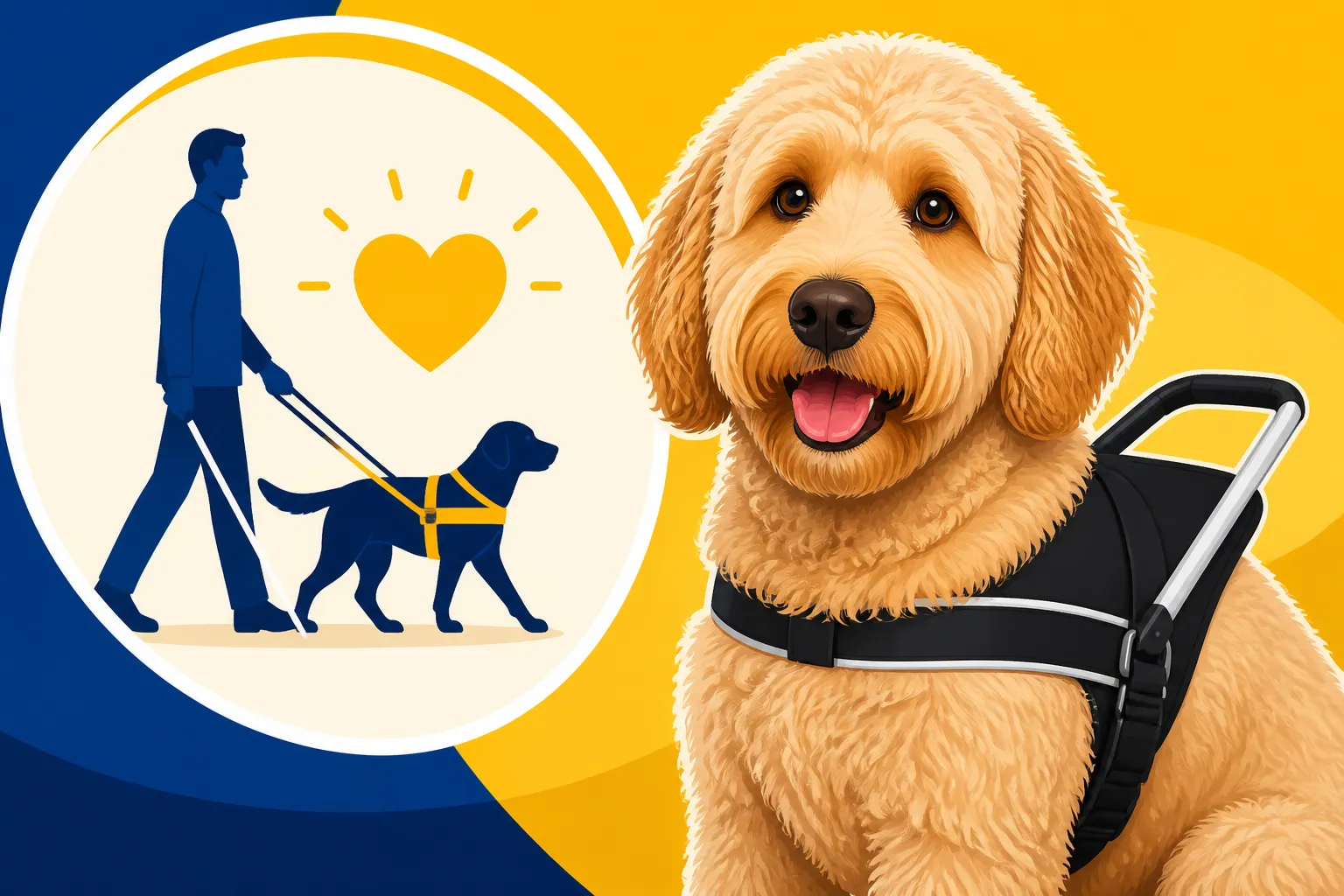
Imagine a person with profound visual impairment, relying entirely on a guide dog for their independence and safety. Now, imagine that person's spouse is severely allergic to dogs, making it impossible to share a home with a typical Labrador Retriever or Golden Retriever guide. This was the exact predicament faced by a woman in Hawaii who desperately needed a guide dog, but whose husband's allergies were a major barrier. Traditional guide dog breeds, while excellent in temperament and trainability, shed dander and hair, triggering allergic reactions. It was a heart-wrenching situation that demanded an innovative approach. Why a Guide Dog Had to Be Allergy Friendly
Conron's mandate was to find a solution that allowed this woman to gain her independence without compromising her husband's health. The existing guide dog programs were focused entirely on established breeds, and rightly so, as these breeds had proven their mettle over decades. However, none of them offered a truly "hypoallergenic" option. This specific client's need forced a re-evaluation of what a guide dog could be, rather than what it had always been. The thought was, if we can combine the best of both worlds – the working prowess of one breed with the allergy-friendly coat of another – we might just create a miracle.
Choosing the Parent Breeds: Labrador Retriever and Standard Poodle
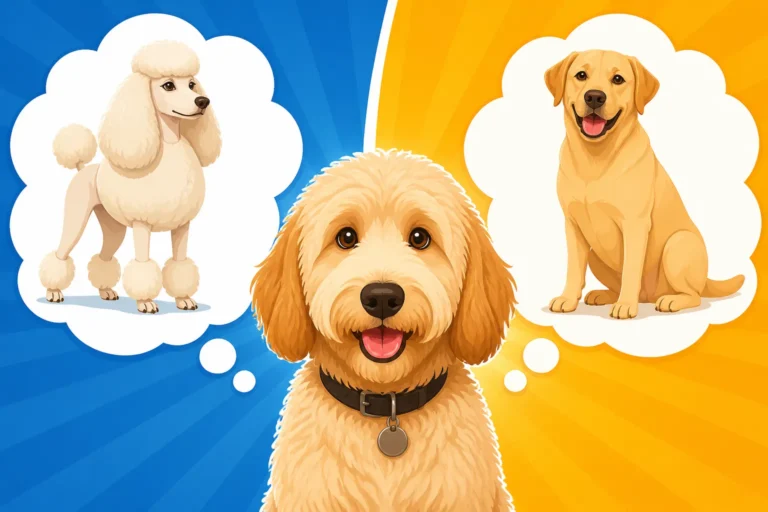
With the client's pressing need in mind, Conron turned his attention to two distinct breeds, each bringing crucial qualities to the table. On one side, the Labrador Retriever. This breed was, and largely still is, the gold standard for guide and assistance work. Labradors possess an inherent eagerness to please, an unflappable temperament, high intelligence, and a remarkable ability to focus despite distractions. They are robust, loyal, and possess the perfect medium size and strength to physically guide a person. They’re natural retrievers, calm under pressure, and highly biddable.
On the other side was the Standard Poodle. Often misunderstood as merely a show dog with fancy haircuts, the Standard Poodle is, in fact, an incredibly intelligent, agile, and robust working breed with a long history in water retrieving. Crucially, Poodles possess a single-layered, continuously growing coat that sheds minimally, making them far less likely to trigger allergies. Their intelligence is off the charts, making them highly trainable for complex tasks. Conron's idea was brilliantly simple: cross the Labrador's unwavering temperament and guide dog aptitude with the Poodle's intelligence and non-shedding coat. The hope was to create a dog that had the best traits of both parents – a biddable, intelligent guide dog that wouldn't cause allergic reactions.
The First Cross and Sultan's Arrival
The decision was made, and the first intentional breeding between a Labrador Retriever and a Standard Poodle took place. It was a pioneering moment, a step into the unknown. From this initial litter emerged a pup named Sultan, who would become the accidental poster child for a new phenomenon. Sultan embodied the early promise of the Labradoodle. He displayed many of the desired characteristics: a pleasant temperament, intelligence, and importantly, a coat that seemed to produce significantly less dander and hair than a purebred Labrador.
Sultan was sent to Hawaii to be trained and eventually paired with the client. His success was a beacon of hope, proving that the concept had merit. He was able to provide the essential service of a guide dog while allowing the client's husband to live comfortably in their home. This first success story, though singular, sparked immense interest and set the stage for the creation of what would become the Labradoodle phenomenon. The news of this unique, allergy-friendly guide dog spread like wildfire, capturing the imagination of the public and other assistance dog organizations. It showed the potential to fill a critical gap in assistance dog provision. What Happened to Sultan After Hawaii
The Desired Traits of a Guide Dog and the Labradoodle Promise
When considering a dog for guide work, it's not just about a friendly face or a clever trick. Guide dogs need a very specific set of characteristics that allow them to perform complex, life-saving tasks reliably, day in and day out. The Labradoodle, in its initial conception, promised to blend these crucial traits with an allergy-friendly package.
Temperament and Trainability: The Labrador's Gift
The Labrador Retriever is renowned for its calm and gentle nature, an almost inherent desire to please its human companions, and a robust, unflappable temperament. These traits are absolutely paramount for a guide dog. A guide dog must be able to remain composed in bustling city environments, navigate noisy public transport, and ignore countless distractions like other dogs, tempting smells, or dropped food. They need to be patient, adaptable, and emotionally resilient. A dog that is easily spooked, aggressive, or prone to extreme separation anxiety would be wholly unsuitable for guide work.
The Labrador's natural biddability and high intelligence also make them exceptionally trainable. They respond well to positive reinforcement and are quick to learn complex commands and sequences of behavior. This eagerness to work alongside humans, coupled with their inherent kindness, means they form deep bonds with their handlers, which is critical for trust and effective teamwork. The expectation with the Labradoodle was that this golden temperament, the "heart" of a guide dog, would be reliably passed down from the Labrador parent. They needed a dog that could be trained to What a Labradoodle Should Know by Six Months, and much more.
Intelligence and Focus: The Poodle's Contribution
While the Labrador brought the warmth and willingness, the Standard Poodle contributed significant intellectual horsepower and an impressive capacity for sustained focus. Poodles are not just smart; they are problem-solvers. In guide work, a dog isn't simply following commands; they are actively making decisions, such as refusing a command if it would lead their handler into danger (known as "intelligent disobedience"). This requires sophisticated cognitive abilities.
A Poodle's intelligence means they can master a vast array of commands and adapt quickly to new situations and environments. Their keen observational skills and ability to maintain focus, even during prolonged training sessions or in distracting public settings, were seen as invaluable assets. By combining the Labrador's biddability with the Poodle's sharp intellect, the hope was to create a guide dog that was not only willing but exceptionally capable of learning and executing the intricate tasks required for safe navigation. They envisioned a dog with both the physical prowess and mental acuity to handle anything.
The Hypoallergenic Coat Myth and Reality
Perhaps the most compelling, yet most misunderstood, aspect of the Labradoodle's creation was the pursuit of a hypoallergenic coat. The entire reason for Wally Conron's initial breeding experiment was to find a guide dog that wouldn't trigger allergies. The Standard Poodle's low-shedding, often curly coat seemed like the perfect solution. The theory was that by crossing a Poodle with a Labrador, you would get a dog with the guide dog traits but with a Poodle-like coat that minimized shedding and dander.
However, genetics are rarely so straightforward, especially in a first-generation cross. While some Labradoodles did inherit the desired low-shedding Poodle coat, many others inherited a coat closer to the Labrador's, or a mixed "fleece" coat that, while attractive, still required significant grooming and could still trigger allergies in sensitive individuals. This unpredictability in coat type became a major challenge for organizations aiming to consistently produce allergy-friendly guide dogs. The ideal was a dog with a consistent, non-shedding coat, like the "wool" or "fleece" coat types described in The Three Labradoodle Coats: Hair, Fleece and Wool, but achieving that reliably proved difficult without further selective breeding.
The Early Program and the Challenges Faced
The initial success of Sultan generated a wave of enthusiasm, both from the public and within guide dog organizations. It seemed like the perfect solution had been found. However, as the program progressed beyond a single dog, the complexities of breeding a new type of assistance animal began to surface.
Initial Successes and Public Fascination
Following Sultan's successful placement, the concept of the "Labradoodle" quickly captured the public's imagination. People saw the potential for a friendly, intelligent, and potentially allergy-friendly dog, not just for guide work, but as a family pet. This immediate fascination led to a surge in demand, far beyond the controlled environment of a guide dog program. Breeders, both responsible and less scrupulous, began to produce Labradoodles to meet this growing interest. The media dubbed them "designer dogs," a term that, while popular, sometimes overshadowed the serious, compassionate origins of the cross.
Guide dog programs initially rode this wave of excitement. The idea was to continue breeding these crosses, refining the lines to consistently produce dogs with the desired temperament, trainability, and coat characteristics. The potential impact on people with allergies who needed assistance dogs was enormous, offering a new path to independence that had previously been closed off. The Royal Guide Dogs Program Behind the Labradoodle truly believed in the potential.
Unpredictability of Early Generations (F1)
The biggest hurdle encountered in the early stages was the sheer genetic unpredictability of the first cross, known as F1 Labradoodles (50% Labrador, 50% Poodle). When you cross two distinct purebreds, the offspring can inherit any combination of traits from either parent. This means that within a single litter, you could have puppies with a wide range of coat types—from shedding Labrador-like coats to low-shedding Poodle-like coats—and equally varied temperaments. Some might be laid-back and focused, others might be high-energy and easily distracted.
For a guide dog program, this unpredictability was a massive problem. Guide dogs require an extremely consistent temperament, trainability, and physical soundness. Screening and training every single puppy from an F1 litter, only to find that a significant number didn't meet the stringent criteria, was incredibly time-consuming, resource-intensive, and ultimately inefficient. While some F1 Labradoodles were indeed excellent candidates, the inconsistency made large-scale production for guide work impractical. It highlighted that Whether an F1 Labradoodle Is Healthier Than a Multigen wasn't just about physical health, but consistency in all traits.
Scaling the Program and Breeder Challenges
As guide dog organizations attempted to scale up their Labradoodle programs, the challenges multiplied. It wasn't just about breeding a few successful individuals; it was about establishing a consistent breeding program that could reliably produce dozens, if not hundreds, of suitable guide dogs each year. This proved incredibly difficult with the F1 crosses. The varied outcomes meant a high "washout" rate, where dogs that didn't meet the exacting standards for guide work had to be rehomed.
Furthermore, the surge in public demand led to many individuals and commercial breeders jumping on the "Labradoodle" bandwagon without the same rigorous health testing, temperament screening, or ethical breeding practices employed by assistance dog organizations. This diluted the quality of the overall Labradoodle population, making it even harder for serious programs to find suitable breeding stock or to maintain public trust in the breed's potential. Wally Conron himself would later express deep regret for opening what he called "Pandora's Box," stating that the cross had gotten out of control. Why Conron Called the Labradoodle a Mistake
Beyond the First Generation: The Australian Labradoodle's Development
Recognizing the inherent unpredictability of the F1 cross, a dedicated group of breeders in Australia, often working independently of the original guide dog program, embarked on a more deliberate and structured breeding journey. Their goal was to stabilize the desired traits and create a truly consistent "breed" suitable for assistance work.
The Need for Greater Consistency
The F1 Labradoodle, while revolutionary, was a genetic lottery. To move beyond this, breeders understood they needed to establish lines that "bred true," meaning offspring would reliably inherit the desired coat, temperament, and health characteristics. This required moving past the initial F1 cross to F1b, F2, and eventually multi-generational (multigen) breedings, where Labradoodle was bred to Labradoodle, or a Labradoodle was bred back to one of its parent breeds (typically a Poodle for coat consistency).
This methodical approach aimed to concentrate the specific genes responsible for the low-shedding coat and the calm, intelligent temperament. It was a long-term project, focusing on careful selection of breeding dogs and extensive health testing to ensure the integrity of the lines. Without this dedication to consistency, the Labradoodle would remain a delightful but unpredictable crossbreed, unsuitable for the uniform demands of a guide dog program.
Adding Other Breeds to the Mix
To achieve even greater consistency in temperament, health, and especially coat type, some Australian breeders introduced a few other carefully selected breeds into their lines. This is a key differentiator that sets the "Australian Labradoodle" apart from the original F1 Labradoodle or subsequent generations of just Labrador and Poodle crosses. The breeds typically added included the Irish Water Spaniel and the Cocker Spaniel (both English and American Cocker Spaniels).
The Irish Water Spaniel was brought in for its non-shedding, dense curly coat and amiable disposition, potentially enhancing the "hypoallergenic" quality. The Cocker Spaniel contributed to coat softness, a smaller size variation, and a gentle nature. These infusions were not haphazard; they were deliberate attempts to fine-tune the genetic makeup, to "dial in" specific traits that were proving elusive in the simpler Labrador x Poodle cross. This careful blending of multiple breeds over many generations created a more robust genetic foundation, intended to reduce variability. The Four Breeds Inside an Australian Labradoodle
The Emergence of the Multigen Australian Labradoodle
Through this meticulous process of multi-generational breeding, involving carefully selected foundation dogs and the occasional infusion of other breeds, the "Australian Labradoodle" emerged. This is not just any Labradoodle; it's a specific type bred for many generations (multigen) from Australian Labradoodle to Australian Labradoodle, with a documented pedigree tracing back to the original foundational breeds. The aim was to create a dog that was predictable in terms of its characteristics—a consistent, low-shedding coat (typically fleece or wool), a balanced temperament ideal for assistance work or family life, and robust health.
The intention was to reach a point where puppies from an Australian Labradoodle litter would consistently exhibit the desired traits, making them much more reliable candidates for service work. While the term "Australian Labradoodle" is often used broadly, true Australian Labradoodles come from these multi-generational lines, managed by dedicated associations focused on breed development and consistency. This structured approach contrasted sharply with the more casual breeding of early F1 Labradoodles, aiming for a consistent outcome every time.
What Guide Dog Schools Look For Today (and why Labradoodles changed course)
Despite the promising origins, the vast majority of guide dog schools globally have largely moved away from using Labradoodles as primary candidates for their programs. Understanding why requires a closer look at the incredibly high standards and rigorous requirements these organizations maintain.
Essential Qualities for a Successful Guide Dog
Guide dogs are not pets; they are highly specialized working animals whose job it is to ensure the safety and independence of their human partners. This demands a suite of extraordinary qualities:
- Impeccable Temperament: A guide dog must be calm, confident, and utterly unflappable in every conceivable situation – bustling city streets, quiet libraries, crowded stores, loud construction sites. Any sign of nervousness, aggression, or over-excitement is a disqualifier.
- High Trainability and Intelligence: They need to learn hundreds of commands and cues, understand complex sequences, and, crucially, exhibit "intelligent disobedience," meaning they must refuse a command if it puts their handler in danger (e.g., refusing to cross a street if a car is coming, even if commanded to "forward").
- Strong Work Ethic and Focus: Guide dogs must be intrinsically motivated to work and maintain focus for extended periods, ignoring distractions that would tempt a typical pet dog.
- Excellent Health and Physical Soundness: They must be free from genetic conditions that could impair their ability to work, such as hip or elbow dysplasia, eye diseases, or conditions like Exercise Induced Collapse and the Labradoodle's Labrador Half. A guide dog needs to work for many years without significant health issues or physical discomfort.
- Appropriate Size and Strength: They need to be large enough to safely guide an adult human, but not so large as to be cumbersome in tight spaces.
These are incredibly high bars, and only a small percentage of even purebred Labradors and Golden Retrievers, specifically bred for these programs, ever make it through the training. What Guide Dog Schools Look For in a Labradoodle delves into this further.
The Difficulties of Consistency in a Crossbreed Program
While the Australian Labradoodle breeding programs aimed for consistency, the reality of working with a developing crossbreed, even a multi-generational one, presented inherent challenges for large-scale guide dog organizations. Achieving the extremely uniform temperament, health, and working aptitude required for guide dogs across hundreds of puppies annually is incredibly difficult. Even with the best intentions and selective breeding, genetic variability in crossbreeds can still be higher than in established purebred lines that have been honed for generations for specific working traits.
This variability meant that guide dog schools would likely have a higher "washout" rate with Labradoodles compared to their highly successful purebred Labrador and Golden Retriever programs. A higher washout rate means more resources (time, money, trainers) are invested in dogs that ultimately don't make the cut, making the program less efficient. For organizations that rely on donations and must be highly accountable for their results, this efficiency is paramount.
The Shift Back to Established Breeds
Ultimately, most guide dog organizations, after initially exploring the Labradoodle's potential, concluded that the consistency and predictability offered by purebred Labrador Retrievers and Golden Retrievers were superior for their demanding programs. These purebred lines have been developed and refined over decades, specifically for their working traits, health, and temperament suitability for assistance work. Breeding programs focused on these breeds can predict with much greater accuracy which puppies will possess the necessary qualities.
It became a question of pragmatism and proven success. While the original problem of allergies was significant, the difficulty of consistently producing guide-quality dogs from a crossbreed, even a multi-generational one, outweighed the benefits. Why Assistance Programs Moved Away From the Labradoodle is a crucial piece of this puzzle. The organizations understood the initial need, but the practicalities of scaling a consistent, high-performing program led them back to what they knew worked best.
The Labradoodle's Legacy: A Pet, Not Primarily a Guide Dog
Despite its departure from mainstream guide dog programs, the Labradoodle has carved out an incredibly successful and beloved niche as a family companion. The qualities that made it attractive to guide dog breeders—intelligence, trainability, and often a low-shedding coat—have made it highly sought after by pet owners.
Thriving as a Family Companion
The Labradoodle, whether an F1 or a multi-generational Australian Labradoodle, possesses a wonderful combination of traits that make it an ideal family pet. They are generally intelligent, eager to please, and playful, fitting seamlessly into active households. Their friendly disposition makes them great with children and other pets. Many owners appreciate their energy and enthusiasm, which can be channeled into various dog sports or simply long walks and games of fetch. The intelligence inherited from both the Labrador and Poodle means they are highly responsive to training, often excelling in obedience classes.
Furthermore, for families where mild allergies are a concern, a well-bred Labradoodle with a fleece or wool coat can indeed offer a comfortable living situation. While no dog is truly 100% hypoallergenic, many Labradoodles do shed significantly less than other breeds, reducing dander and hair in the home. This makes them a viable option for many who previously couldn't consider dog ownership. The Household a Labradoodle Actually Suits is truly diverse, from active singles to bustling families.
Owner Training and Therapy Work
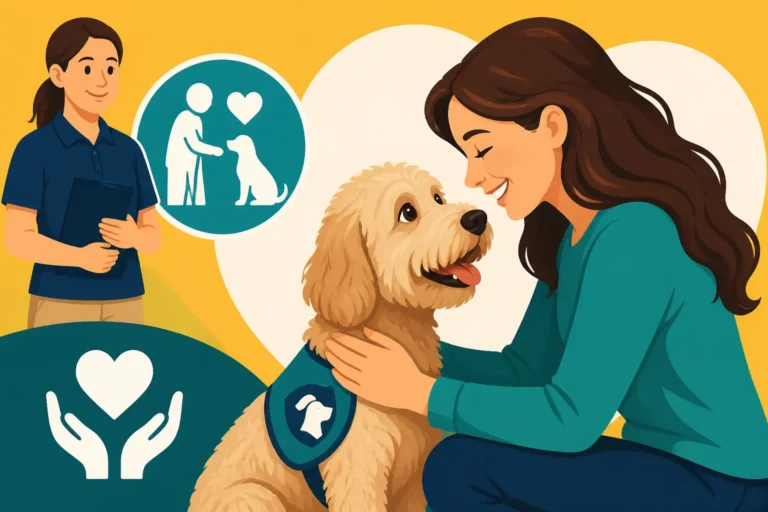
While large organizations may have stepped back from breeding Labradoodles for guide work, individual Labradoodles continue to shine in other forms of assistance and therapy work. Their innate intelligence and compassionate nature make them excellent candidates for owner-trained service dogs, performing tasks such as retrieving dropped items, providing deep pressure therapy, or alerting to certain medical conditions. This often requires significant dedication from the owner, who might use resources like online training programs from BAXTER & Bella to guide them through the process.
Many Labradoodles also excel as therapy dogs, visiting hospitals, nursing homes, and schools to provide comfort and companionship. Their gentle demeanor, tolerance for handling by strangers, and ability to remain calm in unfamiliar environments are highly valued in these roles. A therapy dog Labradoodle might be the highlight of a patient's day, offering a comforting presence and a soft coat to stroke. What a Therapy Dog Visit Asks of a Labradoodle emphasizes these calming qualities.
The Continued Demand for Allergy-Friendly Dogs
The initial demand for an allergy-friendly guide dog, which sparked the Labradoodle's creation, hasn't disappeared. In fact, the need for dogs that can comfortably co-exist with allergy sufferers is stronger than ever. This continues to drive the popularity of Labradoodles and other "doodle" crosses. Families seek out these breeds hoping to welcome a canine companion without the constant struggle of allergic reactions.
For many, the Labradoodle represents the dream of dog ownership without the sneezes and itchy eyes. While careful research into coat types and breeder practices is still essential, the Labradoodle has undeniably opened doors for countless individuals and families to experience the joy of having a dog that might not have been possible otherwise. Finding reliable grooming tools, for example, is essential for these coat types, and platforms like Amazon offer a wide range of brushes and combs to manage their unique needs.
Here's a comparison of ideal guide dog traits versus how Labradoodles typically measure up:
| Trait Category | Ideal Guide Dog Standard | Typical Labradoodle Outcome (Pet/Therapy Potential) |
|---|---|---|
| Temperament | Consistently calm, confident, unflappable, biddable | Generally friendly, intelligent, adaptable; can vary |
| Trainability | Highly intelligent, focused, learns complex tasks quickly | Very intelligent, eager to please, quick learner; requires consistent training |
| Coat Type | Truly non-shedding, minimal dander (hypoallergenic) | Variable: hair (shedding), fleece (low-shedding), wool (non-shedding); often requires significant grooming |
| Health & Soundness | Extremely robust, free from hereditary conditions | Generally healthy, but parental health testing is crucial due to potential inherited conditions from both parent breeds |
| Size & Strength | Consistent, appropriate size and physical structure for guiding an adult | Variable (Miniature, Medium, Standard); physical structure generally good |
| Work Ethic/Focus | Innately driven to work, highly resistant to distractions | Enjoys work, can focus, but more prone to typical pet distractions without specific training |
| Consistency Across Litters | Extremely high predictability of traits across generations | Moderate to high predictability in multi-generational lines, but still more variable than purebreds bred for generations for specific purpose |
| Suitability for Large-Scale Programs | Excellent, efficient production of suitable dogs | Challenging due to higher variability and washout rates, less efficient for high-volume programs |
Disclaimer
This article is for general informational purposes only and does not constitute professional advice. Laws, prices and regulations vary by location and change over time. Consult a qualified professional for guidance on your specific situation.