Whether Two Fleece Parents Give a Fleece Labradoodle
It's a common and totally understandable hope when you're dreaming of a Labradoodle puppy: you envision that soft, wavy, low-shedding fleece coat. Many prospective owners are told that if both parent Labradoodles have that ideal fleece coat, their puppies are practically guaranteed to inherit the same. The reality, however, is a little more nuanced and can lead to real disappointment if you're not prepared. This guide will dive into the fascinating genetics behind Labradoodle coats, explaining why even with two fleece-coated parents, a fleece-coated puppy isn't always a sure thing, and what that means for families navigating the puppy search.
Understanding Labradoodle Coat Genetics
The world of Labradoodle coats is far more intricate than simply "curly" or "straight." It’s a complex interplay of several genes that determine everything from whether your pup has those adorable "furnishings" (the beard and eyebrows) to the actual texture and shedding level of their fur. Understanding these genetic basics is key to grasping why coat types can still vary even when parent dogs look identical.
The Furnishings (F) Gene and Its Impact
When we talk about a "Labradoodle coat," what most people picture is that distinct non-shedding or low-shedding look, often with a shaggy face, beard, and eyebrows. This look is primarily controlled by the Furnishings gene, often denoted as the 'F' locus. Dogs with at least one dominant 'F' allele will have furnishings, meaning their hair grows longer on their face and legs, and they are typically low-shedding. A dog that is 'FF' (homozygous for furnishings) will pass a furnishings gene to all offspring, while an 'Ff' dog (heterozygous) has a 50% chance of passing it on. Dogs that are 'ff' (lacking furnishings) are often referred to as "improper coated" and will shed more like a Labrador, lacking the characteristic doodle beard. This gene is really the foundation for any doodle coat, whether it's fleece or wool. You can learn more about its importance in The Furnishings Gene Behind a Labradoodle's Beard. Without furnishings, a dog won't have the typical "doodle" coat, regardless of curl.
The Curl (KRT71) Gene and Coat Texture
Beyond the presence of furnishings, the texture of a Labradoodle's coat – whether it's hair, fleece, or wool – is largely influenced by the Curl gene, known as the KRT71 gene. This gene dictates the degree of curl in the hair shaft.
- "cc" (no curl): A dog with two recessive 'c' alleles at this locus will have a straight or very slightly wavy coat, even if they have furnishings. This is often seen in some F1 Labradoodles, where the Labrador parent contributes "cc."
- "Cc" (wavy/fleece curl): A dog with one dominant 'C' and one recessive 'c' allele will typically express a wavy or loose spiral curl, which is the hallmark of a fleece coat. This is often the most desired coat type, as detailed in What a Fleece Coat Feels Like on a Labradoodle.
- "CC" (tight/wool curl): Two dominant 'C' alleles usually result in a tighter, dense, spiral curl, characteristic of a wool coat, much like a Poodle's.
It’s the interaction between the Furnishings gene and the Curl gene that truly defines the different Labradoodle coat types. A dog could have furnishings but a straight coat, or furnishings with a very tight curl. The combination creates the diverse range we see.
The Role of Multiple Genes in Coat Type
It’s tempting to think of coat genetics as a simple "on/off" switch, but it's much more complex. While the Furnishings and Curl genes are the major players, other modifier genes can influence the density, length, and texture of the coat. This is why even within a litter, you might see subtle variations in curl or wave, even if all puppies carry the same primary coat genes. Environmental factors and nutrition can also play a minor role in the overall health and appearance of the coat, though genetics are the primary determinant. This multifaceted genetic inheritance is precisely why Whether an F1 Labradoodle's Coat Is a Gamble is a topic of much discussion; the more varied the genetic background, the less predictable the outcome.
The Fleece Coat: Desired but Complex
The fleece coat is often the holy grail for Labradoodle enthusiasts. It strikes that perfect balance between softness, manageability, and low-shedding properties. However, its very desirability sometimes leads to assumptions about its inheritance that don't quite align with genetic reality.
What Defines a Fleece Coat in a Labradoodle
A fleece coat is characterized by its soft, wavy, or loose spiraling texture. It's often described as feeling like cashmere or angora wool. Unlike the tight, dense curls of a wool coat, fleece has a more open, flowing appearance. It should still be low-shedding, which is a huge draw for allergy sufferers or those who simply prefer less dog hair around the house. When properly cared for with regular brushing (remember that Brushing a Labradoodle to the Skin, Not the Surface is crucial), it's a beautiful and functional coat. It's truly a distinctive feature that many owners adore for both its feel and its aesthetic.
The Appeal of the Fleece Coat for Owners
The popularity of the fleece coat isn't just about looks. For many families, it represents the ideal blend of the Poodle's low-shedding qualities and the Labrador's friendly, approachable appearance. Owners often choose Labradoodles specifically hoping for this coat type because it's generally considered easier to maintain than a dense wool coat (though it still requires significant grooming, especially during The Coat Change That Hits a Labradoodle at Nine Months), and is less likely to trigger allergies than a hair coat. The promise of fewer allergens and a manageable texture makes it incredibly appealing, leading many to specifically seek out breeders who specialize in fleece-coated dogs.
When Two Fleece Parents Don't Guarantee Fleece
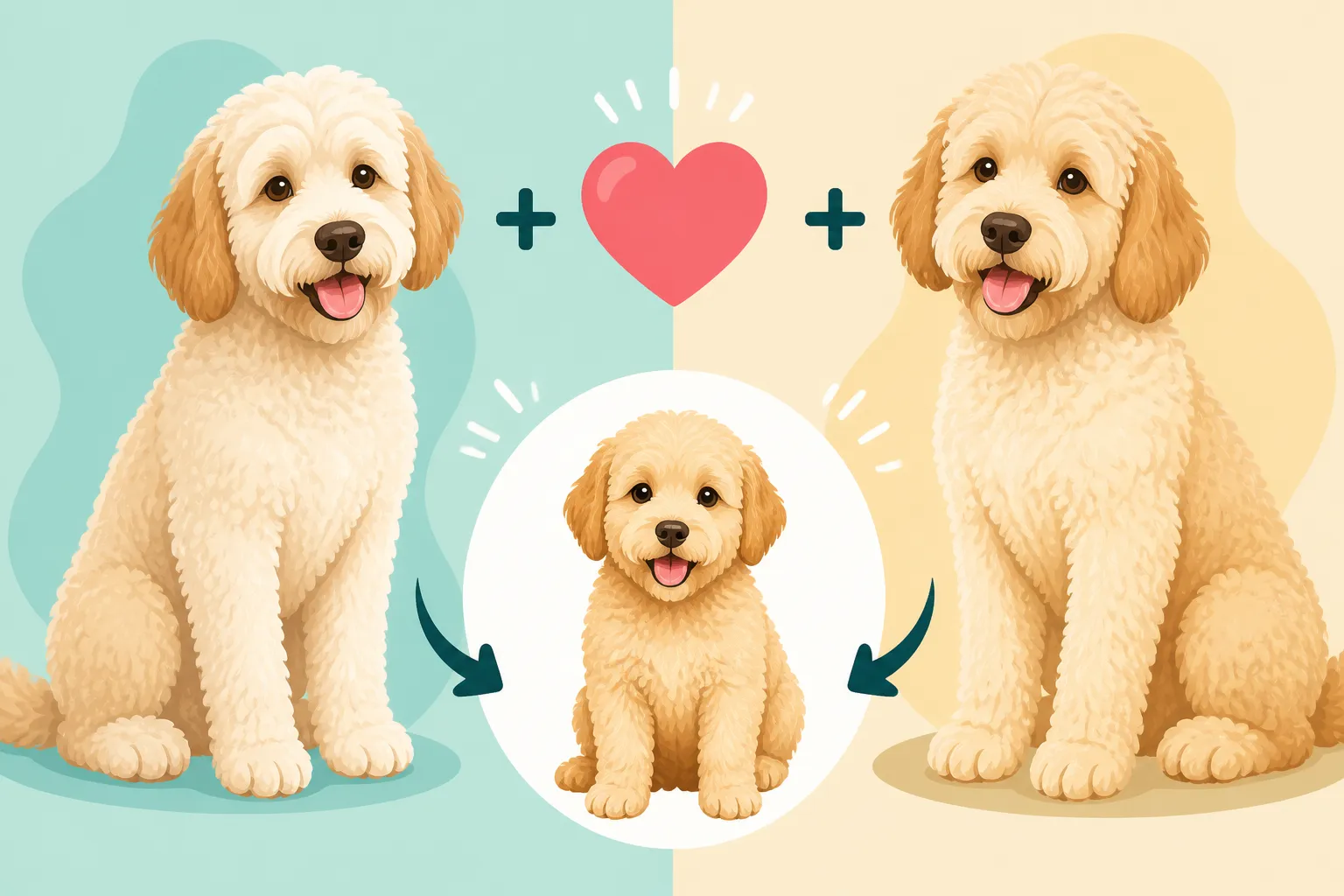
Here's where the genetic rubber meets the road. Even if both parent Labradoodles display beautiful fleece coats, it does not guarantee that every single puppy in their litter will also be fleece-coated. Why? Because a fleece coat is often the result of a heterozygous genetic combination for curl (Cc) and typically a homozygous dominant for furnishings (FF), or sometimes heterozygous for furnishings (Ff).
Let's break down the curl gene (KRT71):
- A fleece-coated dog is often 'Cc' for curl (one copy of the dominant curl gene, one recessive).
- If both parents are 'Cc', they each have a 50% chance of passing on the 'C' gene and a 50% chance of passing on the 'c' gene.
- When two 'Cc' dogs are bred, their offspring can inherit:
- 'CC' (25% chance): These puppies would likely have a tighter, wool coat.
- 'Cc' (50% chance): These puppies would have a fleece coat.
- 'cc' (25% chance): These puppies would have a straighter, hair-like coat.
So, even from two fleece-coated parents (who are 'Cc'), there's a 25% chance of getting a puppy with a wool coat and a 25% chance of getting one with a straighter, hair-like coat, in addition to the 50% chance of getting another fleece-coated puppy.
Similarly, with furnishings:
- Most fleece-coated Labradoodles will be 'FF' or 'Ff'.
- If both parents are 'Ff', there's a 25% chance of an 'ff' puppy (improper coat), which sheds heavily.
- Reputable breeders strive to breed 'FF' dogs to ensure all puppies have furnishings, but it's not always simple, especially in earlier generations. This is why What an Improper Coat Means on a Labradoodle is something breeders actively work to avoid.
This genetic variability explains why even the most experienced breeders might get a mix of coat types in a litter, despite careful pairing. It's not a fault in their breeding, but rather the natural expression of Mendelian genetics.
Navigating Predictability with DNA Testing
Given the complexities of Labradoodle coat genetics, responsible breeders rely on modern science to increase the predictability of their litters. DNA testing for coat genes is an invaluable tool that helps breeders make informed decisions.
How DNA Testing Helps Predict Puppy Coats
Genetic testing for coat traits is readily available and provides breeders with a clear picture of what genes their breeding dogs carry. For the Labradoodle, the key tests usually include:
- Furnishings (F locus): To determine if a dog is FF, Ff, or ff.
- Curl (KRT71): To determine if a dog is CC, Cc, or cc.
- Shedding gene (MC5R): While often correlated with furnishings, this gene can provide additional insights into shedding potential.
By testing both parent dogs, a breeder can predict the probability of certain coat types appearing in their puppies. For example, if a breeder wants to ensure all puppies have furnishings, they would need to ensure at least one parent is 'FF'. If both parents are 'Ff', they know there's a risk of 'ff' puppies. This proactive approach helps breeders minimize surprises and better manage buyer expectations. You can even find kits on sites like Chewy or Amazon, though breeders typically use specialized labs. What a Coat DNA Panel Costs on a Labradoodle is an investment that truly helps improve predictability.
Interpreting Coat Type Test Results
Understanding the results of these genetic tests is crucial for a breeder. Here’s a simplified look at how a breeder might interpret parent results to predict puppy coats:
| Parent 1 Curl Genotype | Parent 2 Curl Genotype | Possible Puppy Curl Genotypes | Probability of Fleece (Cc) | Probability of Wool (CC) | Probability of Hair (cc) |
|---|---|---|---|---|---|
| CC (Wool) | CC (Wool) | CC | 0% | 100% | 0% |
| CC (Wool) | Cc (Fleece) | CC, Cc | 50% | 50% | 0% |
| CC (Wool) | cc (Hair) | Cc | 100% | 0% | 0% |
| Cc (Fleece) | Cc (Fleece) | CC, Cc, cc | 50% | 25% | 25% |
| Cc (Fleece) | cc (Hair) | Cc, cc | 50% | 0% | 50% |
| cc (Hair) | cc (Hair) | cc | 0% | 0% | 100% |
As you can see from this table, two fleece-coated parents (both 'Cc') still have a 50% chance of producing fleece, but also a 25% chance of wool and a 25% chance of a straighter, hair-like coat. This explains the genetic reality behind the variations. The goal for many breeders is to produce a high percentage of fleece coats, which often means selecting breeding pairs strategically based on these genetic markers.
The Breeder's Role in Coat Type Selection
A truly reputable Labradoodle breeder doesn't just breed two good-looking dogs and hope for the best. They carefully select their breeding stock based on health testing, temperament, and coat genetics. By utilizing DNA panels, they can assess the likelihood of producing specific coat types and strive to improve predictability. While no breeder can offer a 100% guarantee on every single trait (nature always has a way of throwing a curveball!), those who understand and apply genetic principles are much more likely to consistently produce puppies with desirable fleece coats. They can tell you with confidence whether their breeding pair is likely to produce only fleece and wool, or if there's a chance of hair coats, too. This transparency is crucial.
What to Expect When Choosing a Puppy
So, you're looking for that perfect fleece-coated Labradoodle. Knowing the genetics is one thing, but how does that translate to the actual puppy selection process? It's about setting realistic expectations and working with a breeder you trust.
Spotting Coat Types in a Labradoodle Puppy
While DNA testing provides the most accurate prediction, experienced breeders can often make educated guesses about a puppy's coat type even at a young age.
- Furnishings: The presence of furnishing can usually be seen as early as a few weeks old, with longer hair growing on the muzzle and around the eyes. Puppies lacking furnishings ("improper coats") will have smoother faces, more like a Labrador puppy.
- Curl: Distinguishing between fleece and wool can be trickier in young puppies. Fleece coats often start as a loose wave, while wool coats might show tighter curls from an early age. Hair coats will be noticeably straighter and often coarser.
- Texture: Feeling the coat can give clues. Fleece is soft and fine, while wool is denser and might feel a bit more coarse or cotton-like.
However, remember that a puppy's coat is still developing. Whether a Labradoodle Puppy's Coat Predicts the Adult One is often a tricky question, as the texture and curl can change significantly during the "coat change" phase, typically around 6-12 months of age. What looks like a loose fleece at 8 weeks might tighten up, or soften out. This transformation is a common surprise for new owners.
The Importance of a Reputable Breeder for Coat Consistency
This is where working with a reputable breeder truly pays off. A good breeder will:
- Perform DNA testing: They will have tested their breeding dogs for coat genes (Furnishings, Curl) and be able to show you the results.
- Understand genetics: They can explain why they expect certain coat types in a litter based on the parentage.
- Be transparent: They won't make false promises. If there's a chance for different coat types, they'll tell you upfront. They understand that Whether a Labradoodle Is Truly Hypoallergenic is also linked to coat type, and proper coat generation is key for allergic families.
- Offer guidance: They can help you assess the puppies' developing coats and offer their professional opinion on what to expect as they mature.
- Prioritize health and temperament: Beyond coats, a responsible breeder focuses on overall health, temperament, and proper socialization, which are far more important in the long run. Good breeders use high-quality nutrition, perhaps from a brand like Ollie, to support overall development, which can indirectly contribute to a healthy coat.
Never choose a breeder based solely on coat promises. Always prioritize health clearances, ethical practices, and open communication.
Preparing for Coat Variability, No Matter What
Ultimately, bringing a Labradoodle into your home means embracing a bit of genetic variation. Even with the best efforts and advanced testing, dogs are living creatures, not manufactured goods. If you absolutely must have a specific coat type for allergy reasons, discuss this extensively with your breeder and consider older puppies whose coats are more developed, or even adult dogs from a rescue where the coat is fully mature. While you might go in hoping for that perfect fleece, be prepared for the possibility of a slightly curlier wool or a wavier, slightly less dense fleece.
The most important thing is to be ready for the grooming demands of any Labradoodle coat. They all require regular brushing, professional grooming every 6-8 weeks, and diligent care to prevent matting. Whether you're purchasing specialty brushes from Chewy or looking for grooming tutorials on Amazon, being prepared for the maintenance is essential. A healthy, loved Labradoodle, regardless of the exact curl pattern, will bring immense joy to your family.
Disclaimer
This article is for general informational purposes only and does not constitute professional advice. Laws, prices and regulations vary by location and change over time. Consult a qualified professional for guidance on your specific situation.