Whether a Labradoodle Mats Overnight During the Change
It's a common and utterly frustrating experience for Labradoodle owners: you brush your beloved companion thoroughly one evening, confident their beautiful coat is tangle-free, only to wake up the next morning to discover a stubborn mat seemingly appeared out of thin air. This guide is here to unravel the mystery of the "overnight" mat, explain why the Labradoodle's coat change makes this phenomenon so prevalent, and equip you with the knowledge and tools to keep your doodle's luscious locks healthy and mat-free, even during this challenging phase.
Understanding the Labradoodle Coat Change
The Labradoodle's coat is one of its most defining features, but it's also a source of endless fascination and, frankly, a lot of work. Unlike many other breeds that have a simple puppy coat and then an adult coat, the Labradoodle often undergoes a significant transformation that can catch even experienced owners off guard. This "coat change" isn't just about growing longer hair; it's a complex process where the softer, often straighter puppy fur is gradually replaced by the denser, sometimes curlier, adult coat.
When the Coat Change Happens
The infamous Labradoodle coat change typically kicks into high gear when your puppy is around nine to fourteen months old. This isn't a hard and fast rule, of course; like teenagers, every dog develops at its own pace. Some Labradoodles might start showing signs as early as six months, while others might hold onto their puppy fluff a bit longer, closer to eighteen months. It’s a rite of passage for Labradoodle ownership, marking the transition from adorable, relatively low-maintenance puppy fuzz to the glorious, but demanding, adult coat. Owners often describe it as a time when their dog's coat seems to explode in volume and tangle with bewildering speed. This period can last for several weeks or even a few months, depending on the individual dog and their specific coat type. Understanding that this is a natural, albeit challenging, phase is the first step in managing it effectively.
What's Actually Happening During the Change
Imagine a construction site where the old building is being demolished while the new one is simultaneously being erected in its place. That's essentially what's happening on your Labradoodle's skin. The fine, soft puppy hair that was so easy to manage is shedding out, but instead of simply falling off, it's getting trapped within the emerging, denser adult coat. This trapped puppy fur is the primary culprit behind the sudden, seemingly impossible mats. Because the adult coat often has more texture – from wavy fleece to tight curls – it acts like Velcro, clinging to the shedding puppy hairs and forming knots and tangles at an accelerated rate. It’s a perfect storm for matting, especially in high-friction areas or places where the coat is particularly thick. This is why What Happens to a Labradoodle's Coat at Nine Months is such a critical topic for new owners to grasp. If you don't actively work to remove those shedding puppy hairs, they'll weave themselves into felted mats faster than you can say "doodle."
The Truth About "Overnight" Matting
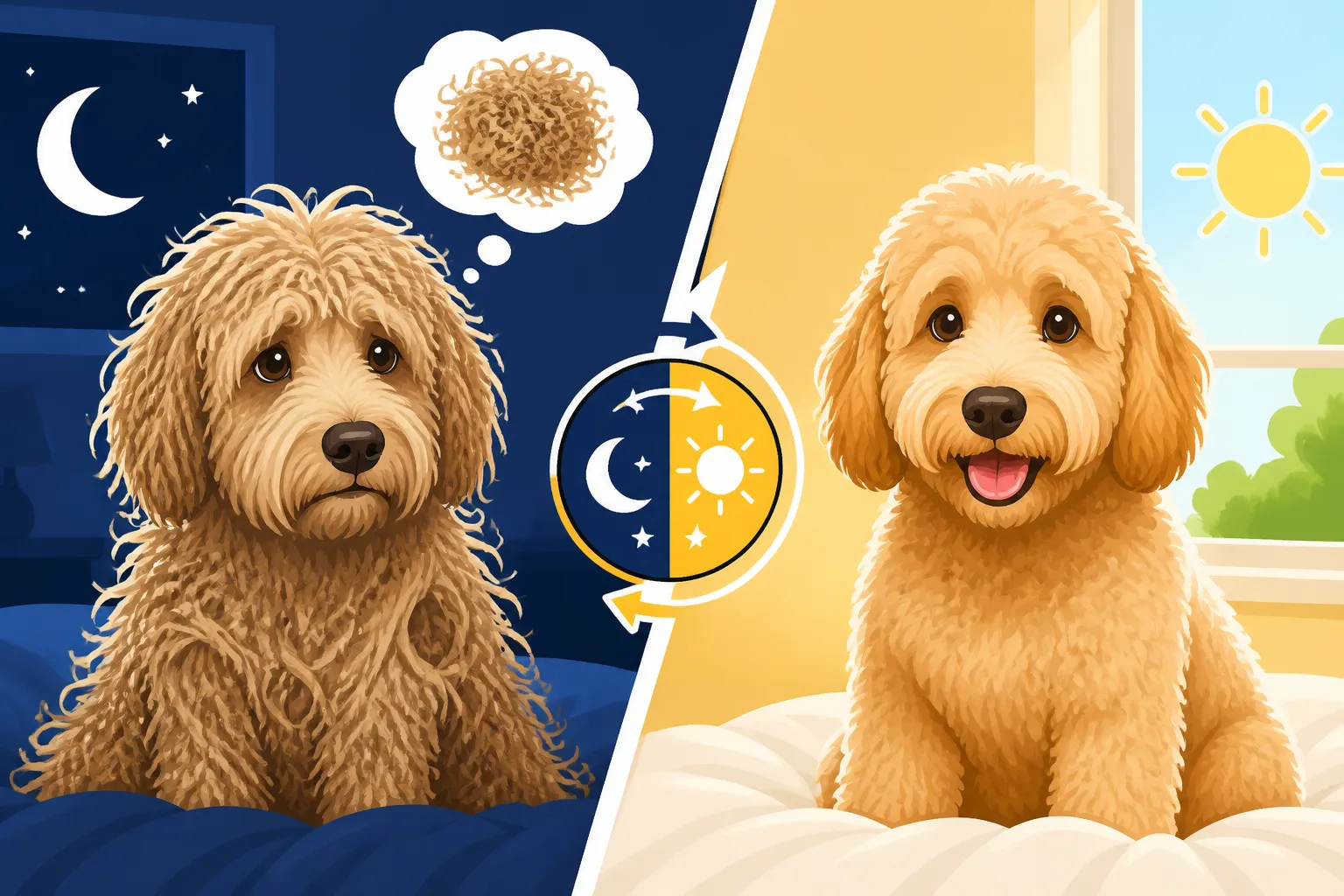
That feeling of waking up to a matted dog after a diligent brushing session the night before? It's not your imagination, nor is it necessarily a sign you did anything wrong. It's a testament to the sheer efficiency of a Labradoodle's coat in forming tangles during its change. While a mat doesn't literally appear from nothing in a few hours, the conditions can be ripe for rapid development.
Why it Feels Like Overnight
The "overnight" sensation of matting is less about instantaneous knot formation and more about how quickly small tangles can escalate into full-blown mats when the puppy coat is shedding into the adult coat. What might have been a minor tangle deep within the coat on Sunday evening can become a dense, painful mat by Monday morning, especially if your dog has been sleeping, rolling, or playing. During the coat change, the shedding puppy hair creates a layer of loose fur that acts like glue. Any movement, rubbing, or pressure – like lying down to sleep, wrestling with another dog, or even just wearing a harness – can compress this loose hair with the incoming adult coat, creating a felt-like mass. These mats often start close to the skin, making them incredibly difficult to detect with a superficial brush on the top layer of fur. This is why Getting a Labradoodle Through Its Coat Change requires a vigilant, proactive approach.
Factors That Accelerate Matting
Several factors can turn a minor tangle into a severe mat in what feels like moments. Humidity is a big one; moisture in the air can cause the coat to fluff up and tangle more easily, or even exacerbate existing small knots. Think about how human hair behaves on a humid day. Similarly, water exposure, like a swim in a lake or even a bath that isn't followed by thorough drying and brushing, can tighten mats to an almost irreversible degree. Friction is another major culprit. Areas where the coat rubs, such as behind the ears, under the armpits, on the chest where a harness sits, or around the tail and hind legs from sitting, are notorious for quick mat formation. Even the simple act of sleeping can create enough friction to compact shedding hair into a mat. Lastly, if your brushing technique isn't reaching all the way to the skin – a common mistake for new Labradoodle owners – you're leaving a dense layer of loose hair near the skin that will inevitably mat. Without proper Brushing a Labradoodle to the Skin, Not the Surface, you're just gliding over the problem.
Preventing Mats During the Coat Change
The good news is that while the coat change is a challenging period, mats are largely preventable with the right tools and a consistent, dedicated grooming routine. It's all about staying ahead of the tangles, rather than trying to fix them once they've taken hold.
Establishing a Robust Grooming Routine
During the coat change, "robust" isn't just a suggestion; it's a necessity. You need to commit to daily brushing, sometimes twice a day for particularly dense or shedding coats. This isn't a quick once-over; it's a thorough session known as "line brushing." This technique involves parting the fur down to the skin and brushing small sections, working from the bottom up, ensuring every single strand is free of tangles from root to tip. It’s time-consuming, yes, but it’s the only way to effectively remove the shedding puppy coat before it fuses with the adult hair. Many owners find a dedicated grooming table or a non-slip surface helpful to keep their dog still and comfortable during these sessions. Consistency is key; skipping even one day during the peak of the coat change can lead to significant matting.
The Right Tools for the Job
Having the correct grooming tools makes all the difference. For Labradoodles, especially during the coat change, a high-quality slicker brush and a sturdy metal comb are non-negotiable. The slicker brush, with its fine, wire bristles, is excellent for working through tangles and removing loose undercoat. Follow up with a long-toothed metal comb to ensure you've reached all the way to the skin. If the comb glides through smoothly, you're golden. If it snags, you've found a tangle and need to go back in with the slicker. Many pet supply retailers, like Chewy and Amazon, offer a wide array of options for these essential tools, often with reviews from other doodle owners. You might also find a detangling spray helpful to reduce friction and ease the brush through the coat, especially if you have a wool or dense fleece-coated Labradoodle. Knowing The Slicker, Rake and Comb a Labradoodle Takes is crucial for efficient grooming.
Here's a quick overview of essential grooming tools:
| Tool | Purpose | Key Feature | Best Used For |
|---|---|---|---|
| Slicker Brush | Detangling, removing loose hair, fluffing coat | Fine, bent wire bristles | All coat types, daily brushing, initial detangling |
| Metal Comb | Checking for mats, line brushing, finishing | Long, widely spaced teeth on one end, finer on other | Detecting mats at the skin, thorough brushing |
| Pin Brush | General brushing, fluffing, longer coats (less effective for mats) | Smooth, widely spaced pins | Longer hair, sensitive areas, gentle brushing |
| Detangling Spray | Reducing friction, easing knot removal | Lubricates hair strands | Pre-brushing, stubborn tangles |
| Force Dryer | Quickly drying, blowing out loose undercoat | Powerful, concentrated airflow | After baths, blowing out shedding hair (optional) |
Professional Help and Resources
Don't be afraid to lean on the professionals! A good professional groomer is an invaluable resource, especially during the coat change. Schedule regular grooming appointments – every 6-8 weeks is typical, but during the coat change, you might need to go every 4 weeks. They can not only tackle any burgeoning mats you've missed but also teach you proper techniques for at-home care. Many groomers offer "puppy intro" sessions to get young Labradoodles comfortable with the grooming process early on. Additionally, there are fantastic online resources and YouTube tutorials demonstrating proper line brushing and mat removal specific to doodle coats. Investing in education now will save you a lot of heartache (and potentially high grooming bills) later. A professional can quickly identify areas like Mats Behind a Labradoodle's Ears or in the armpits that are easy to overlook.
What to Do if Mats Form
Despite your best efforts, sometimes mats happen. It’s not the end of the world, but your approach to handling them can make a huge difference in your dog's comfort and coat health.
Gentle Detangling Techniques
For small, superficial mats that are not tight to the skin, you can try to detangle them yourself. First, spray the mat generously with a detangling spray (you can find good options on Amazon or Chewy). Using a mat splitter or the wide teeth of your metal comb, gently tease apart the outer edges of the mat, working only a few hairs at a time. Always hold the hair at the base, close to the skin, to prevent pulling and causing pain. Work slowly and patiently, never yanking or pulling. If your dog shows any signs of discomfort, stop immediately. It’s better to leave a mat than to make the grooming experience traumatic. Remember, if you can’t get your comb through after a few gentle attempts, it’s likely too tight for DIY removal.
When to Call the Pros
Knowing when to throw in the towel and call a professional groomer is crucial for your Labradoodle's well-being. If a mat is tight to the skin, large, or located in a sensitive area (like the armpits, groin, or behind the ears), it’s almost always best to let a professional handle it. Attempting to pull out a tight mat yourself can be incredibly painful for your dog, potentially causing skin irritation, bruising, or even tearing the skin. A groomer has specialized tools, techniques, and experience to remove mats as safely and painlessly as possible. They can also provide a realistic assessment of the coat's condition and advise on future prevention. Don't hesitate to ask What a Groomer Charges to Dematt a Labradoodle by the Hour before you go, so you're prepared for the potential cost.
The "Shave Down" Reality
Sometimes, despite everyone's best efforts, a Labradoodle's coat becomes so matted that the only humane option is a full shave down. This means clipping the coat very short, close to the skin, to remove all the matted fur. While it can be upsetting for owners to see their fluffy doodle suddenly "naked," it is often the kindest thing to do for the dog. Mats restrict movement, pull on the skin, and can cause painful sores, infections, and discomfort. A shave down provides immediate relief. Rest assured, the coat will grow back! This is an opportunity for a fresh start, allowing you to establish a diligent grooming routine from scratch. It's important to understand that Whether a Tight Matted Labradoodle Has Any Other Option often comes down to the severity of the matting, and sometimes, a fresh start is truly the best outcome for your furry friend's health and happiness.
Disclaimer
This article is for general informational purposes only and does not constitute professional advice. Laws, prices and regulations vary by location and change over time. Consult a qualified professional for guidance on your specific situation.