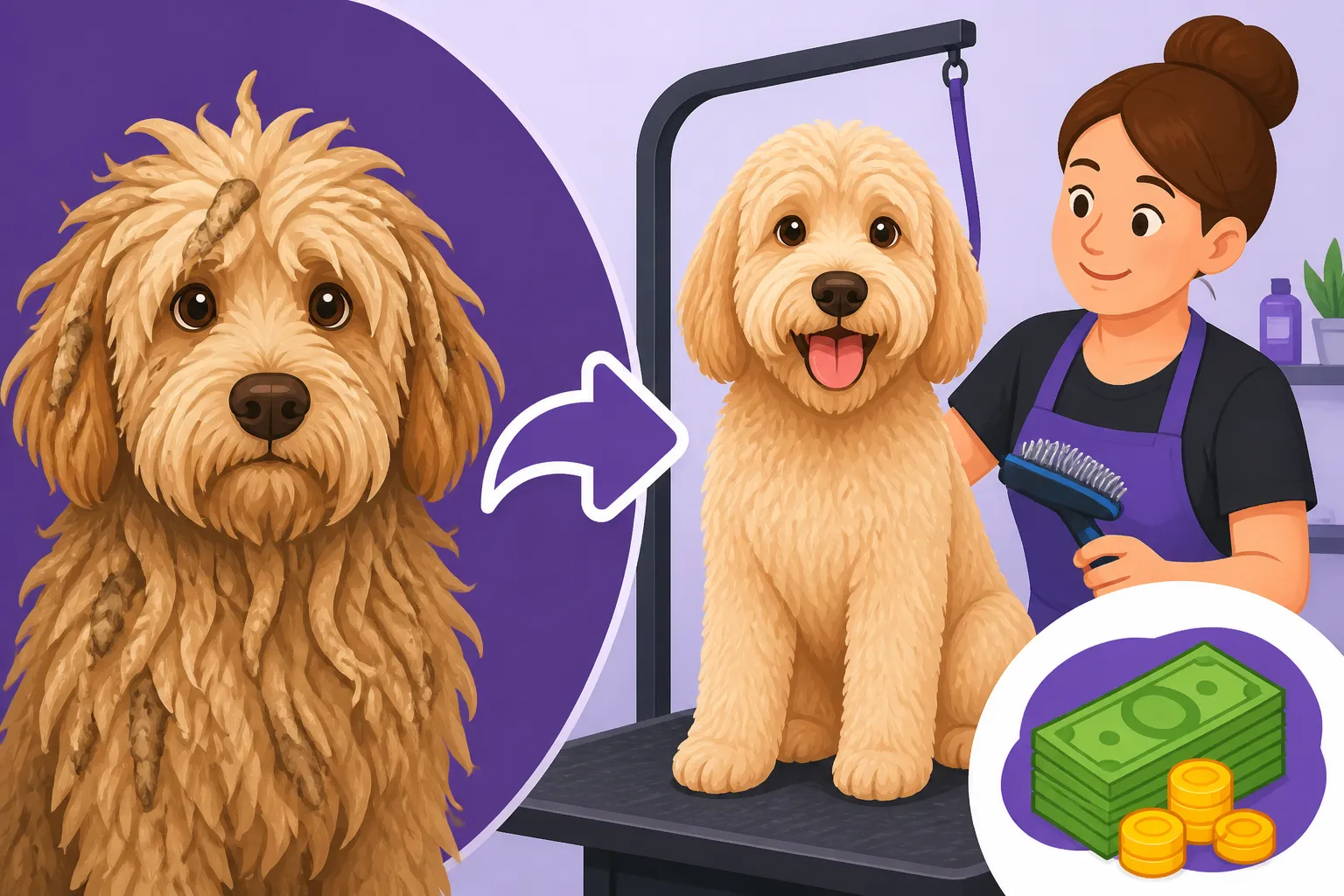
What a Groomer Charges to Strip a Matted Labradoodle
It's a moment many Labradoodle owners dread: you pick up your beloved furry friend from the groomer, expecting a fresh, fluffy cut, only to be hit with an unexpected, hefty bill and a serious conversation about matting. Dealing with a matted Labradoodle coat isn't just a cosmetic issue; it's a deeply uncomfortable, and potentially painful, health concern for your dog that directly impacts professional grooming costs. This guide will walk you through why matted coats are such a challenge, what groomers actually charge to address them, and most importantly, how to prevent this stressful situation from happening again.
The Harsh Reality of a Matted Labradoodle Coat
Discovering mats in your Labradoodle's coat can feel like a sudden surprise, but they often develop silently, tightening over time until they become a significant problem. It’s not just about a few tangled strands; severe matting can dramatically affect your dog’s well-being.
What Matting Really Means for Your Dog's Skin
Imagine wearing a tight, constricting suit that pulls at your skin with every movement. That's essentially what severe matting feels like for your Labradoodle. Mats aren't just surface tangles; they form close to the skin, pulling at it and creating a suffocating layer. This tight, dense fur prevents air circulation, trapping moisture, dirt, and debris against the skin. This environment is a breeding ground for bacteria and yeast, leading to painful skin infections, hot spots, and general irritation.
Beyond the immediate discomfort, prolonged matting can hide underlying issues. Fleas, ticks, and other parasites can thrive unnoticed beneath the matted layers, causing further irritation and potential health problems. We've seen dogs come in with skin so raw and inflamed that it requires veterinary attention before grooming can even begin. It's truly heartbreaking to see a dog in such discomfort, all because their beautiful coat became a cage. The groomer isn't just "stripping" the coat; they're often trying to alleviate significant pain and prevent medical complications.
Why Labradoodle Coats Are So Prone to Matting
Labradoodles are renowned for their gorgeous, low-shedding coats, but these very qualities make them incredibly prone to matting. The "doodle" coat, whether it's fleece or wool, is a blend of the Poodle's curly, dense hair and the Labrador's double coat. This combination, while often hypoallergenic, creates a texture that loves to tangle. Unlike shedding breeds where dead hair falls out, a Labradoodle's hair holds onto it, weaving it into the live coat. If this trapped hair isn't brushed out regularly and thoroughly, it compacts and forms mats.
The most common areas for matting are often friction points: behind the ears, under the chin, in the armpits, on the insides of the legs, and around the tail. These are areas that rub against collars, harnesses, the ground when they lie down, or simply where movement causes the hair to intertwine. Even a small piece of debris like a burr or a stick, or a quick swim in the lake that isn't followed by thorough drying, can quickly create a knot that spirals into a large, dense mat. Understanding The Three Labradoodle Coats: Hair, Fleece and Wool can help you anticipate some of these challenges, as wool coats, for instance, tend to mat more easily than a looser fleece coat.
The Groomer's Perspective: Why Dematting Is Different
When your Labradoodle arrives at the grooming salon with significant matting, it's not a standard appointment. Groomers approach these situations with a blend of professional skill, ethical considerations, and often, a heavy heart.
The Time and Effort Involved in Stripping Mats
A regular Labradoodle groom involves bathing, drying, brushing, and clipping. A matted Labradoodle groom often means all of that, but with a significant and difficult first step: removing the mats. This process is incredibly labor-intensive and time-consuming. Imagine trying to untangle a ball of yarn that has been cemented together – that's closer to the reality of stripping dense mats than simply brushing out a few tangles.
Groomers often have to work slowly and meticulously, section by section, to try and gently separate the matted hair without causing undue pain or skin irritation to your dog. It requires extreme patience, a steady hand, and specialized techniques. This isn't a quick fix, and it's why the time spent on a matted dog can easily double or triple that of a well-maintained one. Every minute spent carefully picking apart knots, often with a frightened or uncomfortable dog, is time a groomer could have spent on another client or on a less taxing task. This increased time directly translates into a higher service charge.
Specialized Tools and Techniques for Severely Matted Coats
Dematting a severely matted Labradoodle requires more than just a regular brush. Groomers rely on an arsenal of specialized tools, each designed for specific types and severities of matting. These can include:
- Mat Splitters: Blade-like tools used to carefully cut into a mat, breaking it into smaller sections for easier removal.
- Dematting Rakes: Tools with sharp, curved teeth that can gently pull through matted fur.
- Slicker Brushes and Metal Combs: Used for line brushing, working from the skin outwards, which is crucial for getting all the hidden mats.
- High-Velocity Dryers: While used for regular drying, they can also help separate hair before or during dematting, but only if the mats aren't too tight.
The techniques are also different. The Line Brushing a Labradoodle Coat Needs is paramount, but for mats, it's often about isolating small sections, applying conditioning sprays, and painstakingly teasing apart the knots. In some cases, groomers might need to use clippers with very short blades, getting underneath the mats right against the skin. This isn't just a skill; it's an art that comes from experience and a deep understanding of canine anatomy and coat types. These tools and the expertise to use them safely and effectively contribute to the specialized cost.
The Ethical Dilemma: Comfort Over Aesthetics
This is perhaps the most crucial aspect of a matted groom for any professional. A good groomer prioritizes the dog's comfort, safety, and well-being above all else. When faced with severe matting, there's a delicate balance to strike between trying to "save" the coat and alleviating the dog's suffering. If dematting would cause excessive pain, stress, or risk injury to the dog (such as clipper burn from working too close to the skin, or extreme pulling), a responsible groomer will make the difficult but necessary decision to shave the coat down.
It's not about being lazy or not wanting to do the work; it's about being humane. No groomer wants to inflict pain on a dog, and a dog struggling and hurting on the grooming table makes the process unsafe for both the dog and the groomer. This often means having an honest, sometimes tough, conversation with the owner, explaining why a full shave-down is the kindest option. While owners understandably want their Labradoodle to look fluffy and perfect, the ethical groomer will always choose relief for the dog.
Understanding the Cost Structure for Matted Grooms
The sticker shock from a matted Labradoodle groom is real, and it's important to understand why the costs climb so steeply compared to a routine trim. It’s rarely just an arbitrary upcharge.
Hourly Rates and Surcharge Models
Most grooming salons operate on a base price for a standard groom, which assumes a well-maintained, tangle-free coat. When a Labradoodle arrives matted, groomers typically apply additional fees based on a few common models:
- Hourly Dematting Rate: This is very common. The groomer will charge their standard hourly rate (which can be significant, reflecting their skill and overhead) for the extra time spent on dematting in addition to the base grooming price. So, if a typical groom takes 2 hours and dematting adds another 1-2 hours, you're paying for 3-4 hours of a professional's time.
- Flat Dematting Surcharge: Some salons might have a tiered surcharge based on the severity of the matting (e.g., light matting, moderate matting, severe matting). Each tier comes with a set additional fee.
- "Shave Down" Fee: If the matting is too severe to humanely demat, the groomer will often recommend a complete shave-down. While this might sound cheaper, it's still a complex process. Shaving through dense mats is harder on clippers, dulls blades faster, and takes more time than a clean clip. There might be a specific charge for this, sometimes equivalent to a severe dematting fee.
It’s crucial to remember that these charges cover not just the groomer's time and skill, but also the wear and tear on their expensive equipment, and the higher risk of injury to both dog and groomer during a difficult, extended session. You might be surprised to learn What a Groomer Charges to Dematt a Labradoodle by the Hour and how quickly those hours can add up.
Factors That Drive Up the Price Tag
Several variables can significantly influence the final cost of grooming a matted Labradoodle:
- Severity of Matting: This is the biggest factor. A few small tangles behind the ears are vastly different from full-body "pelted" matting where the entire coat is one solid, felted mass against the skin. The more severe and widespread the mats, the more time, effort, and specialized tools are required, leading to higher costs.
- Dog's Temperament: A calm, cooperative Labradoodle is easier to work on, even when matted, than one that is squirmy, nippy, or highly anxious. Groomers might charge more for difficult dogs that require two people or extended sessions to ensure safety.
- Coat Type and Length: A wool-coated Labradoodle with long hair will generally be harder and more time-consuming to demat than a shorter, fleece-coated one, assuming similar levels of matting. What a Full Groom Costs on a Wool Coated Labradoodle already tends to be higher due to maintenance, and matting only amplifies this.
- Grooming Salon's Location and Reputation: Just like any service, pricing can vary based on geographic location (city vs. rural) and the salon's reputation. Highly skilled groomers who specialize in doodles or have advanced dematting expertise might command higher prices.
- Additional Services: If skin irritation or hot spots are discovered under the mats, medicated baths or specific skin treatments might be recommended at an additional cost.
The Price of Your Dog's Comfort and Safety
While the cost can be surprising, it’s important to frame it as an investment in your Labradoodle's health and comfort. A matted coat isn't just unsightly; it's a painful prison for your dog. Paying a professional to carefully and humanely remove those mats is a necessary step to relieve their suffering. It's the cost of undoing weeks or months of neglected coat care.
Consider also the potential vet bills if the matting leads to severe skin infections or even injuries during attempted at-home dematting. Sometimes, extremely matted dogs require sedation at a vet's office to be shaved safely, which carries its own significant cost and risks. Investing in a professional groomer to handle the problem correctly often prevents more expensive medical interventions down the line. It's a tough lesson, but one that teaches the true value of consistent, preventive coat care.
The Difficult Decision: Dematting vs. Shaving
When your Labradoodle comes in with extensive matting, you and your groomer will likely face a critical decision: attempt to demat or opt for a complete shave down. It's a choice often made with your dog's best interest at heart, even if it means sacrificing that signature fluffy look for a while.
When Dematting Becomes Inhumane or Impractical
There are clear instances where attempting to demat a Labradoodle's coat is simply not an option. If the mats are so tight and extensive that they cover a large percentage of the body, are pulling the skin severely, or have already caused skin irritation, trying to brush them out would inflict immense pain and distress on the dog. A responsible groomer will refuse to put a dog through such an ordeal.
Furthermore, if the dog is highly anxious, aggressive, or particularly sensitive to handling, the physical and psychological toll of a prolonged dematting session can be too much. The risk of injury to the dog (clipper burn, nicks) or the groomer (bites, scratches) increases dramatically under these conditions. In these scenarios, the professional will explain that a full shave down is the most humane and safest course of action. It's not about judging your care; it's about prioritizing the animal's welfare. Sometimes, Whether a Groomer Refuses a Matted Labradoodle is exactly because they believe it's unsafe or inhumane to proceed with dematting.
The "Fresh Start" of a Shave Down
Opting for a full shave down, often called a "kennel cut" or "strip," means using clippers with a very short blade to go underneath all the matting, essentially starting fresh. While it can be a shock to see your fluffy Labradoodle come out looking like a different dog, it's often a tremendous relief for them. The immediate weight and pulling are gone, and they can move freely without discomfort.
This "fresh start" allows the skin to breathe, which helps heal any underlying irritation or infection. It also provides a clean slate for you to implement a consistent grooming routine from day one of regrowth. While the aesthetic change might be jarring, consider it a necessary reset button for your dog's coat health. The groomer will usually try to leave as much length as possible where the coat isn't matted, but severe matting often necessitates a uniform short cut.
Post-Shave Care and Regrowth Expectations
After a shave down, your Labradoodle's skin will be exposed, so it's important to protect it. They might be more sensitive to sun, cold, or even rough play for a while. Keep an eye out for any lingering skin irritation and follow any advice from your groomer or vet regarding medicated washes or creams if skin issues were present under the mats.
The coat will, of course, grow back! But it's important to manage expectations. Whether a Labradoodle's Coat Grows Back the Same is a common question. While the texture usually returns to its original state, sometimes a severe shave down can temporarily alter the feel, making it feel a bit coarser or wavier initially. The key is to start brushing and maintaining the coat immediately as it grows, even when it's short. This habit will prevent future matting disasters. Regular brushing, even on a short coat, helps stimulate circulation and keeps the new growth healthy and tangle-free.
| Feature | Dematting (Attempted) | Shave Down (Recommended/Necessary) |
|---|---|---|
| Primary Goal | Preserve coat length and aesthetics | Alleviate pain, prioritize dog's comfort and health |
| Dog's Comfort | Potentially painful, stressful, long process | Immediate relief from pulling and weight |
| Time Investment | Significantly longer | Shorter, more efficient process once decision made |
| Cost Implications | Highest cost due to labor-intensive process, hourly fees | High, but often less than extensive dematting; covers blade wear, difficulty |
| Risks | Clipper burn, skin irritation, stress, groomer injury | Clipper burn, sunburn (aftercare needed), temporary aesthetic change |
| Outcome | Retains length (if successful), may still have damage | Very short coat, "fresh start" |
| Ideal Scenario For | Minor, localized tangles | Moderate to severe, widespread, or pelted matting |
Prevention is Power: Avoiding Future Matting Disasters
The best way to avoid the high costs and stress of dematting is to prevent matting from happening in the first place. Consistent, proactive care is your Labradoodle's best friend.
Daily Brushing: Your Best Defense
This isn't just advice; it's a golden rule for Labradoodle owners. Daily brushing, even for just 10-15 minutes, can make all the difference. The goal is not just to brush the surface, but to get all the way down to the skin to remove any loose hair and prevent tangles from forming at the root. Many owners unknowingly brush only the top layer, leaving dense mats to form underneath.
Learning how to properly perform Brushing a Labradoodle to the Skin, Not the Surface is critical. Use a pin brush to gently separate the coat, followed by a slicker brush for thorough detangling, and finally, a metal comb to check for any missed knots. If the comb can't glide easily through the coat, you haven't brushed enough. Make it a bonding experience, not a chore. Start from a young age so your Labradoodle learns to tolerate and even enjoy the routine. This regular interaction also helps you spot any skin issues or new lumps and bumps early on.
The Right Tools for Your Labradoodle's Coat Type
Having the correct grooming tools is non-negotiable for a Labradoodle owner. The typical toolkit should include:
- High-Quality Slicker Brush: Essential for thoroughly brushing out the coat and getting to the underlayers. Look for one with good bristles that don't scratch the skin.
- Long-Toothed Metal Comb: Crucial for "line brushing" and checking your work. It's the ultimate mat detector.
- Pin Brush: Good for general daily brushing and separating the coat.
- Dematting Spray/Conditioner: A good quality leave-in spray can help lubricate the coat, making it easier to brush through tangles and prevent static that leads to matting. Brands available on platforms like Chewy often have a wide selection, making it easy to find one that suits your dog's specific coat and skin needs.
- Blunt-Ended Scissors: For carefully snipping out small, stubborn knots that cannot be brushed, always with extreme caution and never cutting parallel to the skin.
Avoid cheap, flimsy brushes that only skim the surface. Investing in good tools, like those you can find from quality pet supply retailers, will save you money in professional grooming bills in the long run. Learn how to use them correctly – many online tutorials demonstrate proper techniques for different Labradoodle coat types.
Regular Professional Maintenance: A Long-Term Investment
Even with diligent home brushing, Labradoodles benefit immensely from regular professional grooming appointments. Most groomers recommend a schedule of every 6-8 weeks for a Labradoodle, depending on coat type and growth rate. This isn't just for aesthetics; it's preventative health care.
A professional groomer has industrial-strength dryers that thoroughly dry the coat (which helps prevent matting), powerful clippers, and the experience to spot and address small tangles before they escalate. They can trim areas prone to matting, such as armpits and behind the ears, with precision. Think of it as preventative maintenance for their coat. While it's an ongoing expense, these regular appointments are often less costly than waiting until your dog is severely matted and needs extensive dematting or a full shave-down. It's far better to pay for routine trims than for emergency mat removal, both for your wallet and your dog's comfort. This routine care means your Labradoodle can look its best consistently, without the stress of major interventions.
Working With Your Groomer for Long-Term Coat Health
Building a strong relationship with your groomer is key to managing your Labradoodle's coat, especially after a matting incident. They are your partners in maintaining your dog's health and comfort.
Communicating Clearly About Your Dog's Needs
Open and honest communication with your groomer is paramount. Don't be shy about discussing your at-home grooming routine, any challenges you're facing, or specific concerns you have about your dog's coat or skin. If your dog is prone to matting in certain areas, point them out. If they've had a bad experience with brushing or drying, share that information so the groomer can adjust their approach.
Conversely, listen carefully to your groomer's advice. If they recommend a shorter clip to manage matting, explain why your brushing isn't sufficient, or suggest a specific grooming schedule, take their expertise seriously. They see countless dogs and know the common pitfalls. Be honest about how much time you can realistically commit to home grooming. This transparency allows your groomer to tailor their recommendations and services to best suit your Labradoodle and your lifestyle, ensuring a happier and healthier dog.
Finding a Groomer Who Specializes in Doodles
Not all groomers are equally experienced with Labradoodle coats. The unique blend of Poodle and Labrador hair requires specific techniques and an understanding of how these coats behave, especially during their "coat change" phase around The Coat Change That Hits a Labradoodle at Nine Months. When choosing a groomer, look for one who has extensive experience with doodle breeds.
Ask questions: Do they use force dryers? What methods do they use for dematting? Are they comfortable discussing a "comfort groom" versus a show groom? A groomer specializing in doodles will understand the nuances of a fleece versus a wool coat and can advise you on the best clip for your dog's lifestyle and your ability to maintain it. They will often have a deeper knowledge of common doodle skin issues and can offer tailored advice. Online communities and local pet stores can be great resources for recommendations on groomers who are "doodle-savvy."
Home Grooming Practices to Support Professional Care
Your efforts at home are the foundation of your Labradoodle's coat health. Professional grooms are wonderful, but they are maintenance, not a miracle cure for months of neglect. Beyond daily brushing, here are some key home grooming practices:
- Routine Checks: Make it a habit to run your fingers through your Labradoodle's coat daily, feeling for any small knots, especially in those common trouble spots like behind the ears and in the armpits. Catching a mat when it's small is infinitely easier than when it's tight and large.
- Thorough Drying After Baths/Swims: Never let your Labradoodle air dry completely, especially if they have a dense coat. Use a towel to absorb most of the water, then use a hairdryer on a cool setting while brushing to ensure the coat is dry to the skin. This prevents wet hair from clumping and forming mats.
- Regular Ear Cleaning and Nail Trims: While not directly related to coat matting, these are crucial parts of overall grooming that keep your dog comfortable. Make sure to keep on top of How Often a Labradoodle's Nails Need Cutting to prevent discomfort.
- Nutrition and Supplements: A healthy diet contributes to a healthy coat. Ensure your Labradoodle is getting balanced nutrition, perhaps even considering fresh food options like Ollie, which can support overall skin and coat health. Sometimes, a supplement like fish oil, found at retailers like Chewy, can improve coat condition, making it less prone to tangling. For unexpected health issues that might impact coat or skin, consider pet insurance providers like Healthy Paws, which can help with vet bills if skin conditions or other complications arise from severe matting.
Ultimately, preventing matting is a shared responsibility between you and your professional groomer. By dedicating time to consistent home care and utilizing the expertise of a professional, you can ensure your Labradoodle remains happy, healthy, and tangle-free, avoiding those costly and stressful dematting sessions.
Disclaimer
This article is for general informational purposes only and does not constitute professional advice. Laws, prices and regulations vary by location and change over time. Consult a qualified professional for guidance on your specific situation.