What Emergency Bloat Surgery Costs a Labradoodle Owner
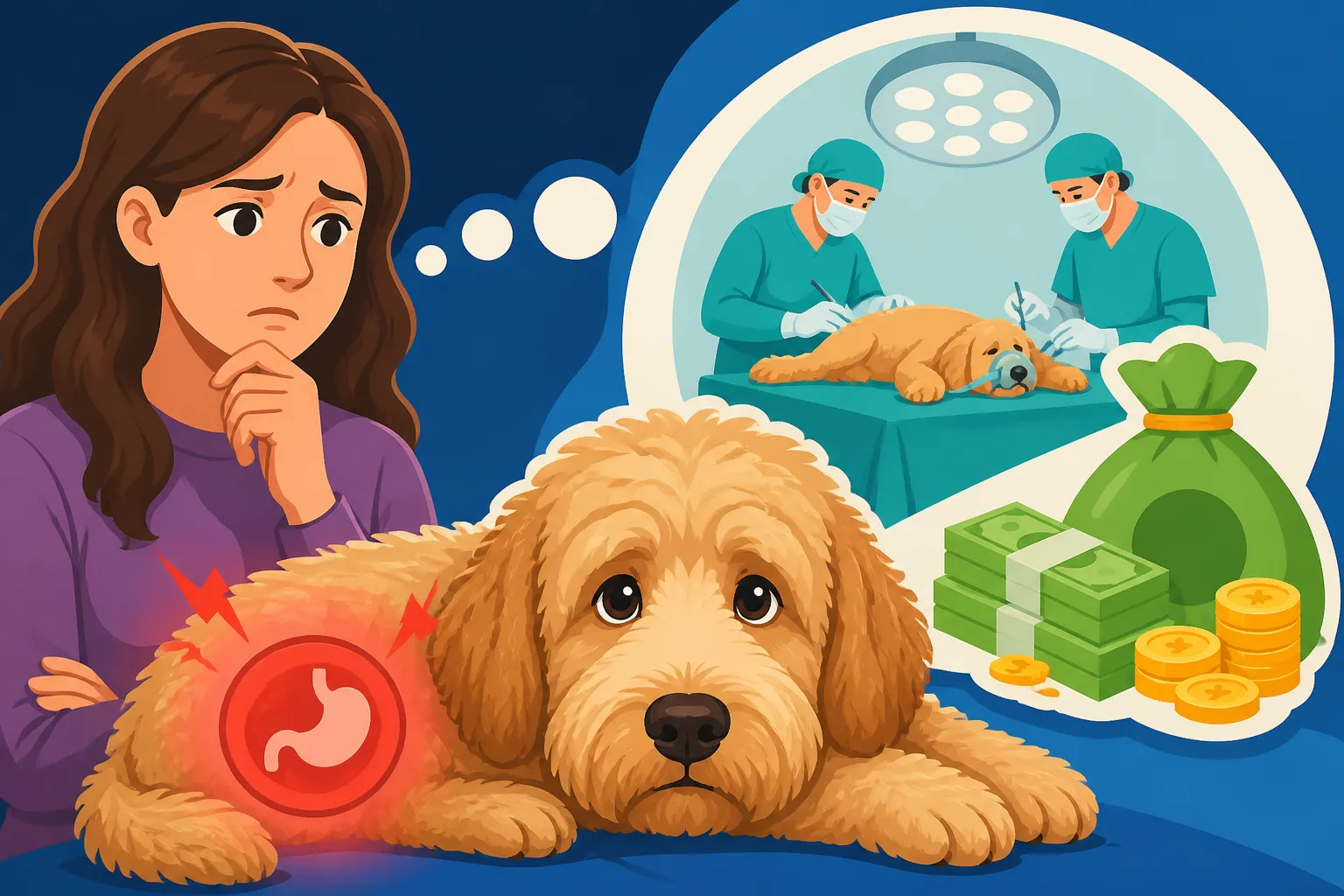
The sudden onset of bloat, or Gastric Dilatation-Volvulus (GDV), is one of the most terrifying emergencies a Labradoodle owner can face. One moment your beloved companion is fine, and the next they are restless, retching, and their abdomen is visibly distended, quickly becoming a life-threatening crisis. The sheer panic of seeing your dog in such distress is often compounded by the immediate, overwhelming question: what will this urgent, complex surgery cost, and how will I possibly manage it? This guide will walk you through the financial realities of emergency bloat surgery for your Labradoodle, from initial diagnostics to post-operative care, helping you understand what to expect during this critical time.
Understanding Bloat and Its Urgency in Labradoodles
Bloat is not just an upset stomach; it's a critical medical emergency where a dog's stomach fills with gas, food, or fluid (dilatation) and then often twists upon itself (volvulus). This twisting cuts off blood supply to the stomach and other vital organs, leading to rapid shock, organ damage, and if untreated, death within hours. For Labradoodle owners, this condition is a constant worry, largely due to the breed's deep-chested anatomy, a trait often inherited from their Standard Poodle lineage.
Why Labradoodles Are at Risk for GDV
It's a cruel twist of fate that our loving Labradoodles, with their delightful personalities, carry a significant risk for bloat. This predisposition isn't unique to them, but it is a concern for many larger, deep-chested breeds. The architecture of their chest, often quite narrow and deep rather than broad and barrel-like, creates a greater cavity where the stomach can shift and twist. Think of it like a hammock suspended between two points: a longer, deeper hammock has more room to swing and flip than a shallow, wide one.
The Poodle side of the Labradoodle's ancestry contributes significantly to this anatomical risk. If you've ever seen a majestic Standard Poodle, you'll notice their elegant, deep chests. While beautiful, this conformation is a known factor for increased bloat risk. This isn't something you can train out or change; it’s simply part of their genetic makeup. Understanding The Deep Chest a Labradoodle Gets From the Poodle is crucial for any owner, as it highlights a fundamental reason why vigilance against bloat is so important.
The Rapid Progression of a Bloat Episode
What makes bloat so terrifying is how quickly it escalates from subtle discomfort to a full-blown life-threatening emergency. Initially, your Labradoodle might just seem a little restless, perhaps pacing or trying to vomit without success (non-productive retching). They might stand with their head down, looking uncomfortable, or stretch in an odd way as if trying to relieve pressure. As minutes turn into an hour, these signs become more pronounced. Their abdomen will start to distend, becoming visibly swollen and hard to the touch, especially on the left side.
The dog's gums might turn pale, their heart rate will increase, and they may show signs of pain or extreme anxiety. This rapid progression means that time is absolutely of the essence. If you even suspect bloat, it's not a "wait and see" situation. You need to get your Labradoodle to an emergency veterinary clinic immediately. Every minute counts, and delaying treatment can drastically reduce the chances of survival and significantly increase the complexity and cost of care.
The Immediate Emergency and Diagnostic Costs
When you arrive at the emergency veterinary clinic with a suspected bloat case, the veterinary team will jump into action. This isn't like a routine check-up; it's a high-stakes emergency where every second is vital for your Labradoodle's survival. The immediate goal is to stabilize your dog and confirm the diagnosis, which involves a series of diagnostic tests and initial stabilizing treatments.
Initial Assessment and Stabilization
Upon arrival, the veterinary staff will immediately take your Labradoodle back for assessment. They’ll quickly check vital signs, assess their level of shock, and determine the severity of the abdominal distension. The first priority is to stabilize your dog. This typically involves inserting intravenous (IV) catheters to administer fluids rapidly to combat shock, provide pain relief, and possibly antibiotics. They might also try to decompress the stomach by passing a tube down the esophagus into the stomach to release trapped gas. This can be challenging if the stomach has already twisted severely.
The cost of this initial stabilization phase includes the emergency examination fee, IV fluids, catheters, pain medications, and any other supportive care provided before a definitive diagnosis is made. These initial charges can quickly add up, often ranging significantly depending on the clinic and the immediate needs of your Labradoodle. It's the cost of buying time and giving your dog a fighting chance before surgery can even be considered.
Diagnostic Imaging and Confirmation
To confirm bloat and especially to determine if the stomach has twisted (volvulus), diagnostic imaging is essential. X-rays are the gold standard for this. A lateral abdominal X-ray can often show the characteristic "double bubble" sign, indicating that the stomach is displaced and rotated. This image provides critical information for the surgical team about the extent of the twist and the best approach for correction. Blood tests might also be run to assess organ function, electrolyte balance, and overall health, which helps the veterinary team understand your dog's ability to withstand surgery and recover.
These diagnostic tests – the X-rays, blood panels, and potentially other imaging or monitoring – contribute a significant portion to the overall emergency bill. They are non-negotiable steps because confirming the diagnosis and understanding the scope of the problem is paramount to successful treatment. The cost will encompass the radiologist's interpretation, the blood work analysis, and the technician time involved in performing these crucial tests.
The Emergency Bloat Surgery Procedure
Once bloat with volvulus is confirmed and your Labradoodle is sufficiently stabilized, the next critical step is emergency surgery. This is a complex, invasive procedure that requires a skilled surgical team, advanced equipment, and meticulous post-operative monitoring. The goal is to untwist the stomach, reposition it, and perform a gastropexy to prevent future episodes.
Anesthesia and Surgical Intervention
The surgery, known as a gastrotomy and gastropexy, begins with inducing general anesthesia. Anesthesia for a bloat patient is particularly challenging and risky because their cardiovascular system is often compromised due to shock. The anesthesia team will carefully monitor your Labradoodle's heart rate, blood pressure, and oxygen levels throughout the entire procedure. Once under anesthesia, a large incision is made in the abdomen to access the stomach. The surgeon will then carefully de-rotate the stomach, which can be a delicate process, especially if tissues are already damaged.
After untwisting, the surgeon will inspect the stomach wall for any areas of necrosis (tissue death) due to the compromised blood supply. If portions of the stomach wall are severely damaged, they may need to be removed, which adds further complexity and risk to the surgery. The gastropexy portion of the surgery involves tacking the stomach to the abdominal wall. This isn't a simple stitch; it creates a permanent adhesion that prevents the stomach from twisting again. This preventive measure is vital because even after successful surgery, dogs who have bloated once are at a significantly higher risk of a recurrence without a gastropexy. You can learn more about Whether a Labradoodle Should Have a Preventive Gastropexy to understand why this part of the procedure is so important.
Post-Operative Intensive Care
The moment surgery is complete, your Labradoodle enters a critical post-operative phase that often requires intensive care. They will be transferred to an ICU or a dedicated recovery area where they can be closely monitored by veterinary staff around the clock. This monitoring includes continuous checks of vital signs, pain levels, and any signs of complications such as arrhythmias (irregular heartbeats), peritonitis (inflammation of the abdominal lining), or continued shock. They will continue to receive IV fluids, pain management, and often antibiotics to prevent infection.
The cost of this intensive care is a significant component of the overall bill. It reflects the specialized equipment, medication, and the constant vigilance of highly trained veterinary technicians and veterinarians. Think of it as round-the-clock nursing care, just like in a human hospital, but for your beloved Labradoodle. The duration of this ICU stay can vary, but typically it’s at least 24-48 hours, sometimes longer if complications arise.
| Component of Bloat Treatment | Description | Typical Cost Shape |
|---|---|---|
| Emergency Exam & Stabilization | Initial assessment, IV catheters, fluids, pain medication, shock treatment. | Initial emergency fee plus costs for fluids, medications, and supplies. Can be a few hundred to over a thousand, depending on severity and clinic. |
| Diagnostics | Abdominal X-rays to confirm GDV, blood work (CBC, chemistry, electrolytes). | Several hundred to a thousand, encompassing imaging, lab analysis, and interpretation. |
| Anesthesia | Sedation, general anesthesia, and continuous monitoring throughout surgery. | Varies by duration of surgery and complexity of patient, usually in the hundreds. |
| Surgical Procedure (Gastropexy) | Untwisting the stomach, repositioning, and permanently tacking it to the abdominal wall. May include resection of necrotic tissue. | The largest single cost component, often in the thousands, reflecting surgical skill, time, and facility use. |
| Post-Operative Intensive Care | 24/7 monitoring, IV fluids, pain control, antibiotics, specialized nursing care in an ICU setting. | Daily charges, often significant, reflecting round-the-clock staffing, monitoring equipment, and medications. Can be several hundreds to over a thousand per day. |
| Medications (Take-Home) | Pain relievers, stomach protectants, antibiotics for home recovery. | Typically a smaller cost, in the tens to hundreds, for prescriptions. |
| Follow-up Appointments | Recheck exams, suture removal, ongoing health assessments. | Standard veterinary appointment fees. |
Recovery and Potential Complications
Surviving the initial surgery is a huge hurdle, but the journey to full recovery from bloat surgery can still be fraught with challenges. The days and weeks following the procedure require careful management, and unfortunately, complications can arise, adding to the emotional and financial strain.
Hospital Stay and Continued Monitoring
After the critical 24-48 hours in intensive care, your Labradoodle will typically remain hospitalized for a few more days, assuming their condition is stable. During this time, the veterinary team will gradually reintroduce small amounts of water and then bland food. They'll continue to monitor your dog for pain, nausea, and signs of digestive function returning to normal. They'll also be watching closely for any arrhythmias, which are a common and serious complication of bloat, even after successful surgery. Regular walks, initially very short and controlled, will be encouraged to aid recovery and prevent blood clots.
The cost for these additional days in the hospital will cover boarding, continued medications, nursing care, and any further diagnostic tests if concerns arise. While less intensive than the immediate post-operative ICU, it's still specialized care that incurs daily charges. Your vet will provide detailed instructions for at-home care, including medication schedules, feeding guidelines, and activity restrictions, to ensure a smooth transition home.
Unforeseen Complications and Re-Hospitalization
Even with the best care, bloat surgery is a major event, and complications are always a possibility. These can range from mild to life-threatening and can significantly prolong recovery and escalate costs. Common complications include gastric motility issues, where the stomach is slow to empty, or even gastric necrosis if more tissue damage occurred than was initially apparent. Arrhythmias can continue to be a concern, requiring specific cardiac medications. Surgical site infections or dehiscence (where the incision opens up) are also potential, albeit less common, issues.
In some unfortunate cases, a Labradoodle might need to be re-hospitalized due to a complication, or even require a second surgery. This is a devastating possibility but one that owners must be aware of. Each complication, whether it's a new medication, additional diagnostic tests, or extended hospital stays, adds to the financial burden. This is where pet insurance, like a policy from Healthy Paws, can become a literal lifesaver, helping to cover unexpected costs that can quickly spiral into the tens of thousands. Without it, owners face the agonizing choice between their pet's life and their financial limits.
Managing the Financial Impact
The cost of emergency bloat surgery is undoubtedly substantial, often placing a significant burden on Labradoodle owners. It's not uncommon for these bills to range into the multiple thousands, depending on your location, the veterinary facility, the severity of the bloat, and any complications. However, there are several avenues to explore when faced with such an unexpected and critical expense.
Pet Insurance: A Lifeline for Emergencies
For many, pet insurance is the single most effective way to mitigate the financial shock of a sudden emergency like bloat. Policies from providers like Healthy Paws can cover a significant percentage of eligible veterinary bills after your deductible is met. It’s crucial to understand that pet insurance typically operates on a reimbursement model – you pay the vet first, then submit a claim for reimbursement. However, knowing that a large portion of the cost will be returned can provide immense peace of mind during a crisis.
When considering pet insurance, it’s vital to enroll your Labradoodle while they are young and healthy, before any conditions like bloat have been diagnosed, as pre-existing conditions are generally not covered. It's worth researching different plans and understanding what they cover regarding emergency care, surgeries, and post-operative treatments. Understanding Whether Bloat Surgery Is Covered on a Labradoodle Policy is paramount, and most comprehensive policies do cover emergency bloat surgery, provided it's not a pre-existing condition. While it's an ongoing monthly expense, having it in place can save you from a catastrophic financial decision later on.
Alternative Funding and Payment Options
If pet insurance isn't an option or doesn't cover the full extent of the costs, there are other ways to manage the bill. Many veterinary hospitals offer payment plans or work with third-party medical credit providers. These options allow you to break down a large sum into more manageable monthly payments. Be sure to understand the interest rates and terms associated with such plans.
Crowdfunding platforms have also become a popular way for pet owners to raise funds for emergency surgeries. Sharing your Labradoodle's story with friends, family, and online communities can sometimes generate significant support. Additionally, some non-profit organizations offer financial assistance for pet owners facing veterinary emergencies, though eligibility requirements can be strict and funds are often limited. Don't hesitate to ask your veterinary clinic about all available financial aid options; they often have resources and recommendations for clients in need.
Preventive Measures to Reduce Bloat Risk
While we can never completely eliminate the risk of bloat in our deep-chested Labradoodles, there are proactive steps we can take as responsible owners to significantly reduce the likelihood of this terrifying emergency. Prevention is always better than cure, especially when the "cure" involves emergency surgery and a hefty bill.
Dietary and Feeding Strategies
How and what your Labradoodle eats plays a crucial role in bloat prevention. One of the most common pieces of advice is to feed smaller, more frequent meals rather than one large meal. This helps to prevent the stomach from distending too much at any one time. Aim for two or three meals a day. Eating too quickly can also increase the risk, as dogs gulp down air along with their food. Using a slow feeder bowl, like those readily available on platforms like Chewy, can be incredibly effective in making your Labradoodle eat more slowly.
Many owners also wonder about Raised Bowls and Labradoodle Bloat, but current veterinary consensus suggests that raised bowls may actually increase the risk of bloat in large, deep-chested breeds. It's generally recommended to feed dogs on the floor. After meals, it's absolutely vital that your Labradoodle rests. Strenuous exercise, rolling, or excited play immediately after eating can be a trigger for bloat. Encourage a quiet period of at least an hour before and after meals. If you're considering premium food options, some owners explore services like Ollie, which provide fresh, portion-controlled meals, though the direct impact on bloat prevention for such diets needs to be discussed with your vet.
Prophylactic Gastropexy
For Labradoodles considered at high risk for bloat, a prophylactic gastropexy can be a life-saving preventative measure. This is a surgery where the stomach is tacked to the abdominal wall, just like the gastropexy performed during an emergency bloat surgery, but it's done before an emergency occurs. It prevents the stomach from twisting, though it doesn't prevent the stomach from dilating (filling with gas). While dilatation can still occur, it's far less life-threatening than dilatation with volvulus.
Many owners choose to have a prophylactic gastropexy performed at the same time their Labradoodle is spayed or neutered, as it requires only one anesthetic event. The cost of a prophylactic gastropexy is significantly less than emergency bloat surgery because it's a planned procedure, performed on a healthy, non-critical patient during normal business hours. You can read more about What Gastropexy Adds to a Labradoodle's Neuter to understand the benefits and costs of combining these procedures. Discuss this option thoroughly with your veterinarian, especially if your Labradoodle's lineage or individual characteristics put them at a higher risk.
Disclaimer
This article is for general informational purposes only and does not constitute professional advice. Laws, prices and regulations vary by location and change over time. Consult a qualified professional for guidance on your specific situation.