The Brush That Works on a Wool Coated Labradoodle
If you've welcomed a beautiful, fluffy Labradoodle with that coveted wool coat into your family, you've likely already discovered one undeniable truth: that gorgeous, non-shedding fur is a magnet for mats. It's a constant battle, and finding the right tools and techniques can feel like searching for a needle in a haystack, leaving many owners feeling overwhelmed and frustrated. This guide is here to walk you through exactly which brush works best for a wool-coated Labradoodle, helping you keep their coat healthy, mat-free, and comfortable.
Understanding the Wool Coated Labradoodle's Unique Needs
Let's face it, a wool-coated Labradoodle isn't just any dog. Their magnificent, dense, curly coats are a joy to behold and a blessing for allergy sufferers, but they come with a distinct set of grooming challenges. Understanding what makes this coat type so special – and sometimes so tricky – is the first step in winning the battle against mats.
What Makes a Wool Coat So Challenging?
A wool coat on a Labradoodle is often described as feeling like, well, sheep's wool. It's incredibly dense, has a tight curl, and sometimes even a slightly coarse texture. Unlike the straighter, looser fleece coat, the wool coat's tight curls tend to interlock with each other, creating a dense web that's just begging to trap loose hair, dirt, and debris. This natural tendency to tangle means that mats can form seemingly out of nowhere, especially in high-friction areas like behind the ears, in the armpits, and around the collar.
The density of this coat also means that brushing simply the top layer isn't enough. You could brush for an hour and still have mats forming closer to the skin, completely unnoticed until they become painfully tight. This is a common frustration for many new Labradoodle owners, who quickly realize that what they thought was a thorough brush was actually just smoothing the surface. For more on managing this particular coat, you might find our article The Wool Coat Labradoodle and Its Upkeep incredibly helpful.
The Battle Against Matting: Why the Right Brush is Crucial
Matting isn't just an aesthetic problem; it's a serious health and comfort issue for your dog. Mats pull on the skin, causing discomfort, irritation, and even skin infections if moisture gets trapped underneath. In severe cases, mats can restrict movement, hide parasites, and make grooming incredibly painful, often requiring a full shave-down by a professional. This isn't just about looking good; it's about your dog's well-being.
That's why choosing the right brush isn't just a suggestion, it's a necessity. A cheap, ineffective brush will glide over the surface, doing nothing to prevent the deep-seated tangles that lead to painful mats. Instead, you need tools designed to penetrate the thick, curly wool, separating individual hairs and removing loose undercoat before it has a chance to bind together. Neglecting this crucial step can lead to a snowball effect where small tangles rapidly turn into large, painful mats, often in places like Where Mats Form First on a Labradoodle.
Recognizing the Different Stages of a Wool Coat
It's also important to remember that your Labradoodle's coat isn't static; it changes and evolves. A puppy's soft, fluffy coat is relatively easy to manage, but this bliss is often short-lived. Around nine to twelve months of age, most Labradoodles go through what's known as "coat change." This is when their soft puppy fur starts to be replaced by their denser, curlier adult coat. During this period, the shedding puppy hair gets tangled in the incoming adult coat, creating an unprecedented matting challenge.
If you thought grooming was tough before, coat change will truly test your patience. Many owners describe this as the hardest period for grooming, requiring daily, intensive brushing to prevent solid sheets of matting. After the coat change, the adult wool coat will still require consistent maintenance, but the intense, daily battle often subsides. However, as they age, some Labradoodle coats can change texture again, sometimes becoming coarser or even finer, which can affect how easily they mat. You can learn more about this transition in The Coat Change That Hits a Labradoodle at Nine Months.
The Essential Brushes and Tools for a Wool Coated Labradoodle
When it comes to tackling that glorious, yet challenging, wool coat, you can't just grab any old brush. You need a specific arsenal of tools designed to penetrate the dense curls, separate the hairs, and prevent those notorious mats from taking hold. Let's break down the absolute essentials.
The Slicker Brush: Your Primary Weapon Against Mats
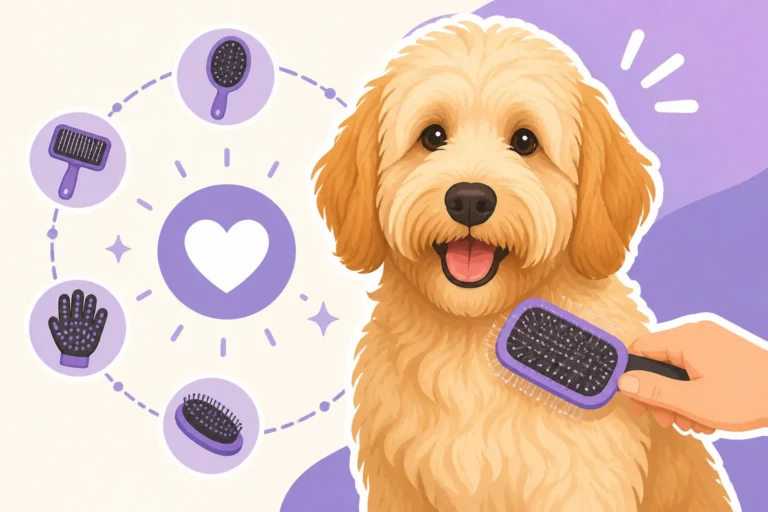
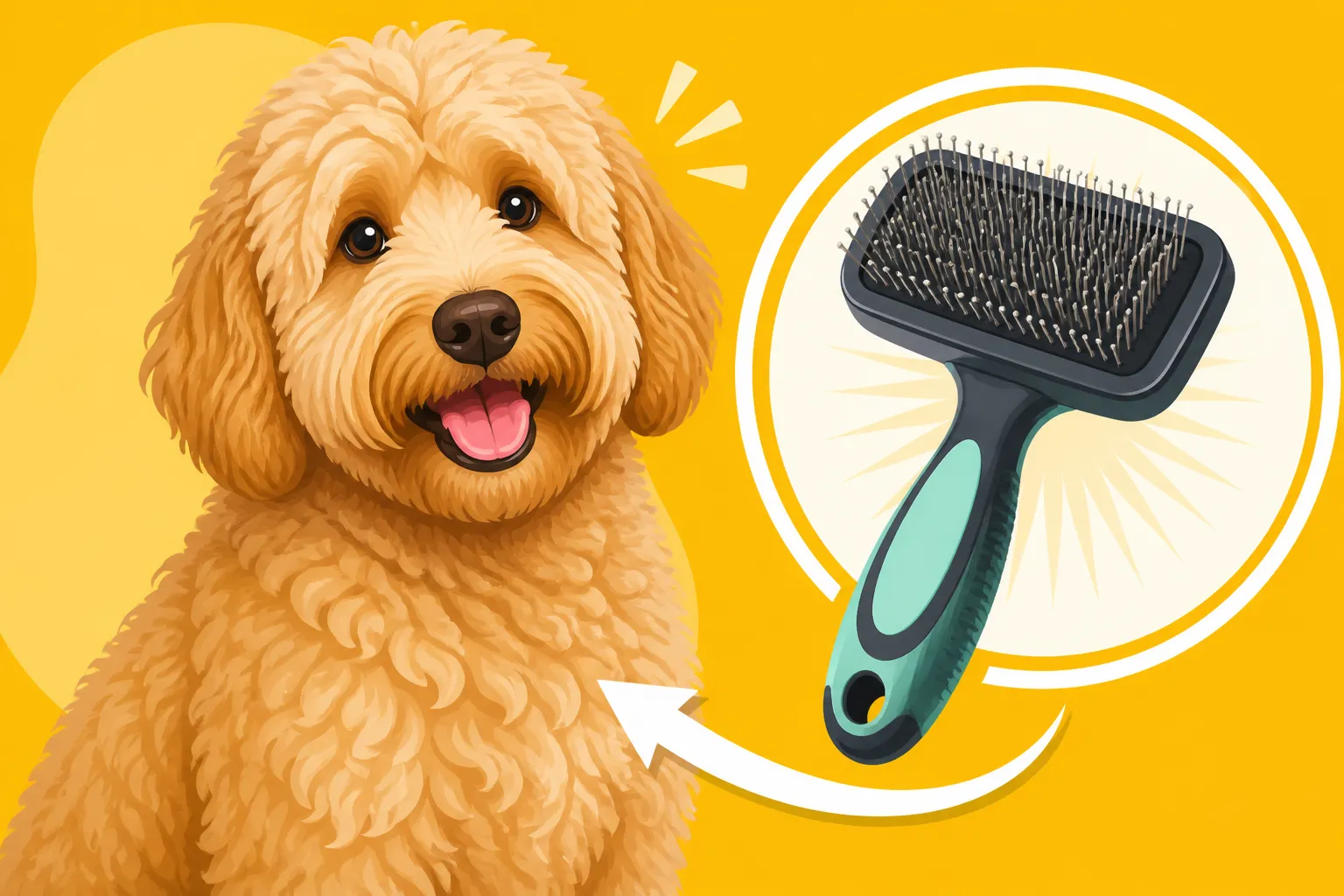
For a wool-coated Labradoodle, a high-quality slicker brush is your absolute best friend. Forget the soft-bristled brushes; they simply won't get the job done. A good slicker brush features a rectangular or oval head covered in fine, tightly packed wire pins that are slightly angled. These pins are designed to gently separate and detangle the individual hairs, reaching deep into the dense coat without scratching the skin.
When choosing a slicker brush, look for one with sturdy, yet flexible pins, and a comfortable handle for you. There are various sizes and pin lengths available. For a wool coat, you'll generally want a slicker brush with pins long enough to reach down to the skin. Some popular professional-grade slicker brushes often recommended by groomers are fantastic investments, though many pet supply stores and online retailers like Chewy or Amazon offer excellent options at various price points. You'll use this brush for the bulk of your grooming, working through sections of the coat to lift loose hair and prevent tangles.
The Metal Comb: For Finishing Touches and Spot Checks
While the slicker brush does the heavy lifting, a sturdy metal comb is indispensable for ensuring you haven't missed anything and for tackling smaller, emerging tangles. You'll want a greyhound-style comb, which typically has two sections: one with wider-spaced teeth and another with finer teeth. This versatility allows you to use the wider teeth for initial passes through denser areas and the finer teeth for checking behind ears, around the muzzle, and on the tail.
The metal comb is crucial for confirming that you've truly brushed all the way down to the skin. After using your slicker brush on a section, run the metal comb through it. If the comb glides smoothly from root to tip, you've done a great job! If it snags, you know there's a mat or tangle hiding, and you need to go back with your slicker brush until the comb passes freely. This step is non-negotiable for wool coats, as it’s the only reliable way to catch hidden tangles before they become major problems.
Dematting Tools: When Mats Get Serious
Sometimes, despite our best efforts, a mat forms. For these situations, a dematting tool can be a lifesaver, but it must be used with extreme caution to avoid causing pain or damaging the coat. There are a few types:
- Dematting Rake/Comb: These tools have sharp, curved blades (sometimes interchangeable) that are designed to cut through small mats rather than ripping them out. They look a bit intimidating, and they are! These are best used only on isolated mats, by pulling the tool through the mat carefully, always holding the hair at the base of the mat firmly against the skin to minimize pulling.
- Mat Splitter: A mat splitter has a single, sharp blade that can be inserted into a mat to slice it into smaller, more manageable sections. This makes it easier to brush out the remaining pieces with a slicker brush. Again, extreme care is needed to prevent injury to your dog's skin.
It’s important to understand that dematting tools are for small, isolated mats. If your Labradoodle has extensive matting, especially close to the skin, attempting to demat it yourself can be incredibly painful and traumatic for your dog. In such cases, the kindest and safest option is often a trip to a professional groomer who can carefully shave out the mats. Never try to force a dematting tool through a large, tight mat, as this will only hurt your dog and potentially cause skin irritation or cuts.
| Grooming Tool | Primary Use | Key Features | Why It's Essential for Wool Coats |
|---|---|---|---|
| Slicker Brush | Daily/Weekly brushing, detangling, removing loose undercoat | Fine, angled wire pins, flexible head, comfortable handle | Penetrates dense curls to remove mats from the root, not just the surface |
| Metal Comb | Finishing check, finding hidden tangles, detail work | Dual-tooth spacing (wide/fine), sturdy metal construction | Confirms full detangling to the skin, essential for mat prevention |
| Dematting Rake | Carefully cutting through small, isolated mats | Sharp, curved blades | Salvages small mats without full shave-down, use with caution |
Mastering the Art of Brushing a Wool Coated Labradoodle
Having the right tools is only half the battle; knowing how to use them effectively is the real game-changer for a wool-coated Labradoodle. It requires patience, consistency, and a specific technique to ensure you're truly getting through that dense fur.
The Line Brushing Technique: A Must-Know for Depth
For a wool coat, surface brushing is practically useless. You need to master line brushing, a technique that ensures you reach all the way down to the skin. Here's how to do it:
- Sectioning: Start by parting your dog's hair, perhaps down their back or along their side. You'll essentially be creating small sections, working across the body in horizontal or vertical lines.
- Lift and Brush: Hold a section of hair up with one hand, exposing the skin and the roots of the hair just below your hand. With your other hand, take your slicker brush and brush the hair below your hand, moving in small, gentle strokes. You're brushing from the skin outwards.
- Work Your Way Down: Once that section is tangle-free, drop a small amount of hair from your held-up section, creating a new "line" of hair to work on. Continue brushing from the skin outwards.
- Cover the Area: Repeat this process, moving across the area you're working on. For example, if you're doing a side, start near the belly and slowly work your way up towards the back, always brushing small sections from the skin outward.
- Comb Check: After you've line brushed an entire area, follow up with your metal comb. If the comb glides smoothly through the hair from the skin to the tips, you've done a thorough job. If it snags, go back with your slicker brush and repeat the line brushing in that specific spot.
This technique is slower, but it's the only way to effectively groom a wool coat and prevent hidden mats. For a deeper dive into this essential technique, check out The Line Brushing a Labradoodle Coat Needs.
Making Grooming a Positive Experience
Let's be honest, few dogs jump for joy at the sight of a brush, and a wool-coated Labradoodle often requires longer grooming sessions. This is why it's vital to make grooming a positive, calm experience from day one. Start grooming your puppy early, even before their adult coat comes in, with short, gentle sessions. Use plenty of high-value treats and praise. If your Labradoodle is still a puppy, our article on Starting Grooming Handling on a Labradoodle Puppy offers some excellent tips.
Teach them a "stand" or "lie down" command that means it's grooming time. A non-slip mat or a grooming table can also help, as it provides a stable surface and elevates your dog to a comfortable working height, reducing strain on your back. If your dog is particularly wiggly or reactive, try breaking up grooming into several shorter sessions throughout the day, focusing on one body part at a time. The goal is for them to associate the brush with positive things, making future sessions much easier. Learning how to get your Labradoodle to relax for longer sessions, as discussed in Teaching a Labradoodle to Lie Still for a Ninety Minute Groom, can save you a lot of heartache.
Frequency and Routine: How Often is Enough?
For a wool-coated Labradoodle, "enough" is almost always "more than you think."
During their puppy stage, a few times a week might suffice to get them accustomed to the routine. However, once the dreaded coat change begins around 9-12 months, daily brushing becomes essential. This period is notorious for rapid matting, and skipping even a day can result in significant tangles.
After the coat change, you'll likely settle into a routine of 2-3 times a week for a full line brush. However, this is just a baseline. If your dog is particularly active, loves to swim, or rolls in burrs, you might need to brush more frequently. High-friction areas like behind the ears, armpits, and under the collar may need daily spot checks with a comb, even if you're not doing a full-body brush. Consistency is key, and understanding How Many Times a Week a Labradoodle Needs Brushing is crucial to avoid painful matting.
Where to Find the Right Grooming Tools (and a few extra tips)
Now that you know what tools you need and how to use them, let's talk about where to get them and some other essentials for keeping your wool-coated Labradoodle looking and feeling great. Investing in quality tools will save you time, frustration, and potentially expensive groomer bills in the long run.
Shopping for Quality Brushes and Combs
You don't necessarily need to visit a professional groomer supply store to find excellent tools. Many reputable online retailers like Chewy and Amazon carry a wide selection of high-quality slicker brushes and metal combs that are perfectly suited for a wool-coated Labradoodle. When browsing, read reviews from other doodle owners and look for brands known for durability and effectiveness. Don't be tempted by the cheapest option; a flimsy brush with weak pins won't stand up to the challenge of a dense wool coat.
While you're shopping, consider picking up a few different sizes of slicker brushes. A larger one is great for the main body, while a smaller, more compact slicker can be invaluable for delicate areas like the face, paws, and behind the ears. The same goes for metal combs; having one with both wide and fine teeth is a versatile choice. Remember, these are investments in your dog's comfort and coat health.
Beyond the Brush: Other Crucial Grooming Supplies
Brushes and combs are the foundation, but a few other items will make your grooming routine much more effective:
- Detangling Spray: This is a game-changer! A good quality detangling spray, often available from brands like Coat Handler or Chris Christensen, can be spritzed onto dry hair before brushing. It lubricates the coat, making it easier for the brush to glide through tangles and preventing static buildup. This can significantly reduce pulling and make the experience much more pleasant for your Labradoodle. Find out more about how to use these sprays effectively in Detangling Sprays for a Labradoodle.
- Force Dryer: If your Labradoodle loves water or gets baths, a force dryer (a high-velocity pet dryer, not a human hairdryer) is essential. Wool coats absorb a tremendous amount of water and air-drying can lead to massive matting as the damp hairs tangle together. A force dryer quickly blasts water out of the coat, fluffing it up and helping prevent tangles. This also allows you to brush simultaneously, ensuring the coat dries straight and mat-free. Learn more about its importance in Drying a Labradoodle to the Skin After a Bath.
- Quality Shampoo and Conditioner: While not a "brush," proper bathing products are crucial. Use a conditioning shampoo and follow up with a good conditioner to keep the coat hydrated and less prone to tangles.
When to Call in a Professional Groomer
Even with the best tools and diligent home grooming, there are times when a professional groomer is invaluable. If you've been battling a particularly stubborn mat that you can't safely remove, or if your Labradoodle develops extensive matting, a professional groomer has the expertise and specialized equipment (like clippers with various blade lengths) to handle it without causing pain or injury. They can also offer specific advice tailored to your dog's coat type and lifestyle.
Many Labradoodle owners opt for regular professional grooms every 6-8 weeks, even with consistent home brushing. This ensures the coat is properly maintained, trimmed, and any overlooked areas are addressed. It also gives you a fresh start. Don't feel guilty if you need to call in the pros; it's part of responsible Labradoodle ownership. Understanding the commitment involved can also shed light on discussions like What a Full Groom Costs on a Wool Coated Labradoodle. Remember, a professional groomer can be an excellent partner in maintaining your wool-coated Labradoodle's beautiful coat.
Disclaimer
This article is for general informational purposes only and does not constitute professional advice. Laws, prices and regulations vary by location and change over time. Consult a qualified professional for guidance on your specific situation.