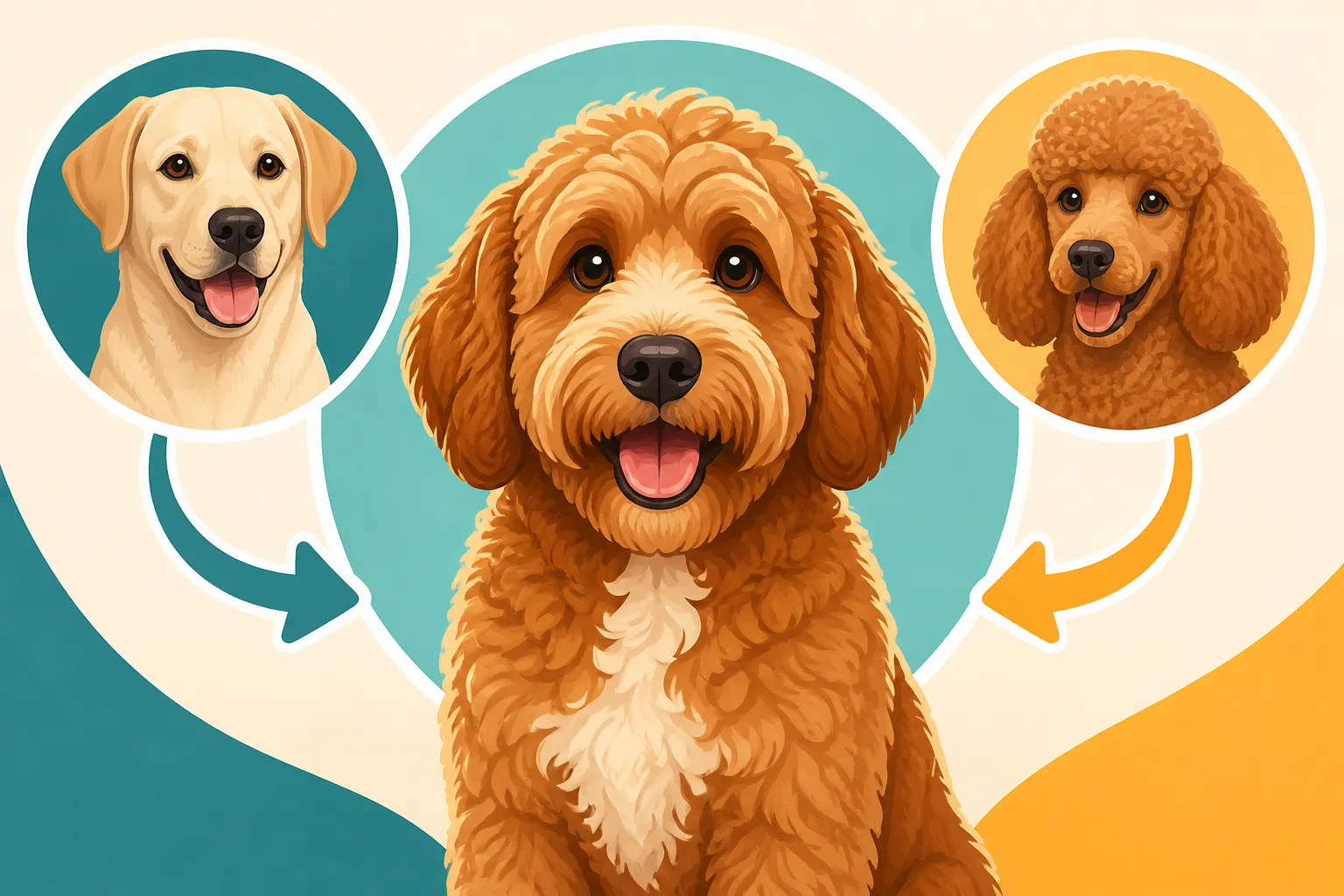
The Breeds Behind the Australian Labradoodle
It can be incredibly confusing when you start looking into Labradoodles, especially when you hear terms like "Australian Labradoodle" thrown around. You might assume it just means a Labradoodle bred in Australia, but that's a common misunderstanding! This guide will clear up the lineage and distinct parent breeds that make up the unique Australian Labradoodle, helping you understand why this particular dog is often considered a separate entity from the original Labradoodle cross.
Unpacking the "Australian Labradoodle" vs. "Labradoodle" Distinction
Let's start by addressing the elephant in the room: the name. When most people first encounter the term "Australian Labradoodle," they naturally think it simply refers to a Labradoodle bred down under. However, that's not quite right. While the breed originated in Australia, the term now signifies a specific, carefully developed multi-generational lineage with a distinct genetic makeup, quite different from the initial The 1989 Cross That Made the First Labradoodle that brought the Labradoodle into existence.
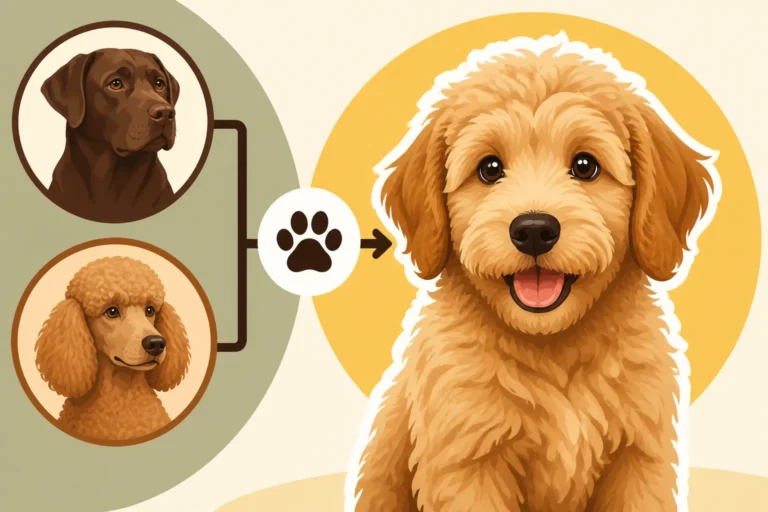
The original Labradoodle, often referred to as an F1 (first generation) cross, was a simple pairing of a Labrador Retriever and a Standard Poodle. The goal was to combine the Labrador's gentle temperament and trainability with the Poodle's intelligence and low-shedding coat. The challenge with these early crosses, as many owners quickly discovered, was the unpredictability of traits. Some F1s shed, some didn't; some had the desired temperament, others leaned more heavily on one parent breed. This is precisely why a dedicated group of Australian breeders began a more extensive breeding program. They aimed to create a consistently predictable dog in terms of health, temperament, and coat quality, ultimately establishing a distinct breed in its own right, rather than just a hybrid. This is the core difference behind Why an Australian Labradoodle Is Not a Labradoodle.
The Foundation: Labrador Retriever and Standard Poodle
At the heart of even the Australian Labradoodle, you'll find the robust genetics of the Labrador Retriever and the Standard Poodle. These two breeds provided the initial blueprint for everything that came after.
The Labrador Retriever is, of course, famed for its friendly, outgoing, and eager-to-please nature. They are highly trainable, incredibly loyal, and possess an inherent retrieving drive that makes them wonderful companions and working dogs. Their gentle disposition and love for people are qualities that breeders desperately wanted to infuse into a low-shedding package. However, Labradors do shed quite a bit, and they can be prone to certain health issues like hip and elbow dysplasia. Their robust, solid build also contrasts with the Poodle's leaner elegance.
The Standard Poodle, on the other hand, is renowned for its exceptional intelligence, elegance, and, crucially for allergy sufferers, its non-shedding, hypoallergenic coat. Poodles are highly athletic, often excelling in dog sports, and they are incredibly perceptive and sensitive. While sometimes perceived as aloof, a well-socialized Poodle is a joyful and engaging companion. They bring a keen mind, a different body structure, and that coveted curly coat to the mix. However, the Poodle's grooming needs are substantial, and some of their independent streak or higher energy levels might not be ideal for every family. The breeders of the Australian Labradoodle sought to selectively breed for the best of The Temperament a Labradoodle Gets From Each Parent and coat qualities, working to achieve that ideal balance. This foundation, drawing the best traits from both the Labrador and the Poodle, set the stage for the further refinement that the Australian Labradoodle would undergo.
The Strategic Additions: Cocker Spaniel and Irish Water Spaniel
To achieve the consistency and specific traits they desired, Australian Labradoodle breeders carefully introduced two additional breeds into their multi-generational lines: the English Cocker Spaniel (and sometimes American Cocker Spaniel) and the Irish Water Spaniel. These infusions were not random; they were deliberate choices made to refine the breed's characteristics over many generations, stabilizing desirable traits and minimizing undesirable ones. The process involved meticulous selection, tracking pedigrees, and health testing to ensure each addition contributed positively to the developing breed.
The goal was clear: to move beyond the genetic lottery of an F1 cross and create a dog that reliably exhibited a specific temperament, an ideal coat type, and robust health. This multi-generational approach is what truly differentiates the Australian Labradoodle program and is a key part of The Multigen Program That Made the Australian Labradoodle. These deliberate infusions helped shape the Australian Labradoodle into the distinct type of dog we recognize today, setting it on a path to becoming a recognized breed, rather than remaining a simple cross.
The English and American Cocker Spaniel Influence
The introduction of the Cocker Spaniel, both English and sometimes American varieties, was a pivotal step in shaping the Australian Labradoodle. These charming dogs are known for their merry, affectionate, and intelligent temperaments. They possess a delightful willingness to please and often have a softer, more expressive look compared to the Poodle.
One of the primary reasons for including the Cocker Spaniel was to refine the coat. While Poodles offer non-shedding qualities, their coat can be quite dense and tightly curled. The Cocker Spaniel contributed to the development of the softer, silkier "fleece" coat that is highly prized in Australian Labradoodles. This fleece coat is less prone to matting than a dense wool coat and often has a lovely wavy or spiraling texture that many owners adore. It's a wonderful blend that offers both visual appeal and manageable upkeep, though regular brushing with quality tools from retailers like Chewy is still essential. Beyond the coat, the Cocker Spaniel also helped in achieving a slightly smaller size range, contributing to the development of the "medium" and "miniature" Australian Labradoodles. Their inherently companionable and cheerful nature also reinforced the desired family-friendly temperament, adding an extra layer of sweetness and adaptability to the breed's disposition. Breeders carefully selected individuals to ensure the positive traits were passed on, while working to mitigate any potential health concerns common to the spaniel lines.
The Irish Water Spaniel's Unique Contribution
While perhaps a less commonly known addition than the Cocker Spaniel, the Irish Water Spaniel also played a significant, albeit subtle, role in the genetic tapestry of the Australian Labradoodle. This distinctive breed is one of the oldest and most striking of the spaniel family, known for its unique "rat tail" and dense, crisply curled, waterproof coat.
The Irish Water Spaniel was primarily introduced to further enhance specific coat qualities and genetic diversity. Their coat is remarkably water-resistant and non-shedding, and it contributed to the development of the desired "wool" coat type, which is dense and curly but still soft to the touch. This helped Australian Labradoodle breeders to solidify the non-shedding characteristics across their lines, aiming for maximum consistency. These dogs also bring considerable intelligence, often described as highly perceptive and sometimes a bit mischievous, adding another layer to the Australian Labradoodle's cognitive abilities. While they can be somewhat more independent than a Labrador or Poodle, careful breeding ensured that this trait was balanced with the overall aim for a biddable and friendly companion. The robust health of the Irish Water Spaniel also offered a valuable contribution to the overall genetic pool, helping to strengthen the breed's vitality. This specific addition highlights the depth of thought and effort that went into developing the Australian Labradoodle, focusing on diverse genetic contributions to achieve a truly unique and consistent canine companion, whose traits can often be identified through a detailed What a Labradoodle Coat DNA Panel Tells You.
The Purpose Behind the Blending: Creating a Consistent Breed
The deliberate blending of these four breeds—the Labrador Retriever, Standard Poodle, English/American Cocker Spaniel, and Irish Water Spaniel—was not done haphazardly. It was a methodical and visionary effort by early Australian breeders to address the inherent unpredictability of first-generation crosses. Their ultimate goal was to move beyond the "hybrid" label and establish a new, distinct breed: one that consistently produced desirable traits in terms of temperament, health, and coat. This involves a rigorous multi-generational breeding program, where dogs are selectively chosen based on their proven qualities over many generations, ensuring that the desired characteristics are reliably passed down.
This commitment to consistency is a hallmark of the Australian Labradoodle program. Unlike the early F1 Labradoodle, where you might get a dog that sheds like a Labrador or has a Poodle's strong prey drive, the Australian Labradoodle aims to offer a much more predictable package. This predictability makes them particularly suitable for specific roles, like assistance work, where consistency in behavior and physical traits is paramount. Reputable breeders invest heavily in health testing and genetic tracking to ensure they are building a solid foundation for future generations, ultimately creating a more reliable and beloved companion.
Temperament and Health Consistency
One of the most significant benefits of the multi-breed infusion was the ability to stabilize and refine the temperament. The breeders aimed for a dog with a calm, intelligent, and highly social disposition, ideal for families and perfect for therapy or assistance roles. By carefully selecting individuals from all four contributing breeds, they were able to reinforce traits like biddability, empathy, and a strong desire to be with their human companions, mitigating some of the more extreme characteristics that might appear in an F1 cross. This deliberate approach results in a dog that is generally more consistent in its personality and easier to train, making the phrase Whether an Australian Labradoodle Is More Predictable often ring true.
Furthermore, health consistency was a paramount concern. Each parent breed can carry specific genetic health conditions. Through careful, multi-generational breeding and extensive health testing – often involving sophisticated DNA panels and physical examinations – breeders worked to reduce the prevalence of these inherited diseases. They aimed to create a robust and healthy lineage, providing peace of mind to owners. For example, testing for conditions common in Poodles, Labradors, and Spaniels became a standard practice, with breeders striving to select dogs clear of known genetic predispositions. This proactive approach to health means that, generally, Australian Labradoodles come from lines where health is a serious consideration, contributing to their overall lifespan and quality of life, something you can read more about in What Health Tested Parents Add Years to a Labradoodle. When looking for a puppy, checking for these health clearances is vital, and many breeders will happily share results for their breeding stock, often obtained through labs that collaborate with pet supply companies like Chewy, making health-related items easier to find.
Coat and Physical Predictability
The coat is often the first thing people think about when discussing "Doodles," and it was a major driving force behind the development of the Australian Labradoodle. The initial Labrador-Poodle cross could result in a wide range of coat types, from shedding hair coats (like a Labrador) to tightly curled wool coats (like a Poodle), and everything in between. This unpredictability was a significant concern for allergy sufferers who sought a truly non-shedding dog.
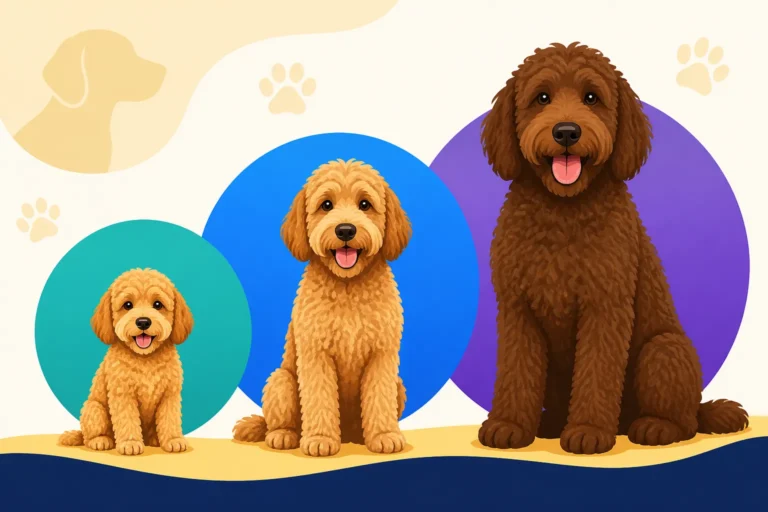
The introduction of the Cocker Spaniel and Irish Water Spaniel, coupled with multi-generational breeding, allowed breeders to stabilize the coat types. The goal was to consistently produce the desirable low-shedding, allergy-friendly "fleece" and "wool" coats. The fleece coat, with its soft, wavy, or spiraling texture, is particularly popular, while the wool coat offers a dense, curly, and often non-shedding option. This means that an Australian Labradoodle puppy is much more likely to develop the expected coat type compared to an F1 Labradoodle. This consistency extends to physical appearance too; breeders worked to achieve a balanced, athletic build with particular facial characteristics often described as a "teddy bear" look. Sizes also became more predictable, falling into consistent categories of miniature, medium, and standard, making it easier for prospective owners to choose a dog that truly fits their lifestyle and living situation. The investment in understanding coat genetics is why many breeders today conduct DNA testing to ensure the desired The Fleece Coat and Why Breeders Aim For It and low-shedding qualities. Tools like specialized brushes and shampoos, available at places like Chewy, are essential for maintaining these beautiful coats.
| Breed Contributor | Primary Contributions to Australian Labradoodle | Key Desirable Traits Reinforced |
|---|---|---|
| Labrador Retriever | Friendly, loyal, outgoing temperament; high trainability; retrieving drive; robust build | Affectionate nature, intelligence, eagerness to please |
| Standard Poodle | High intelligence, non-shedding coat (wool/fleece); athleticism; longevity; elegant build | Hypoallergenic qualities, problem-solving ability, grace |
| Cocker Spaniel | Refined fleece coat texture; merry, cheerful disposition; smaller size contributions | Softer coat, endearing expression, gentle companionship |
| Irish Water Spaniel | Dense, waterproof coat qualities (wool); unique texture; genetic diversity; robust health | Further enhanced non-shedding, resilience, intelligence |
The Australian Labradoodle stands as a testament to dedicated breeding, aiming to produce a truly consistent and well-rounded companion. By strategically incorporating the Labrador Retriever, Standard Poodle, Cocker Spaniel, and Irish Water Spaniel, breeders crafted a dog that reliably offers a wonderful temperament, a desirable low-shedding coat, and a commitment to health. This meticulous approach has helped solidify the Australian Labradoodle's place as a cherished family member and, for many, a genuine assistance animal.
Disclaimer
This article is for general informational purposes only and does not constitute professional advice. Laws, prices and regulations vary by location and change over time. Consult a qualified professional for guidance on your specific situation.