The Year the First Labradoodle Was Bred
Many people wonder about the origins of the beloved Labradoodle, often hearing various stories about how this friendly crossbreed came to be. The truth is, the Labradoodle's story began in a very specific year, born out of a genuine need, and understanding that initial spark in 1989 helps us truly appreciate the journey this charming dog has taken to become the popular family companion it is today. This guide will take you back to that pivotal year, exploring the circumstances, the people involved, and the immediate impact of the world's first planned Labradoodle litter.
The Spark of an Idea: A Need Arises
Before 1989, the concept of intentionally breeding a Labrador Retriever with a Poodle to create a specific type of companion dog wasn't really on anyone's radar. Most Poodle mixes were often accidental or bred without a clear, specific purpose. However, a unique situation arose that would change the course of canine history and pave the way for what we now know as the Labradoodle. This wasn't a whimsical idea to create a "designer dog" initially; it was a deeply practical and compassionate endeavor.
The Request for an Allergy-Friendly Guide Dog
The true genesis of the Labradoodle story lies with a woman named Pat Blum, who lived in Hawaii. Pat was blind and relied on a guide dog, but she also faced a significant challenge: her husband was allergic to dogs. This created an impossible situation. How could she maintain her independence and companionship while ensuring her husband's health? She approached Guide Dogs Victoria in Australia with a plea. She needed a guide dog that wouldn't trigger her husband's allergies. This was a critical and deeply personal need, highlighting the profound impact a service animal has on someone's life, and the potential barriers that can unexpectedly arise. Pat Blum, the Woman the First Labradoodle Was Bred For was the catalyst.
At the time, Guide Dogs Victoria primarily used Labrador Retrievers for their temperament, trainability, and devotion. Labradors are excellent guide dogs, but they shed. A lot. Poodles, on the other hand, have a low-shedding coat, which is often considered more allergy-friendly. However, Poodles, while intelligent, were not the traditional choice for guide work, and finding one with the exact temperament and working drive of a Labrador could be challenging. This was the dilemma facing the breeding program. It wasn't just about mixing two breeds; it was about combining specific, desirable traits for a life-changing role. This need illuminated a gap in existing service dog options, pushing the boundaries of traditional breeding.
Wally Conron's Challenge
Enter Wally Conron, the breeding manager for Guide Dogs Victoria in Australia. He was tasked with finding a solution for Pat Blum. Conron understood the gravity of the request – it wasn't just about a pet, but about a working dog that would provide independence and safety, all while navigating a severe allergy. He initially tried to find a Poodle that met the stringent health and temperament requirements for guide dog work, searching diligently for a suitable candidate. After exploring many options, he realized that a purebred Poodle simply wasn't hitting all the marks for guide dog suitability in the way their proven Labradors did.
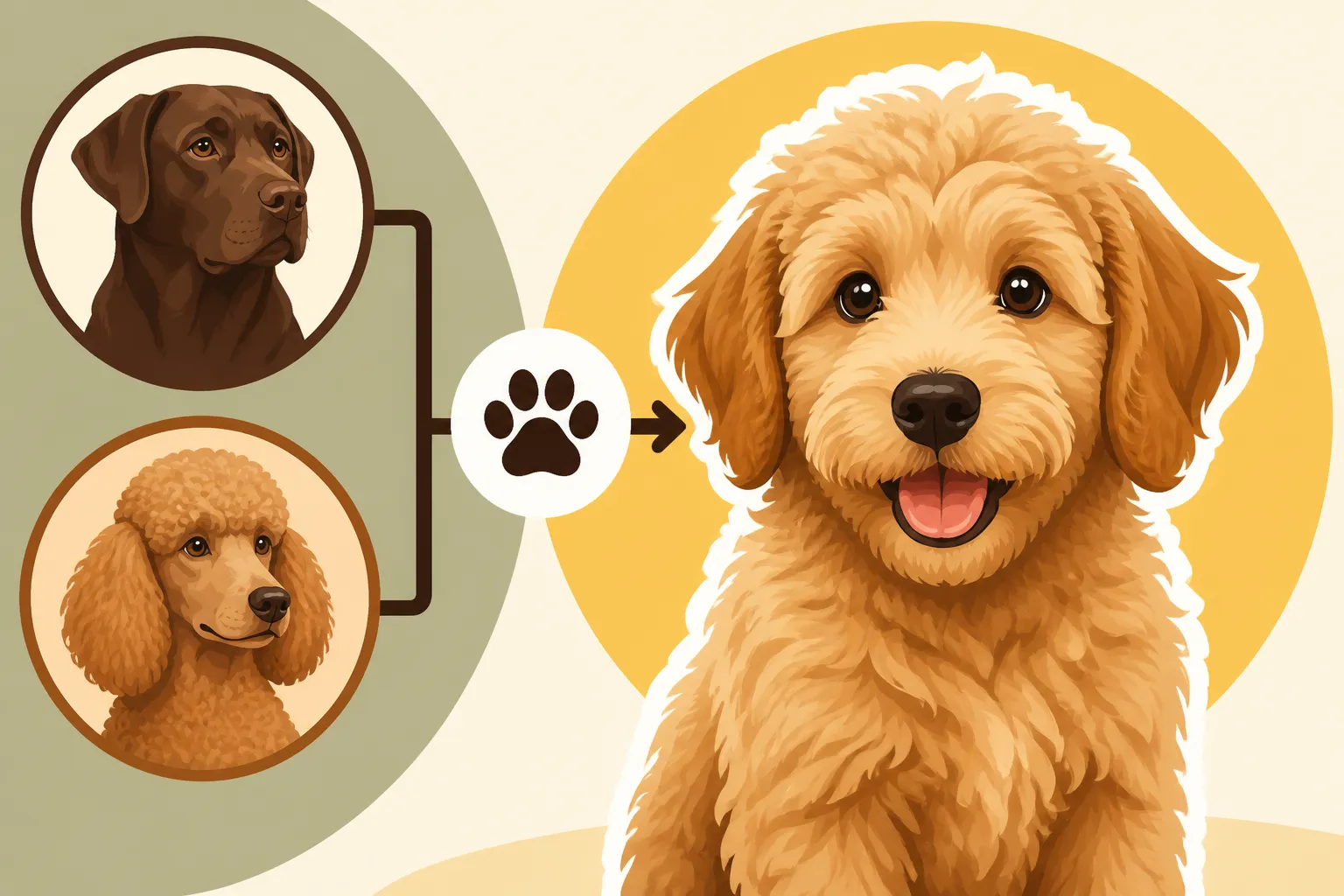
His innovative (and, as he would later famously say, regrettable) idea was to cross a Labrador Retriever with a Standard Poodle. The hope was to combine the Labrador's calm temperament, trainability, and eagerness to please with the Poodle's intelligence and, crucially, its low-shedding, allergy-friendly coat. This was a bold move at the time, as crossbreeding for such a specific, high-stakes purpose was highly unusual within formal assistance dog programs. Wally Conron and the Labradoodle He Regrets later reflected on the wider impact of this decision.
The Fateful Year: 1989 and the First Litter
With the plan in place, Wally Conron made the cross, leading to the birth of the very first litter of intentional Labrador-Poodle crosses. This moment, in 1989, marked the official beginning of the Labradoodle as we know it. The hopes were high, not just for Pat Blum, but for potentially opening up guide dog services to many more people who suffered from allergies.
Sultan's Arrival and Impact
From that pioneering litter, one pup stood out: a dog named Sultan. Sultan quickly proved to possess the ideal combination of traits. He was intelligent, calm, eager to please, and, most importantly, his coat was deemed suitable for Pat Blum's husband's allergies. Sultan was successfully trained as a guide dog and went to Hawaii to live and work with Pat. Sultan, the Labradoodle That Proved the Idea truly was the first success story, showcasing the potential of this new crossbreed. His journey validated Conron's experimental breeding program and provided Pat Blum with the independence she sought.
Sultan's success was not just a win for one person, but a demonstration that this cross could achieve its intended purpose. It confirmed that the combination of Labrador temperament and Poodle coat could indeed produce a functional and allergy-friendly assistance dog. This initial proof of concept was vital in establishing the Labradoodle's early reputation and inspiring further interest. His story quickly spread through the small community of assistance dog providers and, eventually, to the wider public.
Initial Reception and the Media Frenzy
Initially, finding homes for the other puppies in Sultan's litter was unexpectedly difficult. People were hesitant about a mixed breed, especially one intended for a serious working role. They preferred the familiar image of a purebred Labrador as a guide dog. To overcome this, Conron had to give the new cross a memorable name. He coined "Labradoodle." Suddenly, with a catchy name and a story of a successful guide dog, public perception shifted dramatically.
The media picked up on the story, and the "Labradoodle" quickly gained attention. People were fascinated by the idea of a dog that combined the best traits of two popular breeds, particularly the promise of an allergy-friendly coat and a friendly disposition. This media buzz created immense demand, far beyond the needs of guide dog recipients. The public, especially those with mild allergies or simply seeking a friendly, intelligent family pet, saw the Labradoodle as the perfect solution. This demand would ultimately lead to unforeseen challenges and the rapid, often unregulated, expansion of the breed. This initial enthusiasm, while positive in many ways, also laid the groundwork for future complexities.
Here is a brief timeline of these pivotal early events:
| Year | Event | Significance |
|---|---|---|
| 1989 | Pat Blum requests an allergy-friendly guide dog. | Catalyzed the entire breeding program. |
| 1989 | Wally Conron breeds the first Labradoodle litter. | The birth of the breed. |
| 1989 | Sultan is born and selected from the litter. | First successful guide dog from the cross. |
| 1989 | Conron coins the term "Labradoodle". | Helped market the puppies and boost public interest. |
| 1989-1990 | Labradoodles gain media attention. | Sparked the "Doodle craze" and widespread demand. |
The Unforeseen Consequences and the "Mistake"
While the initial goal was noble and successful for Pat Blum, the immediate popularity of the Labradoodle had a ripple effect that Wally Conron himself would later come to deeply regret. The explosion of demand led to practices that were far from his original vision for responsible, purpose-driven breeding. The media's portrayal often highlighted the perceived benefits without sufficiently emphasizing the commitment required for responsible breeding and ownership.
Conron's Regret
In subsequent interviews, Wally Conron famously stated that creating the Labradoodle was his "life's biggest regret." This statement often shocks new owners, but his reasoning stemmed from the uncontrolled breeding that followed the breed's initial success. He had envisioned a carefully managed program to produce healthy, temperamentally sound assistance dogs. Instead, he saw many unscrupulous breeders jump on the bandwagon, breeding Labradoodles without proper health testing, attention to temperament, or ethical practices. What Conron Said He Regretted About the Labradoodle truly highlights his disappointment.
He witnessed dogs being bred solely for profit, with little regard for the welfare of the animals or the predictability of their offspring's traits, particularly their coats. Some Labradoodles were indeed allergy-friendly, but many were not, leading to frustrated owners and dogs ending up in shelters. Conron expressed concern over the health issues that emerged in some lines due to poor breeding choices, as well as temperamental inconsistencies. The widespread, unregulated proliferation diluted the original purpose and quality that he had strived for. This is a common pitfall when a new crossbreed gains rapid popularity without established breed standards or oversight.
The Rise of the "Doodle Craze"
Despite Conron's reservations, the Labradoodle's popularity continued to soar, and it directly inspired what became known as the "Doodle craze." This trend saw countless other Poodle crosses emerge, such as Goldendoodles, Bernedoodles, Cavapoos, and many more, all aiming to replicate the Labradoodle's success in combining the Poodle's coat with another breed's desirable traits. Whether the Labradoodle Started the Doodle Trend is a question that can largely be answered with a resounding yes, as it set the precedent.
This explosion of "Doodles" was a direct consequence of the Labradoodle's initial fame. Suddenly, a mixed breed was seen not just as a mutt, but as a desirable, often high-priced, "designer dog." This led to a huge variety of results, some excellent, some less so. Many owners, drawn in by the promise of a hypoallergenic, intelligent, and friendly companion, found themselves unprepared for the grooming needs of a The Three Labradoodle Coats: Hair, Fleece and Wool or the often high energy levels that can come from the parent breeds. Products for these dogs, from specialized brushes to sensitive skin shampoos, became readily available on sites like Chewy, reflecting the growing market.
Beyond 1989: The Labradoodle's Legacy
The events of 1989, though a specific point in time, laid the groundwork for the Labradoodle's continued evolution and its lasting impact on the dog world. From that single, intentional cross, the Labradoodle has diversified and developed, leading to different lines and types that are sometimes mistaken for one another.
The Emergence of the Australian Labradoodle
One of the most significant developments stemming from the original Labradoodle cross was the creation of the Australian Labradoodle. While the initial 1989 Labradoodle was a simple first-generation (F1) cross between a Labrador and a Poodle, a dedicated group of breeders in Australia recognized the need for greater consistency in temperament, health, and coat type. They embarked on a multi-generational breeding program, introducing other breeds like the English Cocker Spaniel, American Cocker Spaniel, and Irish Water Spaniel to achieve a more predictable outcome. Why an Australian Labradoodle Is Not a Labradoodle is an important distinction to understand.
These breeders aimed to establish a true "breed" rather than just a cross, with a specific vision for its characteristics. This meant careful selection of breeding stock, extensive health testing, and generations of intentional breeding to solidify traits. This effort aimed to address many of the inconsistencies that Wally Conron had lamented, striving for a dog that truly bred true to type. This means that when you are looking for specific characteristics, understanding the difference between an early-generation Labradoodle and an Australian Labradoodle is key.
Understanding Labradoodle Generations Today
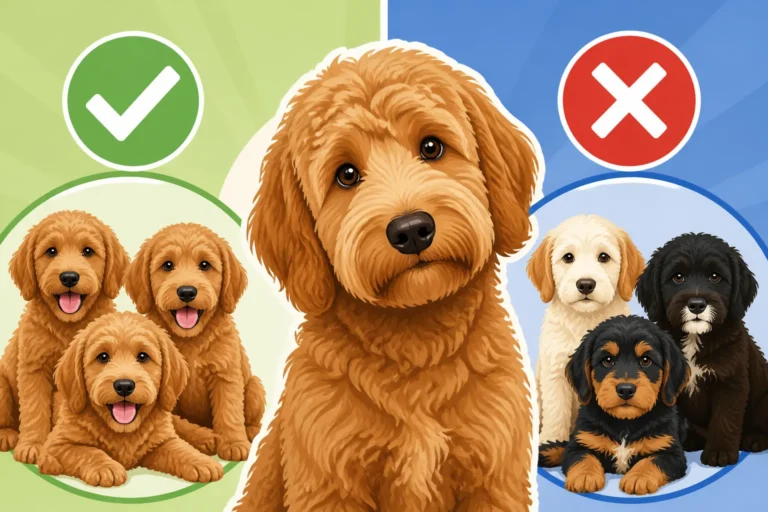
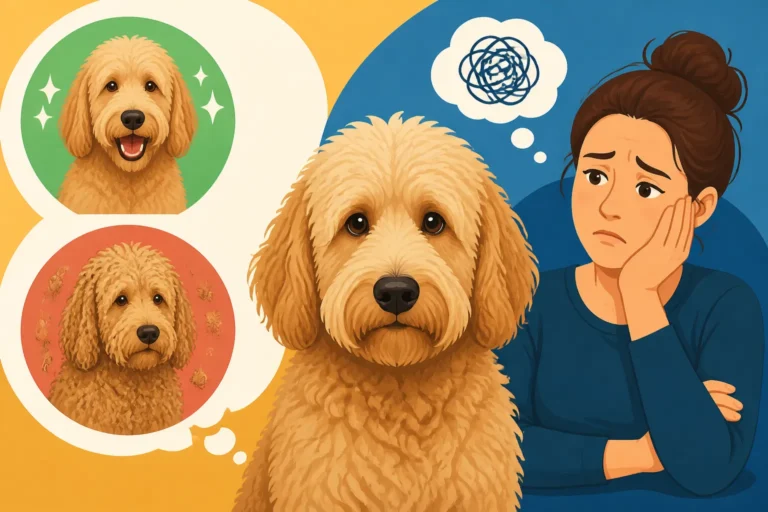
Today, when people talk about Labradoodles, they might be referring to several generations and types, all tracing back to that initial cross in 1989. The most common term is "F1 Labradoodle," which stands for "filial 1," meaning it's a first-generation cross directly from a purebred Labrador and a purebred Poodle. What F1 Means on a Labradoodle is crucial for understanding the potential variability in traits. These F1s can exhibit a wide range of coat types, from more Labrador-like shedding coats to curlier, Poodle-like coats. Whether an F1 Labradoodle's Coat Is a Gamble really depends on the individual puppy and its genetic inheritance.
Further generations exist, such as F1b (an F1 Labradoodle bred back to a Poodle, often to enhance the low-shedding trait) and multigen Labradoodles (dogs resulting from multiple generations of Labradoodle-to-Labradoodle breeding). Each generation seeks to refine and stabilize the desired characteristics, though some degree of variability can still be expected in any crossbreed. The goal for many reputable breeders today is to produce healthy, well-socialized dogs with predictable temperaments and coats, often with assistance from detailed genetic testing. This ensures that families can find the right fit for their lifestyle, perhaps even finding suitable training toys and food from retailers like Chewy.
The journey from a specific need in 1989 to the diverse world of Labradoodles today is a testament to both innovation and the complexities of dog breeding. It highlights how a single decision can spark a global phenomenon, and how responsible breeding practices are paramount in ensuring the health and happiness of future generations. Even with all the evolution, the core desire for an intelligent, friendly companion remains, a legacy that began over three decades ago. You can find many resources on sites like Chewy that cater to the needs of Labradoodle owners, from specific grooming tools to dietary requirements, all designed to support the well-being of these beloved dogs.
Disclaimer
This article is for general informational purposes only and does not constitute professional advice. Laws, prices and regulations vary by location and change over time. Consult a qualified professional for guidance on your specific situation.