The Signs a Labradoodle Is Bloating
Gastric dilatation and volvulus symptoms in Labradoodles include restlessness, anxiety, and a distended, swollen abdomen.
Know what to watch for.
Breed-specific conditions, screening and DNA tests, what surgery actually costs, and the daily habits that stretch a healthy lifespan.
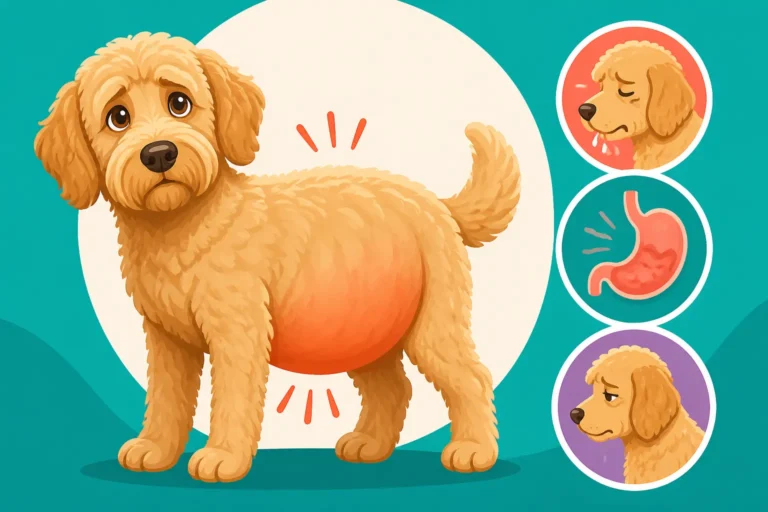
Gastric dilatation and volvulus symptoms in Labradoodles include restlessness, anxiety, and a distended, swollen abdomen.
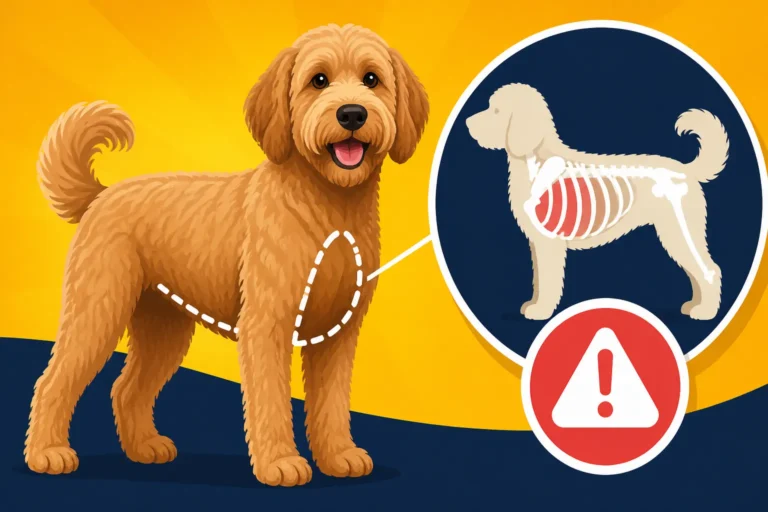
Deep chest shape and skeletal structure create gastric dilatation-volvulus susceptibility and fatal bloat risks for Labradoodles.

Labradoodle skin disease genetics, including inherited allergies and sebaceous adenitis from Labrador and Poodle ancestry.

Labradoodle skin allergies, yeast overgrowth, and bacterial infections explain why medicated baths bring relief from scratching.

Labradoodle itching and diet connections are explained, detailing how food impacts skin health and causes persistent scratching.
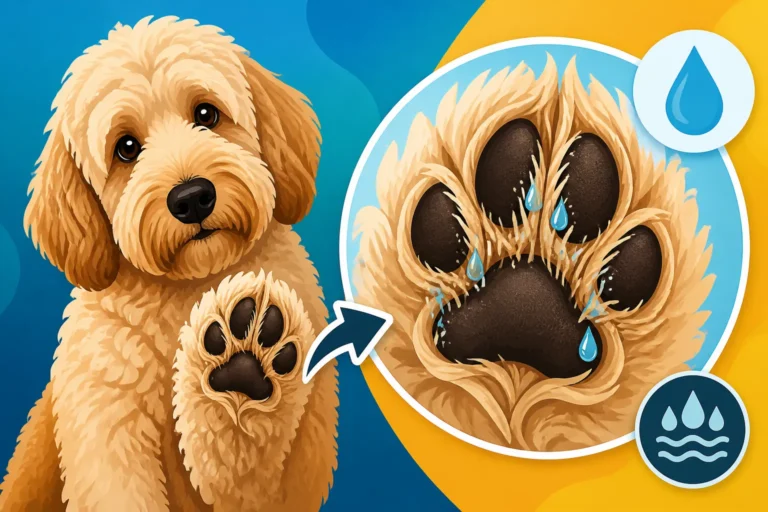
Labradoodle foot hair traps moisture against the skin, causing damp environments that lead to painful yeast infections and dermatitis.
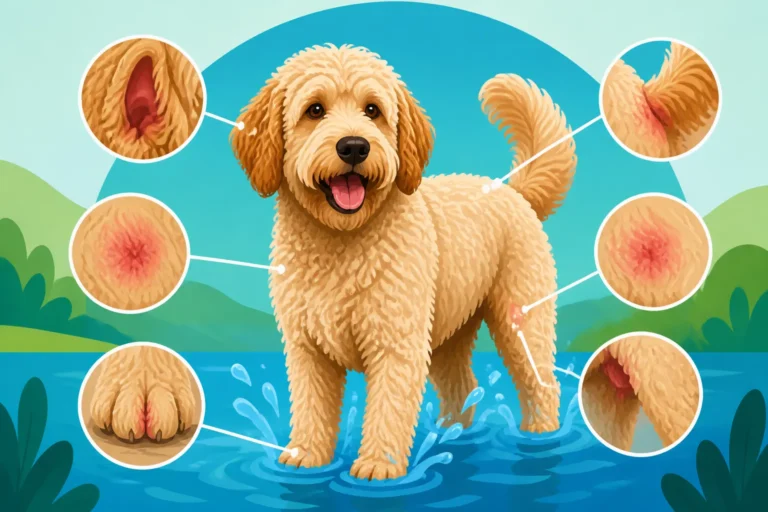
Hot spots on swimming Labradoodles develop when dense coats trap moisture, leading to rapid skin infections and intense itching.
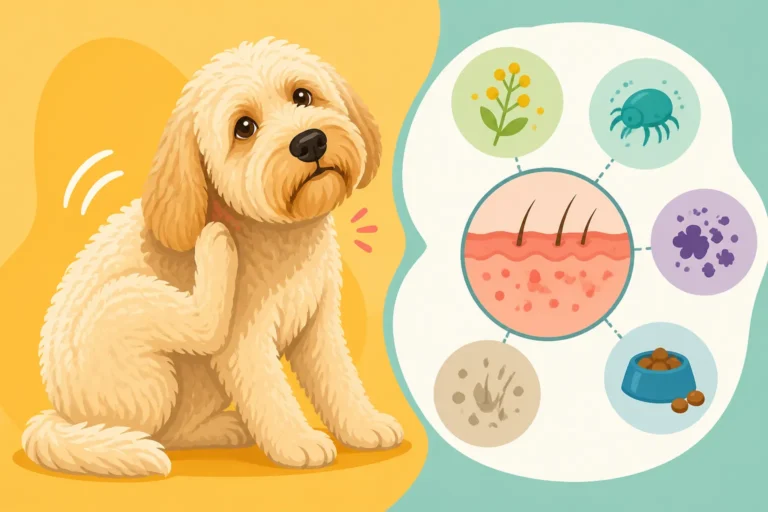
Atopic dermatitis causes intense itching in Labradoodles due to environmental allergies and inherited genetic predispositions.

Oil soaks for Labradoodles with sebaceous adenitis replace lost sebum, bringing relief from dry skin, scaling, and hair loss.
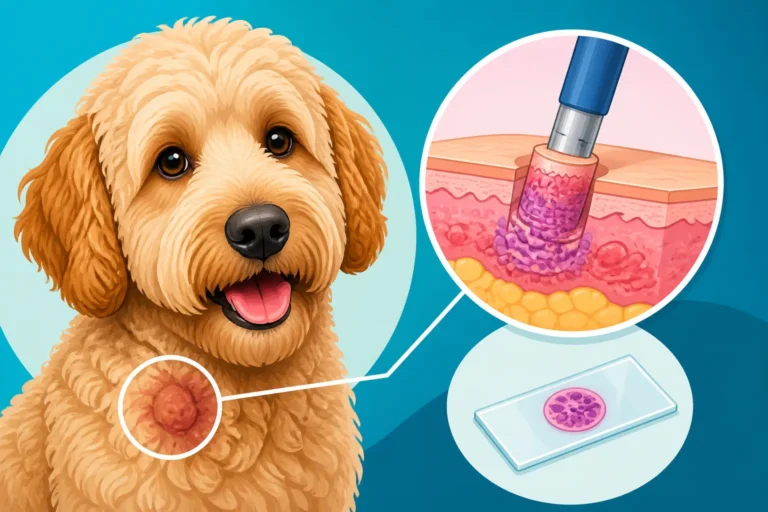
Sebaceous adenitis diagnosis in Labradoodles relies on a skin biopsy for definitive confirmation of the autoimmune disease.