The Weight a Labradoodle Should Hold
Labradoodle weight ranges and growth stages for miniature, medium, and standard sizes are explained with healthy weight guidelines.
Know what to watch for.
Breed-specific conditions, screening and DNA tests, what surgery actually costs, and the daily habits that stretch a healthy lifespan.

Labradoodle weight ranges and growth stages for miniature, medium, and standard sizes are explained with healthy weight guidelines.

Labradoodle constant hunger stems from Labrador genes, Poodle motivation, and practical strategies manage their daily appetites.

Labradoodle inheritance of the Labrador obesity gene and POMC mutation explains constant hunger and weight management challenges.
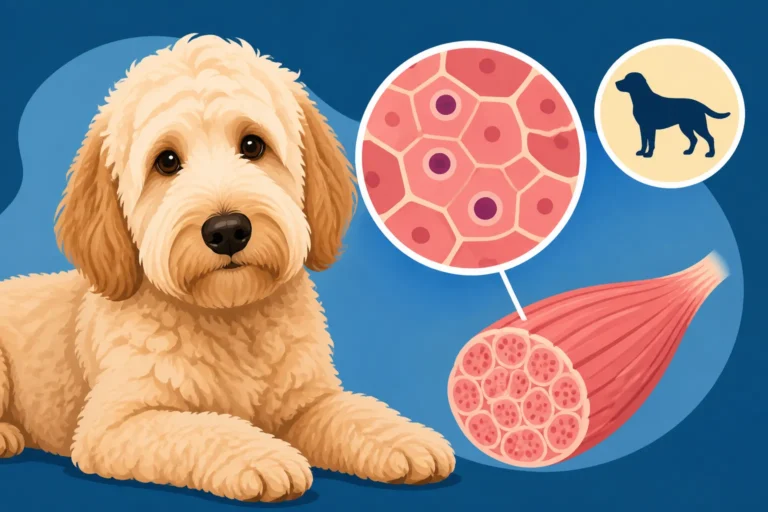
Centronuclear Myopathy is an inherited muscular disorder passed from Labrador lineage through recessive genes, causing muscle weakness.

Canine epilepsy and hereditary risks explain why breeding an epileptic Labradoodle creates severe ethical responsibilities.

Labradoodle epilepsy genetics and Poodle heritage are explored, explaining seizure symptoms, types, and diagnosis methods.
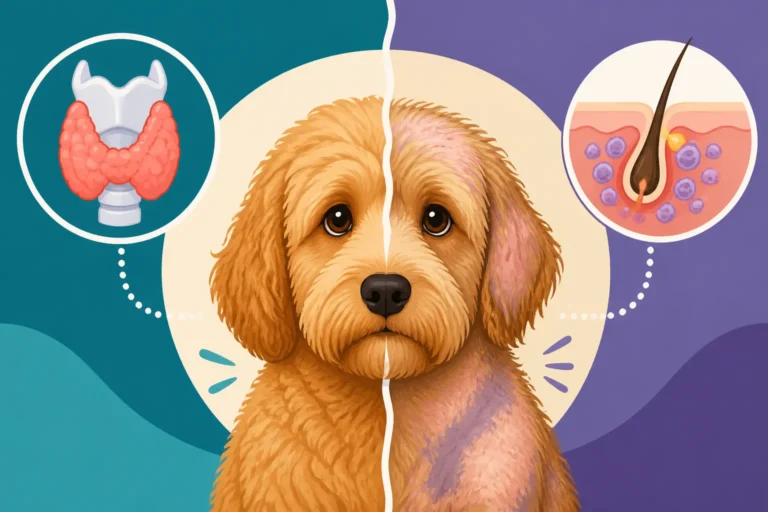
Hypothyroidism and sebaceous adenitis causes in Labradoodles, explaining how to identify distinct coat loss and tell them apart.
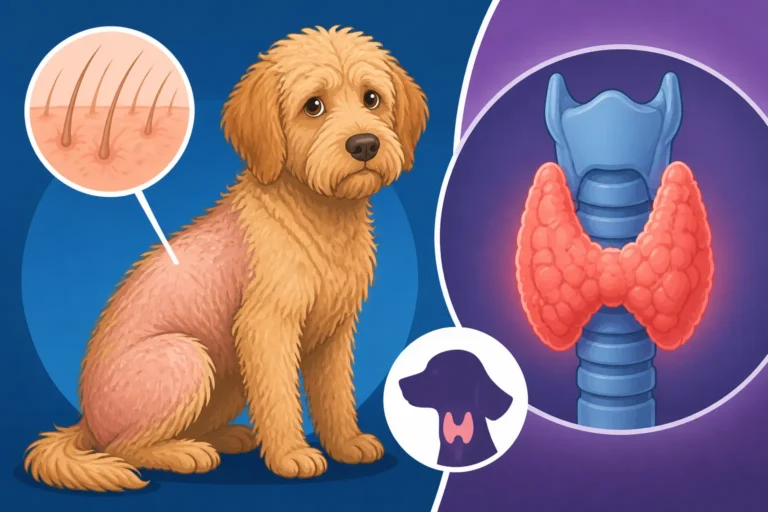
Hypothyroidism in Labradoodles causes coat loss and fatigue when the underactive thyroid gland produces insufficient hormones.
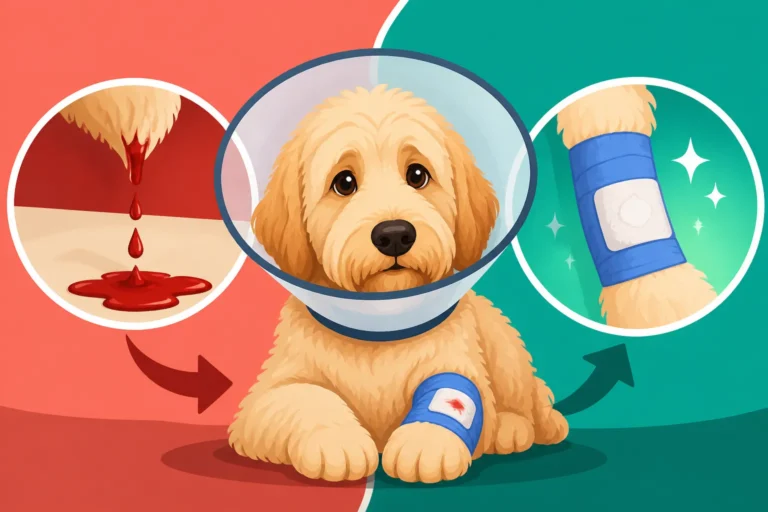
Labradoodle bleeding risks during surgery involve von Willebrand disease, liver issues, and vitamin deficiencies affecting clotting.
Von Willebrand disease testing options for Labradoodles help owners manage genetic bleeding risks and interpret laboratory results.