Whether a Labradoodle Is Too Bouncy for a Toddler
That boundless energy and playful spirit are often what draws us to Labradoodles in the first place, aren't they? But when that exuberant bounce is directed at a tiny, unsteady toddler, it can quickly turn a heartwarming moment into a heart-stopping one. Many of us worry about accidental bumps, scratches, or even fright. This guide is here to tackle that very real concern, offering practical strategies and insights to help ensure your Labradoodle and your toddler can coexist safely and happily.
Understanding the Labradoodle's Natural Exuberance
Labradoodles are renowned for their cheerful dispositions and their zest for life. This isn't just a quirky trait; it's deeply ingrained in their genetic makeup, combining the spirited nature of the Labrador Retriever with the intelligence and athleticism of the Poodle. Understanding this inherent energy is the first step in managing it effectively around young children.
The Energetic Blend of Poodle and Labrador
Think about the parent breeds for a moment. Labradors were bred to be enthusiastic working dogs, known for their retrieving drive, stamina, and generally boisterous personalities. They love to run, jump, and play with an intensity that can sometimes be surprising. Poodles, while often perceived as elegant, are far from sedate. They are highly intelligent, agile, and possess a remarkable amount of energy, thriving on mental and physical challenges. When you combine these two, you often get a dog like the Labradoodle: smart, eager to please, but also incredibly active and sometimes, well, a little clumsy in their enthusiasm.
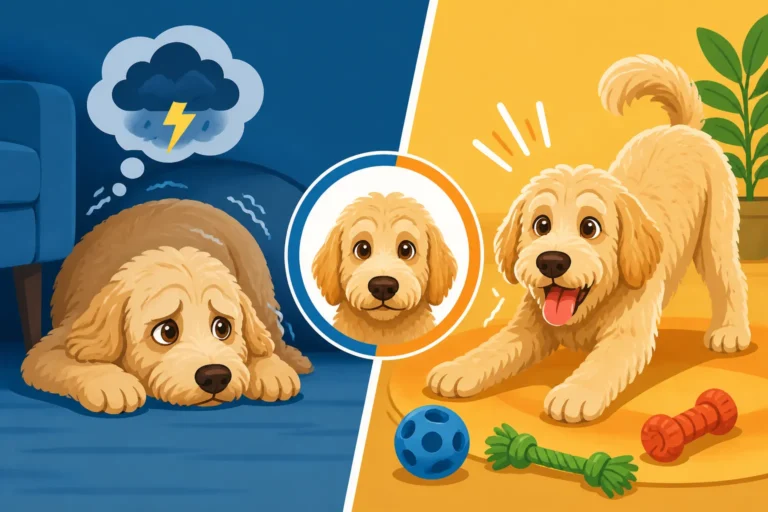
This blend means a Labradoodle often has a deep well of energy that needs regular outlets. Without proper exercise and stimulation, that energy can manifest as jumping, nipping, or general over-excitement, making them feel "too much" for a calm household, especially one with little ones. Their desire for interaction can be overwhelming, even if it's born of pure affection. Understanding The Retrieving Drive a Labradoodle Gets From the Labrador can give you a lot of insight into their inherent desire to engage and move.
Puppyhood to Adolescence: A Bouncy Journey
Every puppy is a bundle of joyful chaos, but Labradoodle puppies can be particularly energetic, and this phase often lasts longer than many new owners anticipate. While that tiny, fluffy puppy might seem manageable, they grow remarkably quickly into powerful adolescents. A Labradoodle can easily retain its "puppy brain" well into its second year, meaning they still have that youthful exuberance and lack of impulse control, even when they're the size of a small pony.
During this adolescent period, which typically hits around six to ten months and can extend much longer, your Labradoodle might seem to forget all the training they've learned. They become bolder, more easily distracted, and their physical strength increases exponentially. This is precisely when their unmanaged bounciness becomes a significant concern around toddlers, who are just learning to navigate their own bodies and the world around them. What was cute puppy nipping or jumping at six pounds is far less so at sixty pounds. Sometimes it feels like The Ten Month Old Labradoodle That Forgets Everything you've taught them, and it's certainly a frustrating phase.
The Risks of Bounciness and Jumping Around Toddlers
It's not about your Labradoodle being malicious; it's about physics and differing levels of physical stability. A happy, wagging tail and an excited jump from a medium to large dog can quickly lead to an accident for a small child.
Accidental Injuries and Fright
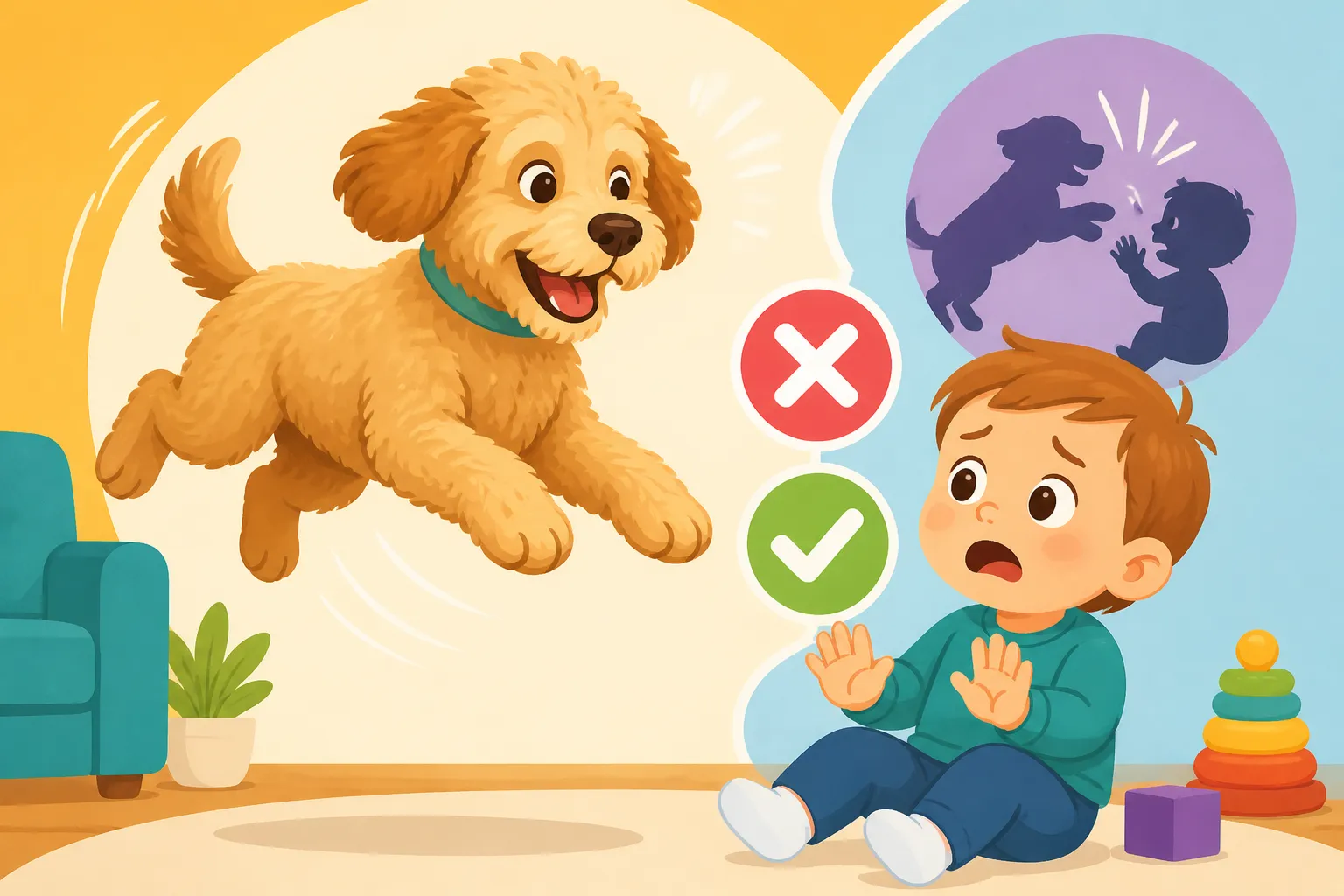
Imagine a scenario: your toddler is toddling along, perhaps a bit wobbly, exploring the living room. Your Labradoodle, thrilled to see the little human, decides it's time for a playful pounce. In a flash, the dog jumps up, not with aggression, but with pure, unadulterated joy. Their solid head can connect with a child's delicate face, a strong paw can scratch, or simply the force of their body can knock a toddler completely off their feet. These aren't intentional acts of harm, but they can result in bumps, bruises, scratches, or worse.
Beyond physical injury, there's the emotional impact. A sudden, forceful interaction, even if accidental, can be incredibly frightening for a toddler. This fear, once established, can be very hard to undo and can unfortunately color their entire perception of dogs, including their beloved family pet. It's a fine line between a dog's natural play and a child's safety, and the responsibility lies with us, the adults, to manage that line effectively. We want the relationship to be one of joy and safety, not constant vigilance and fear. It’s why so many parents agonize over A Sixty Pound Labradoodle and a Toddler.
Misinterpretation of Play by Children
Toddlers operate in a very different world from dogs. They are just beginning to understand cause and effect, and their communication skills are rudimentary. When a Labradoodle jumps up, a child might interpret this as an invitation to engage in rough play, or they might simply not understand the dog's personal space cues. This can lead to the child escalating the interaction, perhaps grabbing the dog's fur, or even pushing back, which can then confuse or overstimulate the dog.
Dogs communicate largely through body language, and subtle cues like averting eyes or a tense posture can easily be missed by a toddler. If a child persistently engages a dog that is trying to disengage, it can inadvertently create a stressful situation for the dog, potentially leading to a more defensive reaction down the line. It's not fair to either the child or the dog to expect them to intuitively understand each other's boundaries without careful guidance and supervision from adults.
Strategies for Managing a Bouncy Labradoodle Around Young Children
The good news is that with consistent effort and the right approach, you absolutely can teach your Labradoodle appropriate behavior around toddlers. It requires a proactive, rather than reactive, mindset, focusing on prevention and positive reinforcement.
Early Socialization and Positive Reinforcement
The foundation of a well-mannered Labradoodle begins in puppyhood. Early, positive socialization to various sights, sounds, people, and gentle interactions is paramount. This means exposing your puppy to children in a controlled, safe way, always ensuring the interactions are positive for both parties. Never force an interaction, and always reward calm, appropriate behavior. When a Labradoodle puppy is learning, you can use treats and praise lavishly for any instance where they keep all four paws on the floor around a child, or simply lie calmly nearby.
Enroll in puppy classes as soon as your vet gives the go-ahead. These classes aren't just for teaching commands; they're vital for socialization and impulse control. Consider online training programs too, especially if getting to in-person classes is tough with a toddler in tow. A program like BAXTER & Bella offers comprehensive online puppy training that focuses on these foundational behaviors, giving you the tools to work at home, at your own pace. The earlier you start, the better chance you have of Raising a Labradoodle Through Its First Year with solid manners.
Consistent Exercise and Mental Stimulation
A tired Labradoodle is truly a better-behaved Labradoodle, especially around impressionable toddlers. These dogs have significant energy demands, and if those needs aren't met, that pent-up energy will find an outlet – often through undesirable behaviors like jumping, nipping, or excessive bounciness. Aim for at least two substantial exercise sessions daily, tailored to your Labradoodle's age and health. This could be a vigorous game of fetch in the park, a long walk or jog, or even a swim if your Labradoodle loves water.
But it's not just about physical exercise; mental stimulation is equally crucial. Labradoodles are intelligent dogs and they thrive on having "jobs" to do. Incorporate puzzle toys, scent work games, or short, engaging training sessions throughout the day. Teaching them new tricks or practicing obedience commands can tire them out mentally, which is just as effective as physical exertion in reducing unwanted bounciness. Remember, The Exercise a Labradoodle Needs Before It Behaves is not just a saying, it's a fundamental truth for this breed.
Creating Safe Zones and Supervision
No matter how well-trained your Labradoodle is, or how much energy they've burned off, direct, constant supervision is non-negotiable when dogs and toddlers are together. Think of it as a layered approach to safety. Physical barriers are your best friends here. Install sturdy baby gates between rooms to create designated "safe zones" where your toddler can play freely without the dog, and vice-versa. A crate can also serve as a safe, comfortable den for your Labradoodle when you need a break from active supervision or when guests with children are visiting.
When your Labradoodle and toddler are in the same space, you must be actively supervising. This means you are not on your phone, not cooking dinner, but actively observing their interactions and ready to intervene instantly. Teach your toddler how to respectfully interact with the dog (gentle pats, no pulling), and simultaneously guide your Labradoodle to interact calmly (four paws on the floor, no jumping). This might involve keeping your Labradoodle on a loose leash even inside the house during these supervised times. For reliable and robust gates and playpens, many owners find great options on Amazon, offering different styles and widths to fit various home layouts.
Training and Management Tools to Help
Beyond general strategies, specific training techniques and tools can make a significant difference in managing a bouncy Labradoodle around toddlers. Consistency and patience are key, but these actionable steps can provide tangible results.
Teaching an "Off" Command
One of the most essential commands for a bouncy Labradoodle is "Off." This means all four paws on the floor, no jumping on people or furniture. Start practicing this without your toddler present, perhaps with another adult or even just yourself. When your Labradoodle jumps up, immediately turn your back, cross your arms, and ignore them. The moment all four paws are on the floor, turn around and calmly reward them with a treat and praise. Repeat, repeat, repeat. Your dog learns that jumping gets them no attention, while calm behavior earns rewards.
Once your Labradoodle understands "Off" reliably with adults, you can begin to introduce it subtly when the toddler is present, always with the dog on a leash for control. The goal is to interrupt the jumping behavior before it happens, by anticipating it and asking for a sit or "off." Remember, consistency across all family members is crucial. If one person allows jumping, it undermines the training. This is part of the broader skill of Teaching a Sixty Pound Labradoodle Not to Pull on the leash, as both involve controlling their forward and upward momentum.
Leash Manners and Controlled Greetings
Excited greetings are often the prime time for bounciness and jumping. Teaching your Labradoodle excellent leash manners is vital, even inside your home when your toddler is around. When someone comes to the door, or when your toddler enters a room, keep your Labradoodle on a short leash. Practice calm greetings by asking for a "sit" or "down" and rewarding them for holding that position while the person or child approaches.
If your Labradoodle still struggles with over-excitement, consider using a physical barrier like a baby gate during greetings. Have them sit behind the gate, and only allow them to greet once they are calm. This helps them understand that calm behavior is what earns them access and interaction. This method is effective for preventing jumping and helps reinforce the idea that good things happen when they are settled.
Harnesses and Management Equipment
While training is foundational, certain equipment can provide immediate management and safety, especially during the learning phase. A front-clip harness, for example, can be invaluable for controlling a strong, bouncy Labradoodle on walks and even indoors. Unlike a regular collar, which can encourage pulling and jumping by putting pressure on the throat, a front-clip harness redirects your dog's momentum back towards you when they pull or try to jump, making it much harder for them to do so effectively. Brands like Easy Walk or Freedom Harness are popular and widely available.
Using a long line (a very long leash) in a secure, fenced yard can also be helpful for practicing recall and controlled play at a distance from your toddler, giving your Labradoodle a chance to burn off energy while still under your supervision and control. Always ensure any equipment fits properly and doesn't cause discomfort. Many excellent options for these harnesses can be found on Amazon, allowing you to compare styles and reviews to find the best fit for your Labradoodle's size and strength.
Remember, every Labradoodle is an individual, and what works for one might need tweaking for another. The key is consistent, positive training and proactive management to create a safe and harmonious home for both your precious toddler and your beloved bouncy Labradoodle.
| Strategy | Description | Benefit |
|---|---|---|
| Early & Consistent Training | Enroll in puppy classes, teach impulse control, "Off" command, and basic obedience. | Establishes good manners and responsiveness from a young age. |
| Daily Exercise & Enrichment | Provide ample physical exercise (walks, fetch) and mental stimulation (puzzle toys). | Reduces pent-up energy, making the dog calmer and less prone to hyperactivity. |
| Use of Physical Barriers | Employ baby gates, crates, or playpens to separate dog and child. | Creates safe spaces, prevents unsupervised interactions, and reduces accidental contact. |
| Active Supervision | Always be present and attentive when the dog and child are in the same space. | Allows for immediate intervention, guides appropriate behavior, and ensures safety. |
| Leash & Harness Management | Use a leash (even indoors initially) and a front-clip harness for control. | Provides physical control, especially during excited moments like greetings, and redirects jumping. |
| Positive Reinforcement | Reward calm behavior around children with treats and praise. | Encourages the dog to associate good things with settled interactions near children. |
Disclaimer
This article is for general informational purposes only and does not constitute professional advice. Laws, prices and regulations vary by location and change over time. Consult a qualified professional for guidance on your specific situation.