What a Labradoodle Destroys When Left Alone
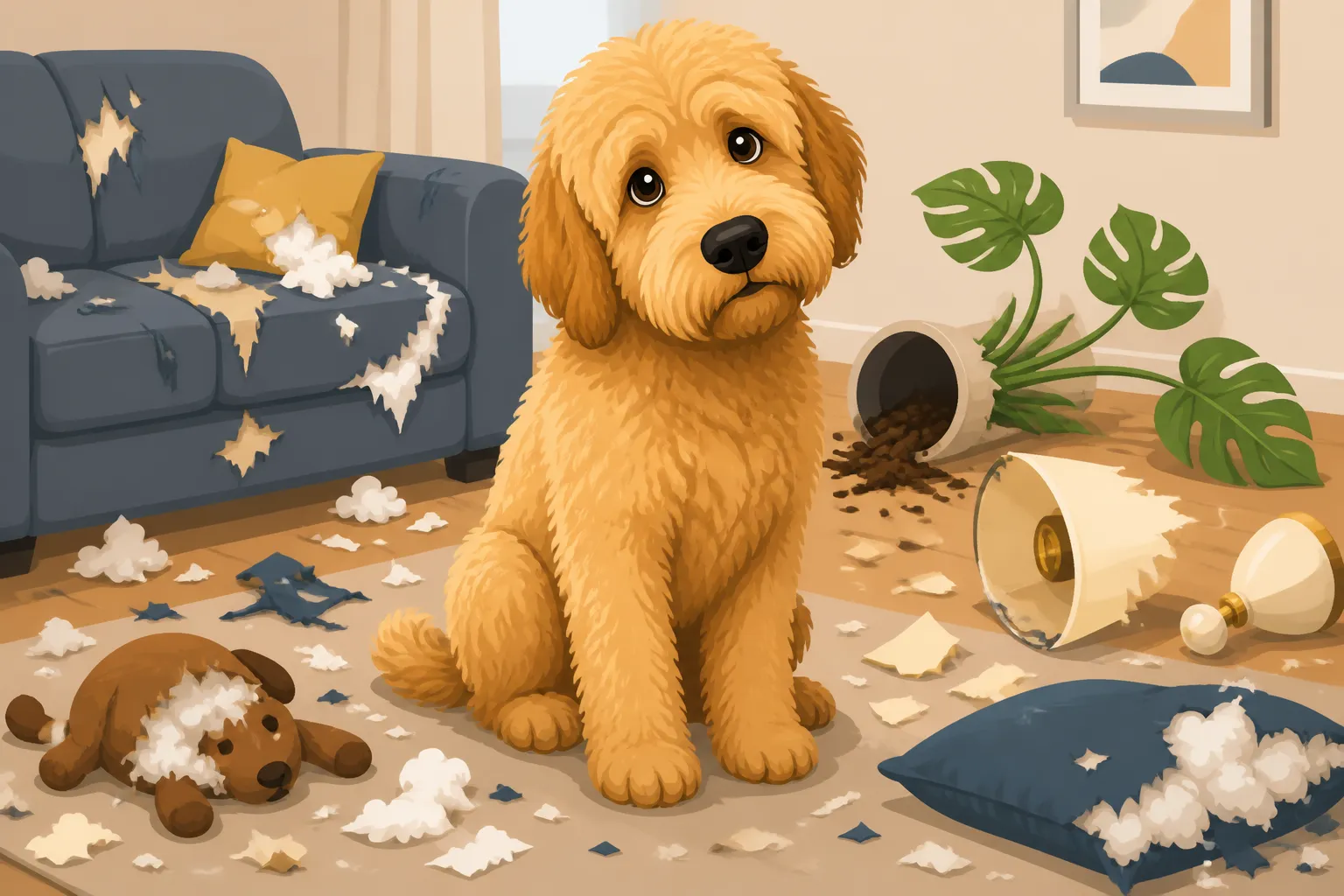
Coming home after a long day, perhaps eager to finally kick off your shoes and relax, only to find your beautiful Labradoodle has decided to redecorate your living room with the stuffing from your couch, or perhaps 'pruned' the legs of your coffee table, is a uniquely frustrating and heartbreaking experience. It's not just about the damaged goods; it's the bewildering question of why your sweet, loving companion would do such a thing. This guide isn't here to judge, but to shed light on why Labradoodles often resort to destructive behaviors when left alone, what those behaviors typically look like, and most importantly, how we can gently but effectively guide them towards calmer, more constructive ways of coping with solitude.
Understanding Why Your Labradoodle Destroys Things When Alone
It’s easy to feel personally offended when you walk into a scene of chaos, but it’s crucial to remember that your Labradoodle isn’t doing it out of spite or malice. Their destructive actions are almost always a symptom of an unmet need or an underlying emotional state. Understanding the root cause is the first, most important step in finding a solution that actually works for both of you.
Separation Anxiety vs. Boredom
This is often the million-dollar question for Labradoodle owners: Is my dog genuinely distressed, or just bored out of their mind? The difference matters immensely for how you approach the problem. A bored dog might chew on things to pass the time, explore their environment in ways you don't appreciate, or simply be a bit mischievous. They might look up with a "whoops!" expression when you walk in, or even seem a little proud of their handiwork. The destruction often stems from a lack of mental or physical stimulation, a way to burn off pent-up energy, or simply a canine version of "I have nothing else to do."
On the other hand, separation anxiety is a far more serious emotional issue. Dogs suffering from separation anxiety aren't just bored; they're genuinely panicked and fearful when left alone. Their destructive behaviors are often frantic attempts to escape or self-soothe. You might see destruction around exit points like doors or windows, excessive drooling, persistent barking or howling, inappropriate urination or defecation, or even self-harm like excessive licking. The dog is often visibly distressed before you leave and shows immense relief upon your return, sometimes to the point of being overly clingy. Recognising these signs is key, and if you suspect true anxiety, consulting with a professional behaviorist or vet becomes incredibly important. You might notice your Labradoodle following you from room to room when you're home, a classic sign of The Velcro Labradoodle That Cannot Be Left.
The Labradoodle's Inherited Drives and Energy Levels
Let's face it, Labradoodles are smart cookies, and they come from two highly intelligent and active breeds: the Labrador Retriever and the Poodle. Both breeds were developed for specific jobs that required brains, stamina, and a willingness to work. The Labrador side brings a strong retrieving drive, a love for carrying things in their mouths, and often a robust physical energy. The Poodle side contributes sharp intelligence, problem-solving skills, and often a playful, sometimes mischievous, nature.
When these strong inherited traits are not given appropriate outlets, they don't just disappear; they find their own expression. A Labradoodle with a strong retrieving drive who isn't given appropriate chew toys or opportunities to carry things might decide your slippers are the perfect stand-in for a pheasant. A highly intelligent Poodle-mix brain that isn't challenged with puzzles or training might decide to "puzzle out" how to get into the pantry or unstuff a couch cushion. Their boundless energy, if not adequately burned off through walks, playtime, or mental games, can easily translate into restless, destructive behavior as they try to self-entertain. This is why understanding The Retrieving Drive a Labradoodle Gets From the Labrador can be so helpful.
Lack of Early Training and Alone Time Exposure
Many destructive behaviors stem from a foundational lack of appropriate training and gradual exposure to being alone. A Labradoodle puppy, much like a human toddler, needs to be taught what is acceptable to chew and what isn't, and also that being alone isn't something to fear. If a puppy is never left alone, even for short periods, they don't learn coping mechanisms. This can set them up for issues down the line.
Proper crate training, for example, isn't just about housetraining; it’s about teaching your dog that their crate is a safe, comfortable den where they can relax and feel secure, even when you're not right there. If a dog is suddenly expected to handle hours of solitude without any prior conditioning, especially after being showered with constant attention as a puppy, it’s not surprising that they might become overwhelmed or bored. Gradual desensitization, starting with just minutes of alone time and slowly increasing the duration, is crucial for building a dog's confidence and ability to self-settle. This groundwork, or lack thereof, significantly impacts how your Labradoodle copes with being by themselves. It's about slowly building up The Alone Time a Velcro Labradoodle Can Build To.
Common Targets of Labradoodle Destruction
When a Labradoodle gets destructive, it’s rarely random. They often go for items that provide a specific type of sensory input, a challenge, or a source of comfort. Understanding what they target can give you clues about why they're doing it.
Furniture and Soft Furnishings
Ah, the classic couch-stuffing explosion. Couches, pillows, blankets, and even carpet often become prime targets. Why? For a few reasons. Firstly, they are typically soft and yielding, making them incredibly satisfying to tear and shred, much like an animal might tear apart prey or dig into a den. The act itself can be a massive stress reliever or an exhilarating form of play. Secondly, these items often absorb human scents very well. For a dog that is anxious or missing their human, burying their nose in a cushion that smells like you, or even chewing on it, can be a way to feel closer to you and self-soothe. The texture and pliability also make them easy to get a grip on and start dismantling.
Imagine a Labradoodle with pent-up energy. A couch cushion offers endless possibilities: digging, tearing, thrashing. It's a grand adventure in their mind. If they're feeling anxious, the act of gnawing and ripping can release endorphins, temporarily making them feel better. Sadly, this also means they're learning that destroying furniture is a valid coping mechanism.
Shoes, Clothing, and Personal Items
This one hits particularly close to home, doesn't it? Your favorite pair of running shoes, a freshly laundered shirt, or even a child's beloved toy can become a chew toy. The common thread here is, again, scent. These items are saturated with your scent, or the scent of other family members. To a dog experiencing loneliness or anxiety, these smell-rich items are incredibly comforting. Chewing them can be like holding a piece of you, literally, in their mouth. It’s a powerful, albeit destructive, form of self-medication.
Beyond comfort, these items often have interesting textures and shapes. A shoe might have laces to unravel, different materials to tear, and a satisfying resistance to chewing. Clothing can be shredded into satisfying strips. Often, these items are also easily accessible – left on the floor, draped over a chair – making them low-hanging fruit for a bored or anxious dog looking for something to do. The frustration isn't just the damage; it's the personal attachment to the lost items.
Doors, Door Frames, and Window Sills
This type of destruction often points more strongly towards separation anxiety or an intense desire to escape or reunite with you. When a dog chews or scratches at a door, door frame, or window sill, they are often attempting to follow you or gain access to the outside world where you might be. It’s an escape attempt driven by panic or a profound feeling of being trapped. The damage can be severe, involving deep gouges, splintered wood, and ruined paint.
The act of chewing on hard surfaces like wood can also be a way to release pent-up energy and frustration. It's less about comfort and more about a desperate effort to change their circumstances. These are usually not subtle acts; they are frantic and sustained, often accompanied by barking, howling, or whining. The destruction here isn't just about an item; it's about a dog's desperate plea to be with their family.
Electrical Cords and Dangerous Items
This is perhaps the most frightening type of destruction, as it poses a serious risk to your Labradoodle's life. Electrical cords, cleaning supplies, medications, or small objects that can be swallowed are incredibly dangerous. Dogs don't understand the dangers associated with these items; they simply see an interesting texture, a dangling "toy," or something with an intriguing smell. Chewing on an electrical cord can lead to severe burns, electrocution, or even death. Ingesting toxic chemicals or foreign objects can cause internal injuries, poisoning, or blockages that require emergency veterinary intervention.
This type of destruction usually isn't about separation anxiety in itself, but rather a lack of proper supervision and "puppy-proofing" combined with curiosity or boredom. It highlights the critical need to secure your home from a dog's perspective, removing any and all potentially harmful items from their reach when they are left unsupervised. Prevention is absolutely paramount in these scenarios.
Here's a quick overview of common destructive behaviors and their likely causes:
| Type of Destruction | Common Targets | Primary Underlying Causes |
|---|---|---|
| Shredding/Tearing | Couch cushions, blankets, pillows, paper, soft toys | Boredom, need for mental/physical stimulation, anxiety (self-soothing) |
| Chewing/Gnawing | Furniture legs, shoes, clothing, baseboards, door frames, remotes | Boredom, teething (puppies), anxiety (escape attempts, stress relief), lack of appropriate chew toys |
| Scratching/Digging | Doors, window sills, carpet, floors | Escape attempts (anxiety), seeking comfort, buried items (instinctual) |
| Ingesting/Swallowing | Small objects, garbage, electrical cords, toxic substances | Curiosity, boredom, lack of supervision/management, severe anxiety (pica) |
Strategies to Prevent Destructive Alone-Time Behavior
The good news is that destructive behavior is almost always manageable, and often preventable, with the right approach. It takes patience, consistency, and a little bit of detective work to figure out what drives your particular Labradoodle's urges.
Management: Setting Up for Success
Before you even think about training, you need to manage the environment. This means preventing your Labradoodle from having the opportunity to be destructive in the first place. Think of it like baby-proofing your house, but for a furry, four-legged, super-chewer.
A properly introduced and used crate can be an absolute lifesaver. It provides a safe, confined space where your dog can't get into trouble, and many dogs learn to love their crate as a personal den. Introduce it slowly, making it a positive place with treats and comfortable bedding. Never use it for punishment. For times when you need more space but still want to limit access, consider using pet gates to restrict your Labradoodle to a "puppy-proofed" room. This room should be stripped of anything valuable or dangerous, leaving only appropriate chew toys and a comfy bed. There are many robust pet gates and crates available on platforms like Amazon that can help with this. Getting Whether a Crate Helps a Labradoodle Switch Off can be a game-changer for many dogs.
Enrichment: Mental and Physical Stimulation
A tired Labradoodle is a good Labradoodle, and a mentally stimulated Labradoodle is an even better one. These dogs need both physical exercise and mental challenges to truly be content. Before you leave the house, make sure your Labradoodle has had a good, solid exercise session. This could be a brisk walk, a run in the park, a game of fetch, or even a trip to a dog park. The goal is to burn off some of that boundless energy. For a Labradoodle, The Exercise a Labradoodle Needs Before It Behaves is paramount.
Mental stimulation is just as important. Provide your Labradoodle with high-value, long-lasting chew toys that are appropriate for their chewing style. Think durable rubber toys that can be stuffed with peanut butter or treats, puzzle feeders that require them to work for their food, or bully sticks. Rotate these toys so they don't get bored. You can find a huge variety of these types of enrichment toys on Amazon. Make them work for their food sometimes by using a slow-feeder bowl or scattering their kibble in a snuffle mat. This keeps their intelligent minds engaged even when you're not there.
Training: Building Confidence and Calmness
This is where the real work happens, especially if you suspect separation anxiety. The goal is to gradually teach your Labradoodle that being alone isn't scary, and that you always come back. Start with very short absences – literally seconds – and slowly increase the duration. Practice leaving and returning calmly, without making a big fuss when you go or when you come back. The idea is to make your departure and return as unremarkable as possible.
Practice "settle" commands, teaching your dog to lie calmly on their bed or mat. Reward them for quiet, relaxed behavior when you are home, particularly when you're busy in another room. For many owners, an online training program can provide structured guidance. Resources like BAXTER & Bella offer comprehensive online courses and support that can be invaluable for teaching your Labradoodle confidence and good manners, including coping with alone time. The key is consistency and positive reinforcement. Teaching them Teaching a Labradoodle That You Come Back is a process, but a rewarding one.
Seeking Professional Help
If you've tried all the above strategies and your Labradoodle's destructive behavior persists, or if you strongly suspect severe separation anxiety, it's time to call in the professionals. Your veterinarian is always the first point of contact to rule out any underlying medical conditions that might contribute to anxiety or unusual behavior. They can also discuss anti-anxiety medications if appropriate, to help your dog feel less overwhelmed while you work on behavior modification.
Beyond your vet, a certified professional dog trainer specializing in behavior, or a certified veterinary behaviorist, can provide invaluable support. These experts can assess your specific situation, accurately diagnose the root cause of the destruction, and develop a tailored behavior modification plan. They have the expertise to guide you through complex cases of anxiety and ensure you're using the most effective, humane methods. Don't be afraid to ask for help; it shows you're a responsible and caring owner dedicated to your dog's well-being.
What to Do When You Come Home to a Mess
It's inevitable that, despite your best efforts, there will be days when you return home to an unexpected mess. How you react in these moments is crucial, not just for the immediate cleanup, but for the long-term success of your training efforts.
The Importance of Your Reaction
This might be the hardest part for many owners: when you walk in and see the devastation, your first instinct is often to react emotionally – anger, frustration, disappointment. However, punishing your Labradoodle after the fact is ineffective and can actually be detrimental. Dogs live in the moment. They won't connect your anger to something they did hours ago. Instead, they'll just associate your return with your unpredictable anger, which can worsen anxiety and create fear around your arrival.
Instead, take a deep breath. Acknowledge the frustration privately, then focus on staying calm and neutral when you greet your dog. If you have an anxious Labradoodle, a calm, low-key greeting is often best. Save the enthusiastic praise for when they greet you politely, not for their general excitement upon your return. The focus should immediately shift to cleanup and reinforcing your management and training plan.
Assessing the Damage and Moving Forward
Once you’ve managed your own reaction, calmly assess the damage. First and foremost, check for your dog's safety. Did they ingest anything dangerous? Are there any signs of injury? If you have any concerns, contact your vet immediately. Then, clean up the mess without fuss or commentary directed at your dog. This is not the time for a lecture.
After the cleanup, reflect on what happened. Was the destruction due to boredom? Was your dog under-exercised that day? Did you forget to leave out an appropriate chew toy? Or was it driven by anxiety? What environmental management failed? Did they have access to something they shouldn't have? Use the incident as a learning opportunity to tighten up your management strategies and refine your training plan. Perhaps you need to invest in a stronger crate, double-check your "puppy-proofing," or increase your dog's exercise before you leave. Every incident, though frustrating, provides valuable data to help you help your Labradoodle.
Disclaimer
This article is for general informational purposes only and does not constitute professional advice. Laws, prices and regulations vary by location and change over time. Consult a qualified professional for guidance on your specific situation.