Whether Grooming Stress Shows as Aggression in a Labradoodle
It's incredibly frustrating when your sweet, goofy Labradoodle suddenly turns into a snarling, snapping creature at the mere sight of a brush or clippers. Many owners struggle with a dog that seems to despise grooming, making a necessary part of their care a traumatic ordeal for everyone involved. This guide will delve deep into why your Labradoodle might be exhibiting aggression during grooming, how to recognize the subtle signals before they escalate, and practical strategies to transform grooming from a battle into a bonding experience.
Understanding Why Grooming Becomes Stressful for Labradoodles
It’s easy to feel like your Labradoodle is just being difficult when they growl or snap during grooming, but often, their reactions stem from genuine discomfort, fear, or even pain. Their unique breed characteristics and individual experiences can contribute significantly to their aversion to grooming.
The Labradoodle's Unique Coat and Sensitivity
One of the primary reasons Labradoodles can struggle with grooming is their fantastic, yet demanding, coat. Unlike many breeds with predictable shedding patterns or single coats, Labradoodles boast a variety of textures – from wavy fleece to tightly curled wool. This beautiful coat, while often marketed as "low-shedding" or "hypoallergenic," is prone to matting like no other.
Imagine having tangled, matted hair that gets pulled every time you move. Now imagine that sensation across your entire body. When a Labradoodle's coat mats, especially in sensitive areas like the armpits, behind the ears, or inner thighs, it pulls on their skin with every step, sit, or stretch. Brushing a matted coat, even gently, can be incredibly painful. If a dog has experienced this pain repeatedly, they learn to associate the brush or clippers with discomfort, leading them to protest loudly when grooming begins.
Furthermore, the Poodle side of a Labradoodle's ancestry often contributes a higher degree of sensitivity to touch than one might expect from the more robust Labrador side. While Labradors are generally known for their stoicism, many Poodles are quite delicate, and this sensitivity can manifest in a Labradoodle. They might feel the pull of a single hair or the vibration of clippers more acutely. What seems like a minor irritation to us can be genuinely distressing for them, and if this sensitivity is combined with matting, it’s a recipe for a very unhappy dog. Understanding The Three Labradoodle Coats: Hair, Fleece and Wool is crucial for effective management. It also helps to know Where Mats Form First on a Labradoodle so you can be extra vigilant.
Negative Past Experiences and Lack of Early Socialization
Dogs aren't born disliking grooming; it's a learned response, often stemming from negative early experiences or a lack of proper introduction. A puppy's first few grooming sessions are incredibly formative. If a young Labradoodle puppy has a painful experience, such as being roughly handled, having a mat yanked out, or a clipper burn, that memory can stick with them for life.
Think about it from their perspective: they are suddenly restrained, unfamiliar tools are buzzing around them, and hands are pulling at their fur. If this experience is scary or painful, they learn that grooming is something to be feared. This fear can then manifest as defensive aggression – they are trying to protect themselves from what they perceive as a threat.
Even if there wasn't a traumatic event, a simple lack of positive, consistent exposure can also create problems. Many owners, overwhelmed by the puppy stage, might not prioritize regular, short, positive grooming sessions. Without early, gentle introduction to brushing, nail trims, and ear cleaning, a Labradoodle can grow up to find these sensations unusual, intrusive, and therefore, frightening. It's why Starting Grooming Handling on a Labradoodle Puppy early and positively is so vital. This early socialization helps them build confidence and trust around handling, which is critical for a lifetime of comfortable grooming.
Underlying Health Issues Masked by Grooming Discomfort
Sometimes, what appears to be outright aggression during grooming is actually a dog attempting to communicate that they are in pain from an unrelated health issue. A groomer's touch, even if gentle, can inadvertently exacerbate an existing problem, leading to a defensive reaction.
For instance, a Labradoodle might have subtle hip or elbow discomfort, perhaps even early signs of Arthritis in a Labradoodle at Ten or other joint issues. When the groomer tries to position them on a table or lift a leg for a paw trim, the movement could send a jolt of pain through an arthritic joint. The dog might growl or snap not because they dislike the grooming, but because they associate that specific position or touch with pain.
Similarly, skin issues can be incredibly irritating and easily mistaken for grooming aggression. A dog suffering from allergies might have inflamed, itchy skin, and the friction of a brush or the pressure of a clipper could feel unbearable. Hot spots, hidden rashes, or even ear infections can make a dog extremely sensitive to touch in certain areas. Imagine if you had a sunburn and someone started rubbing lotion on it without asking – your reaction might be quite strong! These are signs you might miss, interpreting your Labradoodle's discomfort as naughtiness rather than a plea for relief. Allergies Behind a Labradoodle's Itching or even hidden infections can contribute to this type of sensitivity. A thorough vet check is always a good idea if grooming suddenly becomes an aggressive affair, especially if it's a new behavior.
Recognizing the Signs of Grooming Stress and Escalating Aggression
It’s easy to miss the early warning signs when your Labradoodle is starting to feel uncomfortable during grooming. Dogs communicate their stress in a nuanced way, and by the time they resort to growling or snapping, they’ve usually been trying to tell us something for a while. Learning to read these signals is key to preventing an aggressive outburst and building trust.
Subtle Warnings Before a Full Reaction
Long before a Labradoodle escalates to growling or biting, they will often display a series of subtle stress signals. These are their ways of saying, "I'm uncomfortable," "I don't like this," or "Please stop." Unfortunately, because these signals are often quiet and polite, they can be easily overlooked or misinterpreted by busy owners.
Common early warning signs of stress during grooming include:
- Lip licking: Not after eating, but quick, often repeated flicks of the tongue.
- Yawning: When not tired, this can be a displacement behavior indicating stress.
- Head turning or looking away: Your dog avoids eye contact or tries to turn their head away from the brush or your hand.
- "Whale eye": You can see the whites of their eyes around the iris, often accompanied by a tense facial expression.
- Body freezing or stiffening: They might suddenly become very still, rigid, and reluctant to move. This isn't cooperation; it's often a state of fear or anxiety, sometimes leading to a bite if pushed further.
- Low tail carriage or tucked tail: A clear sign of unease or fear.
- Shaking off: Like they're wet, but they aren't. This can be a way to release tension.
- Excessive panting: When not hot or after exercise.
If you notice any of these signs, it's crucial to immediately pause what you're doing. Pushing past these subtle warnings can force your Labradoodle to escalate their communication to more overt and potentially dangerous behaviors. Many owners unknowingly push their dogs past these limits because they don't understand these "polite" protests. It’s about meeting your Labradoodle where they are, and allowing them to dictate the pace of the session. Remember, the goal is to build up to a long, calm grooming session, but that requires respecting their current boundaries. Building a Labradoodle Up to a Long Grooming Session takes time and patience, starting with acknowledging these early signals.
Overt Aggression: Snapping, Growling, and Biting
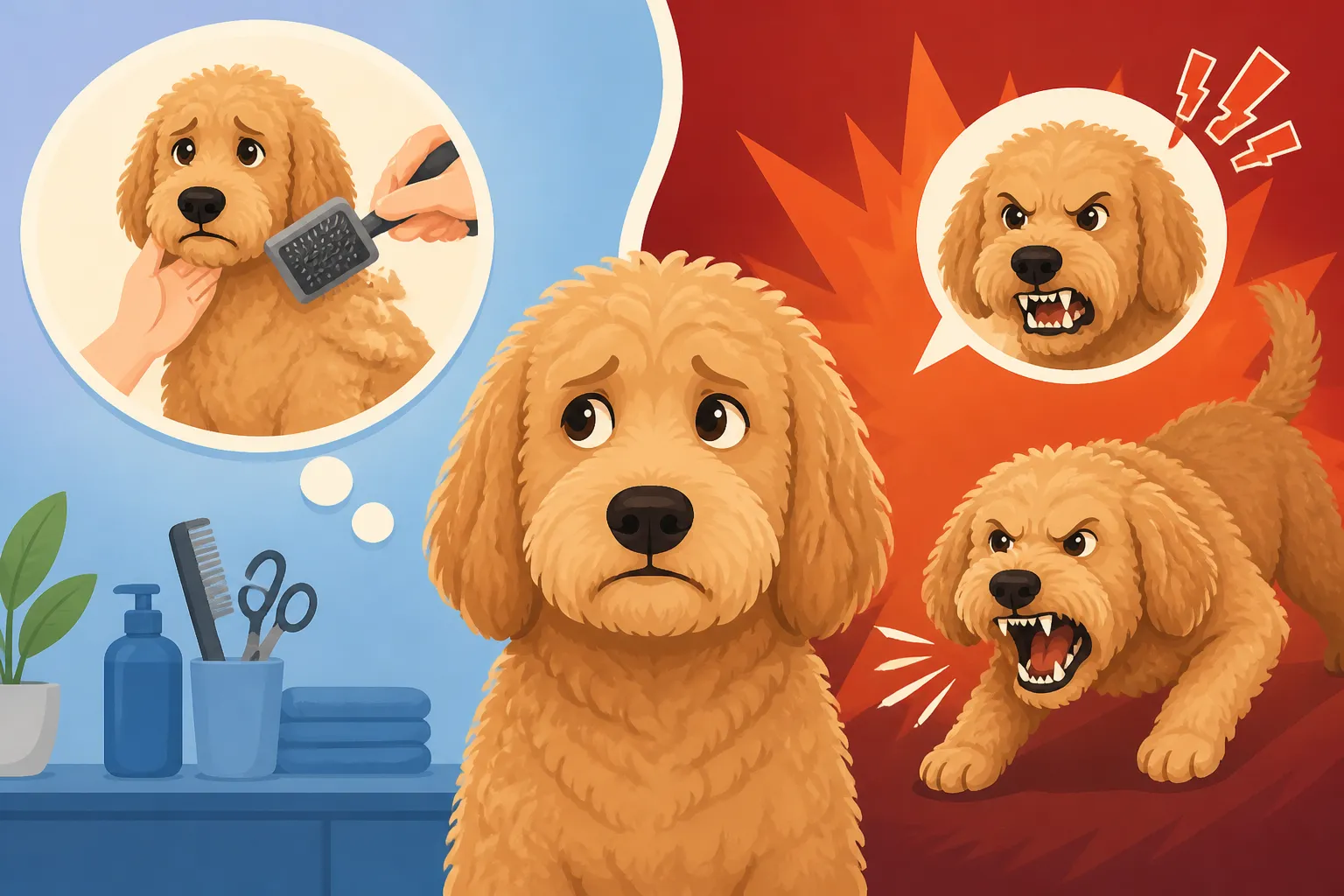
When a Labradoodle's subtle signals are ignored, they have no choice but to escalate their communication to ensure their message is heard. This is when overt aggression manifests as growling, snapping, or actual biting. It's important to understand that this is rarely a "first resort" behavior; it's a desperate plea from a dog who feels threatened, unheard, or in pain.
- Growling: This is a clear warning that your dog is uncomfortable and feels the need to protect themselves. It's a verbal "back off" signal. Punishing a growl teaches your dog not to warn you, potentially leading to a bite without warning in the future.
- Snapping or air biting: This is a step up from a growl. Your Labradoodle might snap their jaws in the air, or even make contact without fully biting, indicating a very strong aversion and a readiness to defend themselves if pushed further.
- Biting: This is the ultimate expression of fear, pain, or discomfort. A bite means your dog feels they have no other option to make the perceived threat stop. Bites can range from inhibited (a warning nip) to uninhibited (a full, damaging bite), depending on the dog's level of fear and previous experiences.
When your Labradoodle displays overt aggression during grooming, it's a sign that immediate changes need to be made. Continuing to force grooming will not only solidify their negative association but also damage your bond and potentially lead to serious injury. It's a sign that your dog is truly stressed, and their actions are a desperate attempt to create distance from whatever is causing them distress. This isn't about being "naughty" or "dominant"; it's about being terrified or in pain.
The Difference Between Fear Aggression and Resource Guarding
While overt aggression during grooming is often rooted in fear or pain, it’s worth understanding that sometimes, a dog might also exhibit what looks like aggression due to resource guarding. While less common specifically for grooming themselves, it can occur if certain grooming tools become perceived "resources" they want to control or avoid.
Fear Aggression: This is the most common type seen during grooming. It stems from the dog perceiving the grooming process, tools, or handler as a threat. The dog’s body language will typically be defensive – they might try to retreat, cower, tuck their tail, or freeze, before escalating to growling, snapping, and biting if escape isn't possible. Their goal is to make the perceived threat go away.
Resource Guarding: This type of aggression occurs when a dog perceives an item (food, toys, a resting spot, or even a person) as valuable and attempts to prevent others from taking it or approaching it. In the context of grooming, it's less common for a dog to guard themselves during the act of being groomed. However, if a Labradoodle has a negative association with a specific grooming tool (e.g., they hate the nail clippers) they might try to guard that tool to prevent it from being used, or guard a spot on the couch where they feel safe from grooming. This might manifest as stiffening, growling, or snapping when you reach for the clippers or try to move them to the grooming area. It’s often about control over a particular item or space rather than direct fear of the process itself.
Distinguishing between these two can be tricky, but observing the full context and body language is key. A fear-aggressive dog often tries to escape the situation, while a resource-guarding dog tries to defend their perceived resource. However, during grooming, the end result often looks similar – a dog acting aggressively. Regardless of the underlying motivation, the strategy for management often involves positive reinforcement, desensitization, and sometimes, professional help to address the root cause, whether it's fear, pain, or resource guarding. For instance, if your Labradoodle tries to grab the brush from you and then growls, it might not be about guarding the brush, but guarding themselves from the brush, a nuance that's important to consider. If your dog shows signs of guarding other items, learning more about Whether a Labradoodle Guards Its Stolen Laundry can provide additional context.
Strategies to Mitigate Grooming Stress and Prevent Aggression
Once you understand why your Labradoodle might be acting aggressively during grooming, the next step is to implement strategies to help them feel safer and more comfortable. This isn't a quick fix; it requires patience, consistency, and a commitment to positive reinforcement.
Positive Reinforcement and Desensitization Techniques
The most effective way to change your Labradoodle's emotional response to grooming is through positive reinforcement and desensitization, also known as cooperative care. The goal is to gradually expose your dog to grooming tools and sensations, pairing each step with something wonderfully positive, so they learn to associate grooming with good things.
Here’s a step-by-step approach:
- Start Small, Stay Short: Begin with incredibly short sessions, perhaps just 30 seconds to a minute. Don't aim for a full brush-out initially.
- Introduce the Tools: Show your Labradoodle the brush, clippers, or nail trimmers. Let them sniff it. As soon as they do, give them a high-value treat (like boiled chicken, cheese, or peanut butter). Don't even touch them with the tool yet. Repeat this several times until they are happy and relaxed when the tool appears.
- Gentle Touch with Treats: Next, gently touch the tool to their body for a split second, then immediately give a treat. For instance, touch the brush to their shoulder, then treat. Repeat. Gradually increase the duration of the touch. If using clippers, start with them off, then turn them on briefly across the room, then treat. Gradually move the running clippers closer, then touch them lightly to a less sensitive area (like a hip), then treat.
- Gradual Grooming: As your Labradoodle becomes comfortable with short touches, slowly increase the amount of grooming. Brush one stroke, treat. Two strokes, treat. Always stop before they show signs of stress. The key is to keep them below their threshold for aggression.
- Focus on Comfort: If they tolerate one area well, like their back, spend more time there before moving to a more sensitive spot like their ears or paws. Keep sessions positive and end on a good note, even if you only achieved a tiny bit of grooming.
- Use High-Value Rewards: Make the treats irresistible! These aren't regular kibble. They should be something your dog absolutely loves.
- Calm Demeanor: Your calm and reassuring presence is vital. Speak in a gentle, soothing voice. Avoid any tension or frustration in your body language, as dogs are highly attuned to our emotions.
Consider leveraging resources from positive reinforcement trainers. Some excellent online programs, like those offered by BAXTER & Bella, emphasize building confidence and cooperation through reward-based training, which is ideal for grooming desensitization. This approach helps teach your dog to give you their paw or allow brushing willingly, rather than forcing them. Desensitizing a Labradoodle to the Clipper Vibration is a perfect example of a skill you can build incrementally using these methods.
Choosing the Right Tools and Grooming Routine
Having the right equipment and maintaining a consistent routine can significantly reduce grooming stress. Subpar tools or infrequent grooming can directly lead to pain and discomfort, fueling aggressive reactions.
- Quality Tools are Essential: Invest in good quality brushes and combs. A slicker brush and a metal comb are usually the staples for a Labradoodle's coat. A poor-quality slicker brush can have sharp pins that scratch the skin, and a cheap comb can pull hair uncomfortably. For trimming, sharp clippers with the correct blades (like a 10 or 30 blade for pads and sanitary areas, and longer blades for the body) will cut smoothly rather than snagging. Dull blades pull hair and can cause clipper burn, both of which are painful. A force dryer, while an investment, can dramatically reduce drying time and help straighten the coat for easier brushing after baths. You can find a wide range of specialized grooming tools on platforms like Amazon. Knowing about The Slicker, Rake and Comb a Labradoodle Takes and The Clipper, Blade and Dryer a Labradoodle Owner Buys is a great start.
- Regular and Consistent Brushing: This is perhaps the most critical component. A Labradoodle's coat needs frequent brushing – often daily or every other day, especially during their "coat change" phase around 9-12 months. This prevents mats from forming in the first place, which is far less painful than trying to brush them out. When mats are severe, professional dematting can be excruciating, making future grooming dreaded.
- Professional Groomer Consultations: Don't hesitate to ask your professional groomer for advice on tools and techniques. They can recommend specific brushes for your dog's coat type and show you how to use them effectively. Many groomers are happy to offer "happy visits" where your puppy or adult dog can come in, get some treats, and get used to the environment without any actual grooming taking place.
Professional Help and Sedation Considerations
For Labradoodles with severe grooming aggression, trying to manage it solely at home can be overwhelming and even dangerous. This is when professional intervention becomes not just helpful, but necessary.
- Certified Professional Dog Trainers (CPDT-KA) or Veterinary Behaviorists (DACVB): If your Labradoodle's aggression is persistent, severe, or escalating, seek help from a qualified professional. A CPDT-KA specializing in fear-based behaviors or a DACVB can assess the root cause of the aggression and develop a tailored behavior modification plan. They can guide you through desensitization and counter-conditioning techniques safely and effectively, teaching you how to read your dog's signals and respond appropriately.
- Cooperative Care Groomers: Look for groomers who practice cooperative care or fear-free grooming. These professionals are trained to work at the dog's pace, use positive reinforcement, and prioritize the dog's emotional well-being over a perfect haircut. They often have specialized equipment and techniques to make the experience less stressful. They understand that What a Groomer Does With a Labradoodle That Will Not Stand needs a gentle and patient approach, not force.
- Veterinary-Prescribed Sedation: In extreme cases, where a dog's fear is so profound that even short, positive sessions are impossible, or for urgent grooming needs (like severe matting causing skin infections), your veterinarian might recommend sedation. It's crucial to understand that sedation is a management tool, not a cure. It helps reduce anxiety and allows necessary grooming to occur without trauma, but it doesn't change the dog's underlying emotional response. It should always be used under veterinary guidance and ideally in conjunction with a behavior modification plan to address the fear long-term. Discussing Whether Sedation Is Ever Right for Grooming a Labradoodle with your vet is a conversation many owners find themselves having when facing intense grooming challenges.
Creating a Safe and Positive Grooming Environment
Beyond specific techniques, the overall environment you create for grooming plays a huge role in your Labradoodle's emotional response. A calm, predictable, and physically safe space can make all the difference.
Setting Up for Success at Home
When you're grooming your Labradoodle at home, the environment you choose can either amplify their stress or help them relax. Thoughtful preparation can significantly improve the experience for both of you.
First, choose a quiet, low-traffic area where you won't be interrupted. A bustling hallway or a room with distractions like other pets or children isn't conducive to a calm grooming session. Your Labradoodle needs to feel secure and focused on you. Ensure the surface you're working on is non-slip. A bath mat on a table or even grooming on the floor can prevent slips and falls, which can cause anxiety or injury. If your dog feels unstable, they're less likely to relax.
Good lighting is also essential. Being able to clearly see mats, paw pads, and sensitive areas helps you groom more effectively and safely, reducing the risk of accidental nicks or pulls that could make your dog wary.
Perhaps most importantly, timing is everything. Never attempt grooming when your Labradoodle is over-excited, overtired, or full of pent-up energy. Ideally, groom them after they've had some exercise and a potty break, when they are naturally more relaxed. A mentally and physically tired dog is much more likely to tolerate handling.
Finally, remember that short, frequent sessions are far more effective than long, infrequent ones. Instead of trying to do a full groom once a month, aim for 5-10 minute positive sessions every day or every other day. This keeps their coat in better condition, prevents matting, and builds their positive association with grooming in manageable increments. This regular, gentle contact reinforces that grooming is a normal, non-threatening part of their routine.
Communicating with Your Professional Groomer
If you rely on a professional groomer, open and honest communication is absolutely paramount, especially if your Labradoodle has a history of grooming stress or aggression. They are partners in your dog's care, and providing them with comprehensive information allows them to approach your Labradoodle in the best possible way.
Share your dog's full history. Don't hold back on details about past negative experiences, specific triggers (like nail trims or face trims), or any subtle signs of stress you've observed at home. Let them know if your dog has any sensitive areas, joint pain, or skin conditions. The more information they have, the better equipped they are to tailor their approach.
Ask about their methods for handling fearful dogs. A good groomer should be happy to discuss their philosophy and techniques. Do they use fear-free methods? Do they take breaks when a dog shows stress? Do they allow owners to stay for part of the session, or perhaps offer "happy visits" for desensitization? A groomer who prioritizes your dog's emotional comfort, even if it means a less-than-perfect haircut, is invaluable. They should understand that pushing a fearful dog too far can exacerbate the problem, not solve it.
Emphasize patience over perfection. Make it clear that you value your dog's emotional well-being above a perfectly sculpted coat. It's often better for a fearful dog to have a "kennel cut" or a simpler, shorter style that can be done quickly and with less stress, rather than attempting a complex trim that might push them over their limit. Let your groomer know that you prefer them to stop if your dog is too stressed, and that you're willing to work on cooperative care at home between appointments. This open dialogue ensures that your groomer is not only aware of the challenges but is also empowered to use the most gentle and humane methods possible, fostering a more positive experience for your Labradoodle.
| Behavior Type | Signs of Mild Stress (Warning Signals) | Signs of Overt Aggression (Last Resort) |
|---|---|---|
| Body Language | Lip licking, yawning, head turning, stiff body | Freezing, cowering, lunging, tail tucked/rigid |
| Eyes & Ears | "Whale eye" (whites visible), ears back/flat | Intense stare, dilated pupils, ears pinned back |
| Vocalizations | Soft whines (sometimes), heavy sigh | Growling, snapping (air or inhibited), barking, snarling |
| Physical Actions | Shaking off, trying to move away, paw lifting | Biting (inhibited or full), lunging, attempting to escape |
| Key Indicator | Dog is attempting to communicate discomfort | Dog is attempting to create distance/make threat stop |
Disclaimer
This article is for general informational purposes only and does not constitute professional advice. Laws, prices and regulations vary by location and change over time. Consult a qualified professional for guidance on your specific situation.