Whether Guide Dog Schools Still Use Labradoodles
Many Labradoodle owners dream of their clever, cuddly companions making a difference, perhaps even as a guide dog, especially given the breed's famous origin story. It's a common and completely understandable assumption, but the reality for formal guide dog schools has largely shifted, leaving many wondering why a breed specifically designed for this role isn't seen in the same capacity today. This guide will delve into the Labradoodle's unique history with guide dog programs, explain why many institutions have moved in different directions, and explore the valuable roles Labradoodles continue to play in other types of assistance work.
The Labradoodle's Origin in Guide Dog Work
The very idea of the Labradoodle was born out of a profound need for a guide dog that could serve an allergic individual. This wasn't some happy accident; it was a deliberate, hopeful experiment aimed at solving a very real problem.
Why the Labradoodle Was Created for Guide Dogs
Back in the late 1980s, Guide Dogs Victoria in Australia received a request from a Hawaiian woman who needed a guide dog but whose husband suffered from severe dog allergies. This was a significant challenge because traditional guide dog breeds, like Labradors and Golden Retrievers, shed hair and dander, making them unsuitable for allergic households. The program's breeding manager at the time, Wally Conron, was tasked with finding a solution. His innovative idea was to cross a Standard Poodle, known for its low-shedding coat and high intelligence, with a Labrador Retriever, famous for its trainability, eagerness to please, and gentle temperament. The hope was to combine the best traits of both breeds: the Poodle's coat and smarts, and the Labrador's classic guide dog demeanor. This pivotal moment is detailed further in The 1989 Cross That Made the First Labradoodle. The motivation was clear: to create an allergy-friendly guide dog without compromising on the crucial working qualities.
The Early Success and Challenges
From that first litter, a dog named Sultan emerged, and he was indeed sent to Hawaii to be the guide dog for the woman who initiated the request. Sultan was celebrated as a success, seemingly proving that the Labradoodle could fulfill its intended purpose. He demonstrated that it was possible to get the desired coat qualities alongside the intelligence and temperament needed for such important work. You can read more about his journey in Sultan, the Labradoodle That Proved the Idea. However, even in those early days, the path wasn't entirely smooth. The challenge of creating a consistent "type" that reliably produced the right temperament and coat from a first-generation cross (F1) was immediately apparent. While some puppies had the ideal coat and personality, others might be too high-strung, too independent, or still shed, much like their Labrador parent. The genetic lottery of a first-generation cross meant that predictability was far from guaranteed, which is a significant hurdle for any organization that relies on consistent outcomes for their service animals.
The Shift Away from Labradoodles in Guide Dog Programs
Despite the initial promise and the Labradoodle's skyrocketing popularity, most formal guide dog schools and assistance dog organizations eventually moved away from using them in their primary breeding programs. This wasn't a reflection on the dogs' inherent worth, but rather a pragmatic decision based on the rigorous demands of producing reliable service animals.
Reasons for Guide Dog Schools Moving On
The primary reason for the shift was the inherent unpredictability of a crossbreed, especially in the early generations. Guide dog schools need to produce dogs with very specific temperaments, health clearances, and physical attributes consistently. With Labradoodles, there was simply too much variability. Some would inherit the Poodle's high energy or grooming needs, others the Labrador's shedding or strong prey drive, and others still a blend that didn't quite meet the stringent criteria for guide work. This variability meant a higher "wash-out" rate – dogs that started training but ultimately weren't suitable for the job – which is both costly and time-consuming for organizations. Furthermore, the very aspect that made them appealing, the "allergy-friendly" coat, wasn't guaranteed in every litter or even every individual puppy, as explored in Why a Guide Dog Had To Be Allergy Friendly. It became clear that managing this unpredictability was more challenging than anticipated.
Many breeders also faced health challenges. While the intention was to combine the best of both breeds, it also meant inheriting potential health issues from both sides, if not carefully managed through rigorous health testing. Finding dogs with consistently clear health lines that also had the ideal temperament and coat proved to be an ongoing battle. The dedication required to consistently produce guide-quality dogs from a crossbreed simply wasn't sustainable or efficient for large-scale programs when compared to working with well-established purebred lines where traits are much more predictable. You can learn more about these difficulties in Why Assistance Programs Moved Away From the Labradoodle.
The Complexity of Breeding and Predictability
The challenge for guide dog programs was rooted in genetic predictability. When you breed two purebred dogs, like two Labradors from working lines, the offspring's traits are highly predictable. You know, with a high degree of certainty, what kind of temperament, size, coat type, and health predispositions you'll get. This consistency is paramount for guide dog organizations that invest years and significant resources into each dog's training.
With a first-generation (F1) Labradoodle, the puppies receive a mix of genes from both parents. This means one puppy might lean heavily towards its Poodle side in terms of coat and temperament, while a littermate might be more like a Labrador. Moving to F1b (Labradoodle back-crossed to a Poodle) or even later generations (Multigen) attempts to stabilize these traits, particularly the non-shedding coat. However, stabilizing all the desired traits – coat, temperament, health, physical soundness – for guide work in a predictable manner across entire litters is a monumental undertaking. This genetic unpredictability leads to a high number of dogs that, while wonderful pets, simply don't have the unwavering focus, calm demeanor, physical resilience, and specific work ethic required for guide dog duties. This is why many organizations prefer to stick with purebred lines, like purpose-bred Labradors or Golden Retrievers, where thousands of generations of selective breeding have honed these exact qualities.
Modern Approaches to Service Dog Breeding
While formal guide dog schools have largely returned to using purebred lines for their consistency, the broader field of assistance dogs has diversified. Labradoodles, while not typically found in the strict "guide dog" role anymore, have certainly found their niche in other valuable forms of assistance.
Focus on Purebred Lines for Consistency
Today, if you visit a major guide dog organization, you'll most likely see purpose-bred Labrador Retrievers, Golden Retrievers, or sometimes German Shepherds. These breeds have generations of selective breeding behind them, specifically for the traits crucial to guide work: stable temperament, biddability, intelligence, physical soundness, and a strong desire to please. The predictability of these traits allows programs to assess puppies early, knowing that a high percentage will mature into successful working dogs. This maximizes their investment in time and resources.
For example, a breeder within a guide dog program can predict with high accuracy how a litter of Labradors will develop, from their trainability to their eventual size and potential health issues. This consistency is essential for the intensive, long-term training required. They understand specific temperament lines and can match dogs to clients with greater precision. While the original intent of the Labradoodle was noble, the consistency offered by these established purebred lines simply proved to be more efficient and reliable for the specific, high-stakes role of a guide dog. Organizations prioritize the success rate for their clients, and predictable genetics are a cornerstone of that success.
Alternative Roles for Labradoodles in Assistance Work
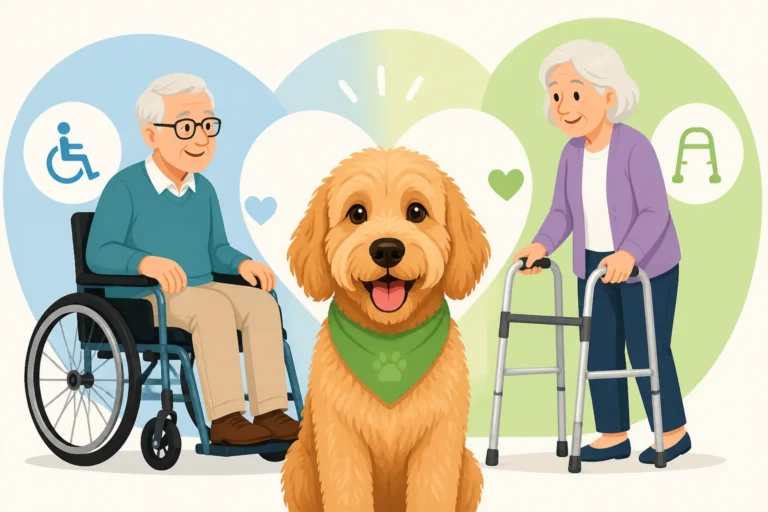
Despite the shift in traditional guide dog schools, Labradoodles absolutely shine in many other assistance and therapy roles, and this is where their original "designer" qualities truly come to the fore. Their intelligence, generally friendly nature, and often low-shedding coats make them excellent candidates for:
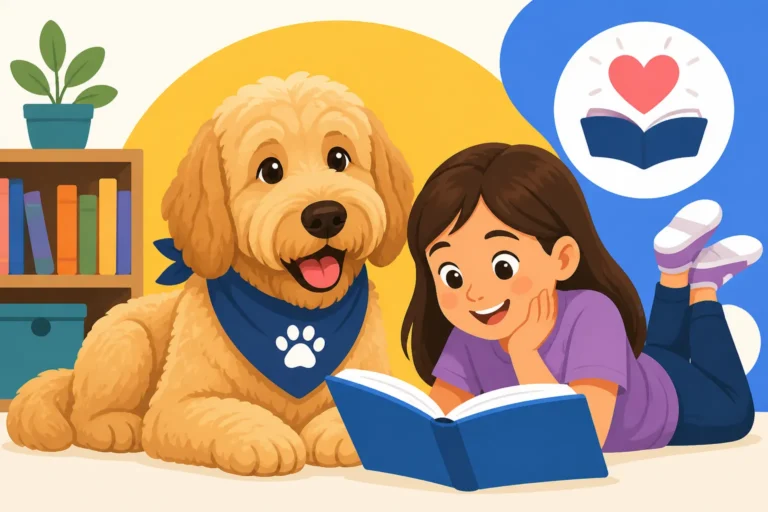
- Therapy Dogs: Labradoodles are frequently found visiting hospitals, nursing homes, schools, and disaster zones. Their gentle nature, soft coats, and intuitive connection with people make them ideal for providing comfort and emotional support. A Labradoodle's natural affection can brighten anyone's day. What a Therapy Dog Visit Asks of a Labradoodle touches on these qualities.
- Facility Dogs: These dogs work in professional settings like schools, courthouses, or mental health clinics, assisting professionals in their work. They provide a calming presence for children testifying in court or help therapists engage with patients.
- Emotional Support Animals (ESAs): While not service dogs with public access rights, Labradoodles are fantastic ESAs, providing invaluable comfort and companionship to individuals struggling with anxiety, depression, or other emotional challenges. Their devoted "Velcro dog" nature makes them particularly suited for this.
- Owner-Trained Service Dogs: For individuals with disabilities who choose to train their own service dog for tasks beyond guiding, a Labradoodle can be a fantastic partner. While the genetic gamble of a consistent temperament still exists, an owner working one-on-one with their dog for specific tasks (like retrieving dropped items, providing deep pressure therapy, or alerting to medical conditions) can tailor the training to their dog's individual strengths. Resources from brands like BAXTER & Bella can be incredibly helpful for owners undertaking this journey, providing structured online programs to guide them.
So, while you might not see them leading the visually impaired through city streets as much anymore, their kind hearts and eager-to-please attitudes ensure Labradoodles continue to make a profound difference in countless lives.
What This Means for Today's Labradoodle Owners
For those who love Labradoodles, understanding their place in the world of assistance work is important. It helps manage expectations but also highlights the incredible potential these dogs still have to impact lives positively, even if it's not always in the most formal "guide dog" capacity.
Finding a Labradoodle with Service Potential
If you are hoping for your Labradoodle to enter some form of assistance work, even if it's not guide dog specific, selecting the right puppy is absolutely crucial. You'll want to prioritize breeders who perform extensive health testing and, just as importantly, temperament test their puppies. A good breeder should be able to tell you about the temperaments of the puppy's parents and grandparents, as these traits are often inherited. Look for a puppy that exhibits a calm, confident, and curious demeanor, rather than one that is overly shy, fearful, or excessively boisterous.
When meeting a litter, observe how the puppies interact. A puppy with good service dog potential won't be easily startled by new sounds or sights, will recover quickly from minor stresses, and will show an interest in engaging with people. Asking a breeder about their Temperament Testing a Labradoodle Puppy for Service process can give you a lot of insight. While no breeder can guarantee a service dog, a responsible one can significantly increase your chances of finding a puppy with the foundational qualities needed for success in various assistance roles. Don't be shy about asking detailed questions about the parents' personalities and what activities they excel at.
Training Your Own Labradoodle for Assistance
If you're considering training your Labradoodle for an assistance role that isn't formal guide work, such as a therapy dog or an owner-trained service dog, be prepared for a significant commitment. This isn't just about teaching basic obedience; it's about building a solid foundation of manners, socialization, and task-specific training that allows your dog to function reliably in diverse environments.
Here's a breakdown of what that often entails:
| Training Stage | Key Focus Areas | Example Activities | Desired Outcome |
|---|---|---|---|
| Puppyhood (8-16 weeks) | Socialization, foundational manners, bite inhibition | Meeting many people/places, crate training, "sit," "stay," leash manners | Confident, resilient, well-adjusted puppy, comfortable with novelties |
| Adolescence (4-18 months) | Proofing commands, impulse control, distraction training, public access | Training in busy stores, parks; refining "leave it," "come" | Reliable obedience in various settings, polite public behavior |
| Advanced/Task Training | Specific tasks for the disability, public access etiquette | Retrieving items, opening doors, bracing, deep pressure therapy | Dog performs tasks reliably, ignores distractions, maintains calm demeanor |
| Ongoing Maintenance | Continued practice, advanced obedience, regular vet checks | Daily practice of tasks/manners, adapting to new situations | Dog remains proficient, healthy, and happy in its working role |
It's a long road, but an incredibly rewarding one. Resources like online training platforms can be invaluable. For instance, programs offered by BAXTER & Bella provide comprehensive, step-by-step guidance that can help you navigate everything from puppy socialization to advanced obedience, all from the comfort of your home. You'll also want to consider tools from retailers like Amazon, such as good quality long lines for recall practice in safe, open areas, or specialized grooming tools to keep your Labradoodle's coat in top condition for public outings. Remember that Whether an Owner Can Train Their Own Service Labradoodle delves into the dedication required.
Keep in mind that public access rights for service dogs are legally protected, but those for therapy dogs or ESAs are not the same. Understanding these distinctions is crucial as you embark on your training journey. While most guide dog schools have moved on, the heart, intelligence, and adaptability of the Labradoodle mean they continue to be extraordinary partners in many other capacities.
Disclaimer
This article is for general informational purposes only and does not constitute professional advice. Laws, prices and regulations vary by location and change over time. Consult a qualified professional for guidance on your specific situation.