Whether the Coat Was the Only Reason for the Program
It’s a common misconception, isn't it? When we talk about the Labradoodle, many people immediately think "hypoallergenic coat for allergy sufferers," and while that was certainly a huge part of its initial creation, to say it was the only reason would be missing a big piece of the puzzle. The story of the Labradoodle actually begins with a very specific, profound need for a guide dog that could do so much more than just not shed. This guide will delve into the full story, exploring the multi-faceted requirements that went into breeding the very first Labradoodle and why its development was driven by a complex set of ideal traits, not just one.
The Genesis of a Solution: More Than Just the Coat
The year was 1989, and the Royal Guide Dogs Association of Australia found itself in a bit of a predicament. They had a client, a blind woman named Pat Blum, who needed a guide dog. That in itself wasn't unusual, as the organization specialized in providing these life-changing animals. The complication? Pat's husband was severely allergic to dogs. This wasn't a minor sniffle; it was a significant allergy that made living with a typical dog, even a short-coated Labrador, an impossibility.
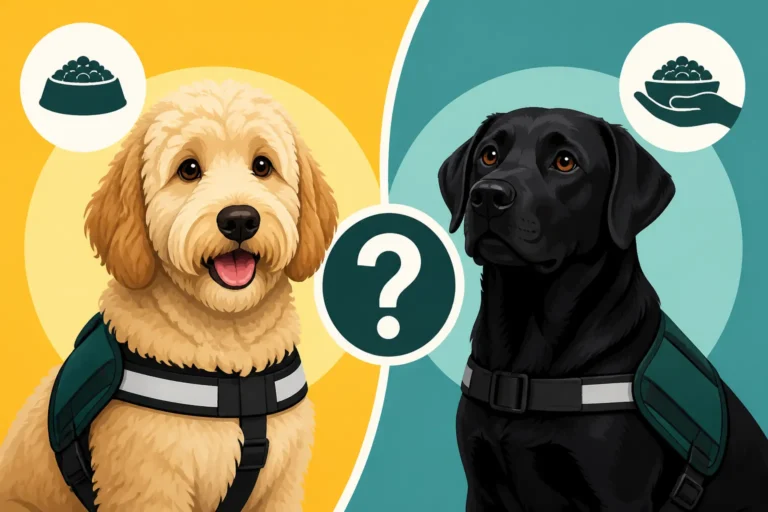
This specific challenge led to a pivotal decision. Wally Conron, the organization's breeding manager, was tasked with finding a solution. He needed a dog with the incredible working temperament, trainability, and devotion of a Labrador, but with the low-shedding, allergy-friendlier coat of a Standard Poodle. The coat, therefore, was undeniably a primary driver. It was the barrier that prevented Pat Blum from having a guide dog in the first place. You can read more about The 1989 Cross That Made the First Labradoodle and Who Asked for the First Labradoodle to understand the full context of this groundbreaking decision.
However, it wasn't simply about swapping one coat for another. The aim was to create a perfect guide dog for a very specific situation. This meant the dog couldn't just have the right coat; it also needed to inherit the best of both parent breeds in terms of intelligence, temperament, and physical soundness. The idea was to combine the Poodle's sharp mind and low-shedding qualities with the Labrador's renowned biddability, eagerness to please, and sturdy physique. It was a calculated risk, hoping to achieve a blend of traits that would create an animal truly fit for the demanding role of a guide dog without compromising the allergic household.
The Comprehensive Qualities of a Working Guide Dog
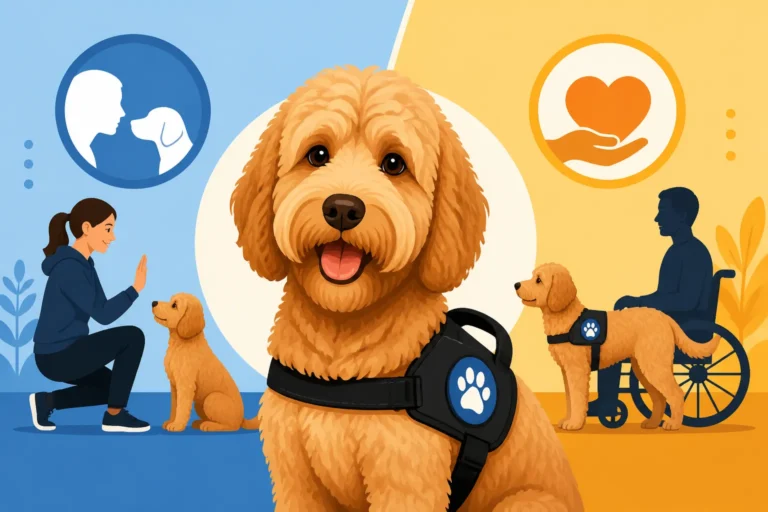
Imagine for a moment what a guide dog actually does every single day. It's not just about walking from point A to point B. These dogs are intelligent, highly trained partners who navigate complex environments, make life-saving decisions, and provide unwavering companionship. When Wally Conron embarked on his mission, he wasn't just thinking about hair; he was thinking about a lifetime of service.
Temperament and Trainability: The Core of a Guide Dog
Beyond the coat, the most critical aspects of any successful guide dog are its temperament and trainability. A guide dog must be calm under pressure, unfazed by bustling city streets, loud noises, or sudden movements. It needs to possess immense focus, ignoring distractions like squirrels, other dogs, and tempting smells. The dog must be naturally eager to please, willing to learn complex commands, and capable of "intelligent disobedience" – knowing when to not follow a command that would put its handler in danger (like stepping into traffic).
The Labrador Retriever brings a huge amount to the table in this regard. They are famously biddable, intelligent, and possess a strong desire to work alongside their human companions. Their retrieving drive, for instance, makes them naturally inclined to pick up dropped items, a crucial skill for many visually impaired individuals. Find out more about The Retrieving Drive a Labradoodle Gets From the Labrador. The Standard Poodle also contributes significant intelligence and a surprising athleticism, making them highly capable of learning intricate tasks. The hope was that the Labradoodle would inherit this mental prowess and willingness from both sides, creating a highly adaptable and eager-to-please working partner.
Physical Soundness and Stamina for a Lifetime of Service
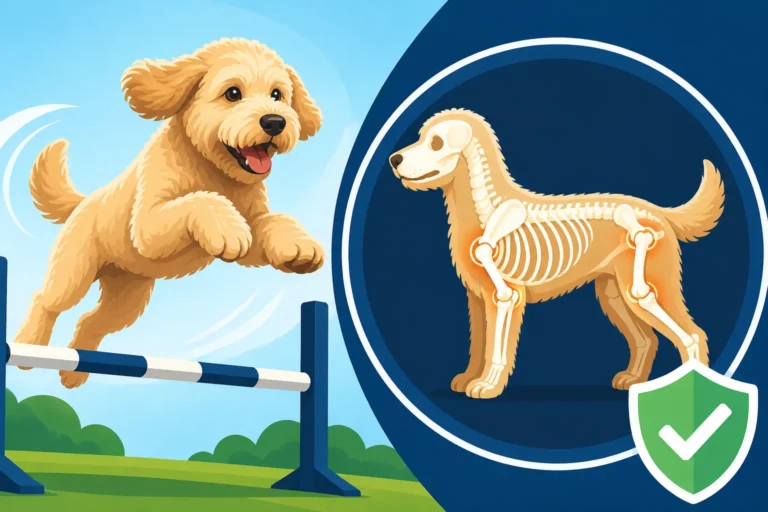
A guide dog's job is physically demanding. They walk miles every day, often on hard surfaces, and need the stamina to maintain focus and pace for extended periods. This requires excellent physical health, particularly strong joints, good vision, and a robust constitution. The Labradoodle's parent breeds, while generally healthy, also have their share of common genetic health concerns that needed careful consideration in a breeding program.
For instance, hip and elbow dysplasia are concerns in both Labradors and Poodles. A guide dog with mobility issues would be unable to perform its duties, becoming a liability rather than an aid. Vision is paramount, so genetic eye conditions like Progressive Retinal Atrophy (PRA) were also a concern. The idea was that by carefully selecting health-tested parents, the Labradoodle would embody the physical resilience required for years of active service. This was crucial for the long-term success of the dog as a working animal, not just for its initial placement. The selection process was about creating a dog that could truly dedicate its life to service, which demanded much more than simply a non-shedding coat.
Hopes, Realities, and the Labradoodle's Unique Blend
The initial breeding of the Labradoodle was an experiment, a hopeful endeavor to combine the best of two beloved breeds. The intention was clear: a guide dog with the temperament, intelligence, and working drive of a Labrador, coupled with the Poodle's low-shedding coat and keen mind. However, genetics are rarely a simple recipe, and the outcomes weren't always as predictable as the breeders initially hoped.
The Hybrid Vigor Dilemma: Predictability vs. Variety
The concept of "hybrid vigor" suggests that the offspring of two unrelated purebreds might be healthier and more robust than either parent. While there can be some truth to this, especially in an F1 cross (first-generation hybrid), it doesn't guarantee a uniform outcome across an entire litter or subsequent generations. When Conron bred his first Labradoodle, he got a variety of coats, temperaments, and even shedding levels within the same litter. Some puppies had the desired low-shedding fleece or wool coat, while others had a "hair coat" that shed much like a Labrador.
This unpredictability was a significant hurdle for a guide dog program that needed consistency. Imagine waiting years for a guide dog, only to find it shed profusely or lacked the desired temperament. This variability was a major reason why the Royal Guide Dogs Association eventually moved away from breeding first-generation Labradoodles. They needed dogs that "bred true" – meaning consistently produced offspring with predictable traits – something that is challenging in a first-generation cross. You can learn more about Whether Hybrid Vigor Is Real in a Labradoodle. The blend was unique, yes, but its variability made it less ideal for a program with such stringent and consistent requirements.
The Grooming Commitment: An Unexpected Factor
While the low-shedding coat was a primary goal, the maintenance of that coat quickly became another factor to consider. The Poodle's coat, and by extension many Labradoodle coats, requires significant regular grooming to prevent matting. For a blind owner, managing a curly, often dense coat that mats easily presents a whole new challenge. This isn't just a cosmetic issue; severe matting can cause skin infections and be incredibly painful for the dog, potentially affecting its willingness to work or its overall health.
Consider the practicalities: brushing daily, professional grooming every 6-8 weeks, and keeping eyes and ears clear. These are not minor tasks. Many Labradoodle owners find themselves investing in extensive grooming tools, from slicker brushes to detangling sprays, often purchased from retailers like Amazon, to keep their dog's coat in good condition. A guide dog organization would have to consider the lifelong grooming burden on its clients. This was a detail that, while perhaps not central to the initial breeding decision, certainly became a significant part of the program's evaluation of the breed.
| Desired Guide Dog Trait | Labrador Contribution | Poodle Contribution | Initial Labradoodle Hope | Reality/Challenge |
|---|---|---|---|---|
| Allergy-Friendly Coat | Short, shedding coat (undesired) | Low-shedding, often curly coat (desired) | Non-shedding, allergy-friendly | Variable coats; high grooming needs for non-shedding |
| Trainability/Intelligence | Highly biddable, eager to please, strong work ethic | Highly intelligent, quick learner, athletic | Intelligent, biddable, quick to train | Some variation, but generally high |
| Temperament/Focus | Calm, steady, patient, stable | Alert, sometimes more sensitive | Calm, steady, adaptable, focused | Can vary; some high-energy or more sensitive dogs |
| Physical Soundness | Sturdy build, generally healthy | Athletic, less prone to certain joint issues | Robust, good stamina, healthy joints | Joint issues still present; bloat risk from Poodle side |
| Size/Stamina | Medium to large, good endurance | Medium to large, good stamina | Optimal size and stamina for daily work | Consistency in size and energy levels could vary |
From Program Dog to Popular Companion: The Labradoodle's Enduring Appeal
Despite the initial breeding program ultimately deciding not to pursue the Labradoodle for widespread guide dog use, the breed's popularity absolutely exploded. The news of an "allergy-friendly guide dog" captured the public's imagination, and soon, demand for these delightful dogs soared far beyond the original intent of service work.
Why Guide Dog Programs Shifted Away
The primary reason guide dog programs like Wally Conron's moved away from the Labradoodle was the sheer unpredictability of the first-generation cross (F1). While some puppies had the perfect combination of traits, many others did not. The variance in coat type, temperament, and even health issues meant that too many dogs washed out of the rigorous training programs. For an organization dedicated to providing consistent, reliable service animals, this level of unpredictability was simply not sustainable or cost-effective. As Conron himself stated, he regretted creating a "Pandora's box" of uncontrolled breeding. You can read more about Why Conron Called the Labradoodle a Mistake and What Washes a Labradoodle Out of a Program. The commitment and resources required to train a guide dog are immense, and programs need a higher success rate from their recruits.
The Labradoodle's Lasting Charms as a Family Pet
However, what made the Labradoodle challenging for a highly specialized guide dog program didn't stop it from becoming an incredibly popular family companion. For everyday pet owners, the occasional variance in coat or a slightly more energetic personality wasn't a deal-breaker. People fell in love with their charming, intelligent, and often cuddly nature. The low-shedding aspect remained a huge draw for families dealing with mild allergies, even if it meant a bit more grooming effort.
Modern Labradoodle breeders, often focusing on multi-generational crosses (where Labradoodles are bred to other Labradoodles), have worked hard to create more consistent lines, striving for the specific "fleece" or "wool" coats and the gentle, intelligent temperaments that owners cherish. Resources like online training courses, such as those offered by BAXTER & Bella, have also helped many new Labradoodle owners navigate the puppy stages, ensuring these intelligent dogs get the foundational training they need to be well-behaved family members.
So, while the coat was indeed the initial spark for the Labradoodle's creation, the vision for this new cross was always much broader. It was about creating a complete package: a dog with the right temperament, the right intelligence, the right physical capabilities, and yes, the right coat, all rolled into one exceptional guide dog. The journey showed that while a desired coat could be aimed for, the full spectrum of traits needed for a working guide dog required a level of predictability that was harder to achieve in a hybrid. Nevertheless, the Labradoodle's enduring popularity speaks volumes about its inherent charms, even if its destiny veered from its original purpose.
Disclaimer
This article is for general informational purposes only and does not constitute professional advice. Laws, prices and regulations vary by location and change over time. Consult a qualified professional for guidance on your specific situation.