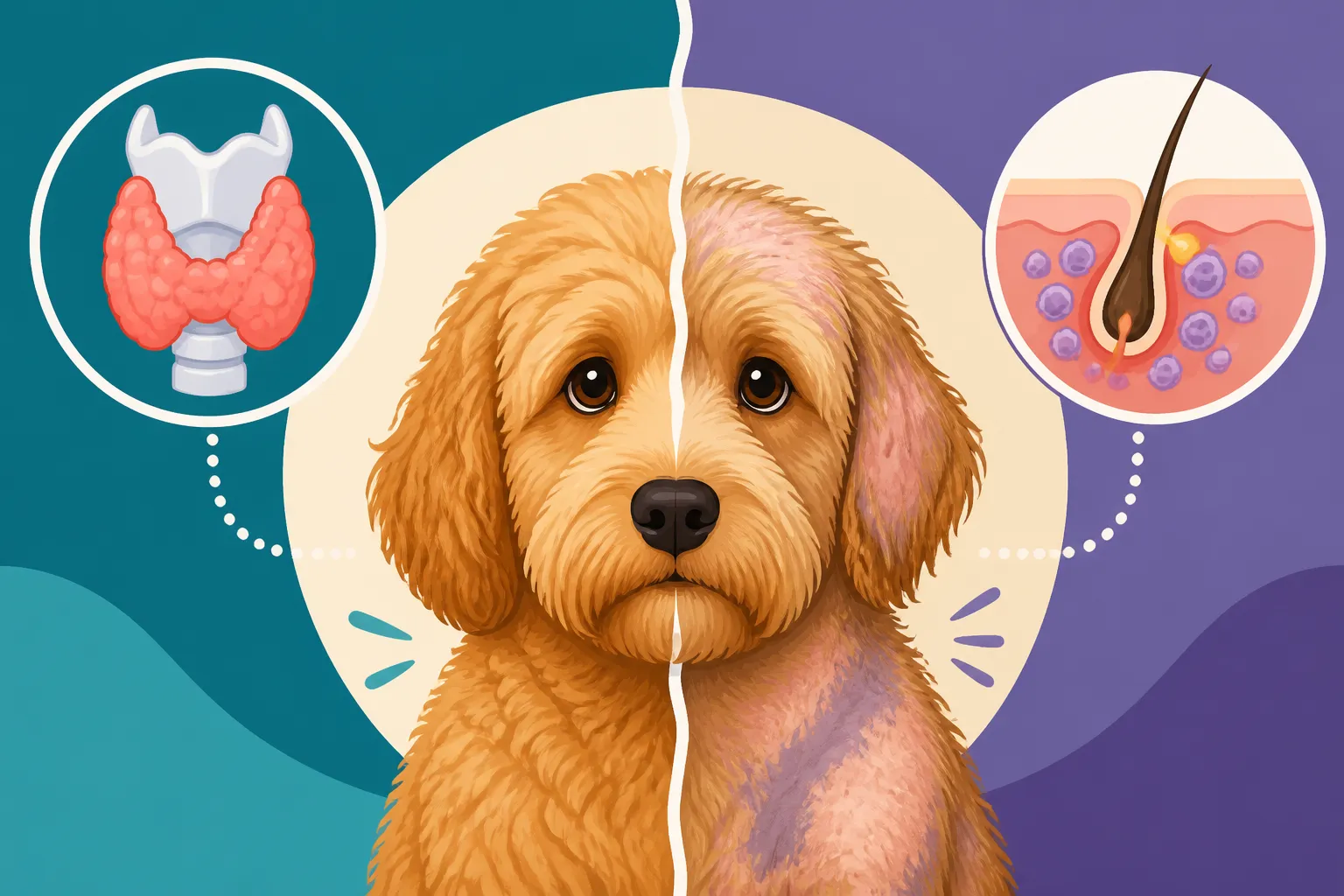
Whether a Labradoodle’s Coat Loss Is Thyroid or Adenitis
It's incredibly worrying when you start noticing your beloved Labradoodle's beautiful coat thinning or changing. Is it just a bad shed, a reaction to something new, or something far more serious lurking beneath the surface? Many owners feel a wave of panic and frustration, especially when the changes seem subtle at first. This guide is here to help you understand two common, yet distinct, culprits behind coat loss in Labradoodles: hypothyroidism and sebaceous adenitis, and how to tell them apart so you can get your furry friend the right help.
Understanding Labradoodle Coat Loss: Beyond Just Shedding
Watching your Labradoodle's glorious coat start to look sparse or unhealthy can be incredibly distressing. You might spend extra time brushing, try new shampoos, or even change their diet, all while wondering what on earth is going on. It’s easy to dismiss early signs as just a "heavy shed" or seasonal change, but sometimes, coat loss is a clear signal that something significant is amiss with their health.
The Normal Shedding Cycle and What's Different
Most Labradoodle owners chose the breed, at least in part, for their reputation as low-shedding dogs. While a purebred Labrador sheds quite a bit, and a Poodle sheds very little, the Labradoodle's coat, especially the popular fleece or wool types, tends to be more on the low-shedding side. Even so, every dog sheds some hair as part of their natural hair growth cycle. You might notice a bit more hair around the house during seasonal changes or when brushing. This is completely normal.
What's not normal, however, is when the shedding becomes excessive, or when you start seeing bald patches, thin spots, or a dull, brittle texture to their fur that wasn't there before. A healthy Labradoodle coat should be vibrant, soft, and relatively full, depending on its specific type – whether it's the shaggier hair coat, the soft wavy fleece, or the tighter curly wool. If you're brushing and getting clumps of hair that reveal noticeably thinner areas underneath, or if your dog’s coat feels greasy, dry, or develops flakes, it's time to pay closer attention. It’s a common frustration to feel like you're doing everything right with grooming, yet the coat still looks unwell.
When to Seek Veterinary Advice for Hair Loss
It’s completely understandable to try a few home remedies first, like a different brush or a new supplement, when you notice changes in your Labradoodle's coat. However, when it comes to significant or unexplained coat loss, delaying a trip to the vet can mean delaying a crucial diagnosis. Your veterinarian is the best resource to pinpoint the exact cause of your dog’s hair loss. This isn't just about aesthetics; coat health is often a mirror of internal health, and many conditions that cause hair loss also have other, more serious implications for your Labradoodle's well-being.
Your vet will likely start by ruling out the more straightforward causes like external parasites (fleas, mites), allergies (food or environmental), or fungal infections (ringworm). They’ll also ask about diet, lifestyle, and any other symptoms you might have noticed, no matter how subtle. Don't underestimate the small details; things like a slight increase in thirst, a change in appetite, or a shift in energy levels can all be important clues. Getting a professional opinion early on means getting your Labradoodle on the road to recovery faster, and it can save you a lot of worry and unnecessary home treatments. Remember, your vet can help differentiate between common issues and more complex conditions that require specific medical intervention.
Hypothyroidism: The Silent Coat Thief
Hypothyroidism is a condition that many Labradoodle owners encounter, largely because both Poodles and Labradors, the parent breeds, can be predisposed to it. It’s a sneaky condition because its symptoms can be quite vague and mimic other problems, making it a true "silent thief" when it comes to your dog's energy and coat health.
How Thyroid Hormones Affect Skin and Coat
At the base of your Labradoodle's neck, there's a small but mighty gland called the thyroid. This gland produces hormones that act like the body's internal thermostat and pace-setter, influencing almost every metabolic process. When the thyroid doesn't produce enough of these essential hormones (a condition known as hypothyroidism), everything starts to slow down. One of the first places many owners notice a change is in their dog's skin and coat.
Thyroid hormones are crucial for maintaining the normal cycle of hair growth. Each hair follicle goes through phases: growth, resting, and shedding. When thyroid hormone levels are low, the hair follicles tend to stay in the resting phase for too long, or the growth phase slows down significantly. This leads to weak, brittle hair that breaks easily or simply doesn't regrow after shedding. The skin itself also suffers, becoming dry and less elastic. It’s a cascade effect: the lack of proper hormonal regulation means the building blocks for healthy skin and hair aren't being adequately produced or maintained, leading to visible deterioration.
Classic Signs of Thyroid-Related Coat Loss in Labradoodles
The coat loss associated with hypothyroidism has some very distinctive characteristics that can help you and your vet narrow down the possibilities. One of the most classic signs is symmetrical hair loss. This means you'll see thinning or bald patches appearing roughly equally on both sides of your Labradoodle's body. Common areas include the flanks, the chest, the back of the thighs, and often, a thinning of the hair on the tail, sometimes referred to as a "rat tail" or "bald tail." Unlike some other conditions, the skin itself might not appear overly itchy or inflamed at first. Instead, it might look dull, thickened, or even darker than usual (hyperpigmentation).
Beyond the coat, you might notice other changes in your Labradoodle's overall demeanor. They could become more lethargic, less interested in playtime or walks, and generally seem to slow down. Unexplained weight gain, despite no change in diet or exercise, is another common symptom. They might also seem unusually sensitive to cold, seeking out warm spots more often. These subtle changes, combined with the distinct coat issues, often point directly to Thyroid Failure in a Labradoodle. If you suspect this, it's vital to bring it to your vet's attention, as early diagnosis can make a huge difference in their quality of life. For more on this, you can look into Thyroid Failure Behind a Labradoodle's Coat Loss.
Diagnosing Hypothyroidism and Treatment
If your vet suspects hypothyroidism based on your Labradoodle's symptoms, the diagnosis typically involves specific blood tests. The most common tests measure levels of total T4 (thyroxine), free T4, and canine TSH (thyroid-stimulating hormone). A low T4 or free T4, especially in conjunction with an elevated TSH level, is usually indicative of hypothyroidism. Sometimes, additional tests might be run to confirm the diagnosis and rule out other underlying conditions that could affect thyroid levels. It’s a straightforward diagnostic process, but it requires a visit to the clinic and usually a blood draw.
Once diagnosed, the good news is that hypothyroidism is a very manageable condition. Treatment involves daily oral thyroid hormone replacement medication, typically levothyroxine. Your Labradoodle will likely need to take this medication for the rest of their life, similar to how humans manage thyroid issues. The dose will be carefully adjusted by your vet, often requiring follow-up blood tests to ensure the levels are optimal. With consistent medication, most Labradoodles show remarkable improvement within a few weeks to a couple of months. Their energy levels often bounce back, their weight stabilizes, and, most importantly for this discussion, their coat starts to regrow, becoming thicker, softer, and healthier. While it's a lifelong commitment, managing the condition allows your Labradoodle to live a full and normal life, much like how a dog with Life on Daily Medication for an Addison's Labradoodle can thrive with proper care.
Sebaceous Adenitis: A Tricky Immune Disorder
While hypothyroidism is a common culprit for coat issues, another condition, Sebaceous Adenitis (SA), can also lead to significant hair loss and skin problems in Labradoodles. This condition is particularly tricky because its early signs can sometimes be mistaken for allergies or simple dry skin, leading to frustration for owners trying to find a solution.
What is Sebaceous Adenitis and How It Impacts Hair Follicles
Sebaceous Adenitis is a rather complex, chronic inflammatory disease that specifically targets and destroys the sebaceous glands in the skin. These tiny glands are incredibly important; they're responsible for producing sebum, a natural oily substance that lubricates the skin and hair, keeping it supple, moisturized, and protected. Think of sebum as your dog's natural conditioner and skin barrier.
When SA strikes, the immune system mistakenly attacks these glands, causing inflammation and eventually leading to their destruction. Without functioning sebaceous glands, the skin and hair follicles become starved of essential moisture and oils. The hair becomes dry, brittle, and easily breaks off or falls out. The skin itself becomes dry, flaky, and prone to secondary infections because its natural protective barrier is compromised. It's a frustrating cycle where the body's own defenses turn against a vital part of the skin's ecosystem, leading to profound and visible changes in the coat. This is a condition that directly affects Sebaceous Adenitis in a Labradoodle's Skin.
The Distinct Appearance of SA-Related Coat Loss in Labradoodles
The coat loss and skin changes with Sebaceous Adenitis often present differently than those seen with hypothyroidism. Instead of symmetrical thinning, you'll typically notice patchy hair loss that can start seemingly anywhere, though it's commonly seen on the head, ears, neck, and down the back. These patches might be irregular in shape and size, and often, the hair that remains looks dull, brittle, and feels coarse.
Perhaps the most distinctive signs of SA are the accompanying skin issues: severe scaling, dandruff, and what are known as follicular casts. These are waxy, silvery-white or grayish deposits that literally cling to the base of the hair shafts. If you run your fingers through your Labradoodle's coat, you might feel these gritty casts, or even see them forming tiny tubes around the hairs. The skin can become greasy in some areas, yet incredibly dry and flaky in others. The coat might also appear matted or clumped due to the waxy debris. Initially, it might just look like severe dandruff or a really dry coat, making owners try various "dandruff" shampoos without success. This is why it's crucial to recognize if Whether a Labradoodle's Coat Thins in Patches is accompanied by these specific skin changes. The typical age of onset for this condition can vary, but generally, dogs are young to middle-aged adults when symptoms first appear, as discussed in The Age Sebaceous Adenitis Appears in a Labradoodle.
Confirming SA and Managing the Condition
Diagnosing Sebaceous Adenitis accurately is critical because its appearance can be confused with other dermatological issues. The definitive diagnostic method is a skin biopsy. This involves taking small tissue samples from affected areas of the skin, which are then sent to a veterinary pathologist for microscopic examination. The pathologist will look for signs of inflammation and destruction of the sebaceous glands, confirming the presence of SA. Blood tests typically aren't helpful for diagnosing SA directly, as it's a localized skin condition rather than a systemic hormonal imbalance. The biopsy, however, provides a clear picture, helping you understand The Skin Biopsy That Confirms Adenitis in a Labradoodle.
Managing SA is a lifelong commitment, as it is a chronic condition with no definitive cure. The goal is to control the symptoms and improve your Labradoodle's comfort and coat quality. Treatment often involves a multi-pronged approach:
- Topical Therapies: Frequent bathing with medicated shampoos (keratolytic to remove scales, antibacterial/antifungal if secondary infections are present) and regular oil soaks. Oil Soaks for a Labradoodle With Sebaceous Adenitis are a cornerstone of treatment, helping to rehydrate the skin and loosen scales.
- Systemic Medications: In some cases, your vet might prescribe immune-modulating drugs like cyclosporine, corticosteroids, or other medications to suppress the autoimmune response.
- Nutritional Support: High-quality diets rich in omega fatty acids can also help support skin health.
While SA is not typically life-threatening, it does require diligent and ongoing care from owners. Improvements are usually seen, but achieving a completely normal coat can be challenging, and flare-ups may occur.
Differentiating Between Thyroid Issues and Sebaceous Adenitis
When your Labradoodle is experiencing coat loss, it can be incredibly tough to figure out what's going on. Both hypothyroidism and sebaceous adenitis can cause hair to fall out, but understanding their distinct characteristics can guide you and your vet toward the correct diagnosis and treatment plan. It’s about looking beyond just the missing hair and observing the full clinical picture.
Key Visual Clues to Look For
Here's a breakdown of the key visual differences that can help you distinguish between hypothyroidism and sebaceous adenitis, though remember, these are clues, not definitive diagnoses:
| Feature | Hypothyroidism (Thyroid Issues) | Sebaceous Adenitis (SA) |
|---|---|---|
| Pattern of Hair Loss | Often symmetrical on both sides of the body. Commonly affects flanks, chest, neck, and tail ("rat tail"). | Typically patchy and irregular, often starting on the head, ears, neck, and back. |
| Skin Appearance | Skin may be thickened, dull, dry, cool to the touch, or hyperpigmented (darkened). Can have secondary infections. | Skin is usually very dry, flaky, scaly, and may have characteristic follicular casts (waxy debris clinging to hair shafts). Can have secondary infections. |
| Coat Texture | Hair is dull, brittle, sparse, and easily pulled out. May feel soft or "puppy-like" in affected areas. | Hair is dry, brittle, coarse, and matted. May look greasy/waxy in some spots, severely dry in others. |
| Itchiness | Usually not the primary symptom; may become itchy if secondary infections develop. | Can be quite itchy due to dry skin, inflammation, and secondary infections. |
| Other Symptoms | Lethargy, weight gain, cold intolerance, slow heart rate, mental dullness. | Generally no other systemic symptoms, focused purely on skin and coat health. |
For example, if you're seeing your Labradoodle gaining weight, acting tired, and has hair loss that mirrors itself on both sides of their body, especially around the tail, your mind should lean towards a thyroid issue. If, however, they're energetic but have patches of dull hair with tons of flaky, waxy debris stuck to the individual hairs, particularly on their back or head, then SA might be more likely. These visual cues are invaluable for guiding the conversation with your veterinarian.
The Importance of Veterinary Testing for a Clear Diagnosis
While observing these visual clues is helpful, it’s absolutely critical to understand that a definitive diagnosis for either condition requires veterinary testing. There's just no way for an owner to know for sure what's going on beneath the surface without professional evaluation. Relying solely on visual assessment can lead to misdiagnosis, which means your Labradoodle isn't getting the right treatment, and their condition could worsen.
For hypothyroidism, a simple blood test can measure hormone levels and confirm the diagnosis. For sebaceous adenitis, a skin biopsy is the gold standard. These tests are straightforward, relatively non-invasive, and provide your vet with the precise information needed to start an effective treatment plan. Guessing could mean months of ineffective treatments, unnecessary expenses, and prolonged discomfort for your dog. For instance, if you treat for allergies when it's actually SA, you'll see no improvement, and the condition will progress. This is why regular health checks, including The Yearly Screening a Labradoodle Should Get, are so valuable for early detection of such conditions. Pet insurance providers like Healthy Paws are there to help with these diagnostic costs, ensuring you can get the necessary tests without undue financial stress.
Why a Labradoodle is Prone to Both Conditions
It often feels unfair when our beloved Labradoodles face health challenges, and it's particularly frustrating when they seem predisposed to several conditions. The truth is, the Labradoodle, being a hybrid, inherits genetic tendencies from both its parent breeds: the Labrador Retriever and the Standard Poodle. Both of these breeds have known predispositions to certain health issues, including hypothyroidism and sebaceous adenitis.
Standard Poodles, for instance, are recognized for their susceptibility to sebaceous adenitis, with some lines showing a higher incidence. They also have a predisposition to hypothyroidism. Labradors, while generally robust, can also carry genes that contribute to hypothyroidism. This means that a Labradoodle, through the combination of these two genetic backgrounds, can unfortunately inherit a predisposition to either or both conditions. While many breeders carefully screen their parent dogs for known genetic diseases – which is why knowing The Health Tests a Labradoodle Breeder Should Show is so important – no breeding program can eliminate all risks. The concept of Whether Hybrid Vigor Is Real in a Labradoodle often suggests increased robustness, but it doesn't grant immunity to breed-specific predispositions. Therefore, as a Labradoodle owner, staying vigilant for signs of these conditions is a crucial part of responsible pet care. If you have pet insurance, ensure it covers hereditary conditions, which Healthy Paws policies often do, providing peace of mind for managing such inherited predispositions.
Disclaimer
The information provided in this article is for general informational purposes only and is not intended as a substitute for professional veterinary advice. Always consult with your veterinarian or another qualified animal health provider regarding any medical condition or health concerns your Labradoodle may have. Never disregard professional veterinary advice or delay seeking it because of something you have read here.