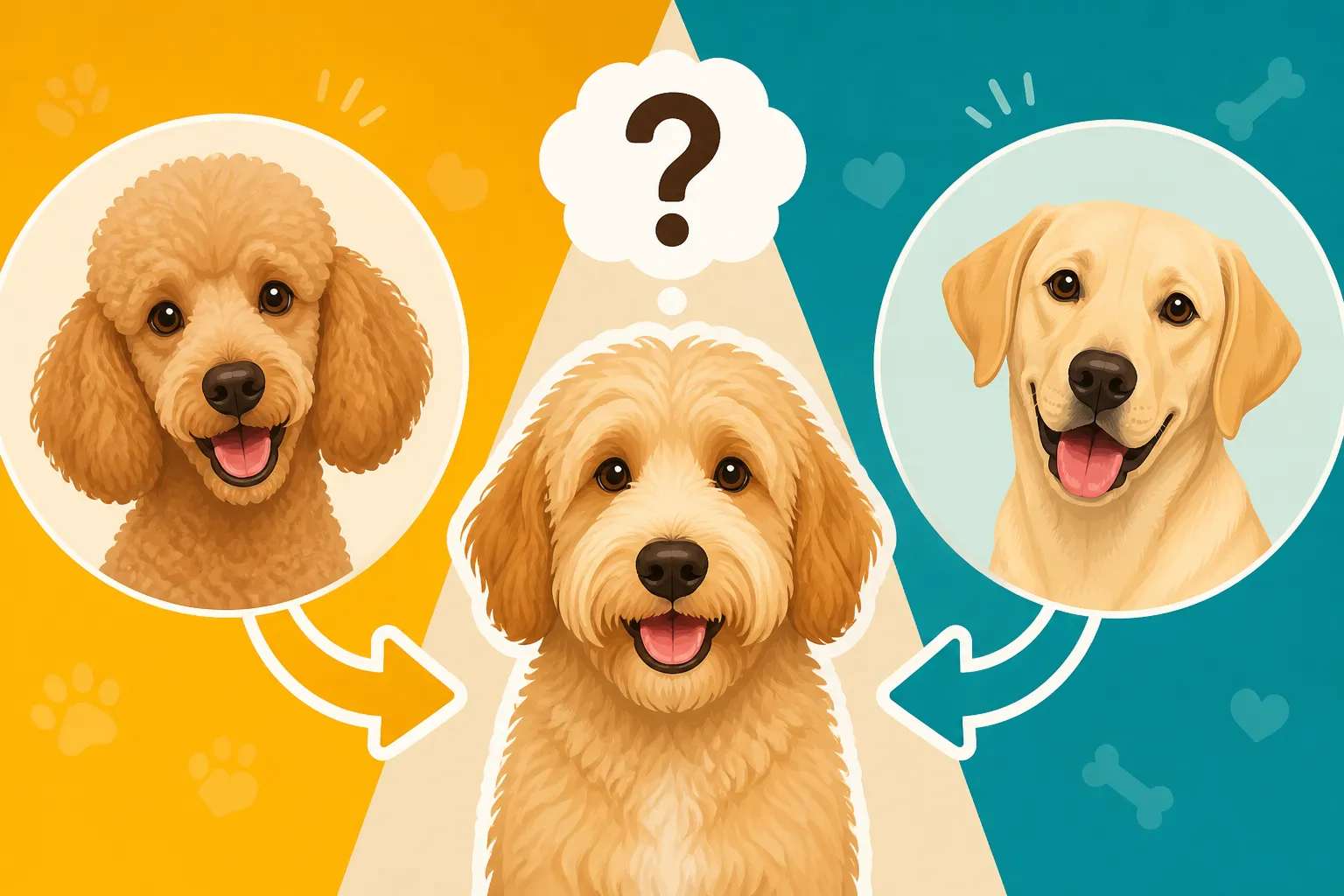
Whether a Labradoodle Looks More Poodle or More Labrador
A Labradoodle can look more like a Poodle, more like a Labrador, or land somewhere between the two—and even puppies in the same litter may look surprisingly different. Coat texture is often the first clue people notice, but face shape, build, ears, and generation matter too. This guide explains what to expect and why a puppy’s appearance can be hard to predict.
Why Labradoodles Can Look So Different
Inheriting traits is not the same as blending them evenly
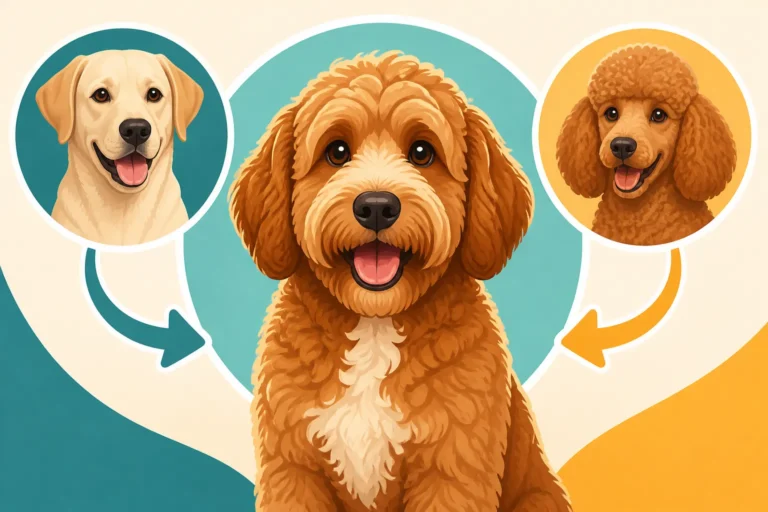
A Labradoodle is a cross between a Labrador Retriever and a Poodle, but that does not mean every puppy gets a neat half-and-half mix of visible traits. A puppy inherits a combination of genes from both parents, and the combination can vary among littermates. One pup may have a wavy coat and a broad, Labrador-like head, while a sibling has tighter curls and a finer muzzle.
This is why “half Labrador, half Poodle” describes a first-generation cross’s ancestry, not a guaranteed appearance. Even when both parents are known, their puppies may not all look alike. A breeder can offer informed expectations based on the parents and their relatives, but appearance is not a simple recipe where a certain percentage of Poodle ancestry guarantees a particular coat or face.
The same variation applies beyond the coat. A Labradoodle may have a sturdy Labrador-style body, a more lightly built Poodle-like frame, or a shape between the two. For a broader look at which traits tend to come from each side, see Which Labradoodle Traits Come From the Poodle and What a Labradoodle Owes to Its Labrador Side.
Generation offers clues, not a visual guarantee
Generation labels can help explain a dog’s ancestry. An F1 Labradoodle is generally a first-generation Labrador–Poodle cross. An F1b is commonly produced by crossing an F1 Labradoodle back to a Poodle, though breeding terminology can vary, so it is sensible to ask exactly which dogs are behind a puppy. Multigenerational Labradoodles have Labradoodle ancestry across several generations.
A backcross to a Poodle may make Poodle-associated traits more likely, but it does not make every puppy look or behave the same. Individual inheritance still matters, and breeders may select parents for different goals, such as coat texture, size, or temperament. Two dogs with the same generation label can therefore look noticeably different.
Generation is most useful as one piece of context—not as a promise that a dog will be curly, low-shedding, or unmistakably Poodle-like. If you are comparing labels, What F1 Means on a Labradoodle, What F1b Means on a Labradoodle, and What Multigen Means on a Labradoodle explain the terms in more detail.
Coat, Face, and Build: What to Look At
The coat is often the most obvious clue
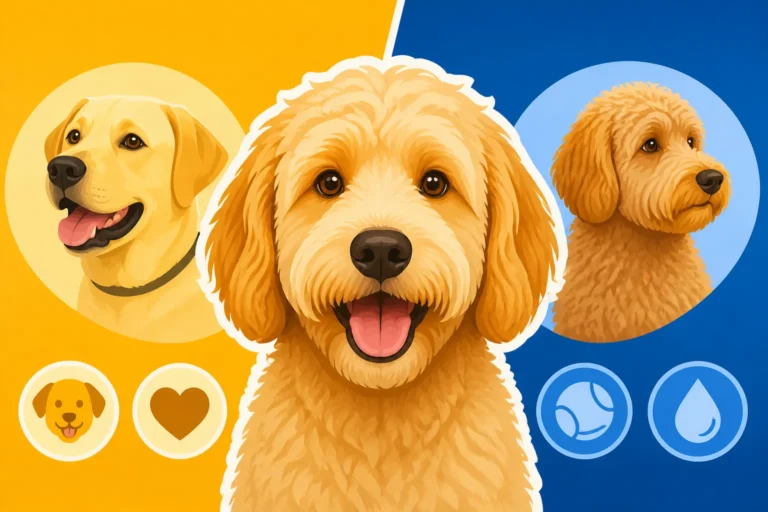
A Labradoodle’s coat may be relatively straight, wavy, or curly. A straight or flatter coat can give a dog a more Labrador-like look, particularly if it is paired with a short, smooth texture. A curly coat often looks more Poodle-like, while a loose wave can create the familiar “shaggy teddy bear” appearance many people associate with Labradoodles.
But texture alone does not tell the whole story. A dog with a wavy coat may still have a broad Labrador-like face, and a curly-coated dog can have a sturdy build and a retriever-like expression. Coat length, furnishings around the muzzle, grooming style, and the dog’s age also affect the impression. A freshly groomed Labradoodle may look quite different from the same dog after several weeks of coat growth.
It helps to learn the coat terms breeders use, while remembering that labels are descriptions rather than guarantees. The Three Labradoodle Coats: Hair, Fleece and Wool covers the common coat categories, and Whether a Labradoodle's Coat Type Can Be DNA Tested looks at what coat testing can—and cannot—tell you.
A quick comparison of common appearance clues
| Feature | More Labrador-like impression | More Poodle-like impression | Why it can be hard to predict |
|---|---|---|---|
| Coat | Shorter, flatter, or straighter | Curlier or more textured | Coat genes and grooming both affect what you see |
| Head and muzzle | Broader head and a substantial muzzle | Finer or more tapered appearance | Parents can pass down different combinations of features |
| Build | Sturdy, athletic, retriever-like frame | More lightly built or elegant outline | Size and structure vary between individual parents |
| Ears | Close to the head, often with a retriever-like look | Longer-looking or more heavily coated ears | Ear shape and coat growth influence the overall impression |
| Overall look | Shorter coat and solid outline | Curled coat and more sculpted outline | One trait does not determine the dog’s entire appearance |
Use the table as a way to describe what you see, not as a scoring system. Many Labradoodles show a blend: perhaps a Poodle-like coat with a Labrador’s broader head, or a retriever’s sturdy body under a curlier coat. It is entirely normal for a dog not to fit neatly into either column.
The face and body can tell a different story from the coat
People often decide that a Labradoodle “looks like a Poodle” or “looks like a Lab” based on the coat alone. But the head, muzzle, eyes, ears, and body proportions all contribute to the dog’s overall appearance. A broad head, strong muzzle, and substantial frame may create a Labrador-like impression even when the coat is curly. A finer outline and tight curls may make another dog look more Poodle-like.
Size can also affect how people read a dog’s appearance. A smaller Labradoodle with a delicate frame may seem more Poodle-like, while a larger, solidly built dog may remind people of a Labrador. Size alone is not proof of ancestry, though: Labradors and Poodles both vary, and Labradoodles can inherit different combinations of height and build.
Try looking at several features together rather than relying on one striking detail. If you are meeting a puppy, notice the parents too, but keep in mind that a puppy may not grow into an exact copy of either one. Whether a Labradoodle Puppy's Coat Predicts the Adult One explains why puppy appearance can change as the dog matures.
What to Expect as a Labradoodle Grows
Puppy coats and adult coats may not match
A young Labradoodle’s coat can change as it grows. The puppy coat may be softer, finer, or less textured than the adult coat, and the transition can alter how curly or shaggy the dog appears. Some owners are surprised when a puppy who looked fairly smooth develops a more textured coat, or when an initially fluffy coat changes in density and manageability.
The timing and extent of coat changes vary. A puppy’s appearance can offer clues, but it is not a reliable preview of the finished adult dog. Even a breeder who knows the parents and their relatives may need to describe a likely range rather than make a firm promise about the adult coat.
This is worth considering if you have a strong preference for a particular look. Ask the breeder what the parents’ coats were like at different ages, and whether they have adult dogs from related litters you can meet. The article The Coat Change That Hits a Labradoodle at Nine Months covers this transition and what owners may notice.
Grooming can make the same dog look like two different dogs
A Labradoodle’s haircut can dramatically change its appearance. A longer, rounded trim may emphasize curls and furnishings, creating a more Poodle-like or teddy-bear look. A shorter, practical clip may make the dog’s body shape and facial structure more visible, which can bring out a Labrador-like impression. Facial hair, ear length, and the shape of the trim can all alter the overall effect.
That is why photos can be misleading when you are trying to judge what a Labradoodle naturally looks like. One dog may be photographed with a carefully styled coat, while another has been clipped short for comfort and easier maintenance. The difference may be mostly grooming rather than genetics.
If appearance matters to you, ask to see several photos of the same dog at different coat lengths, or meet the dog in person if possible. You might also ask how much brushing and professional grooming the coat is likely to need. A particular look can take regular upkeep, and the coat that seems most appealing in a photo may not be the easiest match for your routine.
How to Judge a Puppy’s Likely Look Realistically
Ask about parents, relatives, and variation within litters
When speaking with a breeder, ask to see both parents and, if available, adult dogs from earlier litters with similar ancestry. Pay attention to the range of coats and body types, not only the puppy that looks most like your ideal. A breeder who explains both the likely traits and the uncertainties gives you a more useful picture than someone who guarantees a specific look based on a label alone.
Questions can be practical and specific: Do the parents have straight, wavy, or curly coats? How did their coats change as they matured? What do adult offspring from related pairings look like? Are there puppies in the same litter with different textures or builds? These answers may help you understand the possibilities, but they still cannot predict every detail of an individual puppy.
It is also reasonable to ask how the breeder describes the puppy’s generation and what that label means in this particular pairing. Terms can be used differently, so a clear explanation of the actual parents and grandparents is more informative than the label by itself. For a wider checklist of questions, see Whether Breeders Should State a Labradoodle's Generation.
Prioritize a good fit over a particular “doodle” look
It is easy to focus on finding the puppy with the curl, color, or face you have pictured. But appearance does not tell you everything about coat care, temperament, size, or day-to-day needs. A curly coat is not automatically easy-care, and a dog that looks strongly like a Poodle is not necessarily more predictable in every other way.
If you are choosing a Labradoodle, consider what you can comfortably manage: brushing, grooming appointments, the dog’s likely adult size, and its energy and training needs. A household that loves a shaggy coat but struggles to keep up with brushing may find the day-to-day reality frustrating. Someone who prefers a simpler routine may be happier with a shorter clip, regardless of which parent breed the dog resembles.
The most accurate answer is that a Labradoodle may look more like either parent, and many look like a distinct mix rather than a clear copy of one breed. Coat, face, build, generation, age, and grooming all shape that impression. Meet adult dogs when you can, ask detailed questions, and leave room for individual variation—because no label can guarantee exactly what a puppy will look like when fully grown.
Disclaimer
This article is for general informational purposes only and does not constitute professional advice. Laws, prices and regulations vary by location and change over time. Consult a qualified professional for guidance on your specific situation.