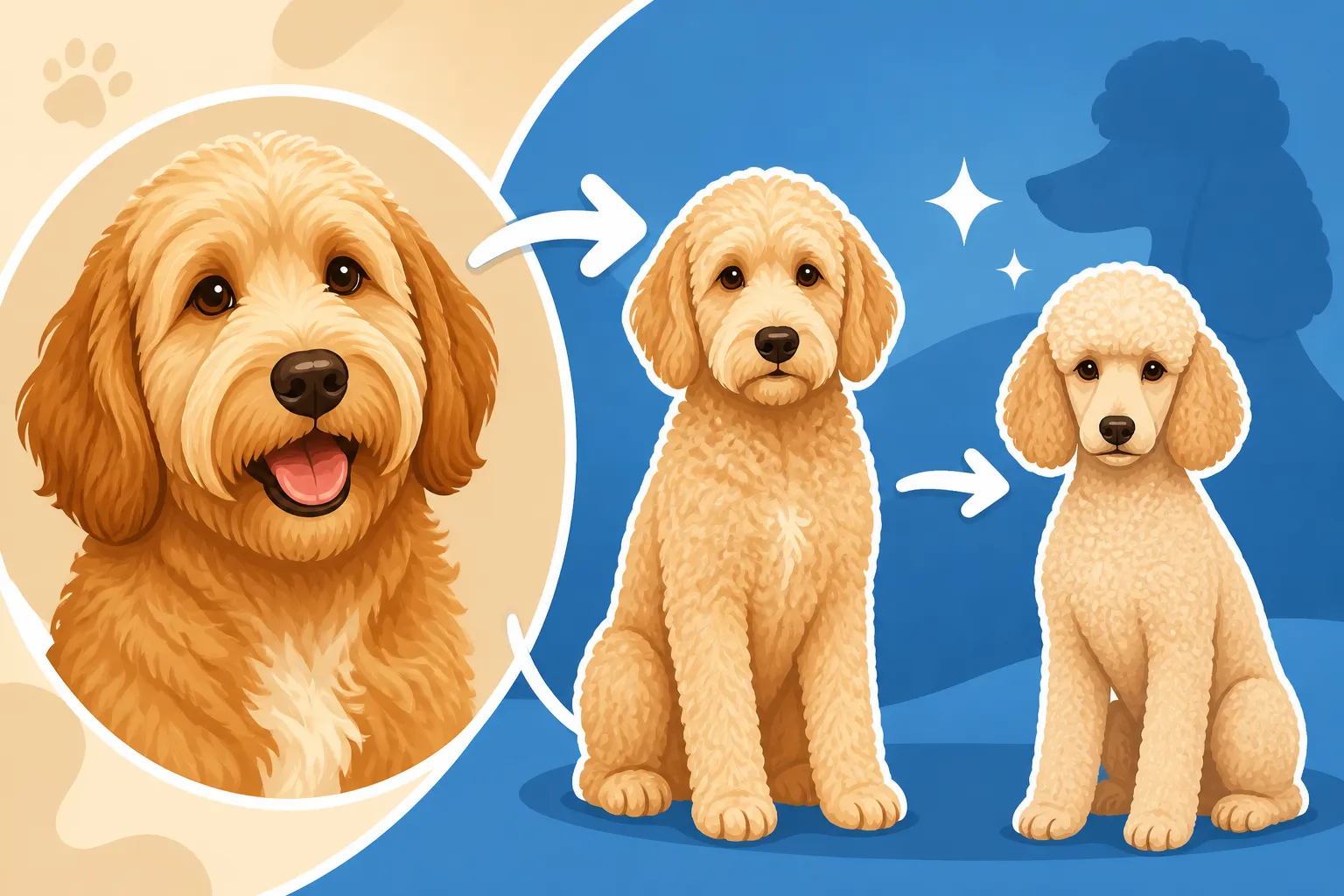
Whether a Later Generation Labradoodle Looks More Poodle
It's such a common thing, isn't it? You fall in love with the idea of a Labradoodle, picturing that perfect shaggy, friendly face, only to realize that every single one looks a little different. It can be confusing trying to understand why some look more like a Labrador, some more like a Poodle, and how their generation plays a huge role in that. This guide is going to peel back the layers on Labradoodle genetics and breeder choices to explain why those later generations often lean heavily towards the Poodle side of their heritage.
Understanding Labradoodle Generations
When you're looking at Labradoodles, you're quickly introduced to a whole alphabet soup of terms: F1, F1b, F2, Multigen. It's enough to make your head spin, but understanding these generations is really the key to unlocking why their appearance varies so much. These terms aren't just arbitrary labels; they tell you a story about the dog's parentage and, by extension, the likely genetic contributions from its Poodle and Labrador ancestors.
What Defines an F1, F1b, and Beyond?
Let's break down these common generational labels, because each one represents a different genetic mix that can influence how Poodle-like your Labradoodle will be.
An F1 Labradoodle is the very first cross between a purebred Labrador Retriever and a purebred Poodle. Think of it as a genetic coin toss. Each parent contributes 50% of their genes, but which specific genes get passed on is largely up to chance. This means that within a single F1 litter, you might see puppies that look very Poodle-like with curly coats, others that resemble a Labrador more closely with straighter hair, and many in between. The variety can be quite striking, and it's part of the charming unpredictability of the first generation. For more on this, check out What F1 Means on a Labradoodle.
Then we have the F1b Labradoodle. The 'b' stands for "backcross." This is where an F1 Labradoodle is bred back to one of its parent breeds, almost always a Poodle. So, an F1b is typically 75% Poodle and 25% Labrador. The intent here is usually to increase the Poodle traits, particularly the non-shedding coat. With that increased Poodle genetic contribution, you're much more likely to see a dog with a curlier, denser coat and other Poodle characteristics. What F1b Means on a Labradoodle delves deeper into what this specific cross achieves.
Beyond these, you'll encounter F2 Labradoodles, which are the result of breeding two F1 Labradoodles together. Again, this is a bit of a genetic wildcard, as both F1 parents carry a mix of Labrador and Poodle genes, and their offspring can inherit any combination. An F2b would be an F2 bred back to a Poodle, further solidifying Poodle traits. Finally, Multigenerational (Multigen) Labradoodles are dogs that are F3 or higher, meaning their parents were both Labradoodles from at least the F2 generation, or an F1b crossed with a Multigen. With each successive generation, breeders have more opportunities to carefully select for specific traits, leading to increased consistency. This selective breeding is where the Poodle look often becomes more dominant.
The Genetic Lottery of the First Cross (F1)
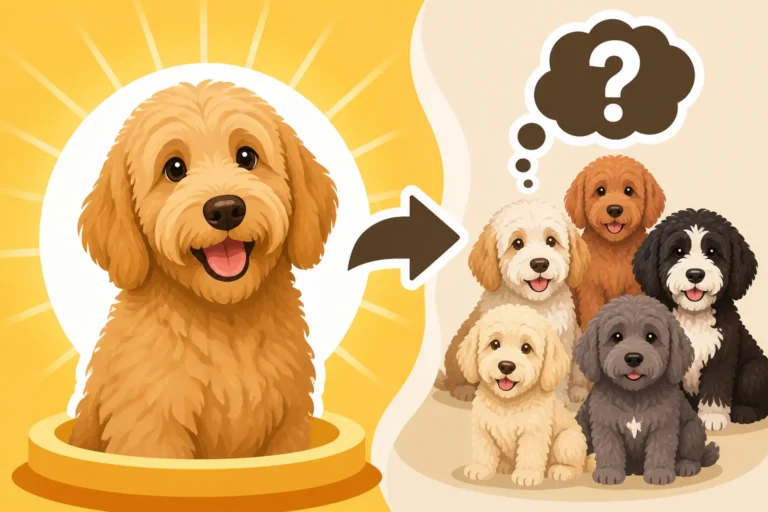
The F1 Labradoodle, as that initial 50/50 blend, truly is a genetic lottery. Imagine a deck of cards, half Poodle, half Labrador. When you shuffle and deal, you never know exactly what combination you're going to get. Some F1 puppies will inherit the Poodle's curly, low-shedding coat, while others might get the Labrador's straighter, shedding coat, and some a wavy "fleece" coat that's a lovely mix of both. This unpredictability extends beyond the coat to body shape, size, and even temperament, although Labradoodles are generally bred for their wonderful dispositions.
It's this wide variation in F1s that sometimes surprises new owners who might have seen a picture of a very Poodle-like Labradoodle and expected the same, only to get a dog that looks quite different. There's no guarantee of a particular look or even a non-shedding coat in an F1 generation. This is also why Whether an F1 Labradoodle's Coat Is a Gamble is such a popular read, as it highlights the inherent variability. This generation perfectly illustrates the concept of hybrid vigor, though Whether Hybrid Vigor Is Real in a Labradoodle might offer a different perspective on its lasting effects.
Why Later Generations Tend Towards the Poodle Look
It’s not just by chance that as you move into F1b, F2b, and especially Multigen Labradoodles, you start seeing a much more consistent, and often more Poodle-like, appearance. This shift isn't accidental; it's often the deliberate result of breeders aiming for specific qualities and predictability.
The Influence of Backcrossing to a Poodle (F1b, F2b)
The "backcross" generations, like the F1b and F2b, are arguably the most direct reason why Labradoodles start to look more Poodle-like. As we touched on, an F1b Labradoodle comes from breeding an F1 Labradoodle back to a purebred Poodle. This means the genetic contribution from the Poodle side instantly jumps from 50% to roughly 75%. With this significant increase, the Poodle's dominant traits become much more likely to express themselves.
Think about it this way: if a Poodle carries genes for a very curly, low-shedding coat, and a Labrador carries genes for a straight, shedding coat, an F1 offspring has a chance of getting either. But when you then breed that F1 back to another Poodle, you're essentially doubling down on those Poodle genes. The chances of getting that signature Poodle curl, the furnishings (that cute mustache and beard), and a leaner build all increase dramatically. This strategy is precisely why breeders utilize the backcross—to solidify desired characteristics that originated from the Poodle. It's a calculated move to reduce the variability seen in the F1 generation and achieve a more consistent "doodle" look and shedding profile.
Breeder Goals and Desired Traits
Beyond the mechanics of backcrossing, breeder goals play a huge role in the Poodle-like shift of later generations. Many breeders are striving for a specific set of traits in their Labradoodles. Primarily, this often includes a non-shedding or low-shedding coat, which is a hallmark of the Poodle. Families often seek Labradoodles specifically because they hope for an allergy-friendly dog, and the Poodle's coat is the source of that trait.
To consistently produce dogs with these desired coats (fleece or wool, both derived from the Poodle's genetic contribution), breeders will intentionally select parent dogs that exhibit those traits strongly. This means if an F1 Labradoodle has a beautiful, wavy fleece coat and a wonderfully calm temperament, a breeder might choose to breed it to a purebred Poodle or another Labradoodle with similar qualities to enhance those features in the next generation. This sustained selection over multiple generations naturally leads to a dog that, while still a Labradoodle, visually and genetically leans more heavily towards its Poodle ancestry. They are curating the gene pool to refine the breed towards a consistent aesthetic and functional goal, which, for many, means more Poodle influence. This process is deeply tied to The Multigen Program That Made the Australian Labradoodle, where intentional breeding created a more predictable lineage.
Specific Poodle Traits That Become More Pronounced
As Labradoodle generations advance and breeders focus on consistency and specific qualities, certain Poodle traits inevitably become more pronounced. These aren't just subtle changes; they contribute significantly to the overall appearance of the dog.
Coat Type and Texture
This is perhaps the most noticeable difference in later generation Labradoodles. The Poodle's dense, curly, non-shedding coat is a dominant trait that breeders actively select for to achieve the "allergy-friendly" reputation of the Labradoodle.
- Wool Coat: This coat type is very Poodle-like, characterized by dense, spiraling curls that are often quite tight. It has a texture similar to lamb's wool, which is where it gets its name. While beautiful and typically very low-shedding, it requires extensive grooming to prevent matting. In later generations, especially F1b and Multigen, the wool coat becomes much more common than in F1s. If you have a wool-coated Labradoodle, you'll find yourself reaching for grooming tools on Chewy often! The Wool Coat Labradoodle and Its Upkeep provides excellent insight into this specific coat.
- Fleece Coat: Often considered the "ideal" Labradoodle coat, the fleece coat is soft, wavy to loosely curly, and hangs in ringlets or spirals. It's also low-shedding and has a lovely flowing movement. This coat is a blend of Poodle curl and Labrador softness, but its presence and consistency are heavily influenced by the Poodle's genetics. Breeders work diligently to achieve and maintain this coat type in their multigenerational lines. The Fleece Coat and Why Breeders Aim For It further explains why this coat is so coveted.
- Reduced Shedding: With the increased Poodle genetic contribution, the likelihood of a Labradoodle shedding significantly decreases. While no dog is truly 100% hypoallergenic, the aim is to minimize the amount of dander and hair released, making them more suitable for some allergy sufferers. This is a direct inheritance from the Poodle side.
Facial Features and Furnishings
Another undeniable visual indicator of Poodle influence is the presence and prominence of "furnishings." These are the longer hair on the face, including the eyebrows, mustache, and beard, which give Labradoodles their characteristic teddy-bear look.
- The "Beard" and "Mustache": A purebred Labrador has a smooth, short-haired face. A purebred Poodle has long hair on its muzzle. The furnishings gene (often denoted as F/f or N/N for full furnishings) dictates this difference. In F1 Labradoodles, you might see a wide range, from dogs with very sparse furnishings to those with a moderate amount. However, in later generations, especially those bred for the classic Labradoodle look, the furnishings become much more defined and consistent. This means you're more likely to see that adorable, shaggy face that hides their eyes and gives them personality. The Furnishings Gene Behind a Labradoodle's Beard offers a deep dive into this genetic trait.
- Expressive Eyebrows: Along with the beard and mustache, later generation Labradoodles often display more prominent eyebrows, another feature derived from the Poodle. These can add to their expressive faces and contribute to their overall friendly appearance.
Body Structure and Build
While the coat and facial features are often the first things people notice, the body structure can also begin to lean towards the Poodle's physique in later generations.
- Leaner Build: Labradors are known for their sturdy, blocky, and athletic builds. Poodles, particularly Standard Poodles, possess a more elegant, leaner, and square-proportioned frame. In early F1 crosses, you might see a dog that inherits a good deal of the Labrador's substance. However, as Poodle genetics are emphasized, later generation Labradoodles often exhibit a more refined bone structure, a slightly deeper chest (characteristic of the Poodle), and a less stocky appearance. They might still be muscular and athletic, but with a gracefulness that is more Poodle-like.
- Tail Set: The Poodle's tail is typically carried high and often has a slight curl or plume. The Labrador's tail is often described as an "otter tail," thick at the base and tapering, carried more level with the back. While variation exists, later generations can show a tail carriage that is more reminiscent of the Poodle's higher, more plumed style.
The Role of Selective Breeding in Multigenerational Labradoodles
The journey from a first-generation cross to a consistent, recognizable type like the Australian Labradoodle is entirely thanks to the dedicated work of breeders and strategic selective breeding. It's not just about mixing two breeds; it's about carefully choosing who gets to be a parent.
How Breeders Shape Appearance Over Time
In the world of multigenerational Labradoodles, breeders aren't just letting nature take its course. They are actively involved in shaping the future of their lines. This involves a rigorous selection process that takes into account not just temperament and health, but also physical appearance. If a breeder's goal is to consistently produce Labradoodles with a soft fleece coat, prominent furnishings, and a certain body type, they will carefully choose two parent dogs that both exhibit those traits. They might select a male and female who both have excellent fleece coats, good "furnishings" on their faces, and a balanced, Poodle-leaning conformation.
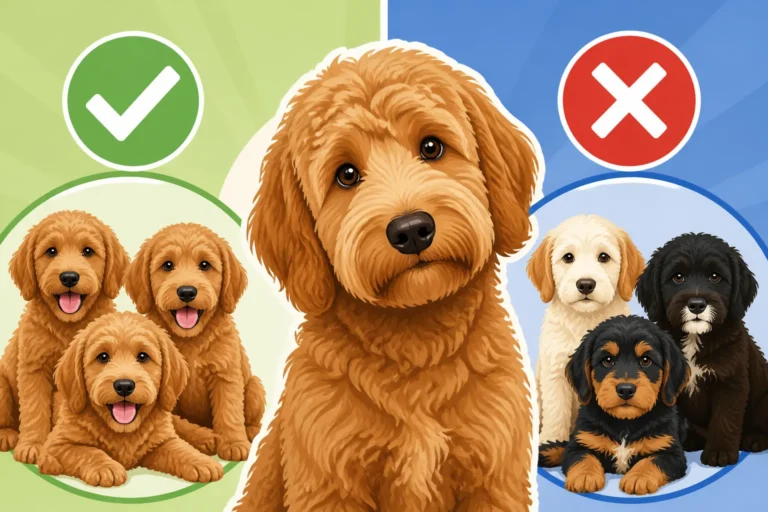
This isn't a one-and-done deal; it's a process that spans many generations. Over time, by continually pairing dogs that best represent the desired Labradoodle "look," breeders can reduce the wide variations seen in early generations. This careful selection increases the probability that puppies will inherit the preferred Poodle-influenced traits, such as the non-shedding coat and characteristic facial hair. It's a long-term commitment to consistency and predictability, moving away from the "genetic lottery" of the F1 generation towards a more uniform outcome. This deliberate approach is also what allows specific coat types, like the low-shedding ones, to become more common and predictable. If you're looking into specific traits for breeding, understanding What a Labradoodle Coat DNA Panel Tells You can be incredibly insightful.
The Quest for the "Ideal" Labradoodle Look
Many Labradoodle associations and serious breeders are working towards a more standardized vision for the Labradoodle. This quest for an "ideal" look often emphasizes traits that are heavily influenced by the Poodle. When people think of a "Labradoodle," they often picture that distinct soft, wavy-to-curly coat, the friendly bearded face, and a medium-to-large size. These are the traits that have become synonymous with the breed, and they largely stem from the Poodle's genetic contribution.
Breeders aim for a dog that consistently displays these features, not just for aesthetics, but also because many of these traits are linked to the practical benefits sought by owners, such as a reduced shedding coat. This means that while the Labrador's gentle nature and biddability are highly valued for temperament, the Poodle's physical attributes, especially coat type and furnishings, are often prioritized for appearance. The goal is to create a dog that is consistently healthy, has a fantastic temperament, and looks like what people expect a Labradoodle to look like, which usually means more Poodle influence than Labrador in terms of physical traits. The discussions around Whether an Australian Labradoodle Is More Predictable often touch upon this very aspect of breed development.
Labradoodle Generations and Poodle-Like Traits
Here's a quick overview of how Poodle-like traits typically manifest across different Labradoodle generations. Keep in mind that individual puppies can still vary, but these are the general tendencies due to breeding choices.
| Generation | Poodle Genetic Contribution (Approx.) | Typical Coat Type Tendency | Facial Furnishings (Beard/Mustache) | Body Build Tendency | Overall Poodle-like Appearance |
|---|---|---|---|---|---|
| F1 (Labrador x Poodle) | 50% | Highly variable (Hair, Fleece, Wool) | Variable (Sparse to Moderate) | Variable (Labrador to Poodle) | Low to Medium |
| F1b (F1 Labradoodle x Poodle) | 75% | More consistent (Fleece, Wool) | More consistent (Moderate to Full) | Leans more Poodle-like | Medium to High |
| F2 (F1 Labradoodle x F1 Labradoodle) | 50% (on average) | Variable, can revert to hair | Variable | Variable | Low to Medium |
| F2b (F2 Labradoodle x Poodle) | 75% (on average) | More consistent (Fleece, Wool) | More consistent (Moderate to Full) | Leans more Poodle-like | Medium to High |
| Multigen (F3 or higher) | Variable, often >75% | Highly consistent (Fleece, Wool) | Highly consistent (Full) | Consistent Poodle-like | High |
This table isn't a guarantee, of course, but it illustrates the general trend. If you're looking for a dog with that classic Labradoodle look, complete with the shaggy face and a curly coat, leaning towards an F1b or a Multigen Labradoodle from a reputable breeder is often your best bet. Remember, even with consistent breeding, a healthy diet, perhaps from Chewy, and regular grooming, are essential for maintaining any coat type.
It's clear that while the F1 Labradoodle offers a fascinating blend of both parent breeds with unpredictable charm, later generations, particularly those involving backcrosses to the Poodle and careful multigenerational breeding, tend to present a more consistent and often more Poodle-like appearance. Breeders actively work to solidify traits like the low-shedding fleece or wool coat and the characteristic facial furnishings, moving the Labradoodle towards a more uniform and recognizable aesthetic. So, if you're dreaming of a Labradoodle that truly embodies that quintessential "doodle" look, chances are you'll find it in a later generation, where the Poodle's genetic influence shines through more brightly.
Disclaimer
This article is for general informational purposes only and does not constitute professional advice. Laws, prices and regulations vary by location and change over time. Consult a qualified professional for guidance on your specific situation.