How Long Sultan Served
Many people know the story of the first Labradoodle, often with a sense of romantic origin or, conversely, with the cloud of its creator's later regrets. However, beyond the initial buzz, there's often confusion about the journey of Sultan, the very first Labradoodle, and the true extent of his service as a guide dog. This guide will delve into Sultan's beginnings, explore the specifics of his working career, and clarify how long he served in the role he was famously bred for.
The Genesis of the Labradoodle and Sultan's Role
The story of the Labradoodle begins not with a designer dog fad, but with a deeply compassionate mission to provide assistance and independence. The first Labradoodle, Sultan, was specifically bred in Australia by Wally Conron for Guide Dogs Victoria, arising from a very particular and pressing need. It's a tale that often gets simplified, losing the nuance of the challenges faced at the time.
The Allergy Challenge that Sparked an Idea
Back in 1989, Wally Conron was the breeding manager for Guide Dogs Victoria when he received a letter from a blind woman in Hawaii. She desperately needed a guide dog, but her husband was severely allergic to dogs. This presented a significant dilemma: how could they provide a highly capable guide dog that wouldn't trigger a debilitating allergic reaction? Traditional guide dog breeds like Labradors and German Shepherds, while excellent workers, were notorious for shedding and producing dander, making them unsuitable for allergy sufferers. The pressure was immense; here was someone whose independence hinged on finding a solution.
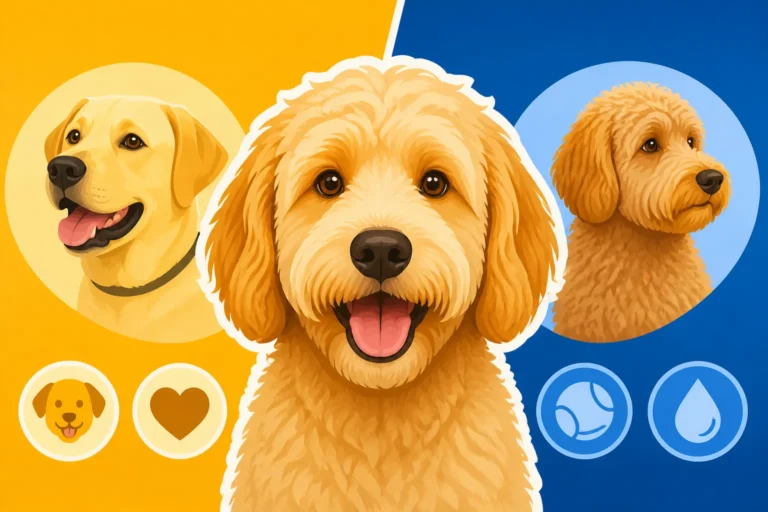
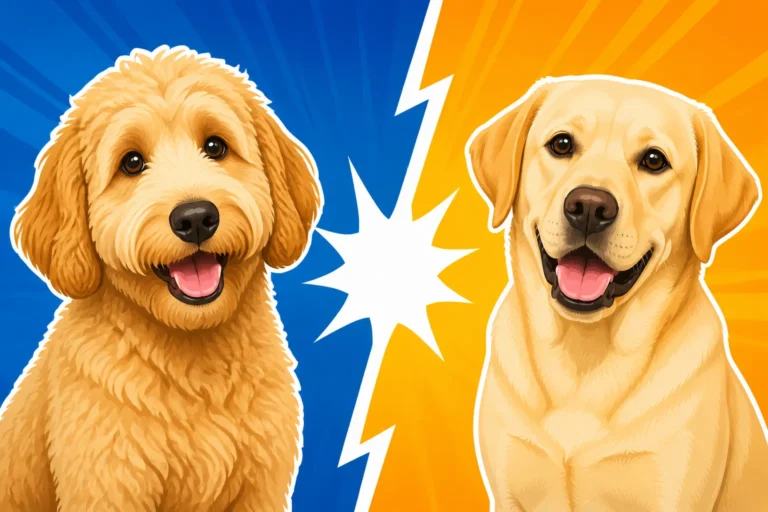
Conron's team first considered using a Standard Poodle, known for its non-shedding, hypoallergenic coat. Standard Poodles are intelligent, trainable, and a decent size for guide work, but at the time, they weren't widely recognized for their guide dog temperament or working drive in the same way Labradors were. There was a concern that a purebred Poodle might lack the placid, confident, and eager-to-please nature that made Labradors such successful guide dogs. The ideal dog needed the Poodle's coat combined with the Labrador's temperament. This urgent need for an allergy-friendly guide dog led to the experimental cross. You can learn more about The 1989 Cross That Made the First Labradoodle and Why a Guide Dog Had to Be Allergy Friendly.
Sultan's Early Promise and Assessment
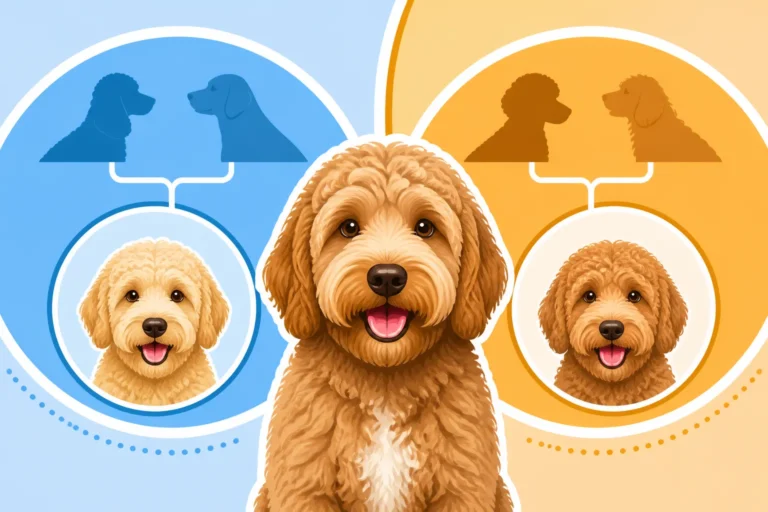
From this pivotal decision, Conron bred a Standard Poodle named Harley with a Labrador Retriever. The result was a litter of three puppies, and among them was Sultan. These puppies were observed with immense interest and hope. Sultan, in particular, showed great promise. He was bright, eager to learn, and possessed many of the desirable qualities that breeders look for in potential guide dogs. His coat, a crucial factor, appeared to be low-shedding, aligning with the primary goal of the cross. This was a critical moment for The Royal Guide Dogs Program Behind the Labradoodle, as it represented a potential breakthrough in accessibility for blind individuals with allergies.
Sultan, along with his siblings, underwent initial assessments typical for any guide dog puppy. This included temperament testing, health checks, and early socialization. The idea was to evaluate not just his coat but his overall suitability for the rigorous demands of guide work. He was a pioneer, a hopeful bridge between two breeds, carrying the hopes of a program looking to expand its reach. His early progress was encouraging, suggesting that the "designer dog" experiment might actually yield the desired results for the woman in Hawaii.
Sultan's Working Life: Expectations vs. Reality
While Sultan embodied the hope of a new type of assistance dog, his actual working life was a complex journey that didn't quite align with the grand expectations that had been placed upon him. Understanding this requires looking at the realities of guide dog training and the unique challenges Sultan faced.
The Demands of Guide Dog Work
Guide dog work is incredibly demanding, requiring a very specific set of traits beyond just intelligence and obedience. A guide dog must possess unwavering focus, impeccable manners, an innate ability to problem-solve and navigate obstacles, and a calm, resilient temperament that can handle busy urban environments, sudden noises, and unfamiliar situations without distraction or anxiety. They are trained to make critical decisions for their handler, such as refusing to step into traffic even if commanded to do so. This level of responsibility requires intense, specialized training, often lasting many months, followed by an equally demanding career that typically spans 6 to 10 years.
Dogs that wash out of guide dog programs often do so not because they are "bad" dogs, but because they simply don't possess the extraordinary combination of traits needed for such a high-pressure role. Perhaps they get easily distracted, are too sensitive to noise, lack confidence in new environments, or develop health issues that preclude continuous service. Guide dog organizations have stringent criteria for a reason; lives depend on it. This rigorous selection process is vital, and it’s why only a select few dogs make it through. What Guide Dog Schools Look For in a Labradoodle is a testament to how particular the requirements are.
The Duration and Nature of Sultan's Service
This brings us to the core question: how long did Sultan serve? While the initial intention was for Sultan to become a fully qualified guide dog for the woman in Hawaii, his path diverged somewhat from that ideal. Sultan did complete a significant amount of training and went on to serve as a guide dog. However, his full working career was not as long or as straightforward as the typical guide dog.
Reports indicate that Sultan served for approximately ten years. This is a respectable length of service for any working dog and certainly demonstrates his capability and dedication. However, it's important to clarify the nature of his service. While he did work, he was ultimately paired with a local woman in Australia who was visually impaired, rather than the original recipient in Hawaii. This change in placement was due to a combination of factors, including logistics, his specific personality, and the evolving understanding of the breed's suitability.
Crucially, Sultan did not remain with his first partner for the entirety of his career. He was eventually rehomed and finished his working life with a different handler. This is not uncommon in the world of assistance dogs; sometimes a dog's personality or specific working style is a better match for a different individual, or the needs of the handler change. So, while Sultan served for about a decade, it wasn't a continuous placement with the same person, nor was it with the initial person he was intended for. This nuanced history contributes to What Happened to Sultan After Hawaii and the varying accounts of his effectiveness.
| Aspect of Service | Typical Guide Dog Career | Sultan's Reported Service |
|---|---|---|
| Intended Recipient | Specific client match | Allergy-sufferer in Hawaii |
| Actual Recipient | Specific client match | Visually impaired woman in Australia |
| Service Duration | 6-10 years (continuous) | ~10 years (with rehoming) |
| Initial Hopes | Full, unwavering service | Allergy-friendly guide |
| Primary Goal Met | Successful partnership | Provided guidance, but with adjustments |
| Public Perception | Heroic working dog | Iconic, but complex history |
Sultan truly did perform guide work, demonstrating the potential of the Labradoodle. He provided essential assistance and companionship, a testament to his training and temperament. However, the expectations for a perfectly hypoallergenic, perfectly tempered, universally successful guide dog in one fell swoop proved to be a formidable challenge, leading to the broader complexities Wally Conron later spoke of.
The Legacy Beyond Sultan's Individual Service
Sultan's personal journey, while impactful for his handlers, really laid the groundwork for something much larger. His existence sparked a global phenomenon and contributed significantly to the ongoing discussion about cross-breeding for specific traits.
The Broader Impact on Guide Dog Breeding
Sultan's story, despite its complexities, undeniably launched the Labradoodle into the public eye and spurred interest in cross-breeding for assistance roles. The idea of combining the best traits of two breeds to mitigate health issues, improve temperament, or, in this case, create an allergy-friendly dog, was compelling. However, the subsequent explosion in demand for Labradoodles led to many less scrupulous breeders entering the market, often without the strict health testing, temperament screening, or ethical breeding practices employed by guide dog organizations. This uncontrolled breeding, often focused solely on the "doodle" aesthetic rather than health or temperament, is a major reason behind Wally Conron and the Labradoodle He Regrets. He saw his noble experiment descend into a commercial free-for-all.
While purebred guide dog programs continued to refine their existing lines, the Labradoodle did open conversations about genetic diversity and the possibility of new assistance dog types. The Australian Labradoodle, a distinct lineage involving more breeds like the Irish Water Spaniel and Cocker Spaniel, later emerged as a more standardized attempt to create a predictable, allergy-friendly assistance dog, specifically aiming for consistency in coat and temperament that the F1 Labradoodle often lacked. The initial "one-off" success of Sultan was difficult to replicate consistently without careful, multi-generational breeding programs. Many dogs, for various reasons, will wash out of a program.
Sultan's Enduring Place in Labradoodle History
Despite the mixed feelings and the controversy that later surrounded the breed's rapid popularization, Sultan remains an icon. He was the catalyst, the living proof that the cross could work, even if not perfectly or consistently in every instance. His existence proved the concept of an allergy-friendly guide dog was viable, and that in itself was a monumental achievement. Sultan's service, though perhaps not the textbook guide dog career envisioned, undeniably improved the lives of the individuals he worked with and demonstrated the loving, loyal nature that Labradoodles are so celebrated for today. His story serves as a crucial reminder of the breed's origins in genuine need, a counterpoint to some of the commercialism that followed.
For every Labradoodle owner today, whether their dog is a family pet or involved in some form of therapy work, Sultan is a foundational figure. He represents the potential for a compassionate cross-breed, even as his legacy also highlights the responsibilities breeders and owners have to ensure the health and temperament of these wonderful dogs. Understanding Whether Sultan Worked as a Guide Dog fully means appreciating both the immediate assistance he provided and the lasting impact he had on the perception of cross-breeds in the world of working dogs.
Disclaimer
This article is for general informational purposes only and does not constitute professional advice. Laws, prices and regulations vary by location and change over time. Consult a qualified professional for guidance on your specific situation.