Whether the Irish Water Spaniel Is Still Used
One of the biggest questions I hear from folks exploring the wonderful world of Labradoodles often revolves around their lineage, specifically the Australian variety. It’s easy to get lost in the various names and origins, and many prospective owners wonder if the Irish Water Spaniel, a breed sometimes mentioned in discussions about the Australian Labradoodle, is still an active part of their genetic makeup today. This guide will delve into the fascinating history of the Australian Labradoodle, clarify the role the Irish Water Spaniel played, and explain how these beautiful dogs are bred in modern times.
Unpacking the Labradoodle Lineage: From Hybrid to Breed-in-Development
Before we can really talk about the Irish Water Spaniel, it's essential to understand the fundamental difference between a "Labradoodle" and an "Australian Labradoodle." The names sound so similar, but their genetic stories are quite distinct, and often a source of confusion for new owners.
The Original Labradoodle: A Simple Cross
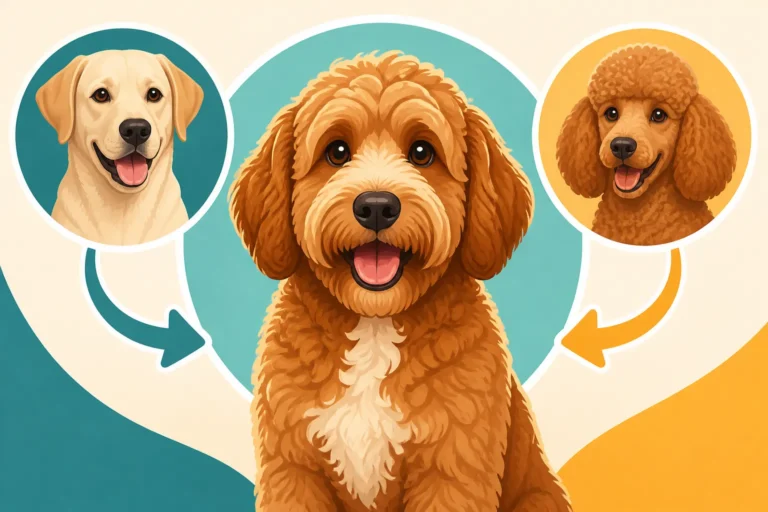
The very first Labradoodle was bred in 1989 by Wally Conron for Guide Dogs Victoria in Australia. His goal was to create a guide dog for a blind woman whose husband was allergic to dogs. He paired a Standard Poodle, known for its intelligence and low-shedding coat, with a Labrador Retriever, famous for its calm temperament and trainability. This first generation, often called an F1 Labradoodle, was a direct cross between these two breeds.
At this stage, the Irish Water Spaniel was nowhere in the picture. The initial idea was simple: combine the best traits of two established breeds. The early results were promising, offering a dog with potential hypoallergenic qualities and a great temperament. However, the first litters weren't always consistent in coat type or temperament, which led to further development. You can read more about The 1989 Cross That Made the First Labradoodle and Why an Australian Labradoodle Is Not a Labradoodle to grasp the core differences.
The Emergence of the Australian Labradoodle
As the popularity of the Labradoodle grew, some breeders in Australia decided to take the concept further. They wanted to create a dog with more consistent traits, particularly regarding temperament, health, and that desirable low-shedding coat. This meant moving beyond the F1 cross and beginning a multi-generational breeding program. This is where the "Australian Labradoodle" truly began to differentiate itself.
Instead of just crossing a Labrador and a Poodle, these pioneering breeders started to infuse other breeds into their lines. The goal was to refine the temperament, improve coat quality, and solidify characteristics that were proving inconsistent in the earlier generations. This intentional diversification of the gene pool was a significant step toward developing what they hoped would eventually become a recognized breed in its own right. This multi-generational approach is what truly defines the Australian Labradoodle today. The goal was to create a consistent "type" that would breed true, offering predictable traits across litters.
The Irish Water Spaniel's Specific Role in Australian Labradoodle History
Now, let's get to the heart of the matter: the Irish Water Spaniel. Its inclusion wasn't random; it was a carefully considered addition by those early Australian Labradoodle breeders trying to achieve specific goals for their developing lines.
Why Was the Irish Water Spaniel Introduced?
The Irish Water Spaniel was brought into the mix of the developing Australian Labradoodle for a few key reasons, primarily centering around coat texture and refinement of the overall look and temperament. It's important to remember that when these infusions happened, the breeders were trying to stabilize characteristics that were proving a bit of a genetic gamble in the earlier F1 and F1b Labradoodles.
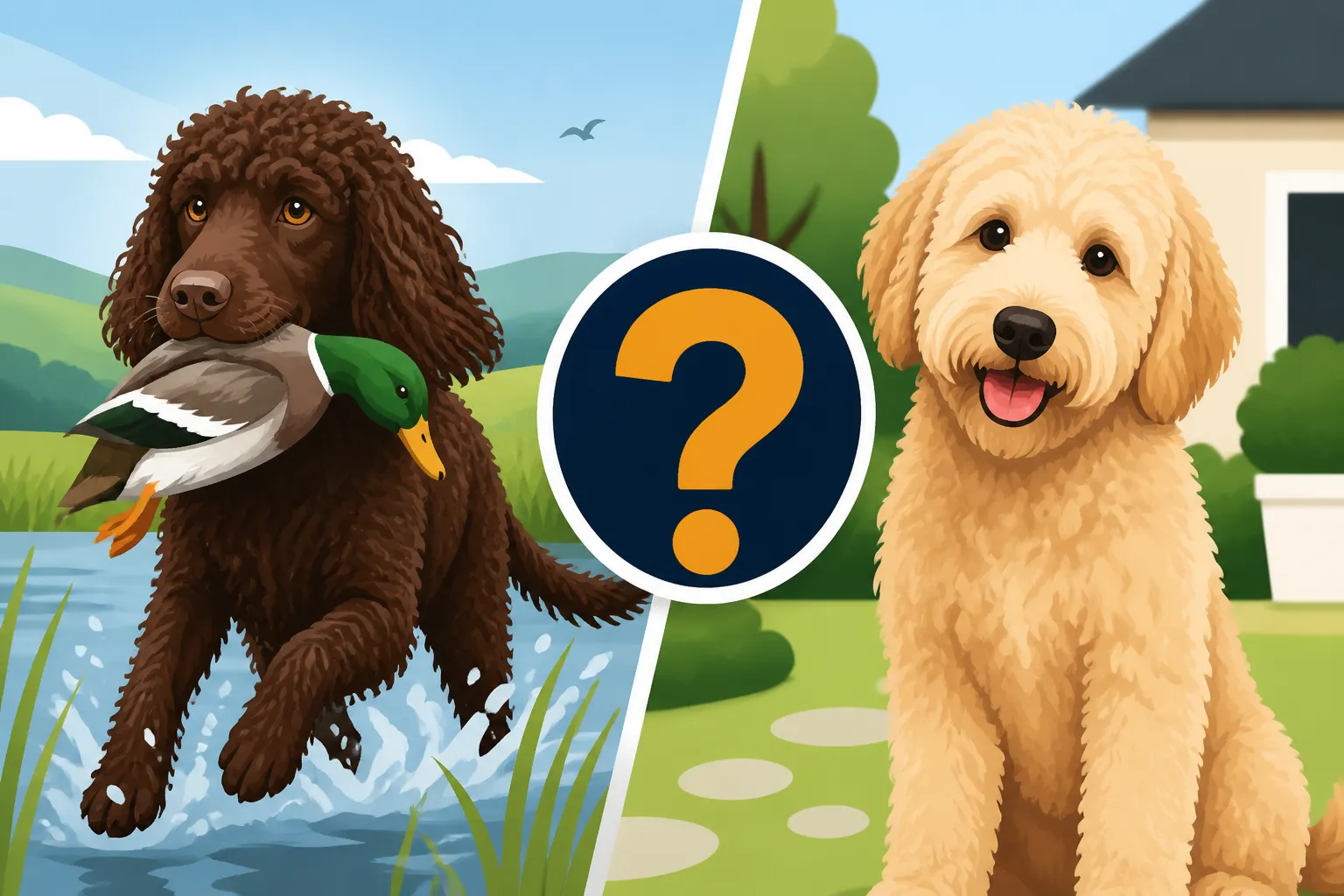
The Irish Water Spaniel contributes a distinctly curly, non-shedding coat that is often described as dense and waterproof. This was highly desirable for achieving the consistent fleece and wool coats that Australian Labradoodle breeders aimed for, moving away from the more unpredictable hair coats. They also possess a lively, intelligent, and often comedic temperament, known for their eagerness to please and trainability. These traits were seen as complementary to the Poodle and Labrador characteristics, helping to further solidify the overall "Labradoodle temperament" — a friendly, intelligent, and generally eager-to-please dog. You can explore The Four Breeds Inside an Australian Labradoodle for a broader view of the genetic tapestry.
Other Breeds Used in the Australian Labradoodle
While the Irish Water Spaniel is a notable addition, it wasn't the only one. Early Australian Labradoodle breeders also incorporated other breeds to achieve their vision. The Cocker Spaniel (English Cocker Spaniel and/or American Cocker Spaniel) was another breed infused into the Australian Labradoodle lines.
The Cocker Spaniel was brought in to introduce smaller sizing, refine coat texture, and potentially influence temperament, adding a touch of gentleness and further compacting the overall look. These careful infusions were done over several generations, breeding back to Labradoodle lines to integrate the desired traits while maintaining the core Labradoodle characteristics. It was a complex genetic project, involving meticulous record-keeping and selective breeding.
| Breed Component | Original Labradoodle (F1) | Australian Labradoodle (Multi-Gen) | Primary Reasons for Inclusion |
|---|---|---|---|
| Labrador Retriever | Yes | Yes (found in ancestral lines) | Temperament, trainability |
| Standard Poodle | Yes | Yes (found in ancestral lines) | Intelligence, low-shedding coat |
| Irish Water Spaniel | No | Yes | Coat texture, temperament |
| English Cocker Spaniel | No | Yes | Coat, size reduction, temperament |
| American Cocker Spaniel | No | Yes (less common) | Coat, size reduction, temperament |
This multi-breed foundation is one of the key differentiators when you're looking at a true Australian Labradoodle versus just any Labradoodle cross. Many people often miss these crucial details, believing all Labradoodles are the same. This history is vital for understanding Whether an Australian Labradoodle Is a Breed Yet and how its development differs from the initial hybrid.
The Irish Water Spaniel's Legacy in Modern Australian Labradoodle Breeding
So, is the Irish Water Spaniel still actively being used, meaning new IWS dogs are regularly bred into existing Australian Labradoodle lines? Or is its influence more of a historical cornerstone? This is where the distinction between "foundation" and "ongoing infusion" becomes important.
Embedded in Multi-Generational Lines
Today, the genetics of the Irish Water Spaniel (and the Cocker Spaniel for that matter) are firmly embedded within the multi-generational Australian Labradoodle lines. This means that reputable Australian Labradoodle breeders are typically breeding Australian Labradoodle to Australian Labradoodle, rather than re-introducing "outside" breeds like a purebred Irish Water Spaniel. The desirable traits that the Irish Water Spaniel contributed, such as coat texture and a certain aspect of temperament, have been "locked in" over many generations of careful breeding.
Think of it like baking a cake. Once you've added all your ingredients and mixed them together, you don't typically add a whole new egg or cup of flour in the middle of baking. The ingredients have become integrated into the batter. Similarly, the genetic contributions of the Irish Water Spaniel are now part of the established genetic blueprint of the Australian Labradoodle. Breeders are now working with these existing multi-generational lines to maintain and improve the characteristics that make the Australian Labradoodle unique. This is largely the process implied by What Multigen Means on a Labradoodle.
The Focus of Modern Australian Labradoodle Breeders
Modern Australian Labradoodle breeders are intensely focused on consistency. They aim to produce puppies that conform to the breed standard in development, showing predictable coats, temperaments, and health profiles. Their efforts are directed towards:
- Maintaining Coat Quality: Ensuring the desired fleece or wool coats, which are low-shedding and allergy-friendly. This involves understanding the genetics of The Three Labradoodle Coats: Hair, Fleece and Wool and focusing on dogs that carry the appropriate genes for furnishings.
- Solidifying Temperament: Breeding for that characteristic friendly, intelligent, and intuitive Australian Labradoodle disposition, making them suitable for families and even therapy or assistance work.
- Prioritizing Health: Continuing rigorous health testing for genetic conditions common in all parent breeds, including hip and elbow dysplasia, eye diseases, and certain inherited diseases. This is a critical aspect, and something conscientious breeders are passionate about.
- Achieving Consistency: Producing puppies that reliably display these traits, reducing the variability often seen in earlier generation crosses.
This dedication to consistency means that new infusions of Irish Water Spaniel, or any other outside breed, are extremely rare, if they happen at all, in established Australian Labradoodle breeding programs. If a breeder were to introduce a purebred Irish Water Spaniel, they would need a very specific, well-thought-out reason related to genetic diversity or addressing a specific issue, and they would be very transparent about it. However, the general practice is to work within the existing multi-generational gene pool.
What This Means for Prospective Owners
For you, as a prospective Labradoodle owner, understanding this history is incredibly valuable. If you're specifically seeking an Australian Labradoodle, you're looking for a dog from multi-generational lines that trace back to those foundation breeds, including the Irish Water Spaniel and Cocker Spaniel. This is a key part of Telling an Australian Labradoodle From a Labradoodle.
When talking to a breeder, don't hesitate to ask about their breeding program's history and genetic lines. A reputable Australian Labradoodle breeder will be transparent about their dogs' ancestry and their breeding goals. They should be able to explain how their lines have been developed and maintained. You'll likely find that while the Irish Water Spaniel's contribution is a celebrated part of the Australian Labradoodle's origin story, new infusions are not a routine part of today's established breeding practices.
It's about knowing you're getting a dog whose traits have been carefully curated over many generations. When you shop for supplies, whether it's specific grooming brushes for their unique coat texture or a balanced diet, you might notice that products specifically designed for "doodle" coats are popular on sites like Chewy, reflecting the unique care needs of these dogs. Investing in good quality products from a trusted source like Chewy can make a big difference in maintaining their beautiful coats and overall well-being. Additionally, finding the right chew toys on Chewy can help with a Labradoodle's natural retrieving drive and keep them entertained.
The Enduring Influence and What to Look For
The influence of the Irish Water Spaniel in the Australian Labradoodle is undeniable and permanent. It helped shape the breed's distinct characteristics, contributing to the curly, low-shedding coats and the engaging temperaments that so many owners adore.
Recognizing the Traits
While you won't see a modern Australian Labradoodle that looks exactly like an Irish Water Spaniel, you can observe the subtle genetic legacies. The distinctive curl and texture of a wool or fleece coat, for example, owes a debt to breeds like the Poodle and the Irish Water Spaniel. The keen intelligence, coupled with a slightly mischievous streak and an eagerness to engage, can also be seen as a blend of these intelligent parent breeds. Understanding the role of The Furnishings Gene Behind a Labradoodle's Beard also helps to clarify how these coat types are achieved.
When you're meeting Australian Labradoodle puppies or adult dogs, you're observing the culmination of a multi-generational breeding program that meticulously selected for specific traits from its foundation breeds. This is why experienced breeders will talk about the "type" they are striving for. They aren't trying to recreate a Labrador-Poodle cross; they are nurturing a distinct and developing breed.
Choosing a Reputable Breeder
Because of the complex genetic background and the ongoing development of the Australian Labradoodle, choosing a reputable breeder is paramount. A good breeder will:
- Be Transparent About Pedigree: They should be able to share the lineage of their dogs, demonstrating that they come from established Australian Labradoodle lines rather than being a newer, random cross.
- Conduct Extensive Health Testing: Ensure they screen for all relevant health issues inherited from the foundation breeds. They should be open about health clearances for the parents of any litter.
- Focus on Temperament: A responsible breeder will prioritize stable, friendly temperaments in their breeding dogs, as this is a hallmark of the Australian Labradoodle.
- Educate Prospective Owners: They will take the time to explain the nuances of the breed, its history, and its care requirements. They will also be a great resource for helping you find the right supplies, like special shampoos or brushes, potentially directing you to trusted online retailers like Chewy.
The Irish Water Spaniel's journey into the Australian Labradoodle's heritage is a testament to the thoughtful and intricate process of developing a new breed. While new infusions of purebred Irish Water Spaniels are not typical in established Australian Labradoodle programs today, their genetic footprint is an integral and cherished part of these wonderful dogs. It’s a rich history that contributes to the unique qualities that make the Australian Labradoodle such a beloved companion. When considering a Labradoodle, remember this fascinating backstory and appreciate the efforts of those who shaped this remarkable breed.
Disclaimer
This article is for general informational purposes only and does not constitute professional advice. Laws, prices and regulations vary by location and change over time. Consult a qualified professional for guidance on your specific situation.