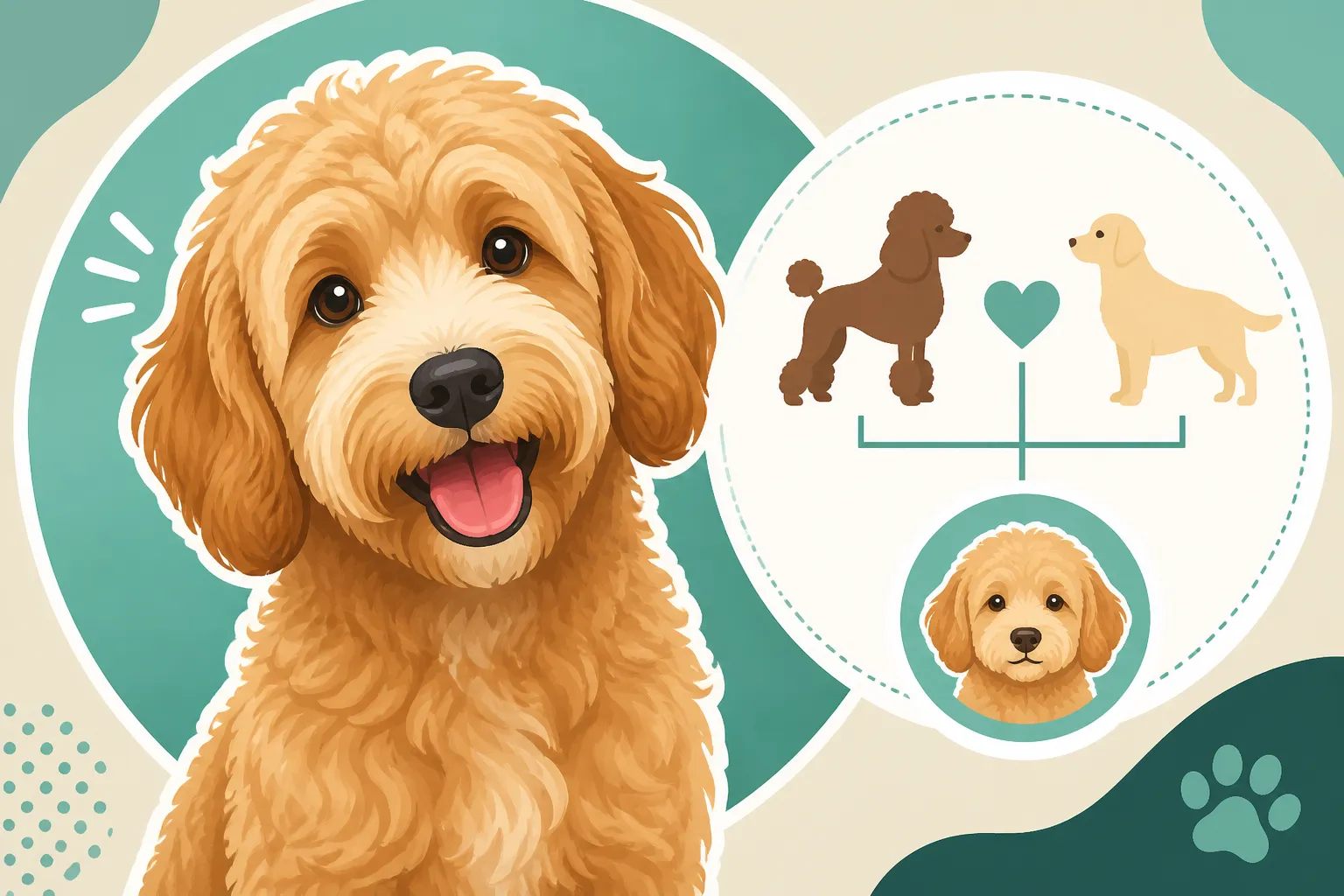
What F1b Means on a Labradoodle
It’s easy to feel lost in a sea of acronyms and numbers when you’re trying to understand Labradoodle genetics. You hear terms like F1, F2, and F1b thrown around, and it can be incredibly confusing, especially when you're just trying to figure out what kind of dog you're bringing into your home. This guide is here to clear up the mystery of the F1b Labradoodle, helping you understand exactly what it means for your potential furry family member in terms of traits, health, and care.
Deciphering Labradoodle Generations: The Basics
Before we dive into the specifics of an F1b, it helps to understand the foundational generations that created the Labradoodle as we know it today. The journey of the Labradoodle started with a very specific purpose: to create a guide dog for a visually impaired woman whose husband suffered from dog allergies. This initial cross, meant to combine the working aptitude of a Labrador Retriever with the low-shedding coat of a Standard Poodle, laid the groundwork for everything that came after.
The Original F1 Labradoodle
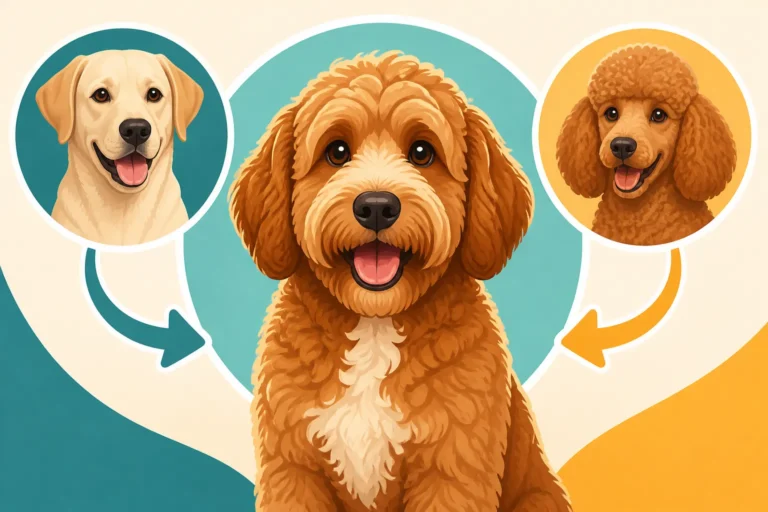
The very first Labradoodle, the "F1," is simply a direct cross between a purebred Labrador Retriever and a purebred Poodle. The "F" stands for filial, meaning offspring, and the "1" denotes the first generation. These dogs are 50% Labrador and 50% Poodle. When you picture this, imagine taking one parent who is all Labrador and another who is all Poodle, and their puppies are the F1s.
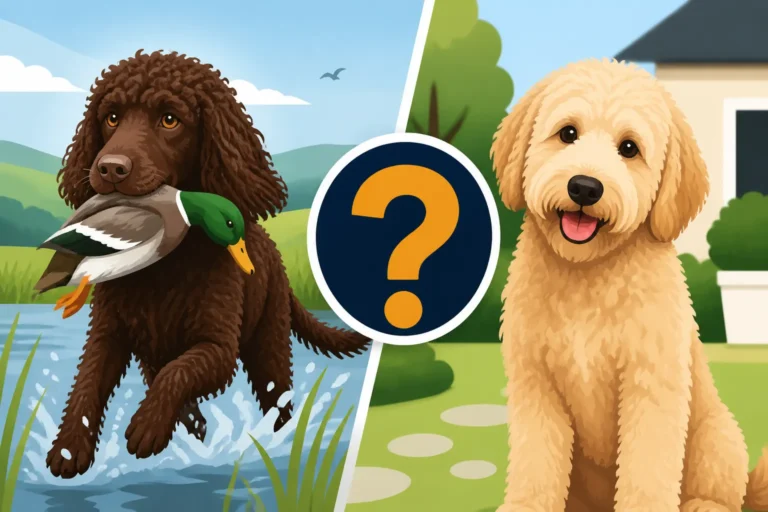
However, the beauty and also the challenge of the F1 generation is its inherent genetic variability. You might get a puppy with a very Poodle-like coat, meaning less shedding, or you might get one with a more Labrador-like coat that sheds considerably. Their temperaments, energy levels, and even their physical appearance can vary wildly within the same litter, drawing from either side of their genetic coin. This is often why Whether an F1 Labradoodle's Coat Is a Gamble is a topic of much discussion among prospective owners.
Why Generations Matter
The reason breeders and owners talk so much about generations isn't just for genetic trivia; it's about predictability. With the F1 generation, while you get the wonderful blend of two intelligent, friendly breeds, the specific traits like coat type, shedding, and even adult size can be quite unpredictable. This unpredictability, while charming to some, can be a real concern for families with specific needs, especially regarding allergies.
Consistency is often the goal, particularly for those seeking a dog with a specific coat texture or a higher likelihood of being low-shedding. Understanding the different generations helps you, the future owner, make an informed decision based on your lifestyle, household needs, and any allergy concerns. It also gives you better questions to ask a breeder about what to expect from their puppies.
Understanding the F1b Labradoodle
The F1b Labradoodle is where things start to get a little more consistent, especially regarding that highly sought-after coat. It's often considered a sweet spot for many families who want a Labradoodle but need a higher likelihood of a non-shedding, allergy-friendlier coat.
The "Backcross" Explained
The "b" in F1b stands for "backcross." This simply means that an F1 Labradoodle (the 50/50 mix of Labrador and Poodle) is bred back to one of the original parent breeds, usually a purebred Poodle. So, the pairing looks like this: F1 Labradoodle x Poodle. This specific cross results in a puppy that is roughly 75% Poodle and 25% Labrador Retriever.
This breeding strategy is very intentional. By adding more Poodle genetics back into the mix, breeders are trying to emphasize certain traits associated with the Poodle, predominantly its signature low-shedding coat. For many, this makes the F1b a more appealing choice when navigating allergy concerns or simply wanting less dog hair around the house. It's a common path for those who liked the idea of the F1 but needed just a bit more Poodle influence.
The Genetic Rationale Behind F1b
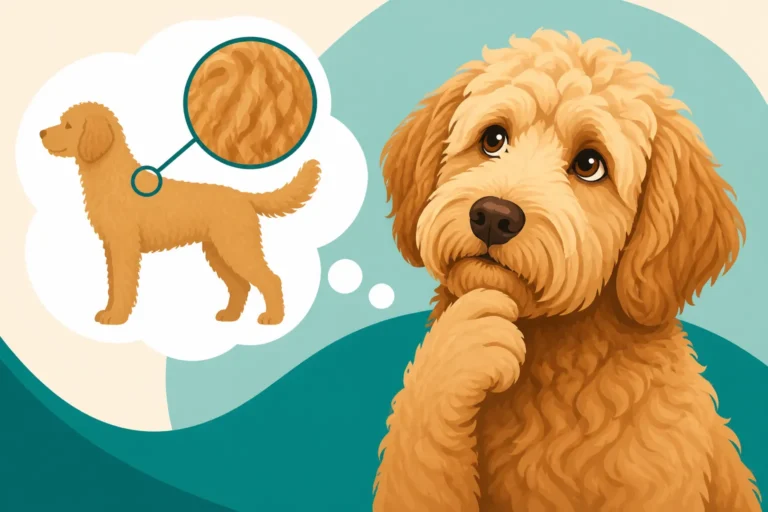
The main reason for the F1b backcross is to increase the probability of a low-shedding, often fleece or wool coat. Poodles are known for their curly, non-shedding hair, while Labradors typically have a dense, shedding double coat. The F1 generation can inherit a mix of these genes, leading to a variety of coat types, some of which still shed. By breeding an F1 back to a purebred Poodle, the genetic dice are loaded in favor of the Poodle's coat characteristics.
This isn't just about shedding, however. The increased Poodle influence can also impact the texture of the coat, making it more likely to be the soft, wavy "fleece" or the tighter, curly "wool" coat that many Labradoodle enthusiasts adore. It's an attempt to refine the Labradoodle qualities and move towards a more predictable outcome than the initial F1 cross can provide. This genetic strategy is why Whether an F1b Labradoodle Is More Poodle often comes up in conversations about coat type and temperament.
Traits You Can Expect from an F1b
With that 75% Poodle, 25% Labrador genetic makeup, F1b Labradoodles often exhibit a more consistent set of traits.
- Coat Type: You'll most commonly see fleece or wool coats in an F1b. These coats are soft, wavy (fleece) or curly (wool), and tend to be very low-shedding. While no dog is truly 100% hypoallergenic, an F1b is generally considered a better option for individuals with mild to moderate dog allergies due to this coat type. However, it’s still crucial to spend time with an F1b Labradoodle to assess individual reactions before committing, as variations can still occur. You can learn more about these textures in The Three Labradoodle Coats: Hair, Fleece and Wool.
- Shedding: The increased Poodle genetics usually mean significantly less shedding compared to an F1 Labradoodle, and certainly compared to a purebred Labrador. You might find a few stray hairs, but it's generally not the constant battle against dog hair that some other breeds present. This is often the primary motivator for choosing an F1b.
- Temperament: F1b Labradoodles typically inherit the intelligence and eagerness to please from both sides, often leaning a bit more towards the Poodle's cleverness. They are usually energetic, sociable, and highly trainable dogs. However, their Poodle heritage can also mean they are prone to being a bit more sensitive or requiring more mental stimulation to prevent boredom, which can manifest in unwanted behaviors.
- Size: Like all Labradoodles, F1b dogs come in various sizes (standard, medium, miniature), depending on the size of the Poodle used in the backcross. A standard Poodle backcross will produce a standard F1b, while a miniature Poodle backcross would produce a miniature F1b.
Is an F1b Labradoodle Right for You?
Choosing an F1b Labradoodle often comes down to balancing coat predictability with other care considerations. While they offer many desirable traits, it's important to understand the full picture to ensure they are the right fit for your home and lifestyle.
Allergy Considerations for F1b
For families with allergies, the F1b Labradoodle is frequently recommended because of its higher likelihood of producing a non-shedding coat. The significant Poodle genetics contribute to this, making them generally more "allergy-friendly" than an F1 or F2 Labradoodle. This is why many sources, including reputable breeders, will suggest an F1b for individuals with mild dog allergies. This links directly to the discussion in Which Labradoodle Generation Suits an Allergic Home.
However, it’s vital to understand that "hypoallergenic" is a misnomer for any dog. Allergies are triggered by dander (skin flakes), saliva, and urine, not just hair. While a low-shedding coat means less dander is released into the environment, it doesn't eliminate allergens entirely. It is always wise for an allergic individual to spend time interacting with an F1b Labradoodle, preferably from the specific litter or breeding lines being considered, to see if they react. This direct exposure is the most reliable way to gauge suitability.
Temperament and Training Insights
The F1b Labradoodle's temperament is a wonderful blend, often highlighting the Poodle's intelligence and the Labrador's eagerness. This combination makes them highly trainable and quick learners. They thrive on positive reinforcement and consistent training. Because of their intelligence, they benefit greatly from mental stimulation, like puzzle toys or learning new tricks, in addition to physical exercise. Regular training sessions, especially in puppyhood, are key to developing a well-behaved companion. For example, building a strong recall is crucial for any Labradoodle, and an F1b's intelligence can make this a rewarding process. Building a Recall a Labradoodle Answers Off Leash is an excellent resource for this.
These dogs are typically very affectionate and enjoy being part of family activities, often earning the "Velcro dog" nickname. However, their intelligence can also mean they are clever problem-solvers who might find their own entertainment if not adequately stimulated. Early socialization is also critical to ensure they grow into well-adjusted adults, comfortable with various people, places, and other animals.
Grooming Needs of an F1b
With their increased Poodle influence, F1b Labradoodles often inherit a dense, curly, or wavy coat that requires significant grooming. While they are low-shedding, this doesn't mean low-maintenance. Their coats are prone to matting, especially in areas of friction like behind the ears, armpits, and where harnesses rub.
Regular brushing, ideally several times a week, is essential to prevent mats and keep their coat healthy. Many owners find professional grooming every 6-8 weeks indispensable. During these sessions, the coat is trimmed, bathed, and thoroughly brushed out. Without consistent grooming, an F1b's coat can quickly become matted, leading to discomfort for the dog and potentially costly dematting or shaving at the groomer. You'll likely need a good slicker brush, a metal comb, and potentially detangling spray. Products like those found at Chewy can be very helpful for maintaining their coat between professional visits. Understanding The Yearly Grooming Total on a Standard Labradoodle can help you budget for this significant aspect of F1b ownership.
Beyond F1b: Other Labradoodle Generations
While the F1b is a popular choice, it's helpful to know that the world of Labradoodle generations extends beyond this specific cross. Each generation aims to achieve different levels of predictability in terms of traits, particularly coat type and temperament.
Exploring F2 and Multigen Labradoodles
After the F1 and F1b generations, you'll encounter F2 and Multigen Labradoodles. An F2 Labradoodle is the result of breeding two F1 Labradoodles together (F1 x F1). This generation, surprisingly, can bring back a lot of the unpredictability seen in the F1, as both parents carry a mix of Labrador and Poodle genes, and their offspring can inherit any combination of these. You might see everything from shedding, flat coats to non-shedding, curly coats within the same F2 litter. This is why some breeders try to avoid the F2 generation if consistency is the goal. For more on this, you can check out What F2 and F2b Mean on a Labradoodle.
Multigenerational (Multigen) Labradoodles are the result of breeding two F3 or higher generation Labradoodles, or breeding an F1b back to another F1b, or similar combinations where at least one parent is an F3 or higher generation. The goal of Multigen breeding is to achieve maximum consistency and predictability in terms of coat, temperament, and health. Breeders working with Multigen lines have carefully selected dogs over several generations to "fix" desired traits, making these dogs often the most consistent in terms of low-shedding coats and specific temperaments. Understanding What Multigen Means on a Labradoodle provides further insight into this complex breeding strategy.
Working with a Reputable Breeder
Regardless of which Labradoodle generation you're interested in, working with a reputable breeder is paramount. A good breeder will be transparent about the generation of their puppies, what that means for coat types, potential shedding, and temperament. They will also be able to discuss the health testing performed on the parent dogs to minimize the risk of hereditary conditions. These tests are incredibly important and often include screenings for hip and elbow dysplasia, eye diseases, and genetic conditions common to Poodles and Labradors.
Don't be afraid to ask detailed questions about the parent dogs' health clearances, temperament, and the specific characteristics of their previous litters. A responsible breeder will welcome your questions and provide documentation, helping you understand the genetic background of your potential puppy. They can also advise on the best generation for your specific needs, such as if you have severe allergies and need the lowest possible shedding coat. Resources like The Health Tests a Labradoodle Breeder Should Show are essential reading before engaging with any breeder. Remember to check out trusted online retailers like Chewy for all your puppy supply needs once you bring your new family member home.
| Labradoodle Generation | Parentage | Poodle:Labrador Ratio (Approx.) | Expected Coat Type | Shedding Level | General Predictability |
|---|---|---|---|---|---|
| F1 | Labrador Retriever x Poodle | 50% Poodle / 50% Labrador | Variable (Hair, Fleece, Wool) | Moderate to Low | Low |
| F1b | F1 Labradoodle x Poodle | 75% Poodle / 25% Labrador | More consistent (Fleece, Wool) | Very Low | Medium |
| F2 | F1 Labradoodle x F1 Labradoodle | 50% Poodle / 50% Labrador | Highly Variable (Hair, Fleece, Wool) | Moderate to Low | Low |
| Multigen | F3 or higher generation Labradoodles | >75% Poodle / <25% Labrador | Highly consistent (Fleece, Wool) | Very Low | High |
Disclaimer
This article is for general informational purposes only and does not constitute professional advice. Laws, prices and regulations vary by location and change over time. Consult a qualified professional for guidance on your specific situation.