Drying a Labradoodle to the Skin After a Bath
Oh, the joy of a freshly bathed Labradoodle! The sweet smell, the soft fur… and then the sheer dread of the hours-long drying process. It's a common frustration for Labradoodle owners, isn't it? You spend all that time bathing them, only to discover their dense, curly coat seems to hold onto water like a giant sponge, leading to that dreaded damp dog smell, and worse, mats and skin irritations if not dried properly. This guide is all about tackling that challenge head-on, showing you how to thoroughly dry your Labradoodle right down to the skin after every bath, ensuring their comfort, coat health, and your peace of mind.
Why Proper Drying Is Non-Negotiable for Labradoodles
It’s tempting, especially after a wrestling match in the tub, to just let your Labradoodle air dry, or maybe give them a quick rub with a towel and call it a day. But for a dog with a coat like a Labradoodle's, that's really asking for trouble. Their unique fur, a blend of their Poodle and Labrador heritage, holds moisture in a way that can quickly become problematic.
The Risks of Incomplete Drying
Leaving your Labradoodle even slightly damp, particularly in those hard-to-reach spots, creates a perfect storm for several issues that no owner wants to deal with.
First and foremost, there's the matting. Water, especially as it evaporates, causes fur to contract and tangle. If your Labradoodle already has a few small knots, getting wet will tighten them into solid, painful mats. Imagine having your hair tied in dozens of tiny, tight knots that pull on your scalp with every movement. That's what a matted coat feels like for your dog. These mats don't just sit on the surface; they can pull on the skin, restricting movement, and creating painful hot spots. Even more insidiously, a wet, matted undercoat becomes a breeding ground for other issues.
Then we have the skin problems. Damp, warm environments are an absolute paradise for yeast and bacteria. You might notice your Labradoodle itching more than usual, or perhaps a distinct, musty odor emanating from their fur. This can often be the sign of a yeast infection brewing beneath the surface, especially in areas like the armpits, groin, between the paw pads, and of course, in their floppy ears. These infections can be incredibly uncomfortable for your dog, leading to relentless scratching, redness, and even open sores which then risk secondary bacterial infections. Think about how uncomfortable a damp sock can feel after a while; now imagine that sensation all over your body, combined with an itch you can't satisfy. It’s a miserable experience for them.
Understanding the Labradoodle Coat's Water Retention
The Labradoodle’s coat, whether it's a The Fleece Coat and Why Breeders Aim For It or a The Wool Coat Labradoodle and Its Upkeep type, is designed to absorb and hold water, making it a significant challenge to dry completely. Unlike a Labrador's slick, water-repellent double coat that sheds water easily, a Labradoodle's coat, particularly the wool or fleece varieties, acts more like a high-density sponge.
When water saturates these coats, it doesn't just sit on the surface. It penetrates deep into the dense undercoat and the individual strands, making them incredibly heavy and difficult to air dry. This density means that even if the top layer feels dry to the touch, the layers underneath can remain damp for hours, sometimes even days, in cooler, less humid conditions. This prolonged dampness is precisely what causes the skin issues and matting described above. It's why a quick towel dry simply won't cut it for a Labradoodle; you need a strategy that specifically addresses the unique structure of their hair to ensure a thorough, skin-deep dry. Understanding this inherent characteristic of their coat is the first step to mastering the art of drying your Labradoodle.
Essential Tools for a Through Dry
Achieving that "skin-dry" result isn't just about technique; it's also about having the right equipment. You wouldn't try to build a house with just a hammer, and you shouldn't try to properly dry a Labradoodle with just a towel. Investing in a few key tools will make the process much more efficient, effective, and less stressful for both you and your furry friend.
The Power of a Force Dryer
When it comes to drying a Labradoodle, a high-velocity force dryer is truly your best friend. This isn't just a fancy hairdryer; it's specifically designed for pet grooming. What makes it so superior?
Firstly, force dryers (often called "blasters") produce a high volume of unheated or minimally heated air. This is crucial because too much heat can damage your dog's skin and coat, leading to dryness, irritation, and even burns. A human hairdryer, even on a cool setting, can quickly become too hot for a dog's sensitive skin, especially when held in one place for too long.
Secondly, and most importantly, a force dryer works by literally blasting water out of the coat. The powerful airflow separates the hair strands, pushes the water droplets away, and helps to straighten the coat, making it less prone to tangling as it dries. It reaches deep into the undercoat that towels can't touch, and it does so much faster than air drying or a conventional hairdryer. You'll be amazed at how much water comes off your dog, often in a fine mist, when you use one of these. This process also helps to "fluff" the coat, making it easier to brush and check for any remaining dampness or tangles. If you're on the fence about the investment, consider that Whether a Home Force Dryer Pays for Itself in terms of saved grooming bills and improved coat health. You can find excellent options on sites like Amazon or Chewy, with various power levels suitable for different coat densities.
Absorbent Towels and Microfiber Wonders
While the force dryer does the heavy lifting, absorbent towels are your initial defense against a soaking wet dog. The goal here is to get as much surface water off as possible before you even turn on the dryer.
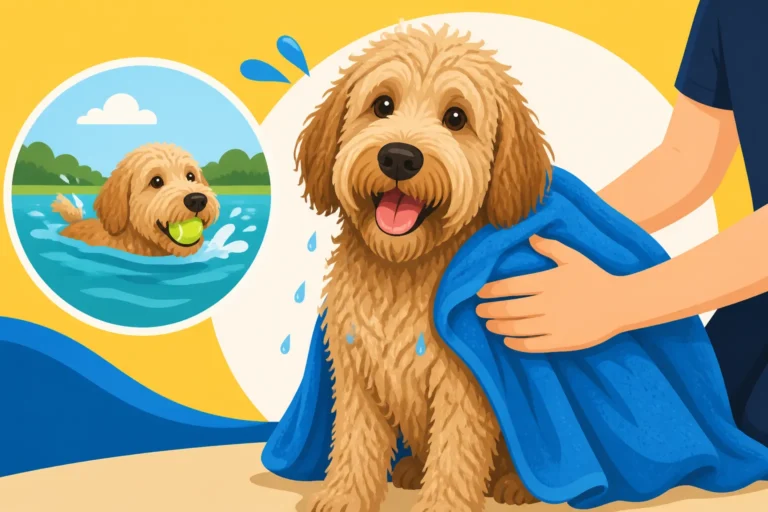
Regular bath towels are a good start, but specialized microfiber pet towels are a game-changer. These towels are designed to absorb significantly more water than traditional cotton, allowing you to wick away a lot of moisture quickly and efficiently. Look for them online through retailers like Chewy or Amazon.
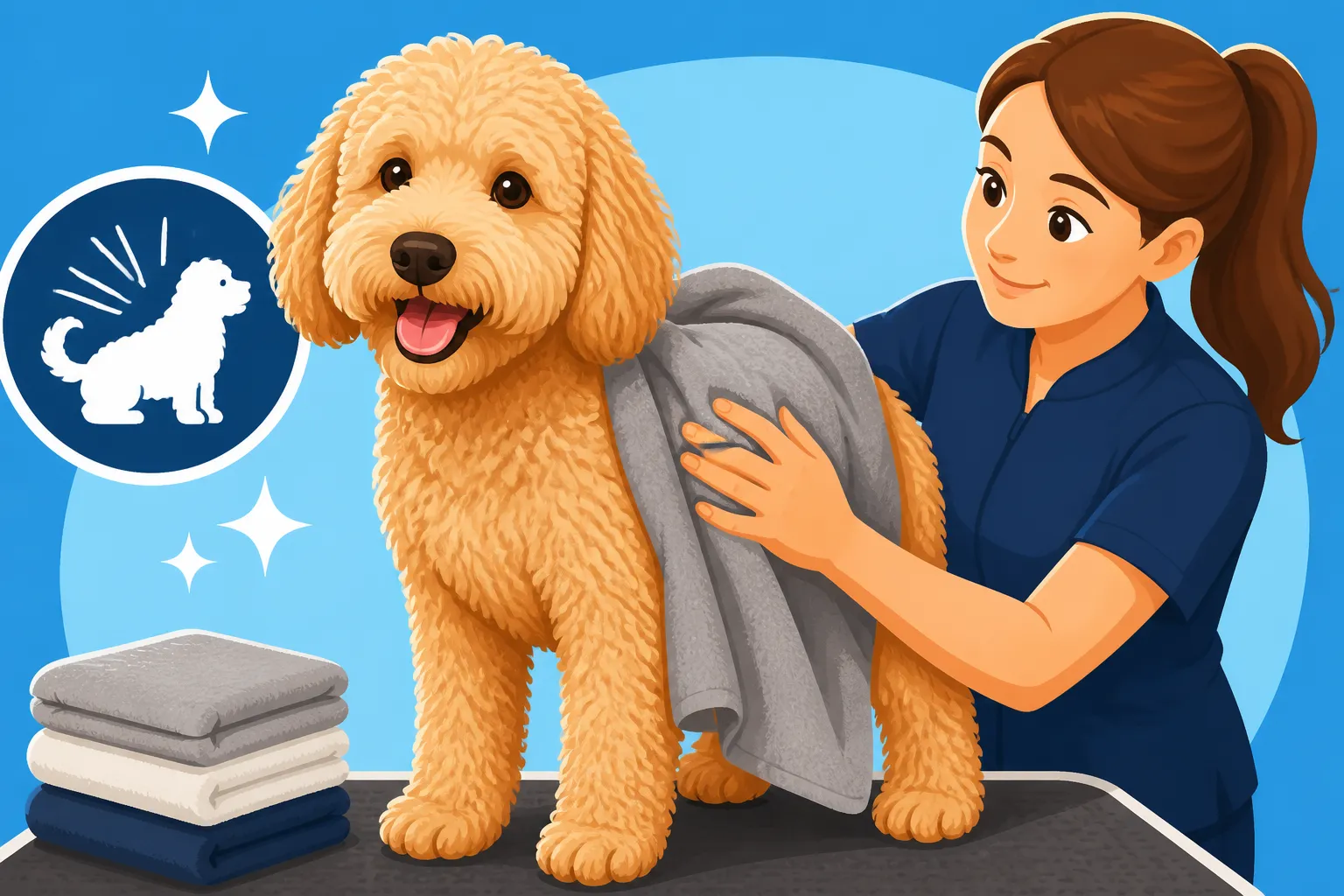
The technique with towels is also important: instead of aggressively rubbing, which can start to create tangles and mats, you want to blot, squeeze, and gently press the water out of the coat. Wrap your Labradoodle in a large, absorbent towel, gently squeezing water from their legs, tail, and other furnishings. Then, use smaller towels to blot the body, working section by section. The less water there is for the force dryer to handle, the faster the entire process will be.
Brushes and Combs for the Drying Process
You can't achieve a skin-deep dry without simultaneous brushing. The process of drying and brushing goes hand-in-hand to prevent matting and ensure every strand is dry.
Your primary tool here will be a good quality slicker brush. This brush helps to separate the individual strands of hair as the force dryer works, ensuring air can reach down to the skin. It prevents the coat from drying in clumps, which would inevitably lead to mats. As you dry, you'll be constantly brushing through the coat, lifting it and directing the air underneath. For an in-depth look at what brushes are best, check out The Slicker, Rake and Comb a Labradoodle Takes.
Once you think your dog is dry, or even just to check progress, a long-toothed metal comb is indispensable. This comb allows you to get right down to the skin and feel for any dampness or resistance from tangles. If the comb snags or feels sticky, you know there's still work to be done. It's the ultimate "truth teller" in the drying process, ensuring you don't miss any spots and prevent those sneaky mats that seem to appear out of nowhere.
| Drying Tool | Primary Function | Best Used For | Key Benefit |
|---|---|---|---|
| Force Dryer | Blasting water out, straightening hair | Initial deep drying, opening coat, preventing mats | Fastest drying, prevents matting, reaches undercoat |
| Microfiber Towels | High absorbency, gentle water removal | Initial water removal post-bath, blotting | Wicks significant moisture, less friction than standard towels |
| Slicker Brush | Separating hair strands, lifting coat | Used in conjunction with force dryer to prevent matting while drying | Ensures air penetrates to skin, prevents tangles as coat dries |
| Steel Comb | Checking for dampness and knots deep in the coat | Final check for dryness, identifying hidden mats | Confirms coat is dry to the skin, essential for mat prevention |
Step-by-Step: Achieving a Skin-Deep Dry
Now that you have your tools ready, let's walk through the process of drying your Labradoodle thoroughly. This isn't a race; it's a methodical approach that ensures every inch of their beautiful coat is bone dry.
Initial Towel Dry and Prep
The moment your Labradoodle steps out of the bath, the clock starts. The goal of the initial towel dry is to remove as much standing water as possible before you introduce the force dryer. This will significantly cut down on your overall drying time.
Grab those super absorbent microfiber towels. Don't rub furiously, as this can start to felt the hair and create immediate tangles. Instead, gently but firmly blot and squeeze the water out of the coat. Pay special attention to the "furnishings" – the longer hair on their legs, tail, beard, and ears – as these areas hold a surprising amount of water. You can even gently squeeze sections of hair to wring out excess moisture.
Next, it’s a good idea to do a quick, gentle pre-brushing while the coat is still quite damp. This helps to loosen any minor tangles that might have formed during the wash and prevents them from tightening into mats as the coat dries. Use your slicker brush for this. For areas like the face and ears, be extra gentle.
Finally, prepare your Labradoodle for the force dryer. This is crucial for their comfort and safety. If your dog is sensitive to noise, consider placing cotton balls loosely in their ears or using a snood to cover their ears and muffle the sound. This helps protect their hearing and makes the experience much more tolerable.
Sectioning and Force Drying Technique
This is where the real work begins, and it’s a technique that groomers swear by. Trying to dry the whole dog at once is inefficient and ineffective. Just like styling human hair, sectioning the coat allows you to focus on one area at a time, ensuring thoroughness.
Start by choosing a section. Many groomers like to start from the rear of the dog and work their way forward, or from the bottom (legs, belly) upwards. Using your free hand, separate a small section of hair. Hold the force dryer nozzle about 6-12 inches away, depending on its power, and direct the airflow onto the skin underneath the section.
The trick is to direct the air with the grain of the hair first to push water away, then against the grain to lift the coat and ensure the air is reaching the undercoat and skin. As you dry, continuously brush the section with your slicker brush. This combination of air and brushing helps to open up the coat, separate the hairs, and ensures air penetrates right down to the root. Move the dryer constantly; never hold it in one spot for too long, as even minimal heat can become uncomfortable or cause skin dryness.
Be extra diligent with "problem areas" – those spots where mats love to hide and moisture lingers. These include:
- Behind the ears: Check out Mats Behind a Labradoodle's Ears.
- Armpits and groin: Mats in a Labradoodle's Armpits are a common headache.
- Under the tail and on the rear.
- The lengthy furnishings on the legs and belly.
- Don't forget the paws and in between the paw pads where moisture gets trapped.
And of course, the ears! Labradoodles are prone to ear infections due to their drop ears and the hair that grows in the canal. Pay close attention to Drying a Labradoodle's Ears Properly to prevent issues. Make sure the inside of the ear flap and the entrance to the ear canal are completely dry.
The "Comb Test" for Bone Dry Confidence
After all that effort, how do you truly know your Labradoodle is dry to the skin? This is where your metal greyhound comb comes in, and it's the most important step for guaranteeing a thorough job.
Once you've force-dried a section and feel confident it's dry, take your steel comb and try to comb through the hair from the tip all the way down to the skin. If the comb glides smoothly, without any snagging or resistance, and feels completely dry when you run your fingers down to the roots, then that section is likely dry. If you feel any stickiness, resistance, or dampness, go back with your force dryer and slicker brush and work that section again.
Repeat this comb test over every section of your Labradoodle's body. Don't skip areas, especially those prone to hidden moisture like the armpits, behind the ears, and the base of the tail. A truly dry coat will also have a lovely, clean smell, rather than that lingering "damp dog" odor. This meticulous "comb test" might add a few extra minutes to your routine, but it's the only way to be absolutely sure you’ve prevented potential mats and skin issues, ensuring your Labradoodle is comfortable and healthy until their next groom.
Maintaining a Dry Labradoodle Between Baths
The drying process isn't just a post-bath chore; it's an ongoing commitment to your Labradoodle's coat health. Even between full baths, your dog will inevitably encounter water, and how you handle those smaller wet incidents makes a big difference.
Quick Dries After Wet Adventures
Labradoodles often love water, whether it's splashing in a puddle, taking a dip in the lake, or just getting caught in an unexpected rain shower. While these might not warrant a full bath, they definitely require a proper dry down.
If your Labradoodle has been for a swim, especially in a lake or pond, it's wise to give them a quick rinse with clean water afterwards. This washes off any potential irritants or bacteria from the natural water source. Then, just like after a bath, towel dry them as much as possible. For more tips on this, see Rinsing a Labradoodle After the Lake.
Even for a quick wet-down, don't let their coat air dry completely if you can help it. A quick 10-15 minute session with your force dryer can prevent many issues. Focus on the areas that hold the most water and are prone to matting: the legs, belly, beard, and behind the ears. This proactive drying prevents moisture from settling deep in the coat and turning into mats or skin problems. Just imagine a long-haired human letting their hair air dry after a swim without brushing it – tangles galore! It's the same principle for your Labradoodle.
Regular Brushing as a Moisture Defense
Consistent, thorough brushing isn't just for looking good; it's a vital defense against moisture-related coat problems. A well-maintained, tangle-free coat allows air to circulate properly, which is essential for both drying and general skin health.
Regular line brushing, as detailed in The Line Brushing a Labradoodle Coat Needs, ensures that the coat is open and airy, rather than compressed and dense. When the hair is separated, any incidental moisture (from humidity, light rain, or even just their drool around their mouth) can evaporate more easily. If the coat is already matted or packed, moisture gets trapped close to the skin, creating that breeding ground for bacteria and yeast we talked about.
Think of it this way: a matted coat is like a heavy, dense blanket, trapping everything underneath. A properly brushed coat is like a light, airy garment that allows the skin to breathe. Even if your Labradoodle hasn't had a bath, committing to a consistent brushing schedule will make future drying sessions much easier, reduce matting, and keep their skin and coat in top condition. This is especially true for those with a dense wool coat. This preventative care is truly the best way to keep your Labradoodle happy, healthy, and smelling fresh.
Disclaimer
This article is for general informational purposes only and does not constitute professional advice. Laws, prices and regulations vary by location and change over time. Consult a qualified professional for guidance on your specific situation.