Whether a Harness Mats a Labradoodle’s Chest
It's a frustrating, all-too-common problem for Labradoodle owners: you invest in a beautiful, fluffy companion, commit to regular grooming, and then notice unsightly mats developing right under their harness on their chest. You thought you were doing everything right, using a harness for safer walks and better control, only to find it's creating a whole new grooming nightmare. This guide is here to shed light on why harnesses often cause matting on a Labradoodle's chest and, more importantly, how you can prevent it and keep your furry friend's coat healthy and tangle-free.
The Labradoodle Coat: A Matting Magnet
Before we dive into harnesses, it's crucial to understand the unique characteristics of a Labradoodle's coat, which, while beautiful and often touted as low-shedding, can be incredibly prone to matting. This isn't just about aesthetics; mats can pull on the skin, cause pain, hide skin infections, and even restrict movement.
Understanding Different Coat Types
Labradoodles come in a few different coat types, largely inherited from their Poodle and Labrador Retriever parents, and each has its own grooming challenges.
- Wool Coat: This is the most Poodle-like coat, dense and curly, similar to a sheep's wool. It's often considered the most hypoallergenic but is also the most prone to matting because the tight curls easily intertwine with each other and catch loose hairs. Owners of wool-coated Labradoodles often find themselves battling mats daily if not diligently brushed. This coat type feels soft but can be quite demanding to maintain.
- Fleece Coat: Often described as soft and wavy or spiraling, this is the coat type many breeders aim for due to its appealing texture and moderate shedding. It can range from loose waves to soft, open curls. While less dense than a wool coat, fleece coats are still very susceptible to matting, especially in high-friction areas. The softness of the hair means it tangles easily.
- Hair Coat: This is the least common type, often resembling more of a Labrador's coat or a rough, wiry texture. It might be straight or have minimal waves and usually sheds more than the other types. While generally less prone to severe matting compared to wool or fleece, even a hair coat can develop tangles under a harness due to constant rubbing.
What makes all these coats particularly prone to matting, especially for the Poodle-derived ones, is the presence of "furnishings." This refers to the longer hair on the muzzle, eyebrows, and legs, and critically, the double gene for furnishing means the coat grows continuously. This continuous growth, combined with the often soft, fine texture, is a recipe for tangles if not regularly managed. You can learn more about these variations in The Three Labradoodle Coats: Hair, Fleece and Wool.
How Matting Forms
Mats aren't just random knots; they're formed through a specific process of friction, shed hair, and entanglement. Imagine a single loose hair: it sheds, but instead of falling out, it gets caught in the surrounding curly or wavy coat. Then, add movement. As your Labradoodle walks, runs, or even just shifts, the harness rubs against these hairs. This friction causes the loose hair to twist and wrap around other hairs, forming a small tangle. The more friction, the tighter the tangle becomes.
Over time, more shed hairs get caught, and the constant rubbing compresses these tangles into dense, felt-like clumps – a mat. These mats tend to grow outward from the skin, becoming larger and tighter, pulling on the skin and causing discomfort. It's particularly bad in areas of high movement and pressure, like the chest, armpits, and behind the ears, which are exactly the spots where a harness sits.
How Harnesses Contribute to Matting
Now that we understand the Labradoodle's coat, it's easier to see why harnesses can be such matting culprits. They sit right on those sensitive, high-friction areas, exacerbating the natural tendency for these coats to tangle.
The Friction Factor
Think about the material of a harness strap rubbing against your Labradoodle's coat for an hour-long walk, day after day. This constant back-and-forth movement creates friction, and friction is the number one enemy of a Labradoodle's coat when it comes to matting.
The chest area, specifically where the horizontal chest strap of a harness rests, experiences immense rubbing. Every step your dog takes, the strap moves slightly, creating tiny abrasions on the hair follicles and encouraging individual hairs to twist and knot together. The same happens in the armpit areas, where the vertical straps connect to the chest and back straps. This continuous agitation not only starts the matting process but can also prevent shed hairs from naturally falling out, instead trapping them within the coat and incorporating them into existing tangles, making them larger and tighter. This is a common issue for many owners, and understanding Where Mats Form First on a Labradoodle can really help.
Moisture and Dirt Trapping
Labradoodles love to explore, splash in puddles, and romp in muddy fields – and that's exactly what we want them to do! However, a harness can inadvertently trap moisture and dirt against their skin and coat. If your Labradoodle goes for a swim or gets caught in the rain, the harness can remain damp long after the rest of their coat has dried, especially if it's a thicker material. This persistent dampness can cause the hair to clump together and, combined with friction, accelerate mat formation.
Furthermore, dirt, dust, and debris picked up during walks can get trapped under the harness straps. This grime adds to the friction and can also irritate the skin, leading to scratching or rubbing that further exacerbates matting. If you live in an area with a lot of sand or fine dirt, this becomes an even bigger concern.
Ill-fitting Harnesses
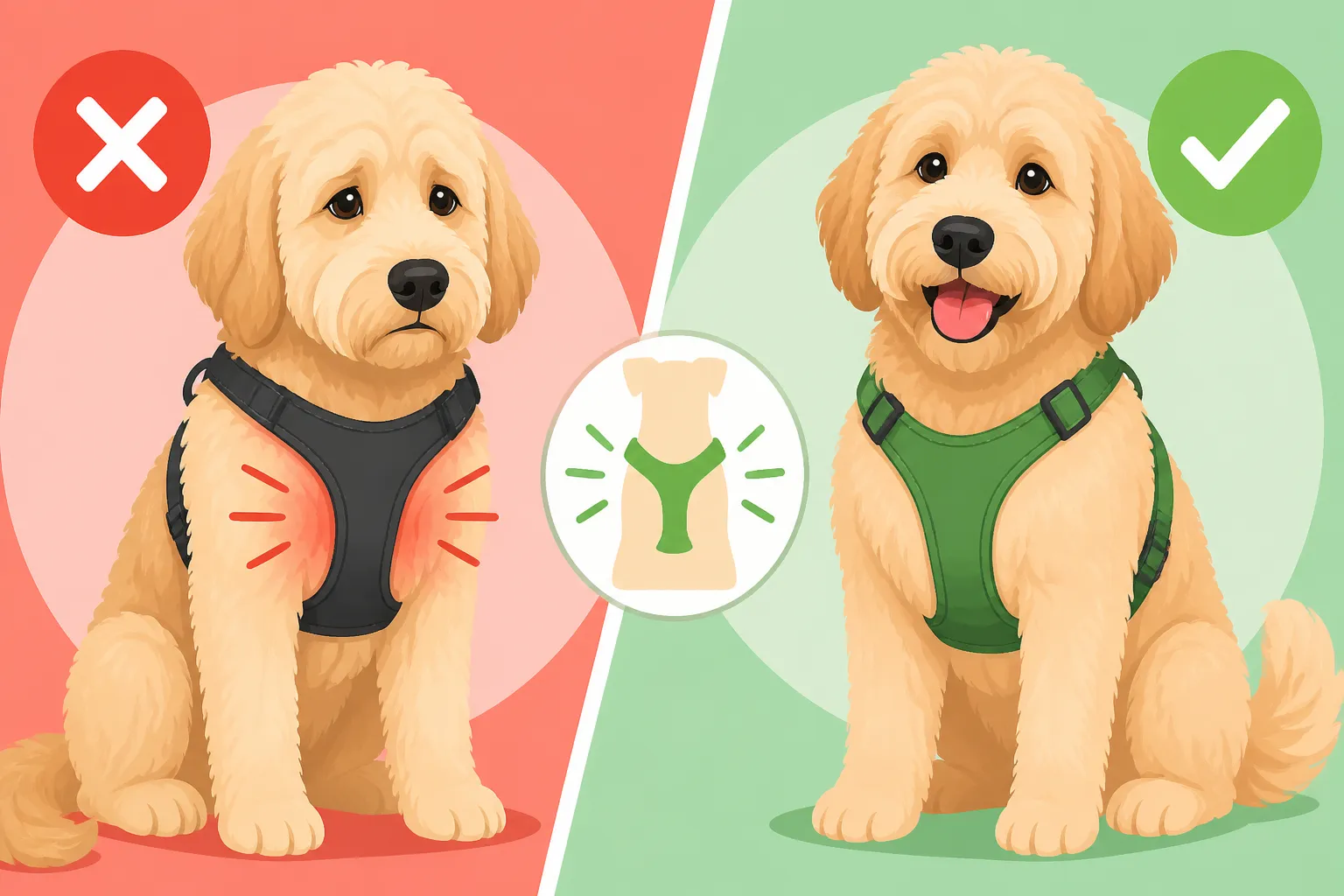
An ill-fitting harness is like pouring gasoline on a matting fire. Whether it's too loose or too tight, it will increase the chances of matting significantly.
- Too Loose: If the harness is too loose, it will shift and slide around excessively on your dog's body. This increased movement means more friction against the coat, particularly on the chest and shoulders. A loose harness also makes it easier for your dog to slip out, which is a safety hazard, but it also allows more room for the coat to bunch up and tangle underneath.
- Too Tight: A harness that's too tight presses the straps deeply into the coat, compacting the hair and making it difficult for air to circulate or for shed hairs to escape. This constant pressure can create deep, stubborn mats right against the skin. It also restricts movement and can be uncomfortable or even painful for your Labradoodle, potentially leading to chafing and skin irritation.
It's a tricky balance to find that perfect fit, but it's essential not only for preventing mats but for your dog's comfort and safety.
Strategies to Prevent Harness-Related Matting
The good news is that you don't have to give up on harnesses entirely. With the right approach and a little extra diligence, you can significantly reduce or even eliminate harness-related matting.
Choosing the Right Harness Type
Not all harnesses are created equal when it comes to a Labradoodle's coat. The design and material play a huge role in how much friction and matting they cause.
- Minimize Contact Points: Look for harnesses with minimal strap coverage, particularly on the chest and under the armpits. A "Y-front" or "H-back" style harness that distributes pressure evenly and avoids a broad chest plate can be a good option. These designs often keep straps away from the most sensitive matting zones. Avoid harnesses with wide, thick straps or excessive padding that covers large areas of the chest, as these tend to trap more hair and create more friction. You might also want to explore Whether a Front Clip Harness Mats a Labradoodle to understand how different styles affect the coat.
- Material Matters: Opt for harnesses made from smooth, soft, and breathable materials. Nylon and polyester are common, but look for ones with a fine weave or soft edges. Avoid rough webbing or materials that feel abrasive to the touch. Some harnesses even come with a fleece or neoprene lining in key areas, which can help reduce friction, but be mindful that thicker linings can also trap heat and moisture if not dried properly. Check out reviews on sites like Chewy or Amazon for feedback from other doodle owners on specific materials.
- Avoid Front-Clip Harnesses (Sometimes): While front-clip harnesses can be excellent training tools for dogs that pull, the ring for the leash often sits directly on the chest. This placement, combined with the dog pulling, can create significant friction and a prime matting spot. If you use one, be extra vigilant with grooming in that area.
Here's a quick comparison of harness types and their matting potential:
| Harness Type | Description | Matting Potential (Chest) | Notes |
|---|---|---|---|
| Standard H-Back | Straps go around neck/shoulders, girth, and connect at back. | Moderate | Good overall, but underarm straps can rub. |
| Y-Front/Freedom | Straps form a 'Y' over the chest, no horizontal strap across breastbone. | Low to Moderate | Often better for minimizing chest matting by avoiding direct horizontal chest pressure. |
| Front-Clip | Leash clip on chest, often combined with Y-front or H-back design. | High | Chest clip creates significant friction when dog pulls. |
| Step-In | Dog steps into two leg holes, clips over back. | Low | Minimal chest contact, but can rub armpits if not fitted well. Less control for strong pullers. |
| Vest/Jacket Style | Broad fabric coverage over back and chest. | Very High | Covers large areas, traps hair, heat, and moisture, leading to severe matting. Generally not recommended. |
Proper Harness Fit and Routine
Even the best harness can cause mats if not fitted and used correctly. This is where your daily routine comes into play.
- Achieve the Perfect Fit: The harness should be snug enough not to shift excessively, but loose enough that you can comfortably slide two fingers under any strap. Pay particular attention to the chest strap and the straps around the armpits. There should be no chafing or pinching. Regularly check your dog's skin for any red marks or irritation, especially after long walks. For growing puppies, you'll need to adjust the harness frequently as they sprout.
- Remove When Not Needed: This is perhaps the simplest yet most effective strategy. Your Labradoodle doesn't need to wear their harness inside the house, in the yard, or while lounging. Take it off as soon as you're home from a walk. This allows their coat to breathe, reduces continuous friction, and gives you a chance to check for any developing tangles immediately. Leaving a harness on constantly is a guaranteed way to create a matted mess.
- Brush Before and After Walks: Make it a habit to do a quick brush of the chest, armpit, and shoulder areas before you put the harness on. This ensures the coat is free of any existing tangles. Then, as soon as you take the harness off, do another quick brush-through. This proactive approach prevents small snags from turning into full-blown mats. You'll want to focus on Brushing a Labradoodle to the Skin, Not the Surface to make sure you're getting all the layers.
Grooming Techniques for Harness Areas
Targeted grooming is non-negotiable for Labradoodle owners, especially those using harnesses. You need the right tools and techniques.
- The Right Tools: Invest in a good quality slicker brush and a sturdy metal comb. The slicker brush is excellent for getting through the coat and removing loose hair, while the comb is essential for finding and working out smaller tangles, especially close to the skin. A detangling spray can also be a lifesaver; you can find excellent options on Amazon or Chewy that help lubricate the hair, making it easier to brush through.
- Line Brushing is Key: Don't just brush the top layer of your dog's coat. You need to "line brush," which means systematically parting the coat and brushing from the skin out, section by section. This ensures you reach those hidden hairs that are most likely to mat, especially on the chest and underarms. The Line Brushing a Labradoodle Coat Needs is a fantastic resource to master this technique.
- Focus on High-Friction Zones: Dedicate extra time to the areas where the harness sits. Gently lift the hair and brush thoroughly, always checking with your metal comb to ensure no mats are forming right against the skin. Don't forget the armpits and behind the elbows, as these are notorious trouble spots. You'll be amazed at how much hair comes out even if your Labradoodle isn't a "shedder." You can also learn Teaching Yourself to Line Brush a Labradoodle for more guidance.
- Address Tangles Immediately: If you feel a small tangle, don't ignore it. Use your fingers to gently pull it apart, then apply a detangling spray and carefully work through it with a comb. Start from the ends of the hair and gradually work your way towards the skin. Never pull harshly, as this can be painful for your dog and cause skin irritation. Consistency is vital; a few minutes of daily attention can prevent hours of de-matting work.
Living with a Harness and a Labradoodle's Coat
It's a lifestyle, really. Integrating harness use with a robust grooming routine will make all the difference in keeping your Labradoodle comfortable and looking their best.
Daily Checks and Preventative Care
Your hands are one of your best grooming tools. Make a habit of physically checking your Labradoodle's coat, especially the areas under their harness, every single day.
- The "Pat and Feel" Check: After every walk or outdoor adventure, and especially before taking the harness off, run your hands over your Labradoodle's chest, armpits, and neck. Feel for any lumps, bumps, or areas where the hair feels denser or stickier than usual. This tactile check can often find a small tangle before it becomes a visible mat.
- Incorporate Grooming into Cuddle Time: Instead of viewing grooming as a chore, turn it into a bonding experience. While you're petting your Labradoodle on the couch, gently run a comb through their chest hair. This not only keeps the coat tangle-free but also helps your dog associate grooming with positive attention, making future sessions easier. You might be surprised How Long Brushing a Labradoodle Takes Each Week when done properly.
- Consider a Grooming Schedule: If you have a wool or fleece-coated Labradoodle, daily brushing is often necessary. For those with slightly less dense coats, every other day might suffice. Whatever your schedule, stick to it. Prevention is always easier than cure when it comes to mats.
When to Seek Professional Help
Sometimes, despite your best efforts, a mat can form that you just can't get out on your own. It's important to know when to call in the professionals.
- Deep or Tight Mats: If you encounter a mat that is tight against the skin, large, or causes your dog pain when you try to comb it out, it's time to visit a professional groomer. Attempting to cut out mats yourself can be dangerous and easily result in cutting your dog's skin. Groomers have specialized tools and techniques to safely remove mats, often with less stress for your dog.
- Skin Irritation Underneath: If you remove a harness and notice redness, sores, or flaky skin underneath a matted area, consult both your groomer and your veterinarian. Mats can hide skin infections or hot spots, which need medical attention.
- Regular Professional Grooming: Even with diligent home care, a Labradoodle benefits from regular professional grooming, typically every 6-8 weeks. They can address areas you might miss, ensure the coat is properly stripped of dead hair, and tackle any budding mats. Be transparent with your groomer about harness use so they can pay extra attention to those areas. You can also ask them for tips on how to manage your particular Labradoodle's coat type at home. Knowing What a Groomer Charges to Dematt a Labradoodle by the Hour can help you budget for these necessary visits.
Ultimately, while harnesses are fantastic tools for walking and training, they do require a conscious effort from Labradoodle owners to prevent matting. By choosing the right harness, ensuring a perfect fit, and committing to a consistent grooming routine, you can keep your Labradoodle's chest free of tangles and their tail wagging happily on every adventure.
Disclaimer
This article is for general informational purposes only and does not constitute professional advice. Laws, prices and regulations vary by location and change over time. Consult a qualified professional for guidance on your specific situation.